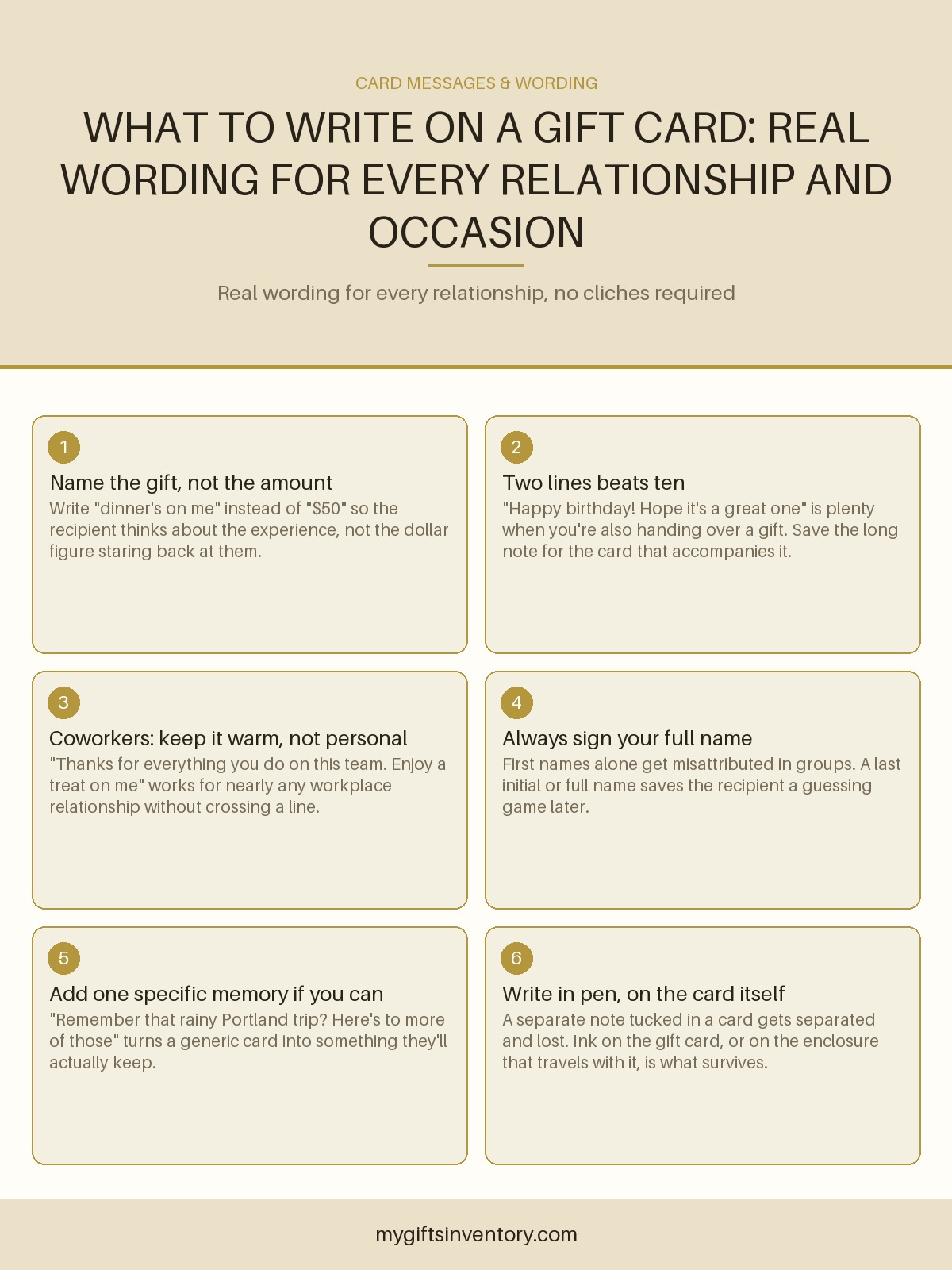
What to Write in a Gift Card: Sentimental Messages That Actually Sound Like You
A gift card can feel impersonal until the card does the work. Here are real message examples by relationship, plus the one rule that turns plastic into a keepsake.
As an Amazon Associate, My Gifts Inventory earns from qualifying purchases. We only recommend products we'd genuinely consider buying ourselves.
You bought the gift card. Now it's sitting on the counter with a blank panel staring back at you, and you're worried that whatever you write will either sound like a Hallmark reject or reveal that you don't know this person as well as you should. That blank space is the real reason you're here. The good news is that a gift card is not the impersonal fallback people make it out to be. It is a placeholder, and the handwritten note is what fills it in. A card with three specific sentences attached can feel more personal than a wrapped object the giver clearly grabbed off an endcap. We've written and received a lot of these, and the difference between a gift card people treasure and one they forget is almost never the dollar amount. It's whether the message names something real.
Why the Message Matters More Than the Card
Think about how a gift card actually gets used. The recipient tucks it into a wallet and pulls it out weeks or months later, standing in a checkout line. In our experience, the paper sleeve usually gets lost by then, so any meaning the gift carried evaporates unless a few words stuck in the person's memory. That's the entire job of your message: give them something to remember when the plastic is gone.
A card is also where you answer the question the gift card implies, which is "why this, and why you?" If you picked a home improvement store card because the person just bought a fixer-upper and you want to be part of that chapter, say so. If it's a bookstore card because they once told you reading was the only thing keeping them sane during a hard year, say that. Specificity is the whole trick. It does the work that a wrapped present would normally do by existing in a particular shape.
There's a practical side too. When a gift card arrives with a thoughtful note, people tend to treat it as a keepsake card and hold onto it, which means it's less likely to be lost or forgotten. Sad but true: a well-written message improves the odds the gift actually gets spent.
The One Rule That Fixes Almost Every Message
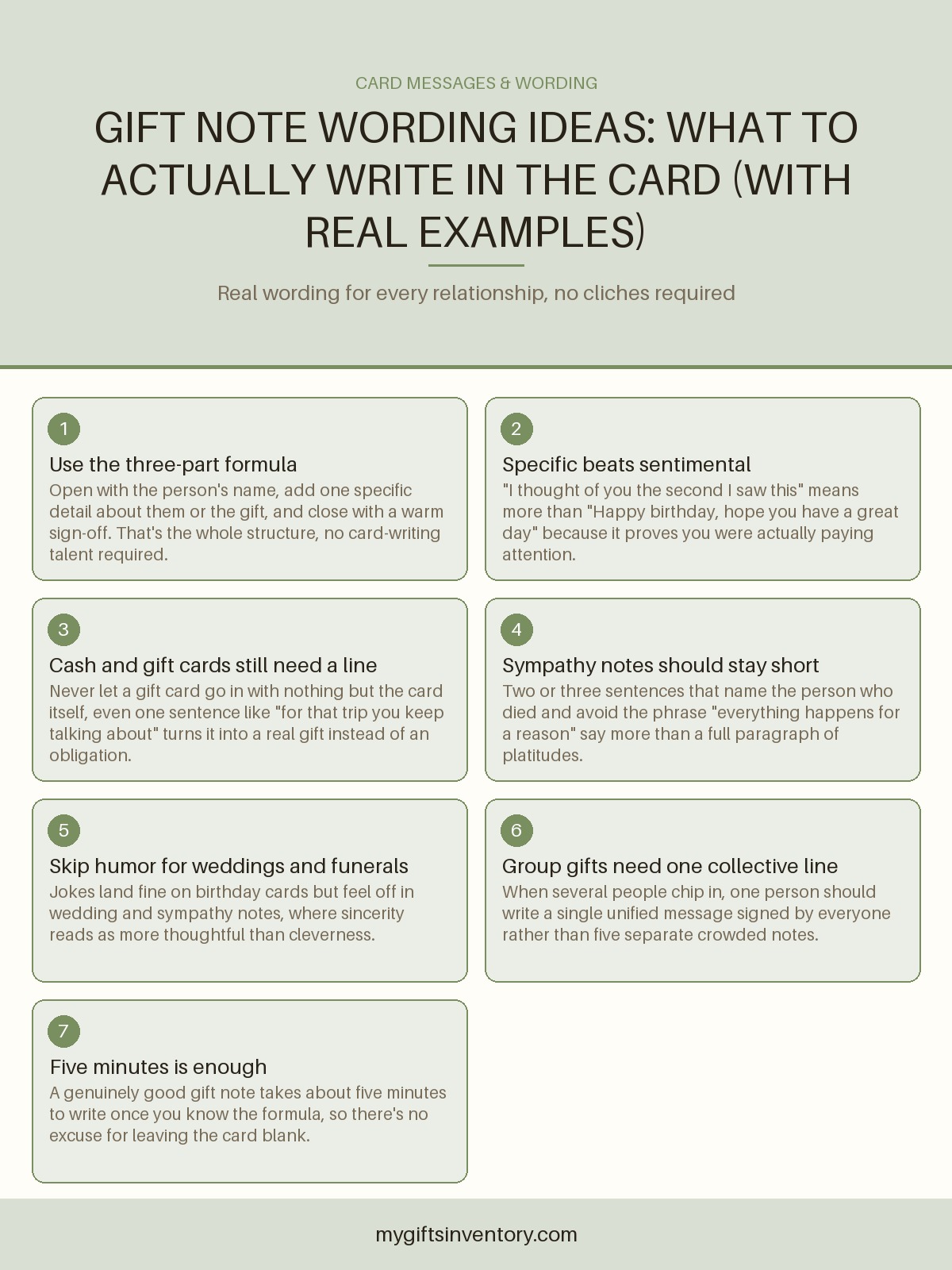
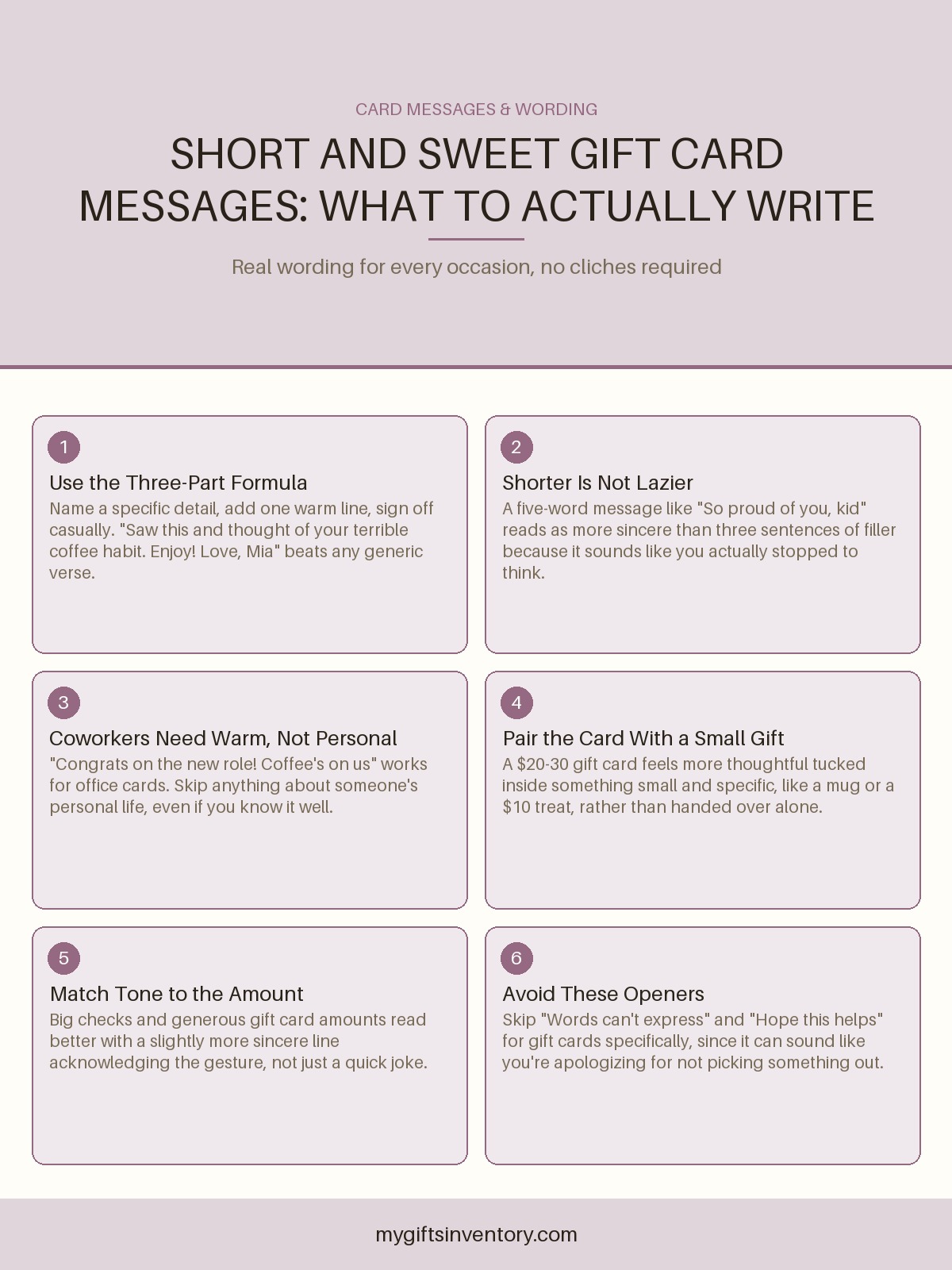
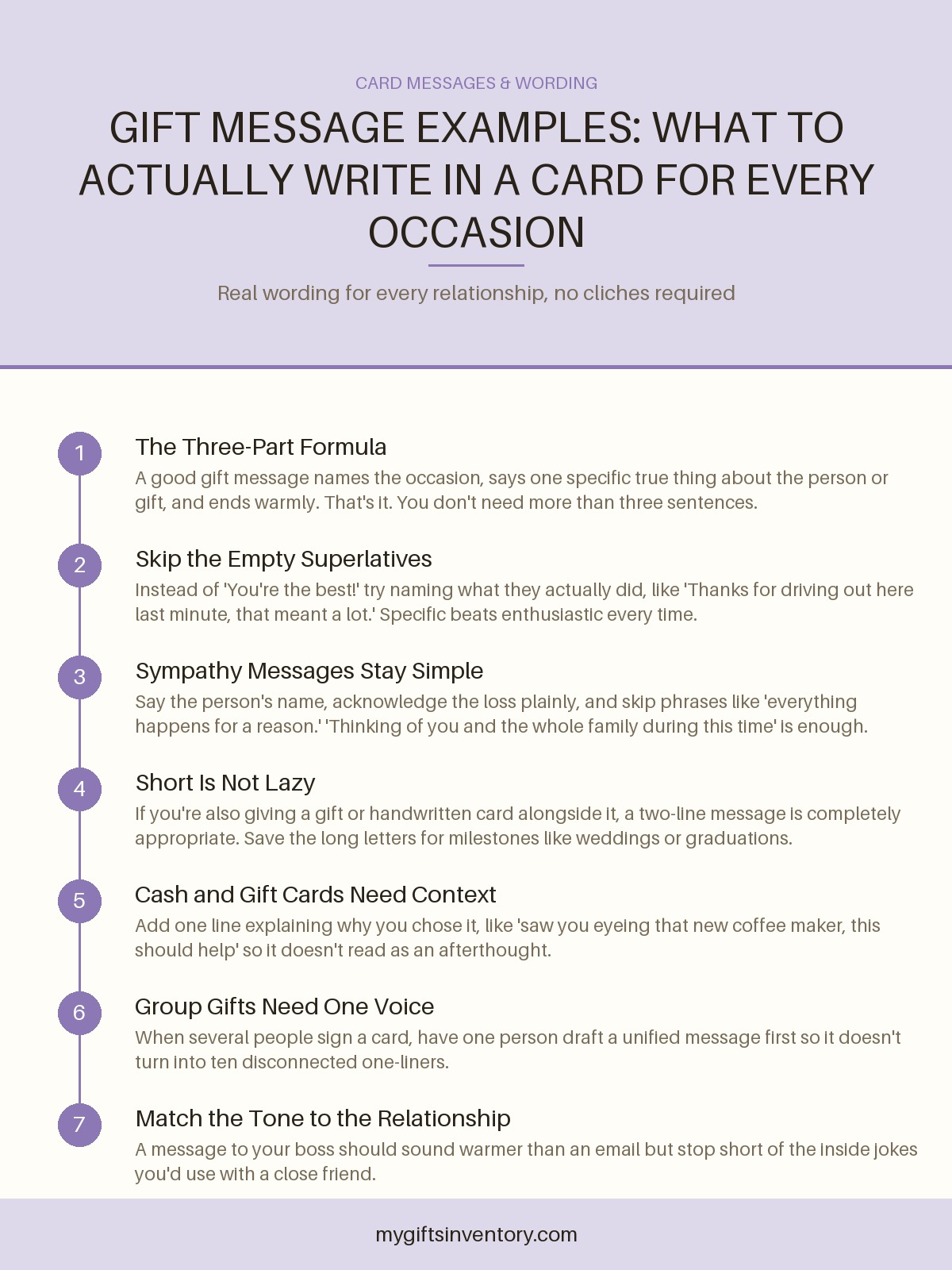
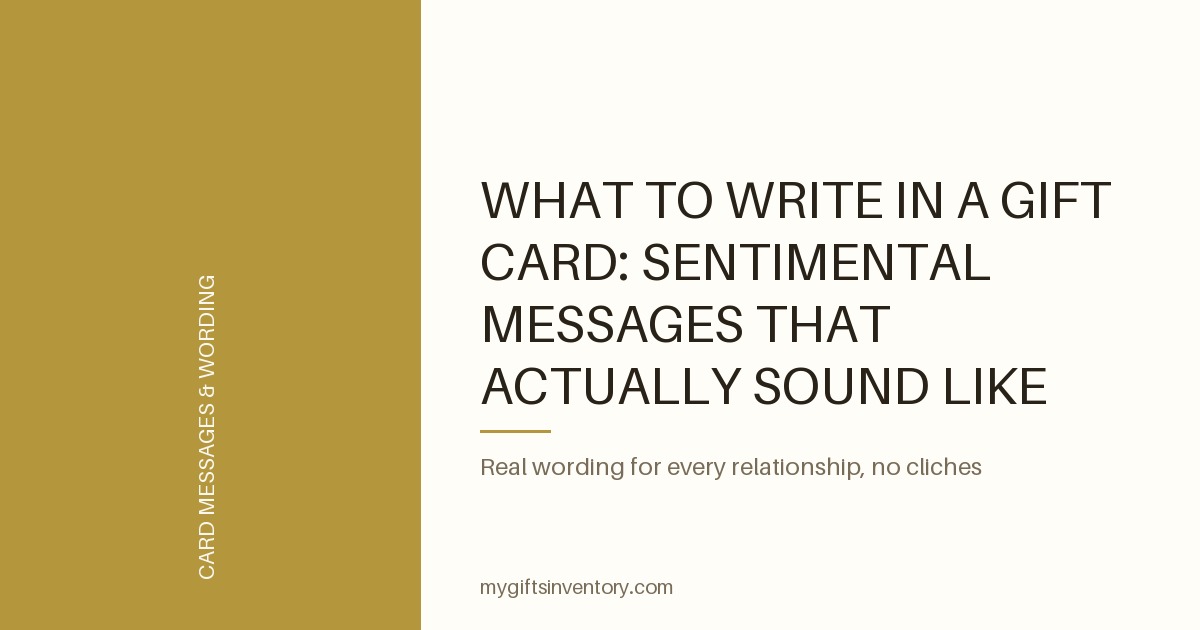
Name a specific memory, trait, or shared plan. That's it. Almost every weak gift card message fails because it reaches for a broad compliment ("You're the best!" "Thanks for everything!") when a single concrete detail would land ten times harder. Compare these:
- Generic: "Happy birthday! You deserve it. Enjoy!"
- Specific: "Happy birthday. Use this on the ridiculous iced coffee you refuse to make at home. You've earned every overpriced ounce this year."
Same card, same budget, completely different feeling. The second one proves you've been paying attention. If you're stuck, ask yourself one question about the person: what did they do, say, or love in the past year that you witnessed? Write that down. It's your opening line, and the rest usually follows on its own.
If you're shopping for someone you genuinely don't know well, that instinct to overcompensate with flowery language kicks in. Resist it. A two-line note that's honest about the relationship ("So glad you joined the team this year. Treat yourself to something good.") is warmer than a paragraph of borrowed sentiment. If you're picking the card itself for a group or an office exchange, our roundup of Secret Santa gift ideas that don't feel like filler covers how to keep small-budget exchanges from going generic.
Message Examples by Relationship
For a Partner or Spouse
This is the one relationship where length is welcome. A full paragraph on the card can feel like a small love letter, and nobody has ever complained about that.
- "For the person who makes ordinary Tuesdays worth looking forward to. Pick something that makes you feel as good as you make me feel."
- "I know I'm hard to shop for, so I gave up and gave you the fun job instead. Go wild. You've more than earned a day that's entirely about you."
- "Ten years of you stealing my fries. This one's on me. Get the good stuff."
For Mom or Dad
Parents get a lot of generic gratitude. What they rarely get is a specific memory of something they did.
- "For the woman who drove to six stores for the right shoes before my first dance. I noticed then. I notice now. Go buy something just for you."
- "Dad, you taught me how to fix a bike chain and how to apologize properly, and I use both constantly. This is for the workshop. Or the golf course. Your call."
- "You spent twenty years putting everyone else first. This card is a small correction. Spend it on absolutely nothing useful."
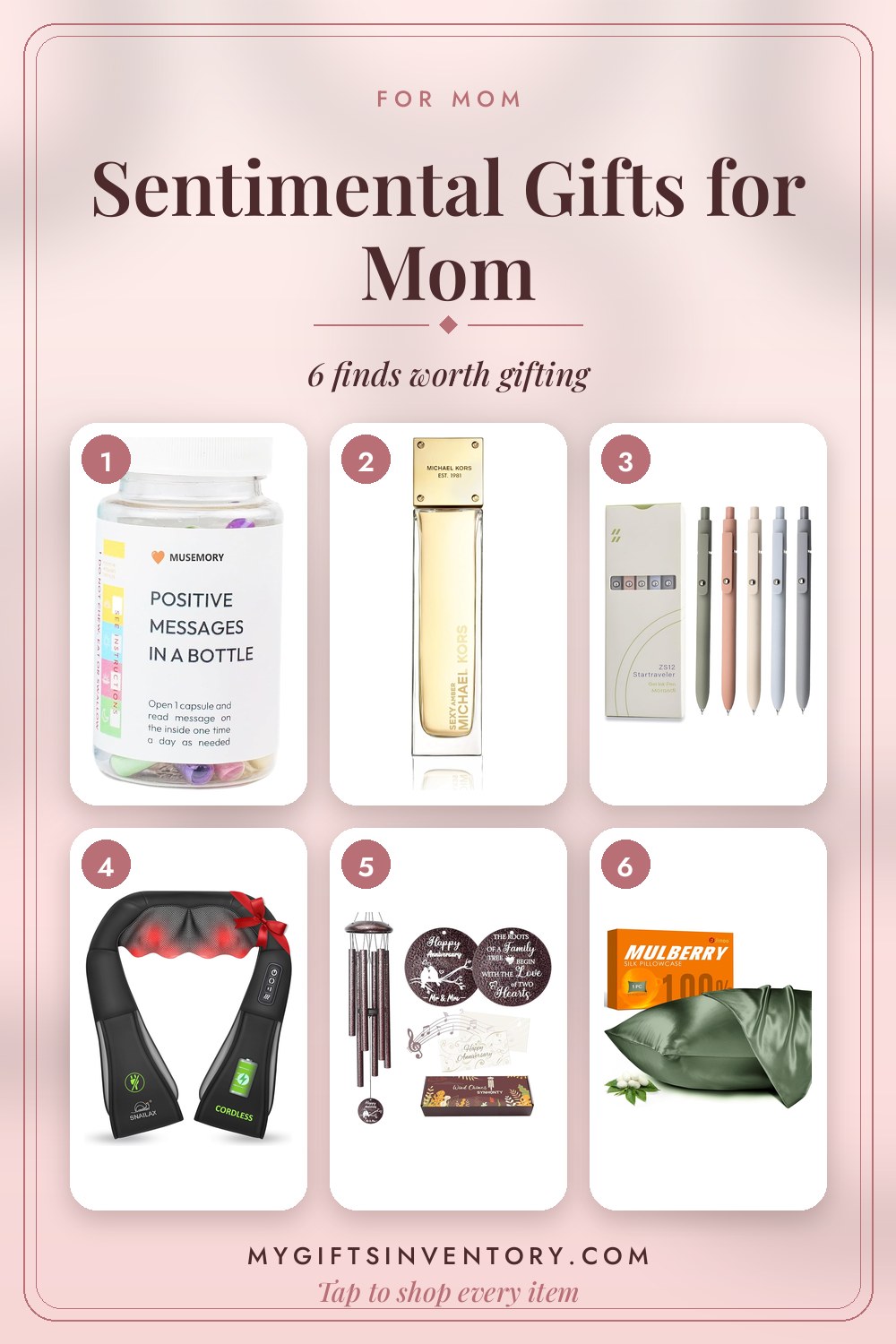
If you're pairing a card like this with an actual present for a parent, our guide to Christmas gifts for mom includes keepsake picks that play well alongside a handwritten note.
For a Sibling or Close Friend
Siblings and best friends have the widest permission range. Teasing works. Inside jokes work. Sincerity works, but it's funnier when it sneaks up on them.
- "Happy birthday from your favorite sibling. Don't argue with me in the card aisle."
- "For the friend who answered the phone at 2 a.m. and didn't make it weird. Buy something frivolous. I mean it."
- "We've been splitting appetizers since we were twelve. This is for a full meal, just you, on me."
For a Teacher, Coach, or Mentor
Keep it warm but not overly familiar. Naming what they taught or changed beats a generic thank-you, and teachers in particular keep notes like these for years.
- "Thank you for seeing something in me before I saw it myself. This is a small token of a big appreciation."
- "You made the subject make sense and made the year bearable. Both are rarer than you probably realize."
- "For the coach who never let me slack and never let me quit. Thanks for both."
For Coworkers and Acquaintances
The rule here is shorter and lighter. Overdoing it can read as awkward, so keep the warmth real but brief.
- "So glad you joined the team this year. Treat yourself to something good."
- "Congratulations on the new place. Consider this a housewarming gift with zero packing tape required."
- "Thanks for covering for me during the crunch. I owe you, and here's the first installment."
For a Tough Year or a Sympathy Gift
This is where wording matters most and where people freeze up hardest. Don't reach for silver linings. Acknowledge the difficulty and offer the gift as breathing room.
- "I'm not going to try to make this better with a card. I just want you to have one less thing to think about this month."
- "Thinking of you. When you're ready to leave the house, this is for a meal you don't have to cook or a night out that doesn't have to be planned."
If you're choosing between a gift card and a physical present for a difficult occasion, our guide to gifts for book lovers includes plenty of quiet, comforting picks that are easier to wrap than to write about. Sometimes the object does the talking and the card can stay short.
Length, Tone, and the Details People Miss
Most notes should land between two and five sentences. Longer is fine for partners, parents, and anyone who will read it twice; shorter is fine for coworkers and neighbors. What matters is the ratio of specifics to adjectives. Skip "amazing," "incredible," and "special" whenever you can replace them with a fact.
A few small habits go a long way:
- Write it by hand whenever possible. Even a legible scrawl reads as effort. If handwriting genuinely isn't an option, a typed insert is acceptable, but sign it yourself.
- Don't put the amount in writing. They can see the balance when they check it. A dollar figure on the card turns a gift into a receipt. If you want them to know it's generous, describe what it should buy, not what it cost.
- Point toward the purchase. "This covers the first round at the new place" or "enough for that coat you've been eyeing" makes the gift feel aimed rather than dropped.
- Sign and date it. People rediscover cards in drawers years later. A date and a name turn it into a small artifact. This is especially true for milestone gifts, where the card is likely to outlast the spend.
One more thing: if the gift card is going to a student heading to college or a friend who just moved, mention the phase of life on the card. "For the new chapter" carries more weight than "enjoy," and it makes the card relevant for years. If you're assembling a whole package around a milestone move, our guide to travel gifts covers the physical items that work alongside a card like that.
Matching the Card to the Person
Where you buy the gift card is half the message. A grocery store card to a new parent means "I see how tired you are, and I'm taking dinner off your plate." The exact same brand sent to a boss means something closer to "I don't actually know you." Context is the whole game, and it's worth a minute of thought before you buy.
Ask what the person's week actually looks like and where the gift will be easiest to use. If they'd have to make a special trip to redeem it, most cards sit in drawers. If it plugs into a routine they already have, coffee, lunch, a hardware store for a house they're elbow-deep in, or a bookstore they pass twice a month, the message can be as simple as "for your usual," and it will still land. That's also a genuinely useful angle in our roundup of tech accessory gifts, where the appeal of most items comes down to whether they fit someone's existing day.
For anyone who values experiences over objects, tying the card to a plan is more sentimental than any wrapping problem. Write "for the first thing we're doing together in the new year" and the gift becomes an invitation.
Common Mistakes and How to Fix Them
The apology opener. "Sorry it's just a gift card" tells the recipient to be disappointed before they've even looked up. Cut that sentence and replace it with whatever made you choose this card in the first place: "I didn't want to guess your size, and I didn't want to give you another candle."
Vague warmth with no anchor. "Wishing you all the best" is fine as a closer but shouldn't carry the entire note. If you're truly stuck, borrow one of the templates above and swap in a detail only you could know.
Too many inside jokes for an unsure audience. If a card might be read aloud at an office, keep it legible to strangers. A joke that needs footnotes belongs on the back if anywhere.
Reusing last year's message. It happens. Someone will notice, because gift cards and their notes often get saved. A single new detail, a trip, a new job, a pet, is enough to keep it fresh.
If you're writing several cards in one sitting for a busy season, we'd suggest writing the messages before you shop rather than after. If you can't produce a single sincere sentence about a person, that's a sign to reconsider the gift itself, not the wording. The blank card tends to reveal what the wallet already suspected.
Gift Ideas to Go With This


Want more ideas? Browse our full guide: 18 Keepsake Gifts Worth Holding Onto (2026): Personalized Picks They'll Treasure Forever
Frequently Asked Questions
Is it impersonal to give a gift card?
No, and the note is what decides it. A gift card with a message naming something specific about the recipient reads as thoughtful and practical. A gift card with nothing written on it is the only version that genuinely reads as impersonal.
How long should a gift card message be?
Two to five sentences suits most relationships. Coworkers and acquaintances get two warm lines, close friends get three to four, and partners or parents can get a full paragraph. Length matters far less than whether you include one specific detail.
Should I write the gift card amount in the card?
No. The balance is visible when they check it, so a dollar figure turns a gift into a receipt. Describe what the card is meant to cover, like a dinner out or the coat they wanted, and leave the number off the page.
What do I write if I don't know the person very well?
Keep it short, warm, and honest about the relationship. "So glad you joined the team this year. Treat yourself to something good." is complete and appropriate. Trying to manufacture deep sentiment for an acquaintance is what sounds off, not the brevity.
Can I give a gift card for a sympathy or hard-times gift?
Yes, and it's often the most useful thing you can give. Skip the silver linings entirely and acknowledge the difficulty. Something like "I just want you to have one less thing to think about this month" is respectful and practical, and much better than a forced bright side.
Looking for an Actual Gift Instead?
Shop Hand-Picked Gift Sets
Every item picked, priced and linked, ready to buy.
More Gift Advice