When to Start Christmas Shopping: The Real Timeline (and Why October Wins)
The honest answer to when Christmas shopping should start, plus a month-by-month plan, deadline math for shipping and popular gifts, and how early is too early.
As an Amazon Associate, My Gifts Inventory earns from qualifying purchases. We only recommend products we'd genuinely consider buying ourselves.
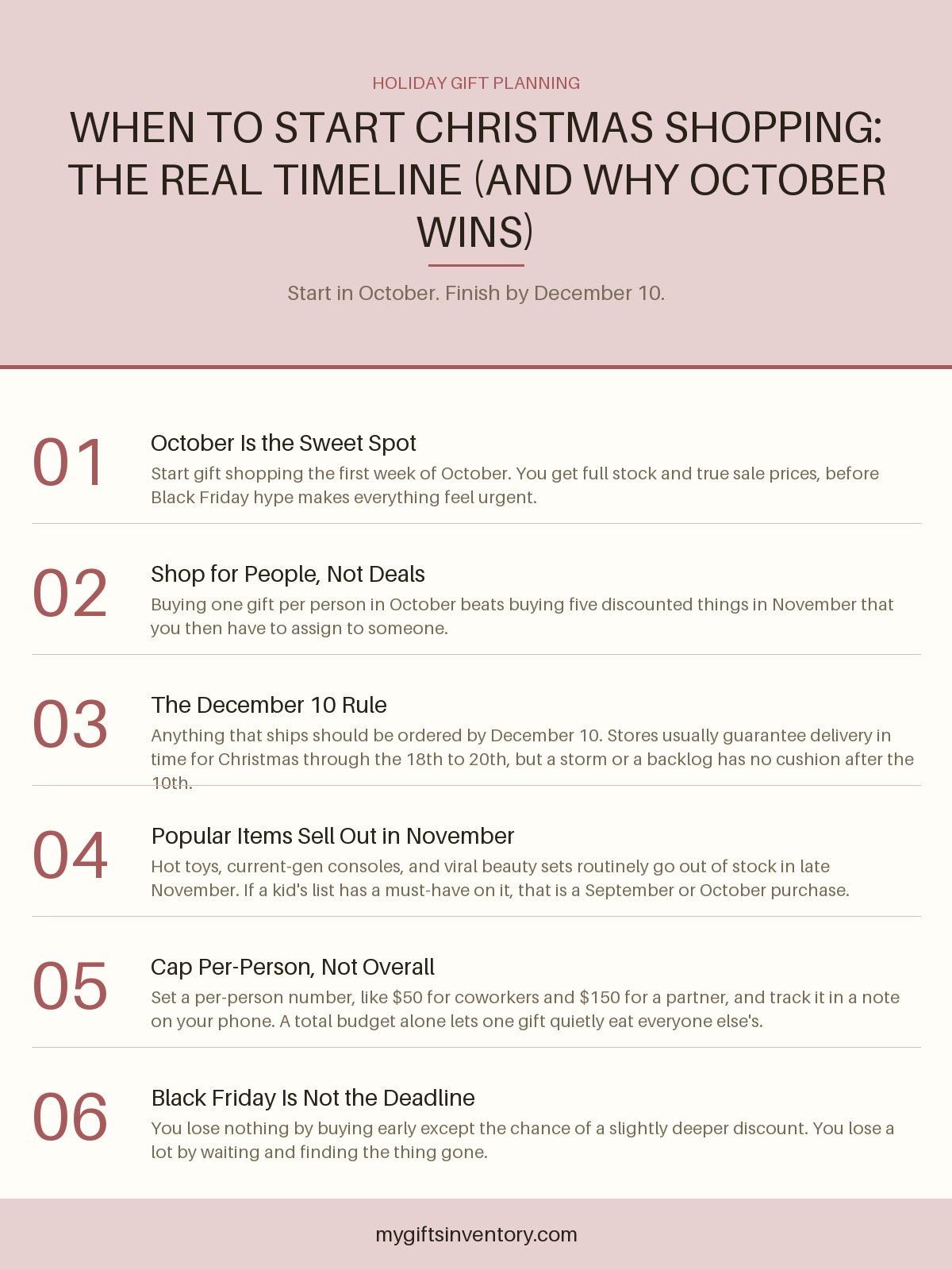
You are probably asking this because it is somewhere between late September and mid-December, and you have a mild knot in your stomach about how much shopping is left. Good news: there is a real answer, and it is earlier than most people think but later than the guilt suggests. For most households, the right time to start Christmas shopping is the first week of October, with a hard finish line of December 10 for anything that has to ship.
What follows is the reasoning behind that, a month-by-month plan, and the specific deadlines that actually bite people in December.
Why October Is the Real Answer
October works for three separate reasons, and all three matter.
Inventory is at its peak. Retailers stock up before the holiday rush, so sizes, colors, and configurations you will not find in December are still sitting on shelves. This is especially true for anything with a model number: the specific slipper size, the specific console bundle, the specific tumbler colorway. By the second week of December, you are often choosing between whatever is left.
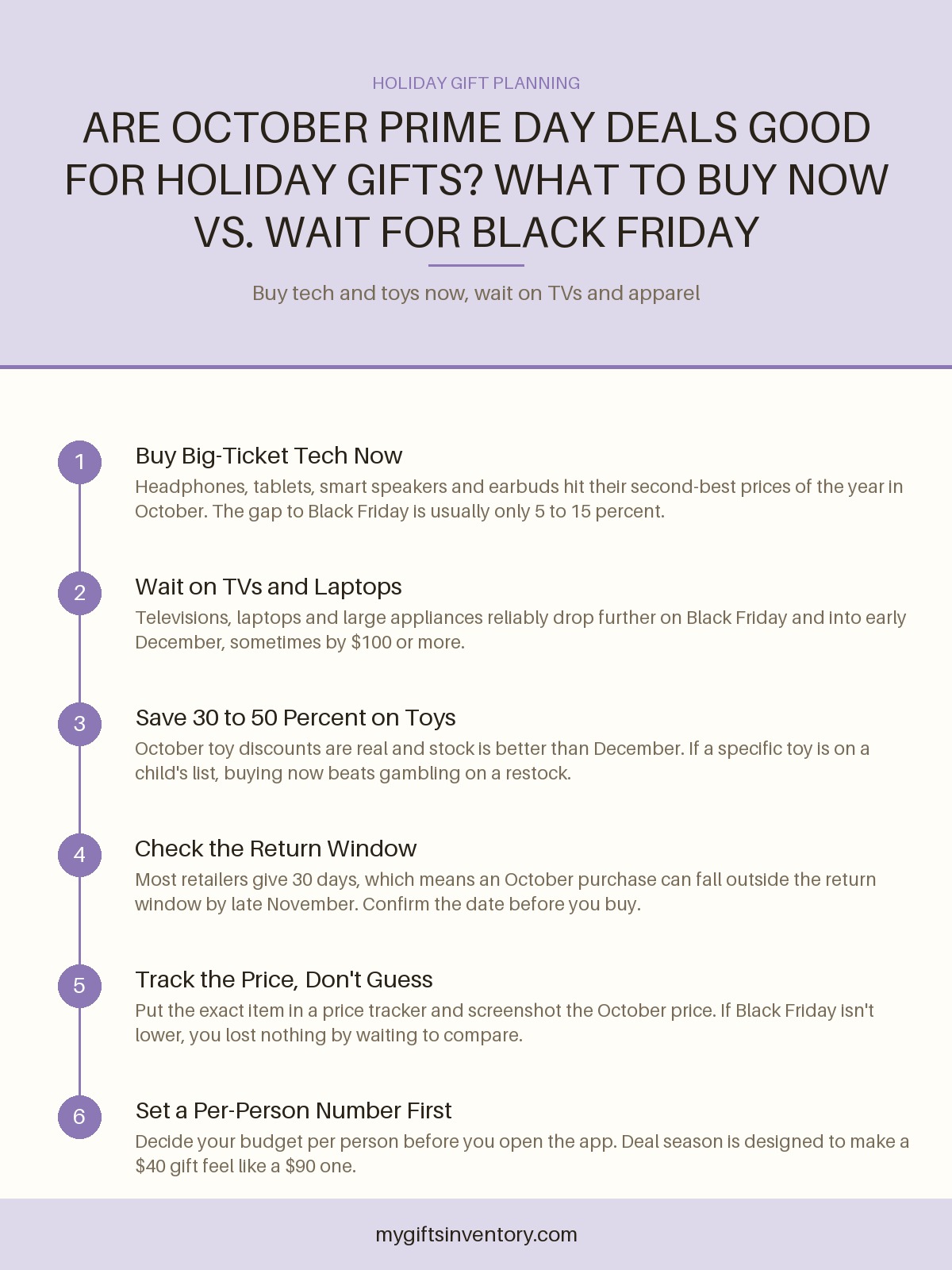
Prices are honest. October prices are normal prices. Black Friday doorbuster pricing is real, but it is also narrow: it applies to specific models the retailer chose in advance, and the "was" price on the tag is frequently inflated to make the discount look bigger. If you shop in October, you are paying a fair market price on the exact thing you wanted rather than a great price on a substitute.
You are shopping for people, not for deals. This is the part that changes the quality of your gifts. In October, you can walk into a store thinking "my sister mentioned she wants a new throw blanket" and buy that thing. In late November, you walk in thinking "what is on sale" and reverse-engineer a person to match the discount. Gift quality drops measurably, even though spending does not. If you want a head start on ideas before you commit, browsing something like our heated blanket gift picks in early fall is a low-commitment way to shortlist before stock becomes a problem.
Month by Month: The Realistic Christmas Shopping Timeline
September: Lists and Must-Haves Only
You do not need to buy much in September. You do need to write down what the kids put on their lists, confirm sizes with anyone you buy clothes for, and identify the one or two gifts per household that are genuinely likely to sell out. That last category is the only thing worth buying this early. If your kid's list includes a specific popular toy or a current-generation console, September is not too soon. Start looking at options now, with guides like our best Christmas toys for kids roundup, so you already know what you are hunting for when you do buy.
October: The Main Event
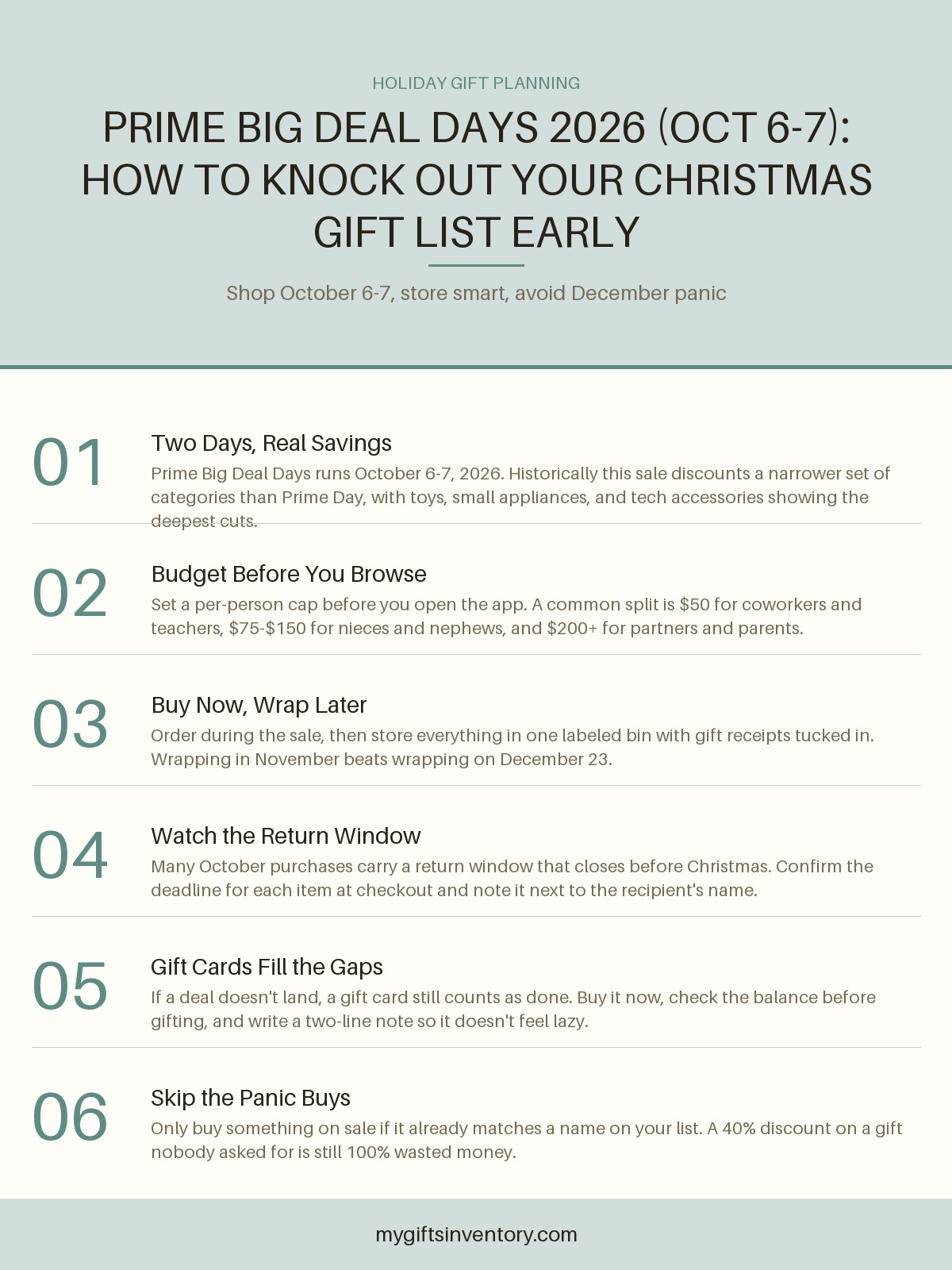
This is where the bulk of the shopping should happen. Aim to complete 60 to 70 percent of your list in October. Break it into two weekends: one for the easy people (coworkers, neighbors, teachers, gift exchanges) and one for the harder ones (partner, parents, siblings, kids). Wrapping supplies bought now are cheaper and in stock, and you avoid the December 20th scramble at a picked-over store.
November: The Finishers and the Deals
Finish the remaining 30 percent in the first half of November. Then, if you genuinely want to hunt Black Friday sales, you can do it from a position of strength: you are looking for upgrades and extras, not scrambling for essentials. This is also the right month for anything personalized, monogrammed, or custom-printed, because those need production time on top of shipping time. Preserved and dried flower arrangements, for example, ship on their own schedule and often need to be ordered before the calendar gets crowded, so browse everlasting flower gifts under $50 sooner rather than later if that is on your list.
December 1 to 10: Closing Time
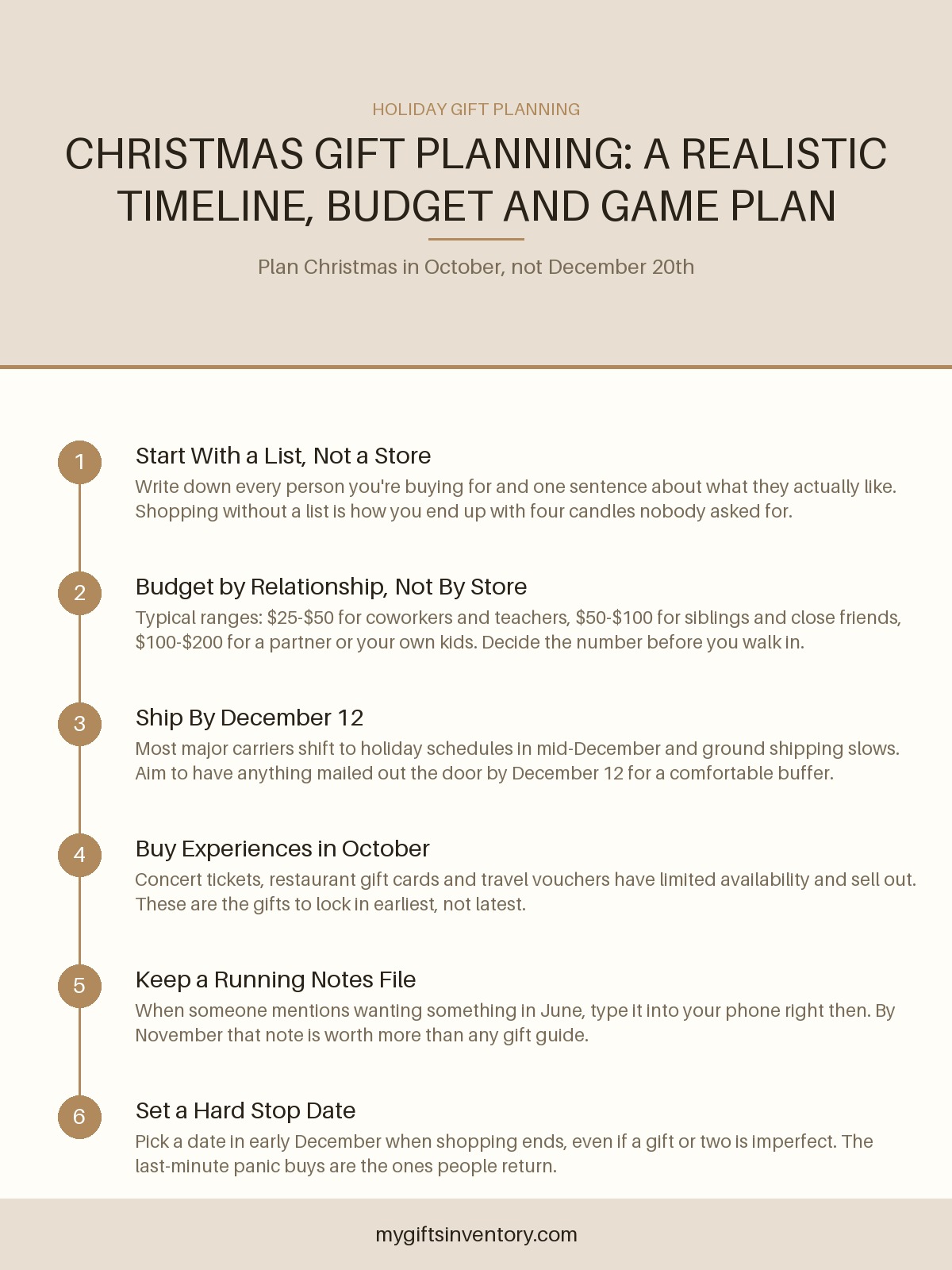
Everything that ships should be ordered by December 10. This is the single most useful deadline in this article. Major carriers publish guaranteed-by-Christmas dates that usually fall between December 18 and December 22 for ground service, and retailers post their own cutoffs, but those guarantees come with fine print and no cushion for weather, a warehouse backlog, or a package that shows up damaged. December 10 leaves you roughly two weeks of slack, which is enough to reorder if something goes wrong.
December 11 to 24: Local Only
From here on, treat it as an in-person operation. Buy online with in-store pickup if the store near you has it, or shop local. Gift cards are the safe play, and knowing how to check a balance before you hand one over saves an awkward moment later. If you are buying a beauty or body care card, for example, it helps to know exactly where the recipient can redeem it and how they check the balance.
How Early Is Too Early?
Practically speaking, there is almost no such thing as too early, but there are three real reasons to hold back.
Return windows. This is the big one. Most retailers run 30 to 90 day return windows, though many extend them for holiday purchases made after a certain date, often November 1. If you buy someone a sweater in September and it does not fit, you may be outside the standard window by the time they open it on December 25. If you must shop very early, ask about the holiday return policy at checkout, or buy from a store with a generous open-ended policy.
Kids change their minds. A seven-year-old's list in September and their list in December can be two different lists. For kids, buy the must-have item early and leave the rest until November.
Storage and tracking. Buying in August means four months of remembering where you hid something. If you shop that early, keep a running list on your phone with the item, the recipient, and the hiding spot. Otherwise you will find a gift in a closet in March.
The Deadlines That Actually Cost You Money
Three dates are worth putting in your calendar right now.
Late November: Popular toys, current-gen game consoles, and viral beauty or fragrance sets routinely sell out. Restocks happen, but not reliably before Christmas. If a specific item is on someone's list and it is the kind of thing that trends, this is your sell-out risk window.
Early December: Personalized items. Anything engraved, embroidered, printed with a name, or made to order needs production time. Most shops quote 7 to 14 business days, and that clock starts after you place the order, not after you decide to.
Mid-December: Shipping cutoffs. Every year, a few days before Christmas, the "guaranteed delivery" language gets quieter and the surcharges get louder. Order by December 10 and none of it applies to you.
A Simple Budget Pacing Method
The reason December feels expensive is that most people spend their entire gift budget in a two-week window, right when their bank account is also absorbing travel, parties, and higher utility bills. Spreading purchases across October and November solves this without any discipline beyond buying when you said you would.
A workable split: spend roughly 40 percent of your gift budget in October, 40 percent in November, and hold 20 percent for December, which covers stocking stuffers, hostess gifts, the coworker you forgot, and whatever last-minute thing comes up. Cap spending per person rather than as a single total. Something in the range of $25 to $50 works for coworkers, teachers, and neighbors; $50 to $150 covers most close friends and extended family; and whatever you and your partner agreed on is nobody else's business. Writing a per-person number down is what stops one gift from quietly eating three others' worth of budget.
When You Should Just Give a Gift Card
If it is after December 15 and you still have people on your list, a gift card is not a cop-out, it is a correct decision. The recipient gets to choose, you skip the shipping gamble, and nobody has to pretend to love a scented candle. The one thing worth doing is checking that the card is active and loaded, especially if it was bought secondhand or sat in a drawer. Here is how to verify a Spotify gift card balance, for instance, and the same basic process applies to most brands you would actually buy for someone. Pair the card with a small physical item, like a nice mug or a box of good chocolate, and it stops feeling like an envelope of cash.
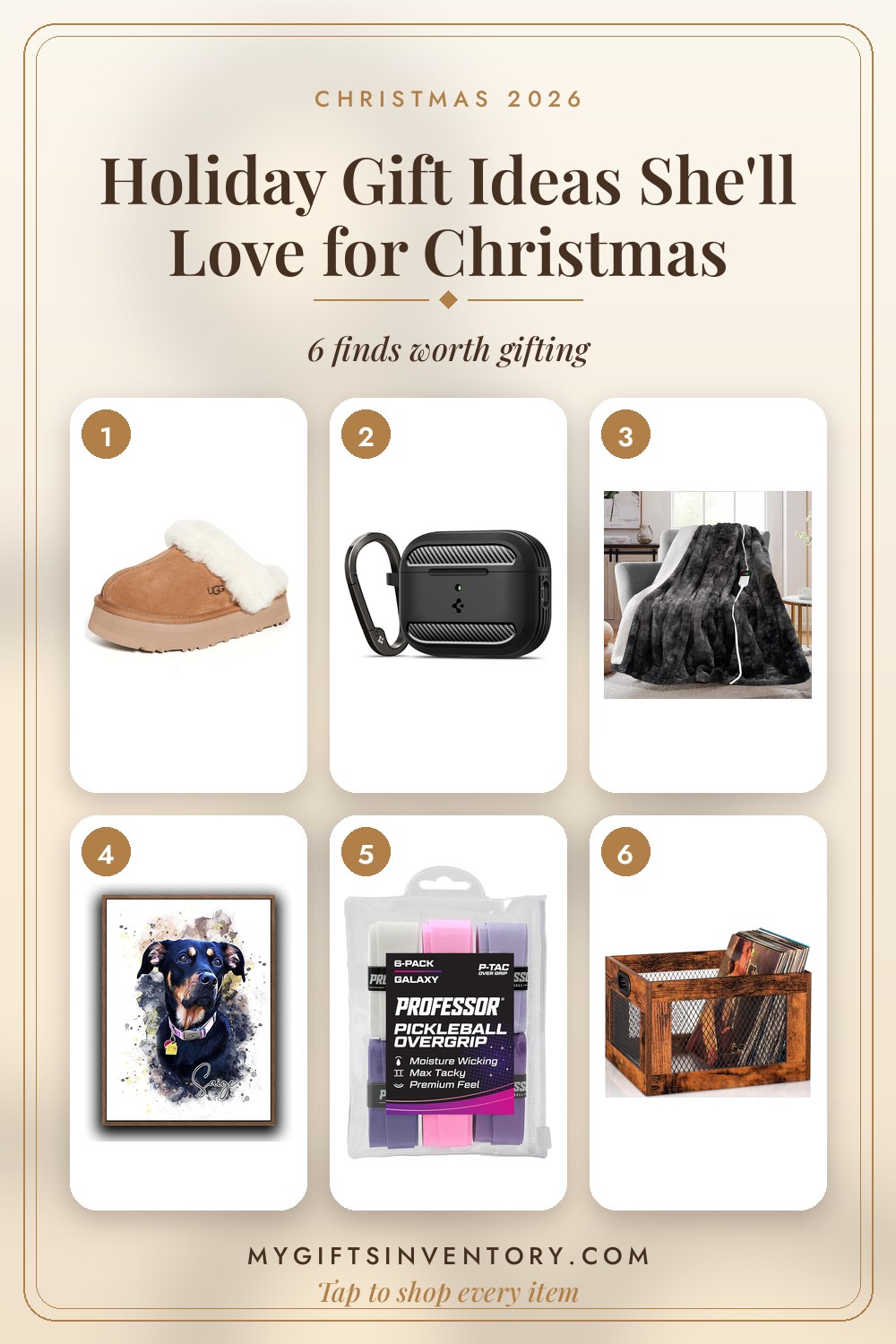
Gift Ideas to Go With This




Want more ideas? Browse our full guide: 18 Holiday Gifts & Christmas Present Ideas Under $50 (2026): Thoughtful Picks for Everyone on Your List
Frequently Asked Questions
What is the best month to start Christmas shopping?
October is the best month to start Christmas shopping for most people. Inventory is fully stocked, prices are normal rather than holiday-inflated, and you have enough time to finish without paying for expedited shipping. Buy time-sensitive must-haves in September, do the bulk in October, and finish in early November.
Is it too early to start Christmas shopping in September?
Not at all, but September is best used for research and for the one or two items likely to sell out, not for everything. Buying clothes, toys, or personalized gifts too early risks falling outside the return window and, with kids, guessing wrong on a list that will change by December.
When do Christmas gifts start selling out?
Popular toys, game consoles, and viral beauty or fragrance products typically start selling out in late November, with the worst shortages in the first two weeks of December. If something specific is on someone's list and it is trending, buy it by early November at the latest.
What is the last day to order gifts online for Christmas?
Retailer and carrier guarantees usually land somewhere between December 18 and December 22 for standard shipping, but those dates carry no cushion for weather or backlog. Aim to have every online order placed by December 10 so you have time to fix a problem if one shows up.
Should I do all my Christmas shopping on Black Friday?
No. Black Friday is good for a handful of specific discounted items, but it is a terrible plan for your entire list because you end up buying what is on sale rather than what people want. Shop early for the right gifts, then use Black Friday for extras and upgrades if you feel like it.
Looking for an Actual Gift Instead?


Shop Hand-Picked Gift Sets
Every item picked, priced and linked, ready to buy.
More Gift Advice