Zero waste gift wrapping ideas and etiquette: what to use and what to avoid
We share practical, low-waste ways to wrap gifts, plus the etiquette people miss, from tape to cards to timing.

As an Amazon Associate, My Gifts Inventory earns from qualifying purchases. We only recommend products we'd genuinely consider buying ourselves.
We get it. You want the gift to feel special, but the thought of producing a pile of film and plastic wrap you cannot recycle makes you hesitate. If you are searching “zero waste gift wrapping,” you are probably trying to solve two problems at once: making it look good in the moment and making it not feel wasteful right after.
Below we share a practical, low-stress approach that still feels celebratory. We cover materials, how to wrap without creating recycling nightmares, what to do with tape and cards, and the etiquette of “minimal packaging” so nobody feels like they got less effort.
Zero waste gift wrapping basics (the part people wish they’d been told)
What “zero waste” means for wrapping in real life
No household can make every single piece of wrapping perfectly recoverable every time. For gift wrapping, our goal is realistic: reduce waste, avoid hard-to-recycle materials, and choose reusables when we can. We treat “zero waste” as the direction: reuse first, recycle what is accepted locally, and avoid items that are designed to be thrown away.
Our rule of thumb: reuse beats recycle, and recycle beats landfill
In practice:
- Reuse first: fabric, reusable bags, sturdy boxes.
- Recycle second: clean paper and cardboard that your local program accepts.
- Avoid when possible: plastic film wrap, foil-like wrapping, glossy mixed-material papers, and tape that is impossible to remove cleanly.
The “look expensive” trick without adding waste
Most people associate “nice wrapping” with a few visible cues: clean edges, intentional color, and a clear focal point. You can get that effect with reusables and simple techniques. A good ribbon tied neatly, a well-placed sticker made from paper, or a reused box that is clean and labeled will photograph beautifully and still feel thoughtful.
Materials that actually work for zero waste gift wrapping
Reusables we reach for again and again
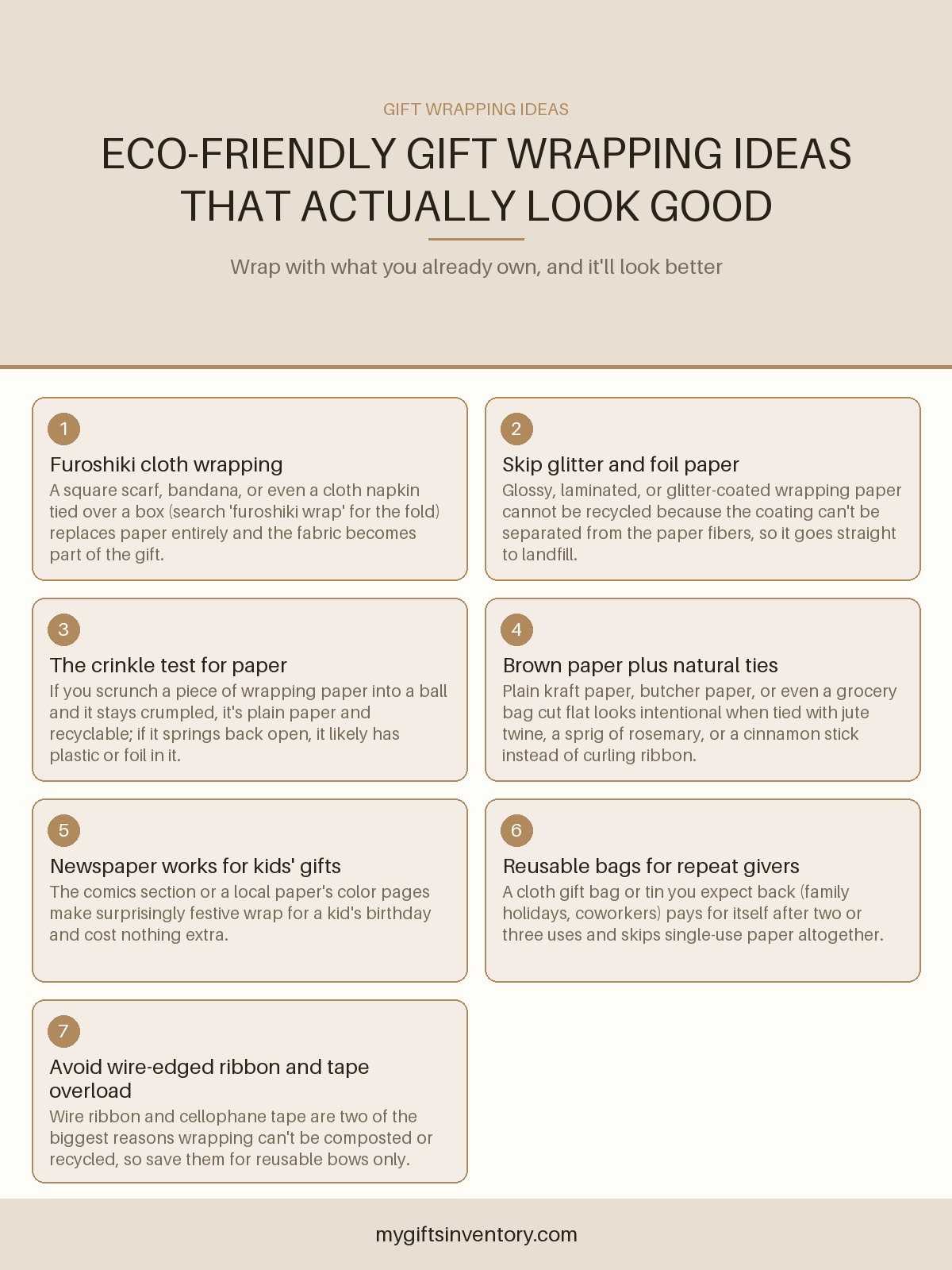
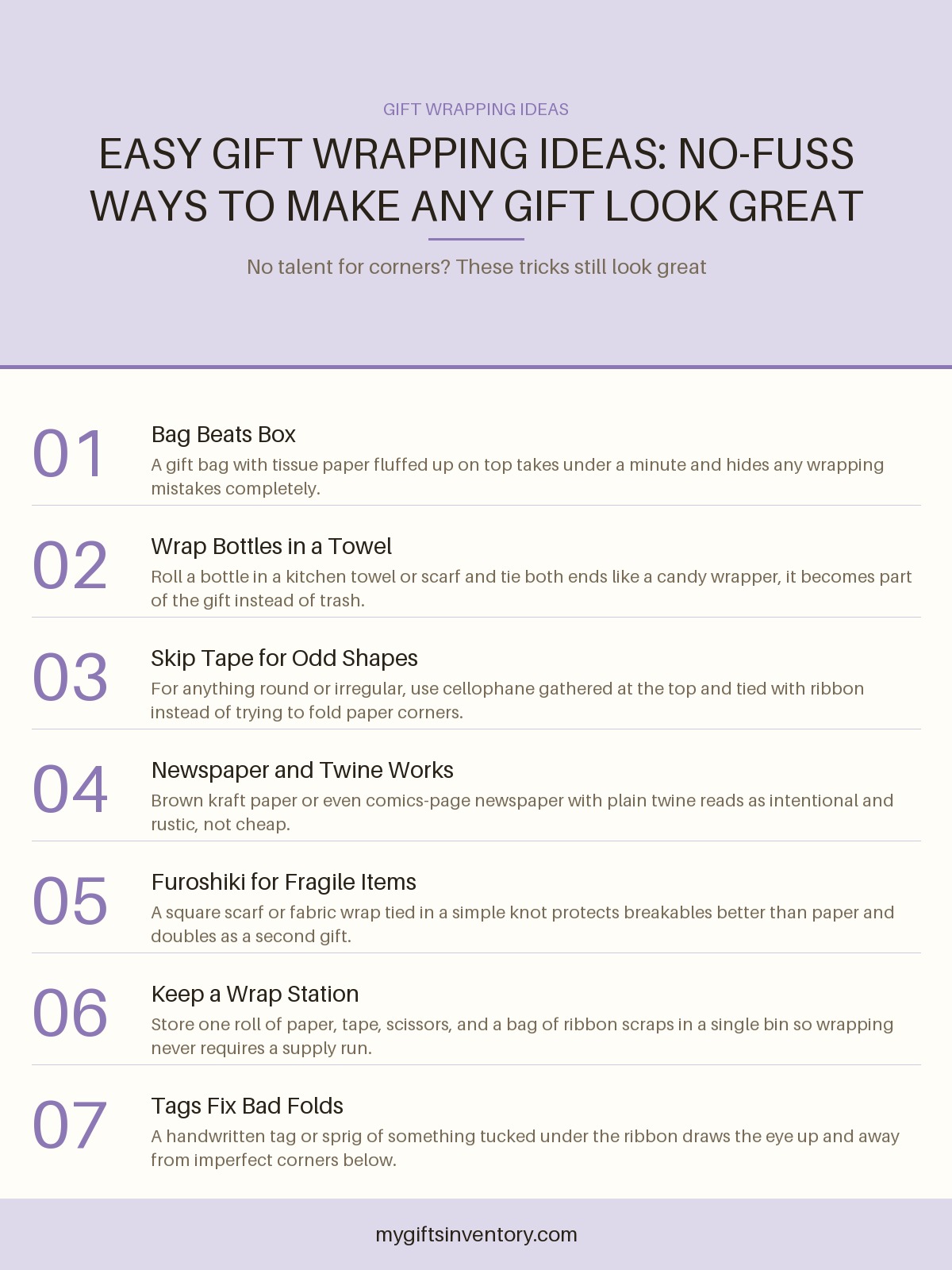
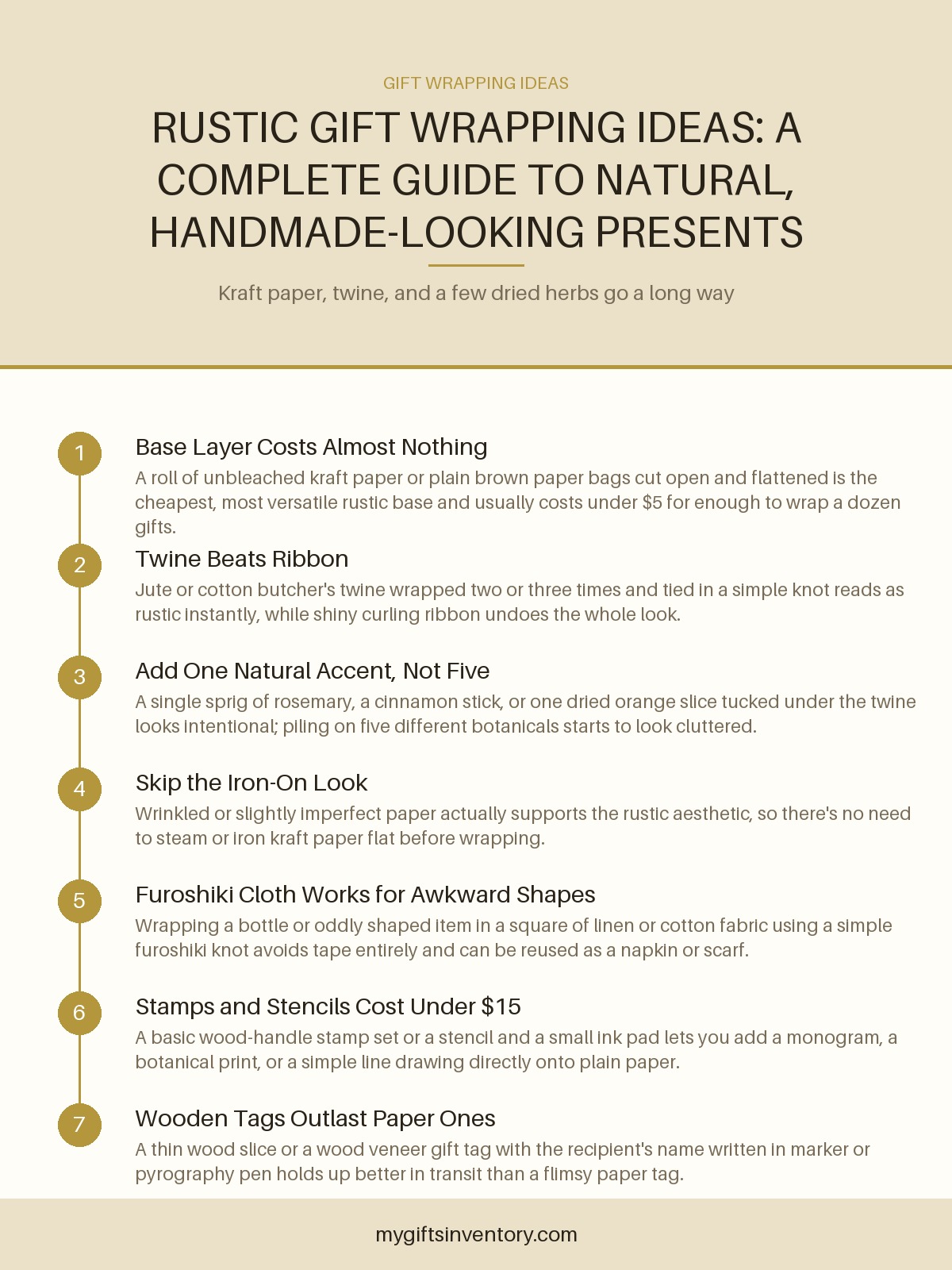
- Fabric wraps (furoshiki-style): Great for small to medium gifts, especially if the item can be set in a box or bag inside.
- Reusable gift bags: Choose sturdy ones and store them like holiday decor. Add tissue paper if you need a barrier, but keep tissue plain and minimal.
- Sturdy boxes and tins: Clean, reuse, and refresh with one new detail like a paper label or ribbon.
- Reusable jars or tins for consumables: If the recipient uses them, you are essentially gifting packaging too.
Low-waste paper options
- Brown kraft paper + string: Simple, versatile, and easy to reuse as drawer liner afterward.
- Newspaper or magazine pages (with care): Avoid glossy or heavily inked pages if your program discourages them. We keep it to smaller sections and pair it with plain kraft around it.
- Cardboard-style paper gift wrap: If it is mostly paper, it is often easier to recycle than plastic-coated wrap. When in doubt, check what your local facility accepts.
When “nice ribbon” is still low waste
Ribbon is one of the easiest places to choose differently. We go for cloth ribbon, cotton string, or paper ribbon. If you reuse ribbon, untie it gently after the holiday so it stays tidy for next time.
What to avoid (because it creates recycling headaches)
- Plastic tape layers: Even if the tape itself is small, it can make recycling messy.
- Cellophane or plastic film: Beautiful, but rarely accepted for recycling with paper.
- Mixed-material wrap: Foil, glitter-coated, or laminated materials that do not separate easily from paper.
- Shredded decoration: Decorative shredded filler is hard to sort. If you need texture, use fabric, dried florals, or folded paper.
Step-by-step: how we wrap gifts with minimal waste (without looking sloppy)
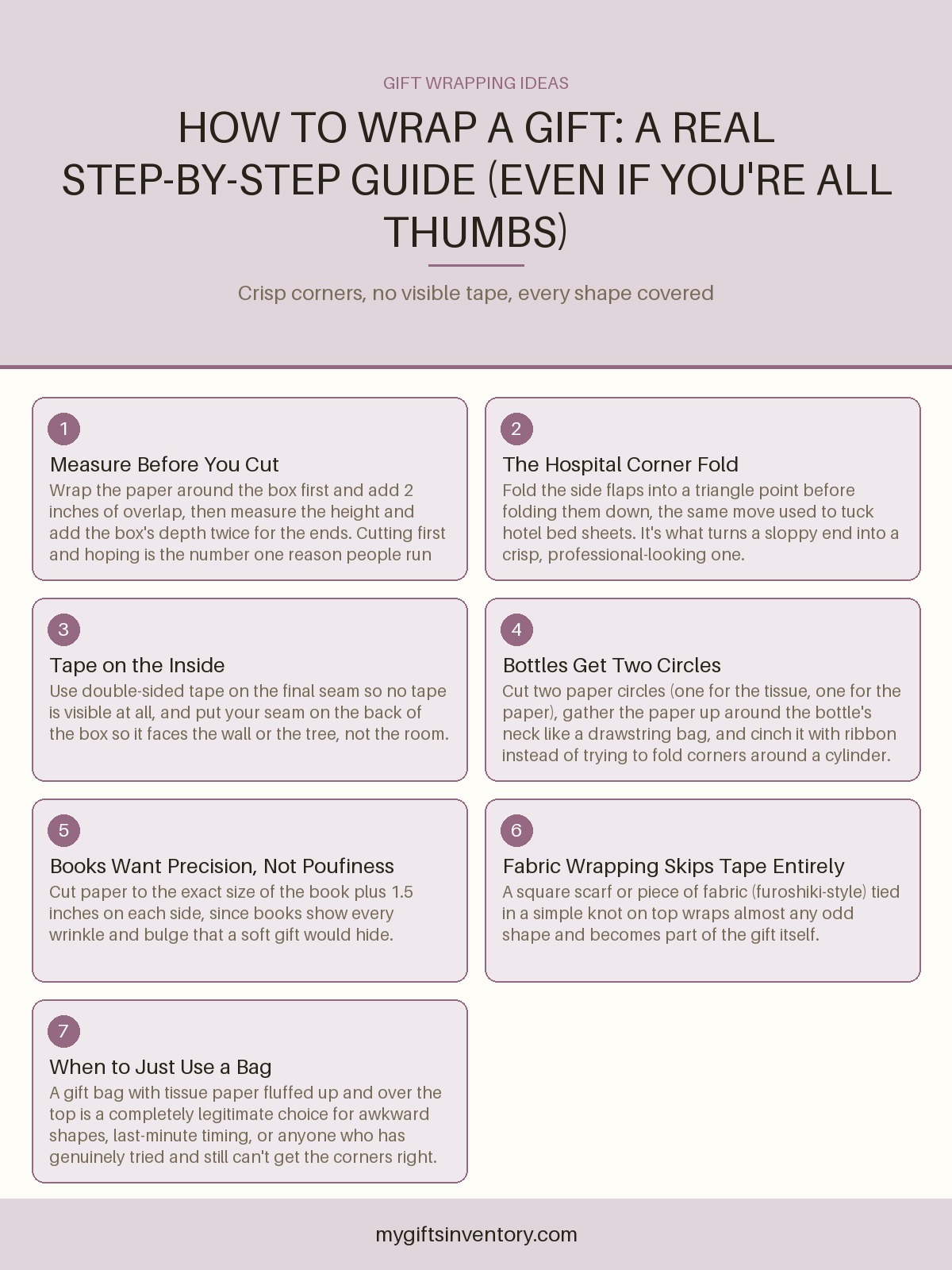
Step 1: Choose one “outer” packaging, then keep everything else simple
We pick a single outer container and build around it:
- If it is a small gift: fabric wrap or a reusable bag.
- If it is a medium gift: a sturdy reused box plus brown kraft and ribbon.
- If it is a fragile gift: a reusable box or container first, then wrap paper around it for presentation.
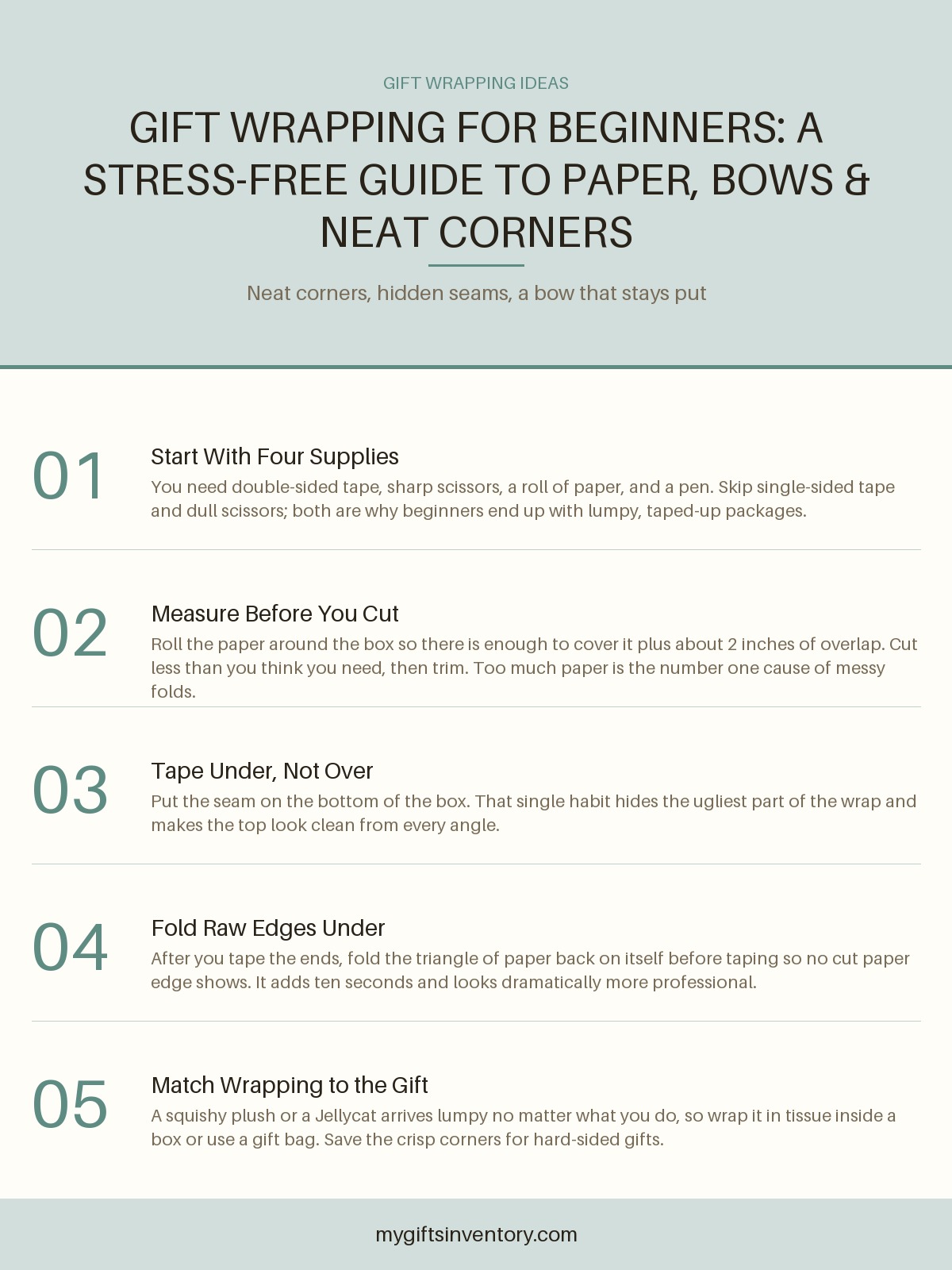
Step 2: Secure with string or folding, not tape everywhere
We aim for one small “secure point” instead of multiple tape strips. Common methods:
- String bows: Tie the string through holes or around the seam.
- Paper tuck folds: Fold and tuck the edge so it holds shape.
- Cloth ribbon: Tie on a clean finish and avoid sticky backing products.
Step 3: Add one personal detail, not ten decorations
One label or one small charm is enough. Consider:
- A handwritten tag made from recycled paper.
- A small sprig of greenery tucked in safely (not glued).
- A reused greeting card cover turned into a tag.
Step 4: Leave an easy “open path”
This is a big etiquette move in zero waste wrapping. If you use a reusable container, we make it easy for the recipient to lift the lid or remove the ribbon without ripping everything to shreds.
Our best practice: Avoid wrapping that requires the recipient to cut through glue layers or tear through plastic to get to the gift. Minimal packaging should still be convenient to open.
Etiquette: how to make zero-waste wrapping feel like care, not thrift
If someone comments on packaging, here is the line we use
We treat comments like an opening, not a debate. A simple response keeps it light:
- “I wrapped it with what I already had so the gift could be the focus.”
- “I’m trying to waste less, and I hope you enjoy the wrap too.”
Should we include a note?
Only if it genuinely helps. We add a short tag when the packaging is clearly different, for example fabric wrap or a reusable bag without traditional paper. Keep it one line:
Example tag: “Wrapped with reused materials so it can be used again.”
What not to do
- Do not apologize for the packaging.
- Do not make it about the recipient’s “responsibility” to recycle or compost.
- Do not imply their previous gifts were wasteful. You are choosing a style, not running a critique.
Cards, messages, and tags: zero waste rules for what we write
We keep the card simple but specific
A gift card or a small item still deserves a thoughtful message. We use this structure:
- One warm opener (happy birthday, congratulations, missing-you energy).
- One specific detail about them or the moment we share.
- One line about the future (when we will see them, what we hope they do with it).
- Our signature.
Message templates you can copy
For birthdays: “Happy birthday, [Name]. I loved [specific detail]. I hope this year brings more [thing they love] and a little extra time for you.”
For holidays: “Thinking of you this season, [Name]. Thank you for [something they do that matters]. Can’t wait to [future plan]. With love, [Your Name].”
For a “small but meaningful” gift: “This might be small, but it is coming from a big place. I chose it because [reason]. Hope it becomes one of your favorites.”
What we do when the gift is a gift card
If you are giving a gift card, keep the wrapping minimal and the message more personal. A card can carry the “thought” even when the packaging is intentionally quiet. If you are deciding between store gift cards, it can help to understand where the recipient shops. For example, you can compare options using our pages on specific chains like Walmart gift cards, or Target gift cards and their typical fees and brand options.
Zero waste wrapping by occasion (so it fits the moment)
Birthdays
- Use a reused box, kraft paper, and a single ribbon color.
- Add a tag with a short “memory line” like: “Still thinking about that trip.”
- If the recipient loves craft or DIY, include an extra piece of plain paper they can reuse for notes.
Holidays
- Choose fabric wrap for one or two gifts if you want a memorable look.
- Keep wrapping style consistent within your household so it feels curated.
- Skip plastic wrap decorations and glitter that sheds.
Anniversaries and milestone gifts
- We lean into sturdier containers like re-wrapped boxes with a clean ribbon.
- Cards should be more personal. Use “I noticed” language: “I noticed how you…”
- If the gift is an experience, tie the ticket or itinerary to the wrap with string and include a note on when to use it.
Corporate gifting (even if we are wrapping at home)
For work friends, zero waste should still feel polished. Keep materials clean and uniform. If you are giving consumables or small items, a clean brown paper wrap plus a simple branded tag reads professional without excess.
If you need help matching gift ideas to a budget for work relationships, we often point people to corporate gift ideas under $50 because it helps you choose something that is easy to package well.
Planning timeline: when to wrap so it does not become a last-minute mess
A realistic schedule we recommend
We treat wrapping like a project you start early enough to do it calmly.
- T-7 to T-10 days: Gather reusables (bags, boxes, ribbon stored in one place).
- T-4 to T-6 days: Wrap most gifts that are not fragile or seasonal.
- T-2 days: Final wrapping and card writing. This is where you can adjust based on what is left or what arrived late.
- Day-of: Only wrap items that truly need it and have time to label.
Labeling is part of zero waste (because it reduces rework)
We label gifts before they go under the tree or into a closet. Use paper tags and a pen that does not smear. Labels prevent “I wrapped the wrong thing” mistakes, which leads to rewrapping and wasted materials.
Recycling, composting, and what to do with leftover materials
Our quick sorting method after the celebration
- Paper wrap: Keep it intact when possible. If it is clean, set it aside for recycling.
- Tape: If it is removable, peel it off and discard separately. If it is not, avoid taping next time where you can.
- String and ribbon: Save and store in a bin. This is where “zero waste” really starts paying off.
- Gift bags: Reuse immediately if possible, so you do not end up with an unusable pile later.
How much leftover wrap is “too much”?
We aim to use most of what we have, but we do not keep unsorted piles that never get used. A good target is one small container per year of “wrap supplies,” so you always know where to grab them. If you have excess, donate reusable bags and clean boxes where local programs accept them.

Frequently Asked Questions
Is wrapping with brown kraft paper “too plain”?
No, brown kraft paper can look very intentional when we use clean folds, a coordinated ribbon or string, and one personal tag. The “special” part is the presentation plus the message, not the material.
Can we use tape for zero waste gift wrapping?
We try to use as little as possible. If tape is necessary, use minimal amounts and choose tape that peels off cleanly so the paper can still be recycled. If it leaves a lot of residue, it is a sign to switch to string or folding.
What do we do if the gift arrived in plastic packaging?
We keep the wrapping separate from the presentation when we can. We do not reuse plastic film as outer wrap, but we can reuse the gift itself in a reused box or fabric wrap so the recipient still gets a “finished” look without bringing extra plastic to the table.
Should we give a gift card instead of wrapped goods to reduce waste?
A gift card can be a thoughtful option, especially when we add a specific card message. If you go this route, keep the wrapping minimal and make the card more personal. To help you choose where it can be spent, we often compare options like Kroger gift cards or Dollar General gift cards.
How do we wrap fragile items without creating extra waste?
Use a sturdy reusable container first, then add only a light protective layer that you can reuse next time, like a reusable cloth or paper cushioning you can fold back. Avoid plastic film as your outer wrap because it is harder to sort after opening.
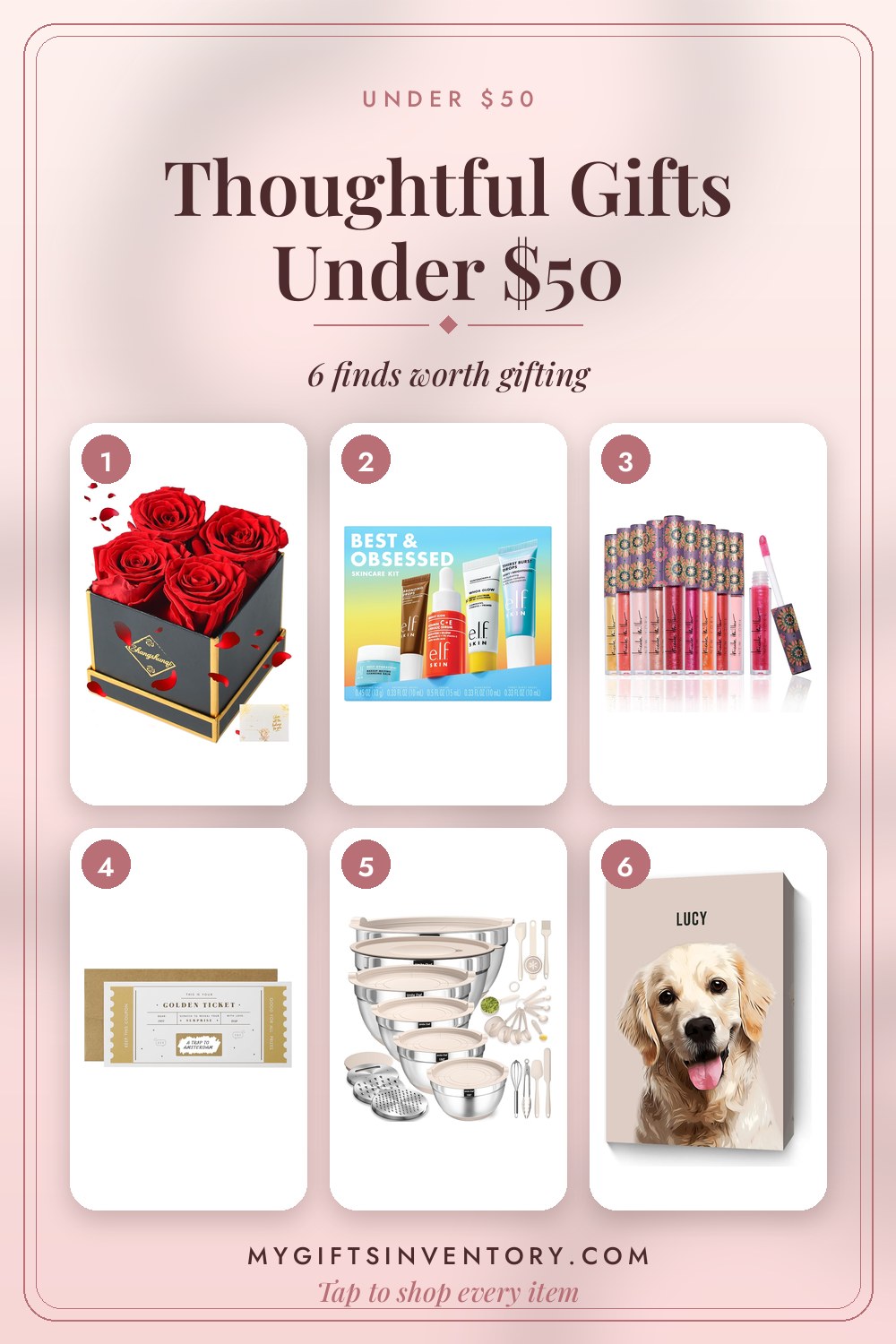
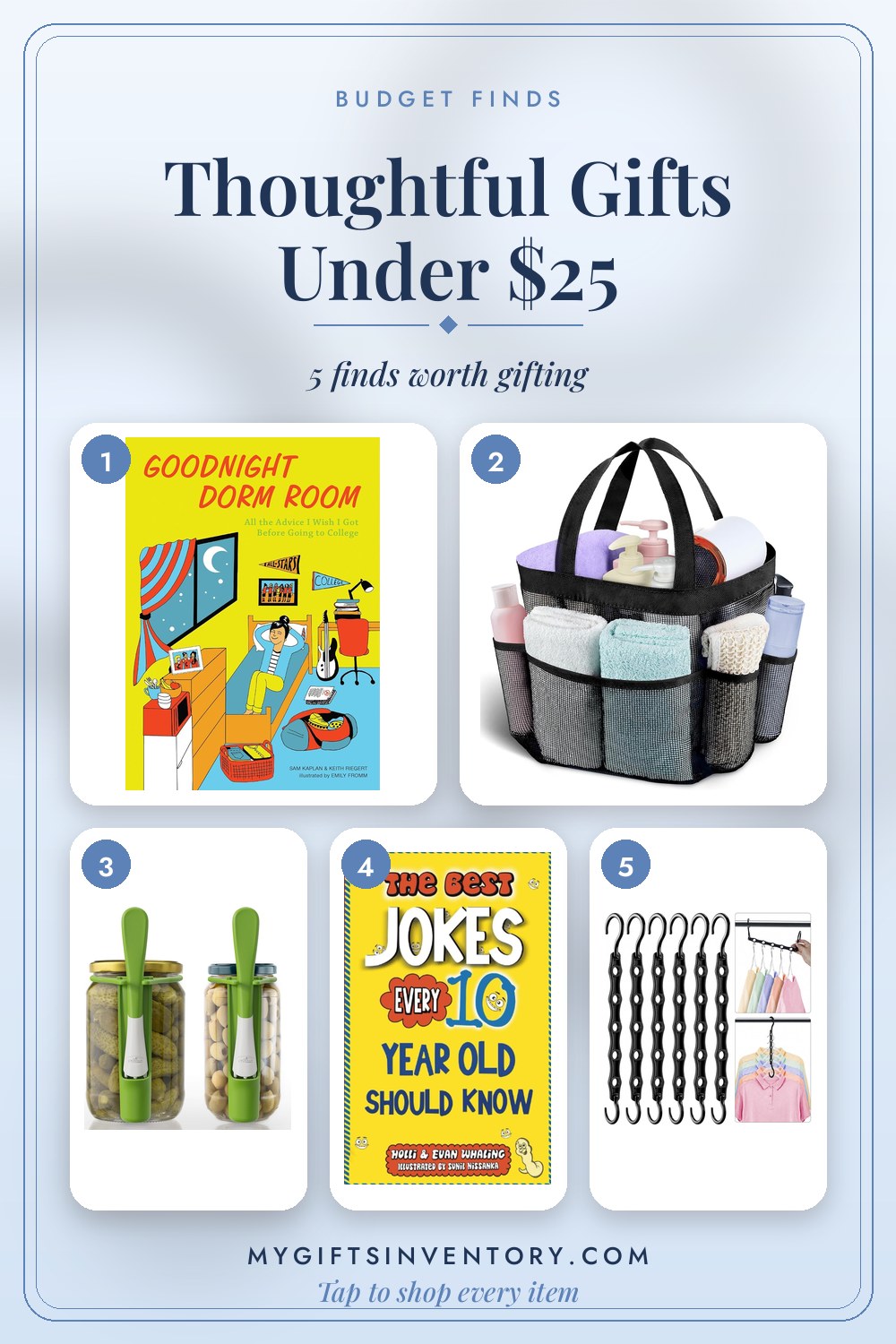
Looking for an Actual Gift Instead?
Gift Sets We Love Right Now
Every item picked, priced and linked, ready to buy.
More Gift Advice