Gift Giving Customs Around the World: Etiquette Guide to Avoid Awkward Moments
Navigate international gift etiquette with confidence. We cover taboos, wrapping rules, timing, and thoughtful choices so your present lands with respect instead of surprise.
As an Amazon Associate, My Gifts Inventory earns from qualifying purchases. We only recommend products we'd genuinely consider buying ourselves.
You are heading to a colleague’s home in Tokyo, meeting your partner’s extended family in Mumbai, or sending a thank-you across borders after a big deal. The worry is the same: will this gift feel thoughtful or will it accidentally land as rude? Gift giving customs around the world are not about perfection. They are about showing you paid attention. We have gathered the patterns that matter most so you can choose, wrap, and present with confidence instead of guesswork.
Customs shift by region, religion, occasion, and even generation. What follows is practical guidance drawn from widely observed etiquette rather than rigid rules. When you know someone well, their personal taste still wins. When you do not, these norms keep you safely on the respectful side.
Core Principles That Travel Well
A few habits work almost everywhere. Give and receive with both hands or the right hand when culture emphasizes it. Present the gift at the right moment (often upon arrival for hosts, or at the end of a meeting for business). Include a short handwritten note that names the occasion and your appreciation. Quality of thought beats price. And if you are unsure, a consumable (good chocolate, fruit, tea, or coffee) or a shared experience usually creates less long-term awkwardness than a permanent object that might carry hidden meaning.
For help matching the gift itself to the person once the cultural filter is clear, we lean on the same practical process in our guide to choosing the perfect gift. Culture sets the boundaries. Knowing the recipient fills in the rest.
East Asia: Careful Presentation and Lucky Numbers
Japan
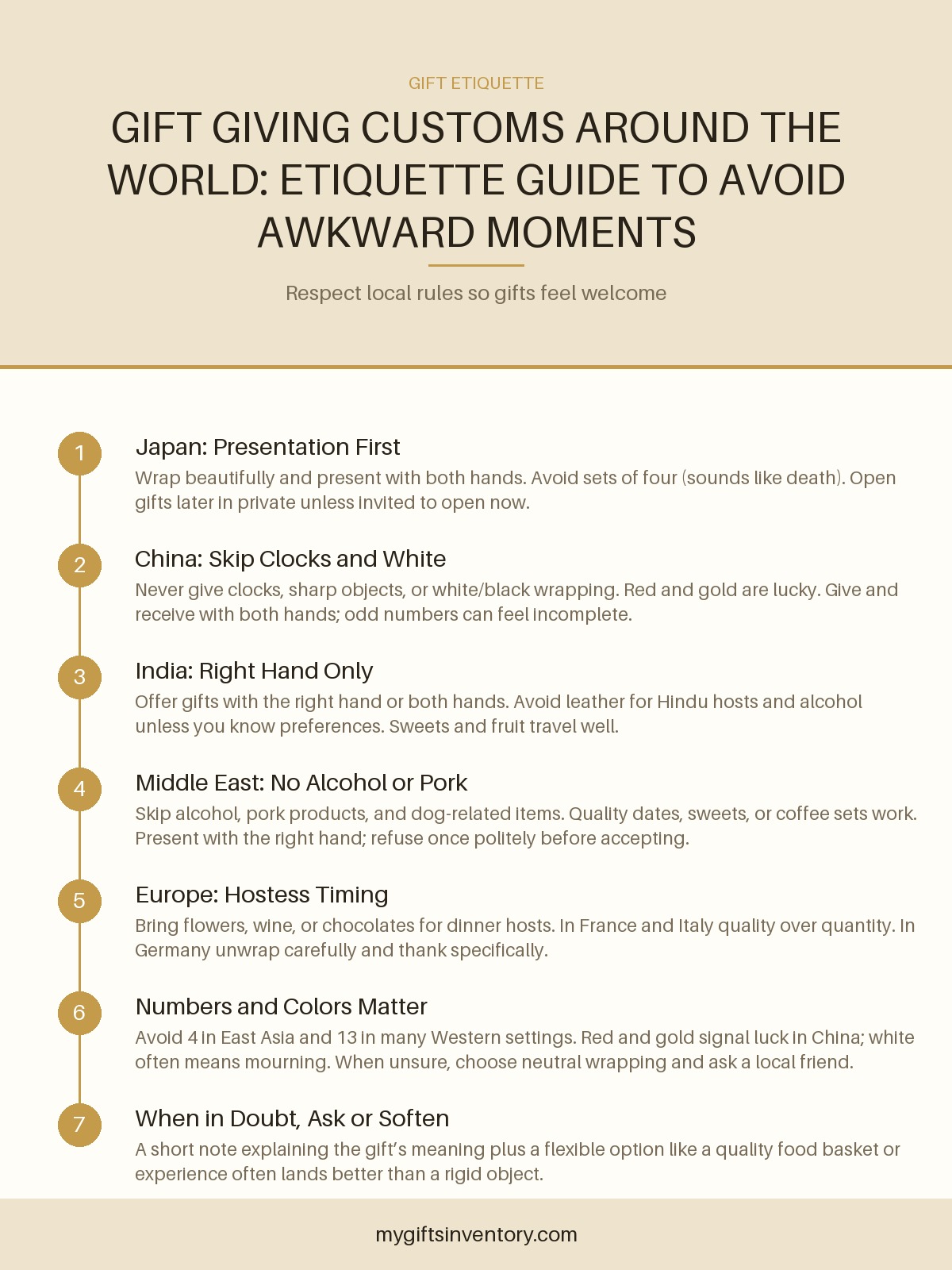
Presentation is half the gift. Beautiful wrapping, often with precise folds and quality paper or cloth (furoshiki), shows respect. Offer the gift with both hands and a slight bow. Recipients commonly set the gift aside and open it later in private so no one loses face over the reaction. Do not press them to open it immediately unless they invite you to watch.
Avoid sets of four of anything. The word for four sounds like the word for death. Sharp objects (knives, scissors) can symbolize cutting ties. White flowers and lots of white wrapping lean funeral. Clocks and handkerchiefs also carry heavy or parting associations. Good choices include high-quality tea, regional sweets, elegant stationery, or something useful for the home that is not overly personal. For business, modest branded items or carefully chosen gourmet items work better than flashy luxury.
China and Chinese Communities
Red and gold signal luck and celebration. White and black often connect to mourning, so skip those for wrapping and cards on happy occasions. Never give a clock or watch as a primary gift. The phrase for giving a clock sounds like attending a funeral. Sharp objects, umbrellas (which can sound like “break up”), and handkerchiefs are also risky. Pears can sound like “separate.”
Give and receive with both hands. Even numbers (especially eight, which sounds like prosperity) are often preferred over odd ones for quantities, though practices vary. Cash in red envelopes is common for certain celebrations, but for personal gifts focus on quality fruit, fine tea, or something the household will share. Open gifts later unless the host encourages otherwise. A short note in the card that mentions good fortune or shared success lands warmly.
South Korea
Similar care with presentation and both hands applies. Avoid overly expensive gifts in early relationships because they can create pressure to reciprocate at the same level. Practical household items, quality food gifts, and thoughtful small luxuries work well. Numbers and colors follow some of the same East Asian patterns, so steer clear of four and heavy white or black themes for joyful events.
South Asia: Hands, Hosts, and Dietary Care
India
Offer gifts with the right hand or both hands. The left hand is traditionally reserved for less clean tasks. When visiting a home, a small gift for the household is appreciated. Sweets, fresh fruit, dry fruits, or good quality tea and coffee travel well and suit many dietary needs. If you know the family is Hindu, avoid leather items. If you know they are Muslim or hold other specific practices, skip alcohol and pork products unless you are certain they are welcome.
Bright colors are festive. Money in envelopes appears for weddings and certain ceremonies, often in amounts ending with 1 for luck. For everyday thanks or hostess gifts, something shareable for the table is safer than highly personal clothing or perfume. A warm note that references the hospitality you received goes further than generic phrases.
In many South Asian settings the act of giving and the relationship matter more than the price tag. If you are building a longer connection, consistency and sincerity outweigh a single spectacular present.
Middle East and North Africa: Generosity and Clear Boundaries
Hospitality runs deep. Guests often bring a gift, and hosts may refuse once or twice out of politeness before accepting. Persist gently and offer again. Use the right hand or both hands. Alcohol and pork products are inappropriate in most Muslim households and many professional settings. Dog-related imagery or items can also miss the mark in some communities.
Excellent dates, high-quality sweets, Arabic coffee sets, or elegant home items that the family can enjoy together are reliable. For business, modest and high-quality tokens work better than anything that could look like a bribe. In more conservative settings keep gifts gender-appropriate and not overly personal. When in doubt, ask a trusted local colleague what would feel comfortable.
Europe: Hostess Gifts, Wine, and Regional Nuance
Across much of Europe a small gift when invited to someone’s home is expected. Flowers (check local color and count rules), quality chocolate, or a good bottle of wine are classics. In France, presentation and quality matter. Avoid chrysanthemums (cemetery associations) and be mindful that an even number of flowers can feel odd in some places. In Germany and parts of Northern Europe, people often open gifts when received and appreciate practical, well-made items. Specific thanks for the exact gift is valued.
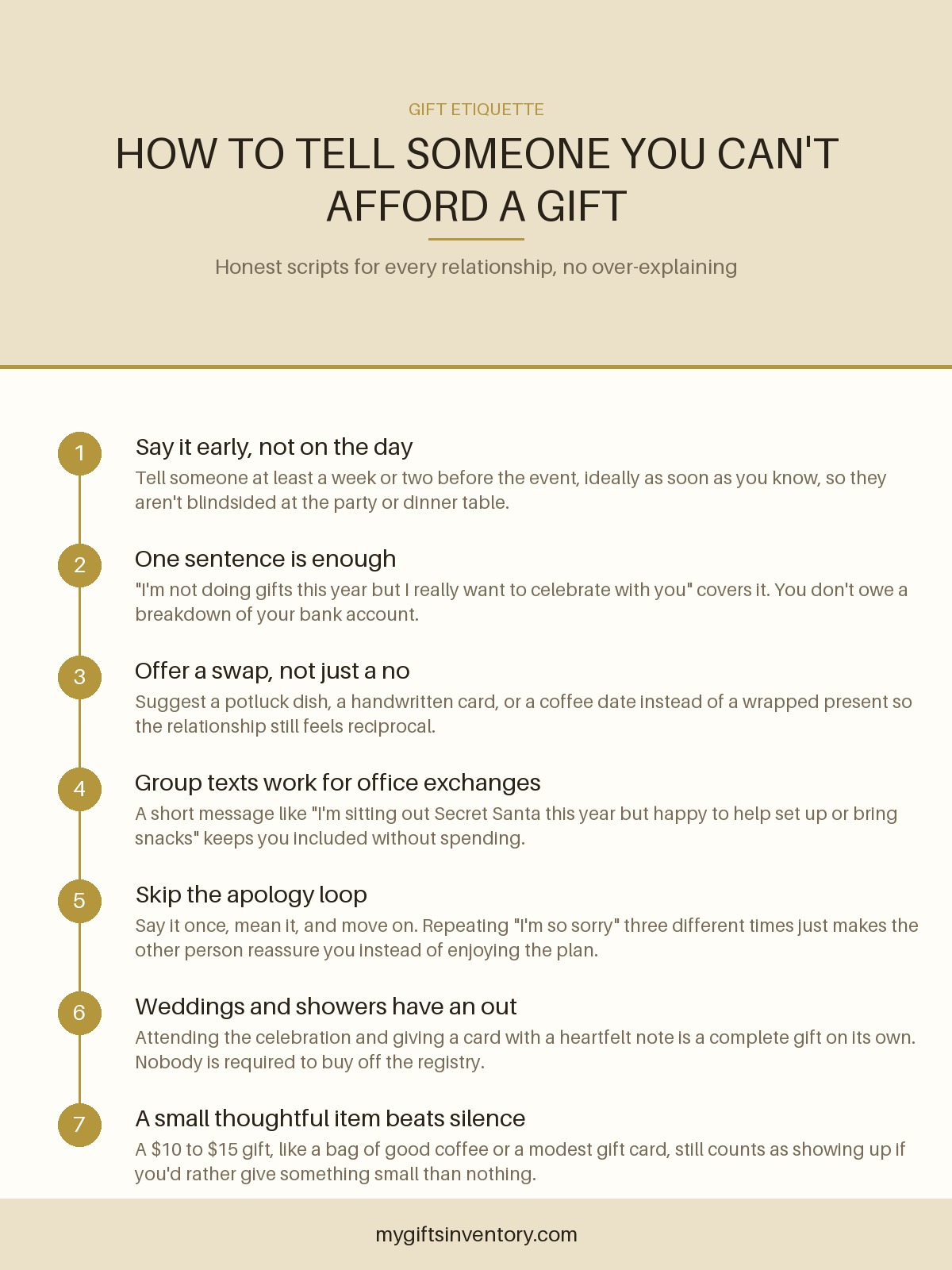
In Italy and Spain the gesture of bringing something for the table or the home is warm. In the UK a bottle, flowers, or chocolates for the host is standard. Corporate and professional gifting tends to stay modest and thoughtful rather than lavish, especially under transparency rules. For ideas that feel generous without crossing into awkward obligation territory, our roundup of corporate gift ideas under $50 stays in a safe, useful range that travels across many office cultures.
Latin America: Warmth, Relationship, and Celebration
Personal connection usually outweighs rigid formality. Gifts for hosts, birthdays, and holidays are given with warmth and often opened with enthusiasm in the moment. Bright wrapping feels festive. Flowers, sweets, wine (where appropriate), or something for the children in the house are appreciated. In many places the social time around the gift matters as much as the object.
Be sensitive to economic differences. An overly expensive gift can create discomfort about reciprocity. Something clearly chosen with the person in mind beats a generic luxury item. For family gatherings, shareable food gifts or small treats for everyone present help the gesture feel inclusive.
Other Patterns Worth Knowing
In many African contexts the emphasis is on relationship and usefulness. Practical gifts that the household can use, or contributions toward a celebration, often land better than purely decorative objects. Local norms vary widely by country and community, so a quick check with someone familiar with the specific culture is wise.
In Australia and New Zealand the style is generally relaxed and practical. Hostess gifts, bottles, and experiences are common. Overly formal presentation is less expected than in parts of East Asia, but thoughtfulness still shows.
Jewish traditions include specific practices around holidays such as Hanukkah (gifts or gelt over multiple nights in many families) and avoidance of gifts on the Sabbath for observant households. When invited to a celebration, asking the host what would be welcome is never wrong.
Wrapping, Colors, Numbers, and Cards
Wrapping is part of the message. In Japan the paper and folds signal care. In China red and gold celebrate. White, black, and sometimes blue carry mourning associations in several cultures, so neutral or festive colors are safer when you are unsure. Avoid writing in red ink in some East Asian contexts because it can feel severe or final.
Numbers: four is unlucky in much of East Asia. Thirteen carries negative weight in many Western settings. Eight is often positive in Chinese communities. When giving multiples, a quick cultural check helps.
Card messages stay short and specific. Name the occasion, thank the person for something concrete (their hospitality, the collaboration, the invitation), and wish them well. Example for a host: “Thank you for welcoming us into your home. We loved the evening and hope these sweets bring a little extra enjoyment to the household.” Example for a business counterpart: “It was a pleasure working with you on this project. Wishing you continued success.” Avoid humor that relies on wordplay that may not translate, and skip religious phrasing unless you share that tradition with the recipient.
Business and Professional Gifting Across Borders
Company policies and anti-bribery rules often set hard limits. Even when they do not, keep professional gifts modest, useful, and clearly connected to the relationship or the work. Logo items should be high quality rather than cheap giveaways. Consumables and desk-friendly useful objects travel better than anything highly personal. Timing matters: end of year, after a successful project, or upon a first visit are common windows. Always check whether the recipient’s organization allows gifts and whether they must be declared.
If a physical object feels risky, a carefully chosen food basket or gourmet selection can feel generous while remaining easy to share with a team. We have practical options in that spirit in our gift baskets under $50 guide and our collection of gourmet treats, wine and coffee gift ideas. Both stay in a range that rarely creates reciprocity pressure.
When Gift Cards and Experiences Make Sense
Some people worry that gift cards feel impersonal. In cross-cultural settings they can actually reduce risk: the recipient chooses something that fits their tastes, dietary rules, and home. Pair a card with a short handwritten note that explains why you wanted them to have the freedom to pick. Experiences (a meal, a class, tickets) create shared memory and leave no object that might carry unwanted symbolism. Just confirm the experience is accessible and welcome before booking.
Practical Planning Checklist
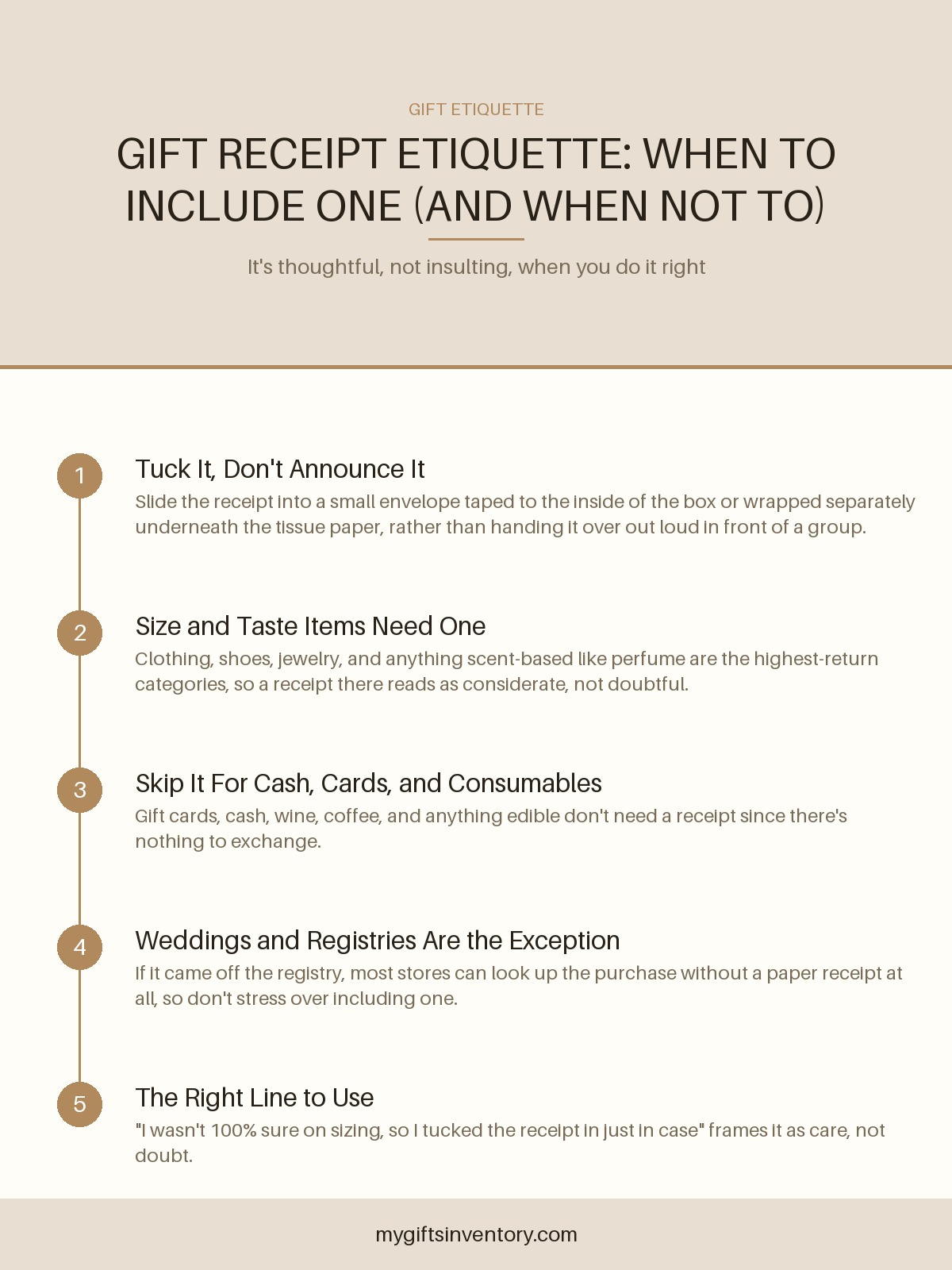
Start with the relationship and the occasion. Then filter for cultural taboos (alcohol, leather, sharp objects, clocks, certain colors and numbers). Decide whether the gift should be opened immediately or set aside. Plan wrapping that matches local positive signals. Write the card in clear, warm language. If shipping internationally, check customs rules on food and plant products and leave enough time. When you are a guest, bring the gift with you rather than having it arrive separately unless the host has indicated otherwise.
If the recipient has lived between cultures or is part of a diaspora community, ask gently what feels meaningful to them. Personal history often outweighs textbook customs.
Putting It All Together
The goal is never to perform perfect anthropology. It is to show that you cared enough to avoid known rough edges and to choose something the other person can actually enjoy. When you combine that respect with real knowledge of the individual, the gift stops being a potential landmine and becomes what it should be: a small bridge.
Keep a simple note on your phone for recurring international relationships: preferred colors, dietary notes, past gifts, and any explicit likes or dislikes they have mentioned. Over time that personal record becomes more valuable than any general guide.
Frequently Asked Questions
What should I avoid giving as a gift in China?
Avoid clocks, watches, sharp objects like knives, umbrellas, handkerchiefs, and wrapping in white or black for celebratory occasions. These carry associations with death, separation, or funerals. Choose red or gold wrapping when possible and favor items the family can share, such as quality tea or fruit.
Is it rude to open a gift immediately in Japan?
It is usually more polite to set the gift aside and open it later in private unless the giver specifically invites you to open it now. Opening immediately can put pressure on everyone to manage reactions publicly. Follow the host’s lead if they encourage opening on the spot.
Can I give alcohol as a gift internationally?
Only when you know it is welcome. Skip alcohol for most Muslim recipients and many professional settings in the Middle East and elsewhere. In much of Europe and the Americas a good bottle is a classic hostess gift, but quality and personal preference still matter more than the gesture alone.
How do I give a gift politely in India?
Offer it with your right hand or both hands. Sweets, fruit, or dry fruits are widely appreciated for home visits. Avoid leather if the family is Hindu and avoid alcohol or pork if you are unsure of religious practices. A short note thanking them for their hospitality completes the gesture.
Are gift cards acceptable across different cultures?
Yes, especially when paired with a sincere handwritten note. They let the recipient choose something that fits their tastes, diet, and needs, which reduces the risk of cultural missteps. In business settings confirm that gift cards comply with the recipient’s company policy.