What to Say When You Receive an Unexpected Gift: Real Wording for Every Awkward Moment
Someone hands you a gift you weren't expecting and your brain goes blank. Here's exactly what to say, plus how to handle the guilt, the thank-you note, and the temptation to reciprocate.
As an Amazon Associate, My Gifts Inventory earns from qualifying purchases. We only recommend products we'd genuinely consider buying ourselves.
You open the door, the mail, or a bag you didn't know was coming, and there it is: a wrapped box from someone who was not on your list. Your stomach drops a little. Your mouth opens and something like "oh, you really didn't have to" falls out, and then you spend the next hour wondering if you said the right thing. We've all been there. The good news is that the bar for handling this well is much lower than you think, and the words that work are simpler than the ones your brain is scrambling for.
This is about what to actually say in the moment, how to follow up afterward, and how to deal with the two big feelings that show up alongside an unexpected gift: guilt and the urge to immediately buy something back.
Why This Moment Feels So Awkward
An unexpected gift puts you in a weird spot because you weren't prepared to be grateful on cue. Gratitude usually has a runway. You know a birthday is coming, you know the holidays are coming, you've had time to think about how you feel about the person and the occasion. A surprise gift skips all of that.
There's also a social ledger running in the back of most of our minds, and a gift with no matching occasion feels like it just moved the balance. That's why the first instinct is often a defensive joke ("now I owe you one!") or a flustered apology ("I didn't get you anything"). Neither one is terrible, but both make the moment about you and your discomfort instead of about the person standing in front of you who just tried to do something nice.
The fix is to get out of your own head for about ten seconds and put the attention back on them and the gift. Everything below is basically a variation on that.
What To Say in the First Five Seconds
You don't need a script, but having a few reliable openers in your pocket means you never freeze. These work across nearly every relationship and occasion.
Universal openers
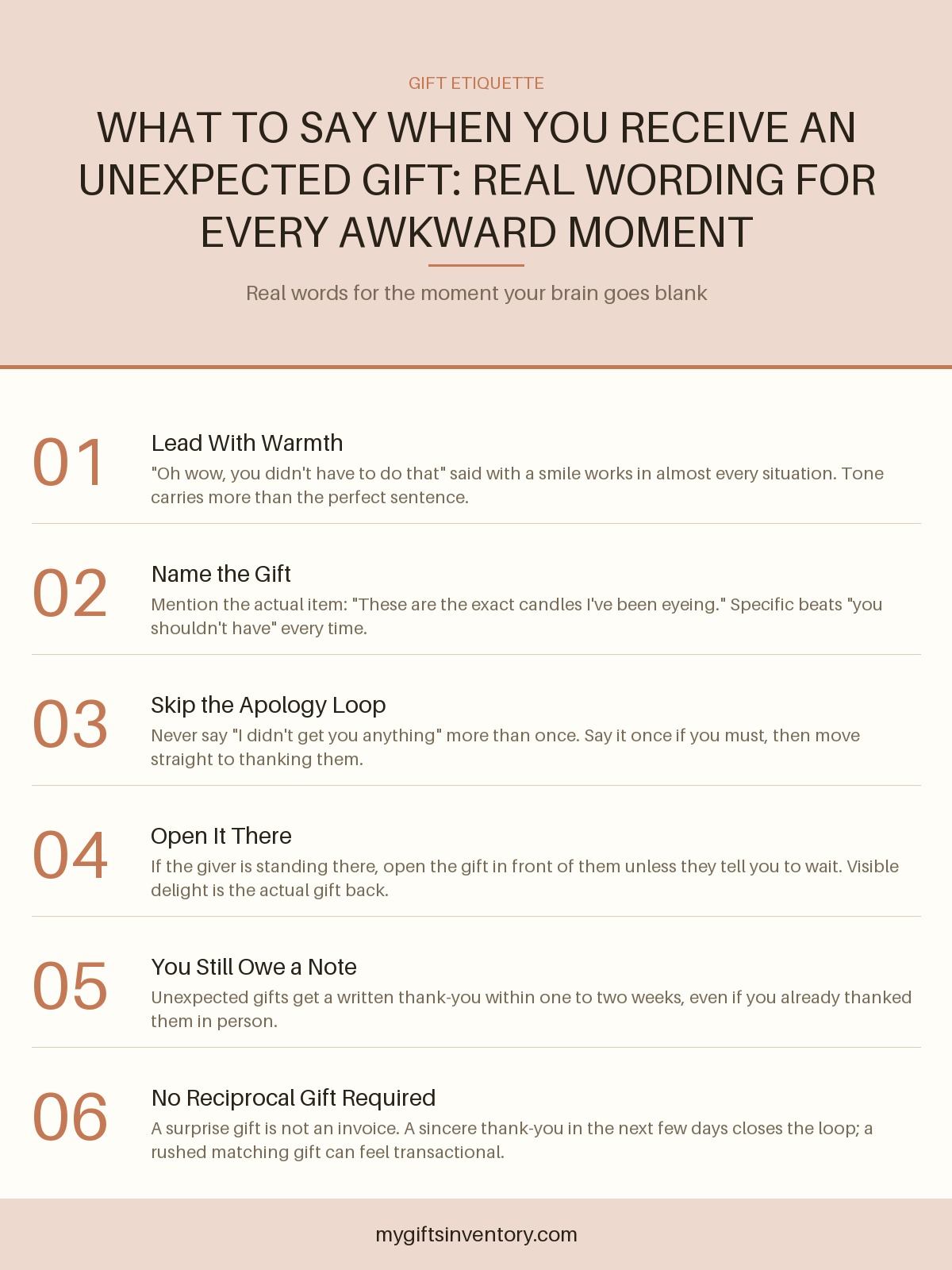
- "Oh wow, this is so thoughtful of you."
- "Wait, what? You didn't have to do this. Thank you so much."
- "This completely made my day, thank you."
- "Okay, I was not expecting this and I love it."
- "How did you even think of this? Thank you."
Notice that none of them start with "you shouldn't have." That phrase is technically polite, but it subtly tells the giver they made a mistake. A version like "you didn't have to do this" said with genuine surprise and a smile lands much warmer, because it signals delight rather than resistance.
If you actually love the gift
Be specific. Name the thing. "These are the exact candles I've been eyeing at the store" or "this is going straight on my nightstand" does more work than any grand speech, because it proves you looked at the gift and it registered. Specificity is the whole game. If it's a cozy throw, say out loud that you're already planning to live under it, and if you want ideas for what's actually in that category right now, our roundup of heated blanket gifts for winter is a good sense of the range people are giving this year.
If you're not sure you love it
You can still be specific about the effort. "You remembered I collect these" or "this is such a fun color" is honest and warm without requiring you to lie about a gift you'll never use. Keep it short. The longer you talk about a gift you don't like, the more likely you are to say something that gives it away.
If it's from a boss, coworker, or client
Keep it professional and a notch shorter. "This was so kind of you, thank you" is complete on its own. Don't make jokes about owing them, don't ask how much it cost, and don't open it in front of a group if the gift looks personal or could be embarrassing to either of you. If you're the one on the giving side more often, our guide to keepsake gifts for her covers the sentimental end of the spectrum, which is usually where surprise gifts land.
What Not To Say
A short list, because these trip people up constantly.
- "I didn't get you anything." Say it once, at most, and only if it's true and relevant. Repeating it makes the giver feel like they created a problem.
- "How much was this?" Never. Not even playfully.
- "You really shouldn't have." Reads as rejection.
- "Now I have to get you something." Turns a gift into a debt.
- "What's the occasion?" Asked bluntly, this sounds like an audit. If you genuinely don't know why you got a gift, a softer version works: "This is such a nice surprise, what's this for?"
- "I already have one of these." Even if you do. Especially if you do.
The general rule: anything that makes the giver feel like they miscalculated, overstepped, or created an obligation is a miss. Anything that makes them feel seen is a hit.
Should You Open It Right Then?
Yes, in almost every case, unless the giver tells you to wait. Opening the gift in front of someone is part of the gift. The visible reaction, the little gasp, the "oh my gosh" is often what they were actually after when they handed it to you.
The exceptions are practical ones. If you're in a crowded room and the gift is clearly personal, a quiet "can I open this when we get home?" is fine and thoughtful. If you're on a video call and the package just arrived, it's perfectly acceptable to say "I'm going to wait until I'm off this call so I can really enjoy it, but thank you, I'm so excited."
What you shouldn't do is set it aside with a vague "I'll open it later" and then forget about it entirely. If you said later, actually follow up. A photo of the gift in use a few days later is one of the most underrated thank-yous there is.
The Guilt Problem, and Whether You Owe Them Something
Here's the thing most people get wrong: an unexpected gift is not an invoice. It does not create a matching obligation, and treating it like one usually makes the situation worse, not better.
If someone surprised you with a gift because they were thinking of you, the thing they want back is not a gift of equal value. It's the knowledge that they made you happy. That's it. Rushing out to buy them something within 48 hours, especially something generic, can actually read as "I'm paying you back so we're even," which is the opposite of the warmth they were going for.
That said, there's a spectrum:
Small, low-stakes surprises
A neighbor drops off cookies. A friend brings you a candle because it reminded them of you. A sincere thank-you, in person or by text that day, closes the loop completely. Nothing else is required.
Gifts with real cost or effort
If someone spent meaningfully, either in money or in effort, you should follow up with a written thank-you note within a week or two, even if you already thanked them in person. A note is not a payment. It's a signal that the gift landed and that you thought about it after the moment passed. That's worth more than a hurried reciprocal gift.
Gifts that carry an unspoken expectation
Occasionally a surprise gift comes with strings: from a relative who expects something in return, or a coworker angling for a favor. You can accept the gift gracefully and still not take on the expectation. "Thank you so much, this was really kind" is a complete sentence. You don't have to negotiate anything in the moment, and you don't have to agree to anything either.
If the timing is such that you do want to reciprocate later, aim for thoughtfulness over matching value. Something that reflects a real thing you know about them beats a gift of equivalent dollar amount almost every time.
Thank-You Notes for Unexpected Gifts: Real Wording
Written follow-up is where most people drop the ball, and it's also where you can genuinely stand out. A surprise gift especially deserves a note, because the giver wasn't expecting a thank-you either. Getting one is a small, disproportionate pleasure.
Three to four sentences is plenty. Structure: thank them, name the gift, say what it means or what you'll do with it.
To a friend
"Thank you so much for the surprise package, it genuinely made my week. I've already burned the candle twice and my whole apartment smells like it. You're very good at this and I'm very lucky."
To a neighbor or acquaintance
"Thank you for dropping off the cookies, that was so thoughtful. We've been working through them all weekend and they didn't last long. Thank you for thinking of us."
To a coworker or boss
"Thank you for the gift, that was incredibly thoughtful of you. I really appreciate you thinking of me."
To a relative you don't see often
"Thank you so much for the surprise gift, it meant a lot that you thought of me. I've put it right in the living room where I'll see it every day. Hope we can catch up properly soon."
One practical note: if you're ever the one on the receiving end of a gift card rather than a wrapped item, the same rules apply, and a quick thank-you can reference how you plan to use it. If it's a brand you're not familiar with, it's fine to say you're looking forward to using it. If you want to check what's left on one before you spend it, pages like our guides on how to check a Trader Joe's gift card balance walk through that step by step.
The Reciprocity Question: Do You Have To Give Back?
Short answer: no, not immediately, and not necessarily ever. But there are a few situations where a future reciprocal gift is genuinely the right call.
- If it's part of an ongoing exchange. If you and your sister exchange birthday gifts every year and she surprised you early, you weren't unprepared, you were just early, and your normal gift still happens on schedule.
- If you suspect the giver is going to feel left out later. If someone gives you a gift at a party where gifts are exchanged and you have nothing for them, a thoughtful gift within the following week is a fair move, though a sincere note is not wrong either.
- If you actually want to. Getting someone a gift because you were moved to, not because you were cornered, is the entire point.
What you should avoid is the panic-buy: the $30 scented candle grabbed on the way home because you feel guilty. It usually reads exactly like what it is. If the only options in front of you are a rushed generic gift or a genuinely warm note, take the note.
If the unexpected gift happens to be something you already own or can't use, that's a separate situation. You still say thank you with full warmth in the moment, and you handle the return or regift quietly, later, never in front of the giver.
Staying Graceful When the Gift Misses the Mark
Sometimes the surprise gift is genuinely baffling: a style that's nothing like yours, a hobby you dropped years ago, something for a pet you don't have. Your job in the moment is not to be honest. Your job is to be kind. The giver made a guess in good faith, and the correct response is to honor the gesture.
A couple of lines that work when you're not sure what you're looking at:
- "This is so you, thank you."
- "You always find things I wouldn't find myself."
- "I love that you thought of me, thank you so much."
Notice the pattern: you're complimenting the thought and the relationship, not the object. That's honest, it's warm, and it doesn't require you to pretend. If it's something you truly can't keep, you deal with that on your own time and never mention it. The five seconds after unwrapping are not the moment to negotiate.
A Note on Big Surprises
Occasionally, an unexpected gift is a big one: a piece of jewelry, a piece of tech, an expensive trip, something with real financial weight. These moments can feel heavier than a candle, and the same rules apply, just slower. Thank them first, take the moment in, and don't react to the price tag out loud. If the gift comes with a practical question (size, setup, how you'll get it home), ask it later, once the emotional moment has passed.
And if you're going to be on the giving side of a surprise like that, it's worth checking what the person actually wants. Our roundup of Apple Watch gifts is a good example of the range that exists even within one product, which is exactly why surprise gifts in that category tend to need a little recon first, or a gift receipt tucked in the box.
The Short Version
Say thank you warmly and specifically. Name the gift. Don't apologize more than once. Open it in front of them if you can. Send a note within a week or two if the gift had real weight to it. Don't rush out and match it out of guilt. And if your brain blanks in the moment, "this was so thoughtful of you, thank you" gets you through almost any version of this situation with your dignity intact and the other person feeling good.
Gift Ideas to Go With This


Want more ideas? Browse our full guide: 20 Best Gifts Under $100 (2026): Thoughtful Picks They'll Actually Use
Frequently Asked Questions
What do I say when someone gives me a gift and I didn't get them one?
Say "thank you, this was so thoughtful of you" and leave it there. You can acknowledge once, briefly, with something like "I didn't expect this at all, thank you," but don't repeat it or apologize more than once. The gift giver did not hand you a problem, and treating it like one makes the moment worse for both of you.
Do I have to give a gift back if someone surprises me with one?
No. An unexpected gift does not create a matching obligation. A sincere thank-you in the moment, plus a written note if the gift had real cost or effort, is a complete response. A rushed reciprocal gift usually reads as settling a debt rather than returning warmth.
Is it rude to not open a gift in front of the giver?
It can feel a little deflating for them, so open it in front of them when you reasonably can. The visible happy reaction is often the part they were looking forward to. If the setting isn't right, say so warmly ("I want to really enjoy this at home, thank you") and follow up with a photo or a thank-you within a few days.
Should I send a thank-you note for a small unexpected gift?
A written note isn't required for something small like a plate of cookies or a candle from a friend. A text or a quick in-person thank-you the same day covers it. If the person spent meaningfully, put in real effort, or isn't someone you see often, a short written note within one to two weeks is the right move.
What if I don't like the gift?
Say thank you warmly and compliment the thought behind it rather than the object. Something like "I love that you thought of me, thank you" is honest without being hurtful. You never have to tell the giver you don't like it, and if you can't use it, handle that quietly on your own later.
Looking for an Actual Gift Instead?

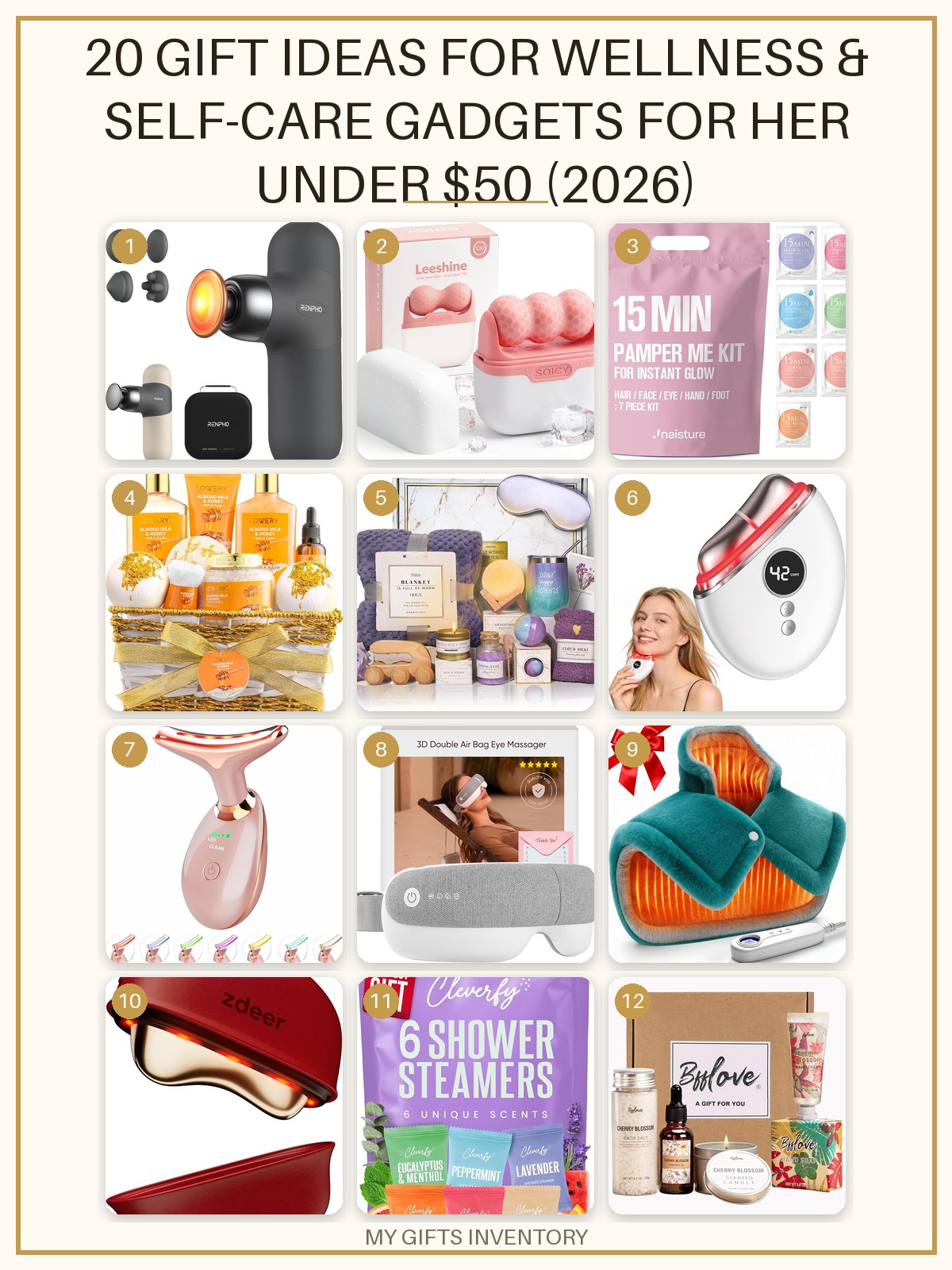

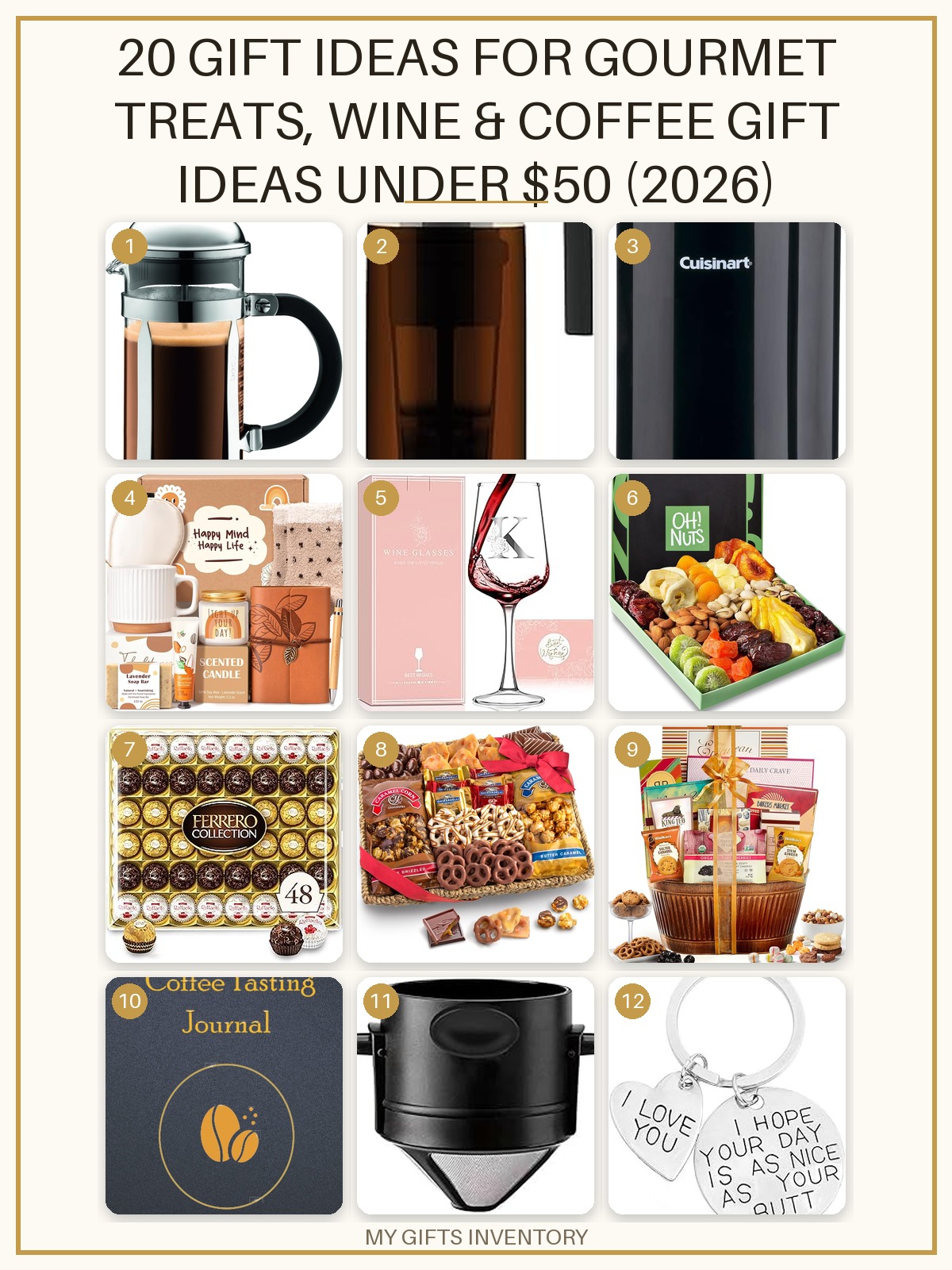
Gift Sets We Love Right Now
Every item picked, priced and linked, ready to buy.
More Gift Advice