Should I Give My Boss a Gift? A Real Answer to the Etiquette Question
Here's how to figure out if a gift for your boss is a thoughtful gesture or an awkward overstep, plus budget guidance, what to write, and what to avoid entirely.
As an Amazon Associate, My Gifts Inventory earns from qualifying purchases. We only recommend products we'd genuinely consider buying ourselves.
You're standing in the break room mid-December, or it's your manager's birthday, or you just got a promotion partly because of them, and suddenly you're wondering if you're supposed to show up with something. It's a strange question because the power dynamic runs the wrong way, gifts usually flow downhill from boss to employee, and giving one upward can look thoughtful or can look like you're angling for something. There's no universal rule here, but there is a real answer once you look at your specific workplace.
The Short Answer
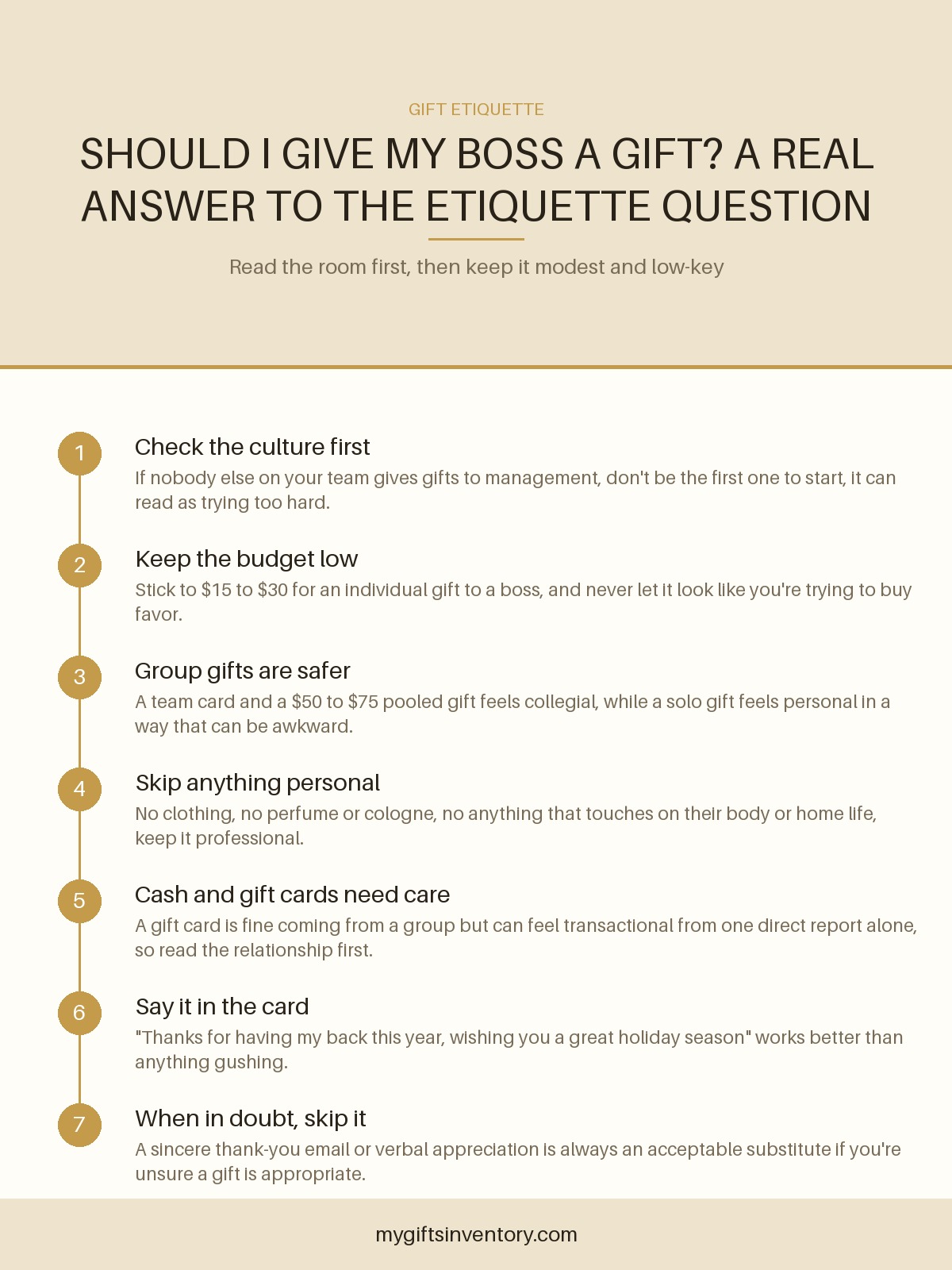
You are not obligated to give your boss a gift, and in most workplaces, nobody expects one. That said, a small, low-key gesture is completely appropriate in certain situations, especially around the winter holidays, a boss's departure, or a milestone like a retirement. The key word is small. This isn't the relationship where you go big, and going big is actually the fastest way to make things weird.
When It Actually Makes Sense
Holiday Season
If your office has a general culture of small holiday exchanges, a modest gift or card to your manager fits right in, especially as part of a team gift rather than something you do solo. If your workplace doesn't really do gifts at all, don't introduce the tradition just for your boss, it puts them in an odd spot of having nothing to reciprocate with.
A Boss Leaving, Retiring, or Being Promoted Elsewhere
This is probably the single most appropriate occasion for a boss gift. Someone is moving on, the team wants to mark it, and a group card plus a pooled gift feels natural rather than calculated. This is usually organized by one person on the team collecting a few dollars from everyone, not something you need to handle alone.
A Boss Who Has Been Genuinely Good to You
If your manager went out of their way for you this year, championed you for a raise, covered for you during a rough patch, mentored you through something hard, a small thank-you gesture at year end is a nice way to acknowledge that without it feeling transactional. The gift should read as gratitude, not currency.
When You Probably Should Skip It
Skip it if you're new to the job and don't know the culture yet, if your boss has never given or received gifts with the team before, if there's an active performance review or raise conversation happening (timing matters, you don't want a gift to look like it's buying goodwill), or if your company has a strict no-gift policy for managers, which many larger companies do specifically to avoid the appearance of favoritism.
Budget: How Much Is Appropriate
This is where people overthink it the most, and the answer is genuinely simple: less than you'd think.
Individual Gift From You Alone
Somewhere between $15 and $30 is the sweet spot. Anything higher starts to feel like it's trying to accomplish something beyond a nice gesture, and in a boss relationship, that reads as uncomfortable rather than generous.
Group or Team Gift
Pooled gifts can go a bit higher since the cost is spread out, typically landing between $50 and $100 total for something like a retirement or farewell gift. Contributions are usually $5 to $15 per person, and it should always be optional, never pressured.
What to Avoid Regardless of Budget
Don't spend more than you'd spend on a good friend. If you find yourself justifying a $75 solo gift for your manager, that's worth pausing on. It's not about the money being wrong, it's about what the gesture starts to signal in a relationship that has a built-in power imbalance.
What to Actually Get
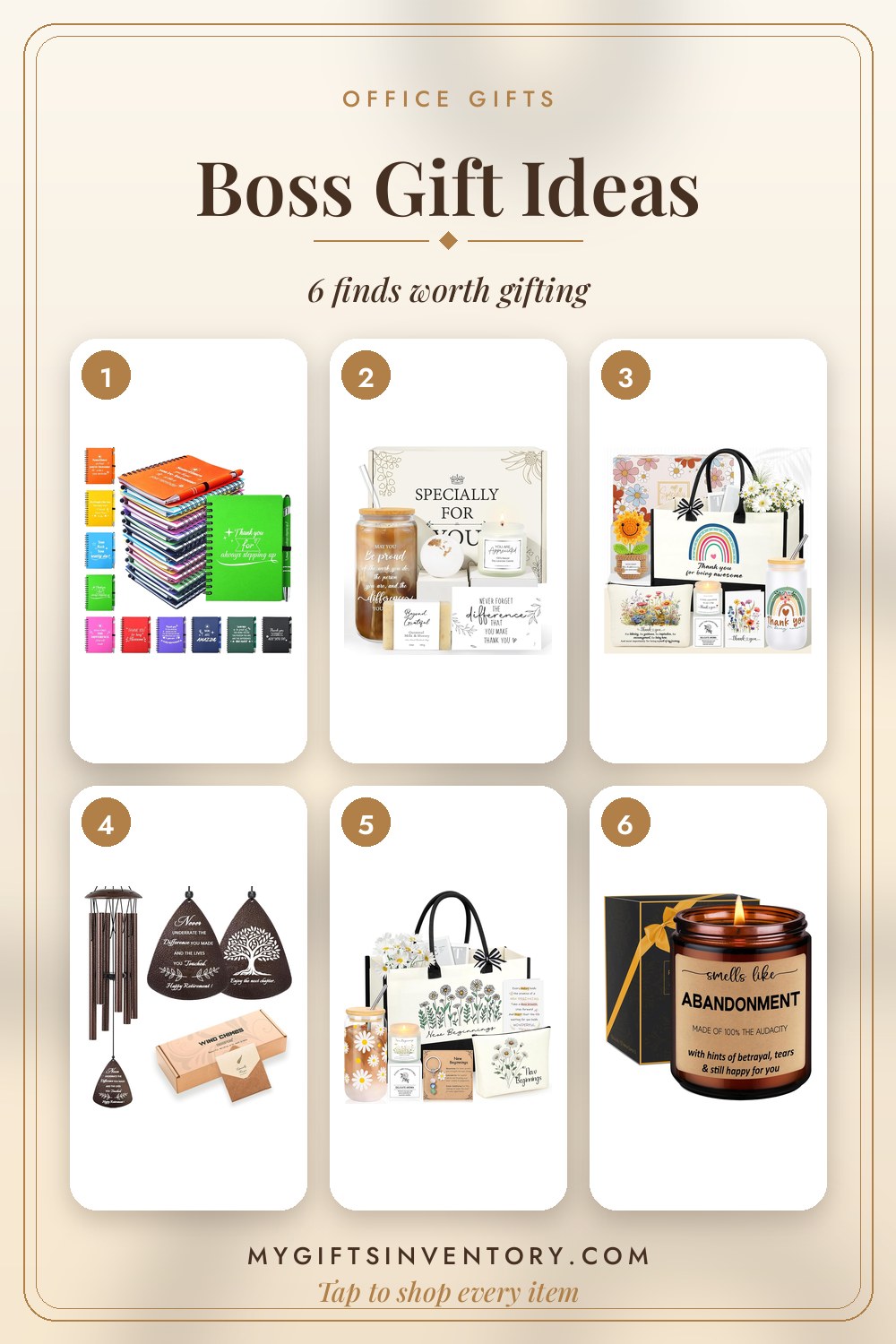
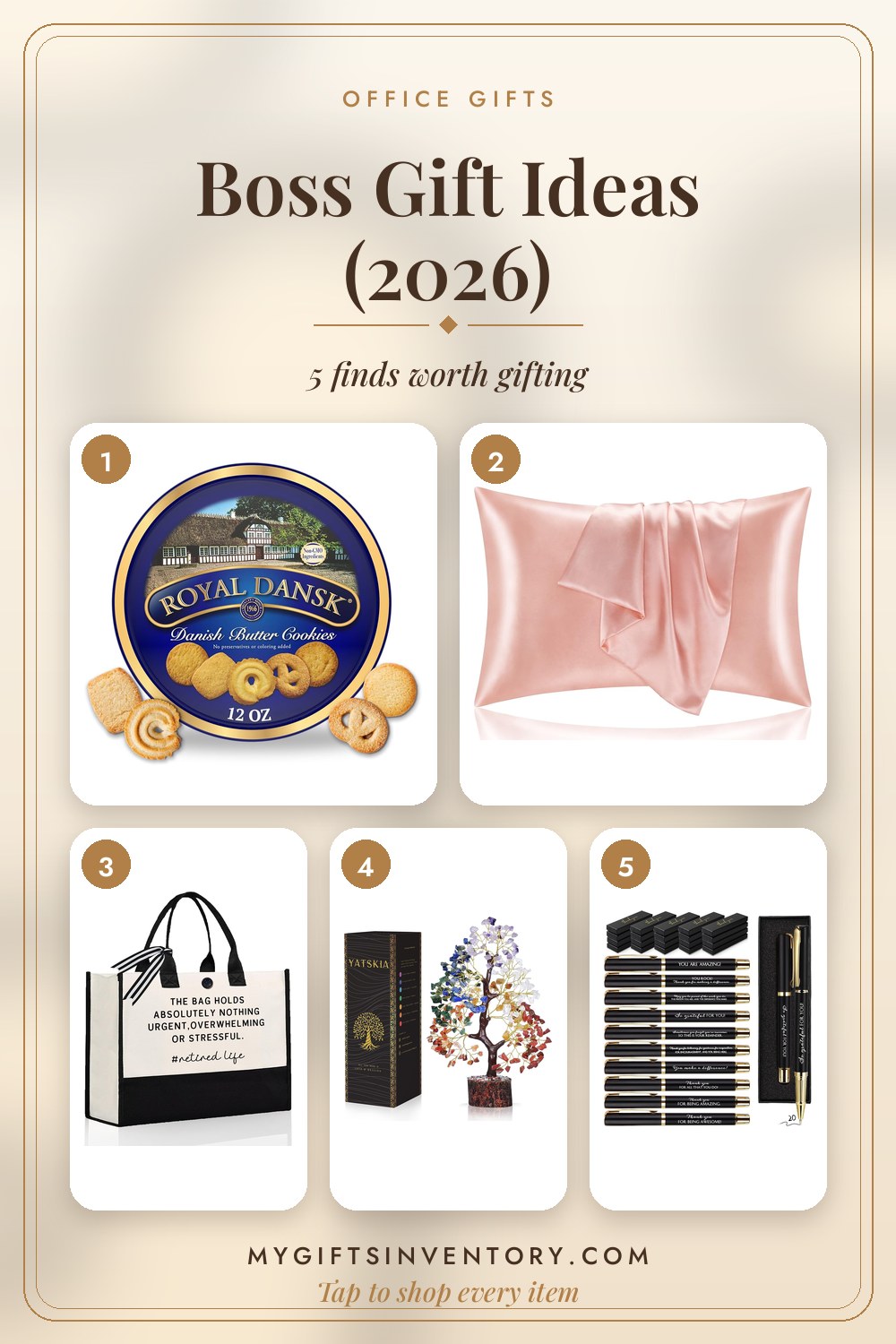
The safest gifts for a boss are ones that are useful, a little bit personal to their known interests, but not personal in a way that touches their private life. A nice mug and good coffee, a small desk plant, a book related to something they've mentioned enjoying, or a gift card to a coffee shop near the office all work well. If you know they're a genuine coffee person, our guide to coffee lover gifts under $50 has options that skew thoughtful without skewing personal. For office-appropriate options generally, our corporate gift ideas under $50 roundup was built for exactly this kind of gray-area workplace gifting, where you want something that reads as genuine rather than obligatory.
If you're stuck and want a broader framework for matching a gift to a relationship and situation, our general guide to choosing the right gift walks through how to think about the recipient and occasion together, which is useful here since a boss relationship doesn't map cleanly onto family or friend gifting logic.
Gift Cards
A gift card can work well, particularly as part of a group gift, since it removes the guesswork about taste. It reads differently coming from a team than from one person alone though, a solo gift card from a direct report can feel a little transactional, almost like a tip. If the team is pooling money for a nicer department store card, something like Nordstrom feels appropriately upscale without being over the top, and if you're going the simpler, universally useful route, an Amazon gift card is about as low-risk as it gets.
What to Write in the Card
Keep it professional and specific rather than warm and vague. Generic sentiment like "you're the best!" can feel oddly personal for a work relationship, while something specific about the year feels genuine. A few examples that actually work:
- "Thank you for your support this year, it's made a real difference. Wishing you a great holiday season."
- "Appreciate everything you've done for the team this year. Enjoy the holidays."
- "Congratulations on the new role, it's well deserved. We'll miss having you around the office."
- "Thanks for always having my back and pushing me to grow. Wishing you the best in retirement."
Avoid anything that reads romantic, overly emotional, or that references anything outside of work. This isn't the place for inside jokes about weekend plans or comments on their family unless you know them extremely well outside the office.
Presentation and Timing
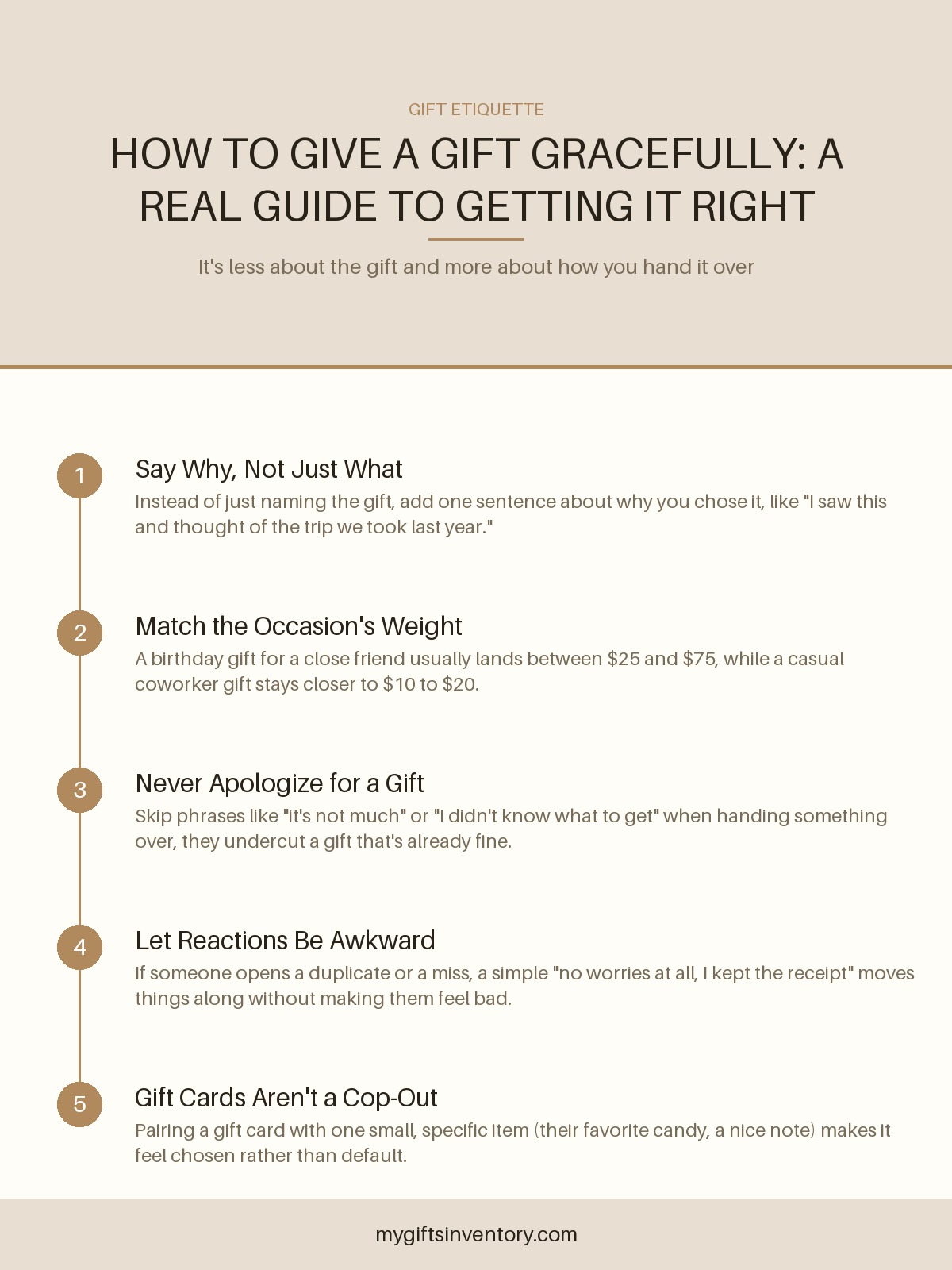
Simple wrapping or a basic gift bag is fine, this isn't a gift that needs elaborate presentation. Hand it over privately or as part of a group moment rather than making a big show of it in front of the whole office, which can put your boss in the position of having to react to something in front of everyone. For timing, the last work day before a holiday break, at a team lunch, or during a designated farewell gathering are natural moments. Avoid handing over a gift during a one-on-one meeting or right before a performance review, the timing alone can make it look strategic even if it isn't.
Red Flags to Avoid Entirely
- Anything too personal. No clothing, no fragrance, no jewelry, nothing that references their appearance or body.
- Cash. Giving your boss cash directly is almost always inappropriate, it can look like a bribe no matter how it's meant.
- Anything expensive. A lavish gift can put your boss in an uncomfortable position, especially if company policy restricts what they can accept.
- Being the only one who gives a gift. If it's not a team-wide thing, a solo gift stands out in a way that can feel awkward for both of you.
- Gifts tied to a request. Never give a gift right before or after asking for a raise, time off, or a favor. The timing alone undermines the gesture.
Check Your Company's Policy First
Plenty of companies, especially larger corporations, government offices, and anywhere with compliance concerns, have explicit rules about gifts between employees and management, sometimes with dollar limits or outright bans to avoid any appearance of favoritism. Before you buy anything, a quick check of the employee handbook or a question to HR can save you from an awkward situation where your boss has to decline a gift on policy grounds.
If You Decide to Skip It
Skipping the gift entirely is a completely normal choice, and a sincere verbal or written thank-you carries plenty of weight on its own. Something like telling your manager directly that you appreciated their support this year, or sending a short end-of-year email noting something specific they helped you with, accomplishes the same goal without any of the risk of overstepping. In most workplaces, this is genuinely enough.
Gift Ideas to Go With This


Want more ideas? Browse our full guide: 20 Best Gifts Under $100 (2026): Thoughtful Picks They'll Actually Use
Frequently Asked Questions
Is it weird to give my boss a gift?
It's only weird if it's out of step with your office culture or if you're the only one doing it. A modest, professional gift as part of a team gesture, a farewell, or genuine holiday goodwill is normal in most workplaces, it's the solo, expensive, or overly personal version that tends to feel off.
How much should I spend on a gift for my boss?
For an individual gift, $15 to $30 is the appropriate range, and for a pooled team gift, $50 to $100 total split among several people works well. Going higher than that on your own risks the gesture looking like it's meant to accomplish something beyond simple appreciation.
Should I give my boss a gift for their birthday?
Only if it's already customary for the team to acknowledge birthdays, and even then, a card or a small group gesture is more appropriate than an individual gift. Bosses generally don't expect birthday gifts from their reports the way they might from friends or family.
Is a gift card an appropriate gift for a boss?
Yes, particularly as part of a group gift, since it takes the guesswork out of matching their taste. From one person alone it can feel slightly transactional, so it works best paired with a genuine, specific note rather than handed over on its own.
What if my boss gives me a gift but I didn't get them one?
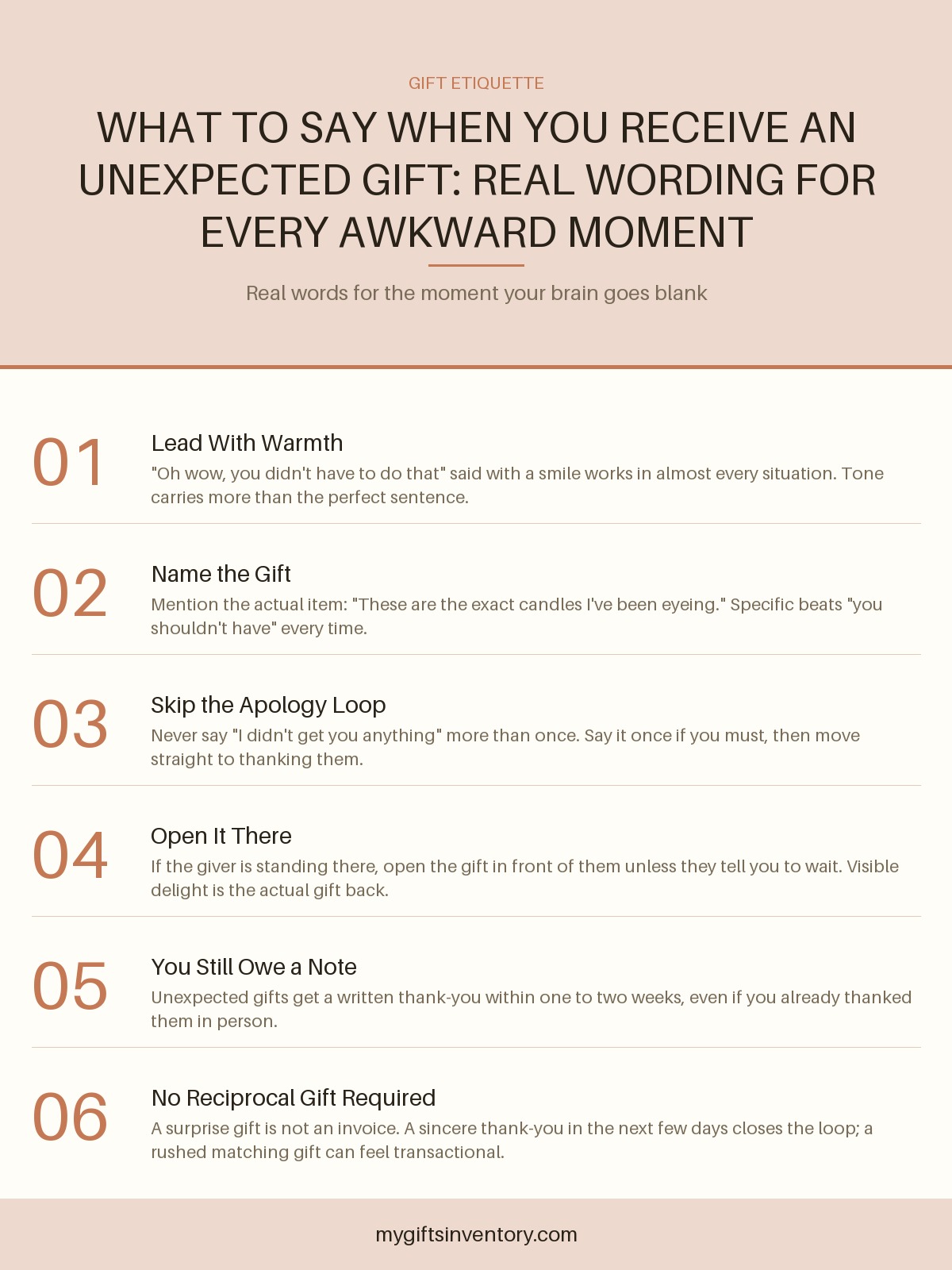
A warm, genuine thank-you in the moment is completely sufficient, you don't need to scramble to reciprocate immediately. If it bothers you, a small gesture later, like bringing in coffee or a handwritten note, closes the loop without feeling forced.
Looking for an Actual Gift Instead?

Shop Hand-Picked Gift Sets
Every item picked, priced and linked, ready to buy.

More Gift Advice