Gift Giving in China: The Etiquette Rules You Actually Need to Know
A practical guide to Chinese gift-giving etiquette, from the numbers and colors to avoid to how to actually hand over a gift, receive one, and choose something that won't cause an awkward moment.
As an Amazon Associate, My Gifts Inventory earns from qualifying purchases. We only recommend products we'd genuinely consider buying ourselves.
Maybe you've got a business trip to Shanghai next month, or your daughter just married into a family with roots in Guangzhou, or a close friend from Beijing is visiting and you want to bring something to their home. Whatever brought you here, the real worry is usually the same: you don't want to accidentally hand someone a symbol of death, bad luck, or divorce when you meant to say "thank you." Chinese gift-giving customs are layered with meaning that isn't obvious to outsiders, and getting it wrong can sting more than getting it right feels good.
The good news is that most of this comes down to a handful of consistent rules once you understand the logic behind them. This isn't about memorizing an endless list of superstitions, it's about understanding why certain numbers, colors, and objects carry weight, and how the actual physical act of giving and receiving works.
The Idea of "Face" Is the Whole Point
Before we get into specifics, it helps to understand the concept that sits underneath almost every rule: mianzi, or "face." Gift-giving in China is rarely just about the object itself. It's about respect, relationship-building (guanxi), and making sure nobody feels embarrassed, slighted, or put on the spot. A gift that's too cheap can suggest the relationship doesn't matter to you. A gift that's too extravagant, especially in a business context, can feel like an uncomfortable obligation or even bribery. The goal is thoughtful proportionality, not maximum generosity.
This is also why reciprocity matters so much. If someone gives you something, there's a general expectation that you'll return the gesture at a comparable value, whether that's at the next holiday, the next visit, or the next business meeting. Keeping a mental note of what you've received isn't rude, it's actually part of maintaining the relationship well.
What Not to Give (and the Real Reason Why)
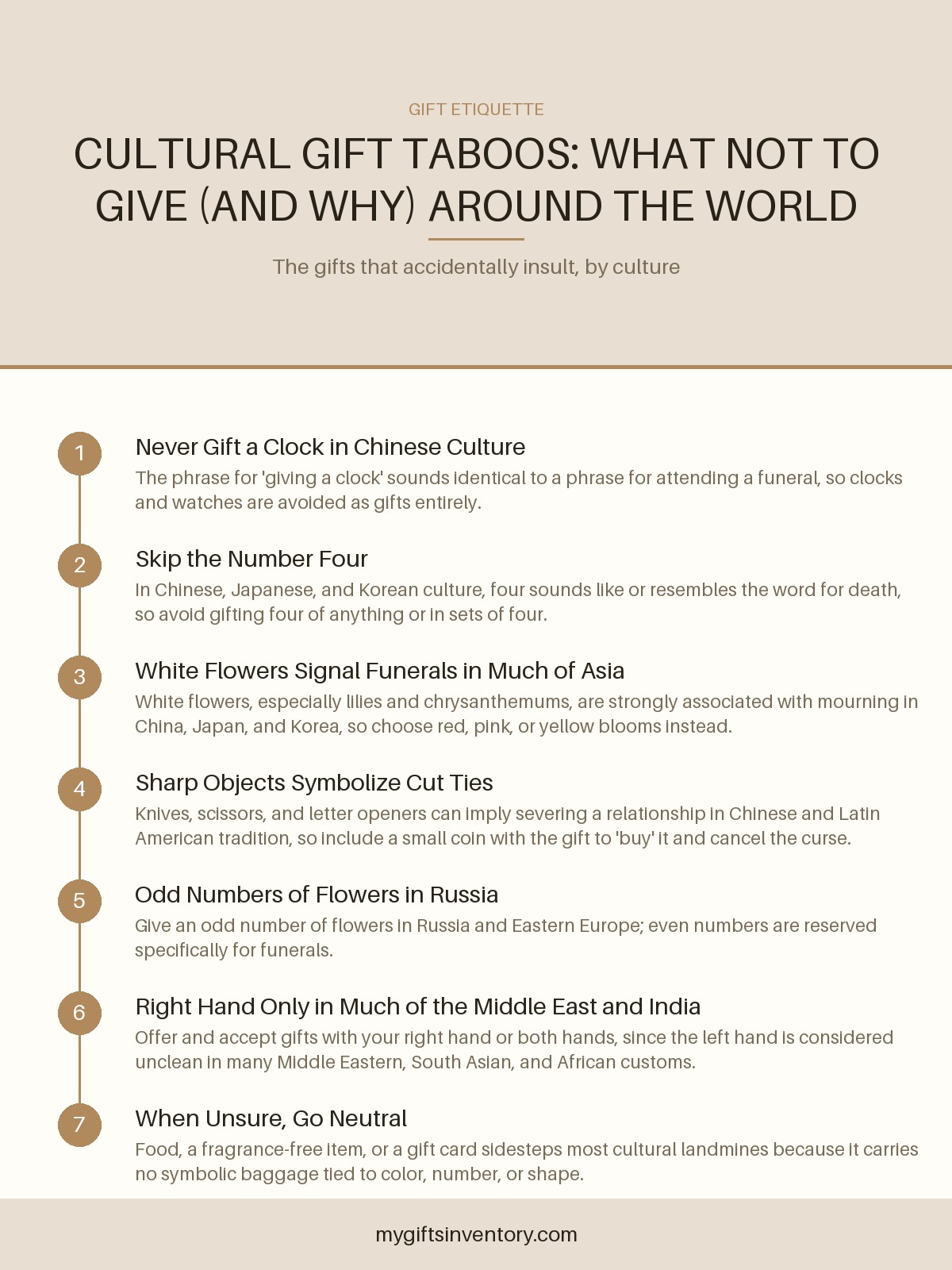
Most of the "don'ts" in Chinese gift-giving trace back to language. Mandarin has a huge number of homophones, so certain objects sound like unlucky words even though they have nothing to do with them literally.
Objects to Avoid
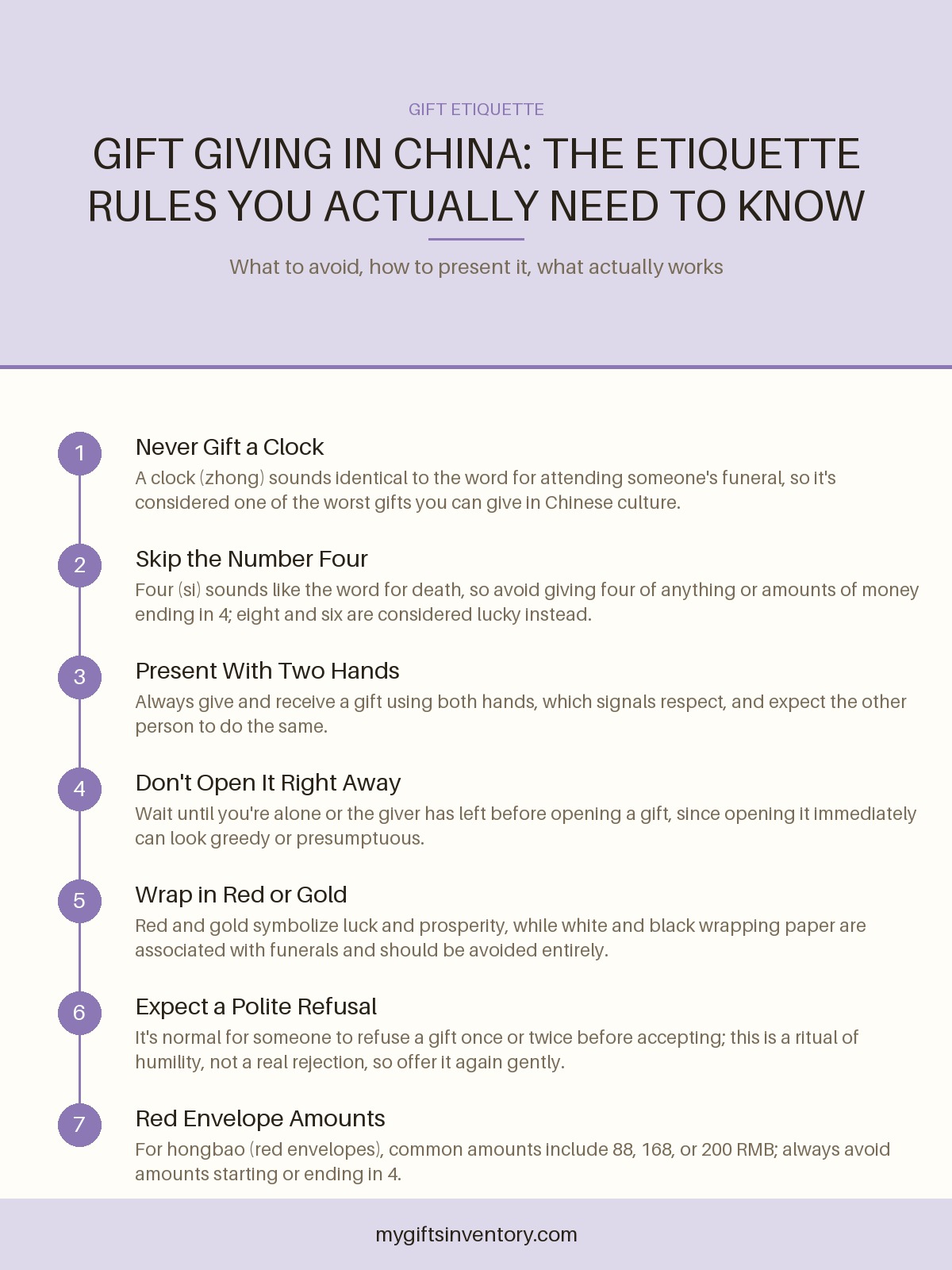
- Clocks or watches"giving a clock" (song zhong) sounds identical to a phrase referring to attending someone's funeral or seeing them off in death. This is considered one of the most offensive gifts possible, especially for elders.
- Sharp objectsscissors, knives, or letter openers imply "cutting" the relationship.
- Umbrellasthe word for umbrella (san) sounds like the word for "separation" or "to break apart."
- Handkerchiefstraditionally associated with tears and farewells, often given at funerals.
- Pearsthe word for pear (li) sounds like "separation," so splitting a pear with someone is considered especially unlucky.
- Shoesgiving shoes can imply you want the recipient to "walk away" from you, and in some regions is linked to walking out of a relationship.
- A green hatnever give a man a green hat. The phrase "wearing a green hat" is slang for having an unfaithful spouse.
- Anything white or black in bulkthese are the traditional mourning colors, so an all-white bouquet or all-black gift set can feel funereal.
Numbers That Matter
The number four (si) sounds almost identical to the word for death, so avoid giving four of anything, whether that's four apples, four flowers, or a monetary gift ending in 4. On the flip side, the number eight (ba) sounds like the word for prosperity, so it's considered extremely lucky, and six (liu) suggests smoothness and things going well. Odd numbers are traditionally linked to funerals, so gifts are usually given in pairs or even quantities, with the notable exception of four.
Colors That Matter
Red is the color of luck, joy, and celebration, and it shows up everywhere from wedding dresses to New Year decorations to the red envelopes we'll get to below. Gold reinforces wealth and prosperity. White and black, as mentioned, are associated with mourning and should generally be avoided for wrapping paper or ribbon, especially around holidays or celebratory occasions.
How to Actually Hand Over a Gift
The etiquette isn't just about what you give, it's about how you give it.
- Use both hands. When presenting or receiving a gift, use two hands rather than one. This small gesture signals sincerity and respect, and it's noticed.
- Expect a polite refusal, maybe two. It's common and expected for someone to wave off a gift once or even twice before accepting it. This isn't a real rejection, it's a ritual of modesty. Offer it again gently and it will usually be accepted the second or third time.
- Don't open it in front of the giver. Unlike Western custom where you tear into a gift immediately, the polite move in China is to set it aside and open it later, in private. Opening it on the spot can look eager or even greedy, and if it turns out to be something modest, it can cause embarrassment for the giver in front of others.
- Present it with a small verbal downplay. Many hosts will say something like "it's nothing much, just a small token" even when the gift is generous. This humility is expected and you don't need to take the phrase literally.
Choosing Something That Actually Works
Once you know what to avoid, the safe territory is actually pretty wide. Good options include quality tea, imported specialty foods, fine liquor (particularly baijiu or a good wine), fruit baskets (avoiding pears), regional specialties from your home country, and well-made household items. If you're bringing something for a host's home rather than a person specifically, thoughtful home decor pieces tend to travel well and avoid any of the symbolic landmines above, since they're neutral and clearly not tied to any unlucky homophone.
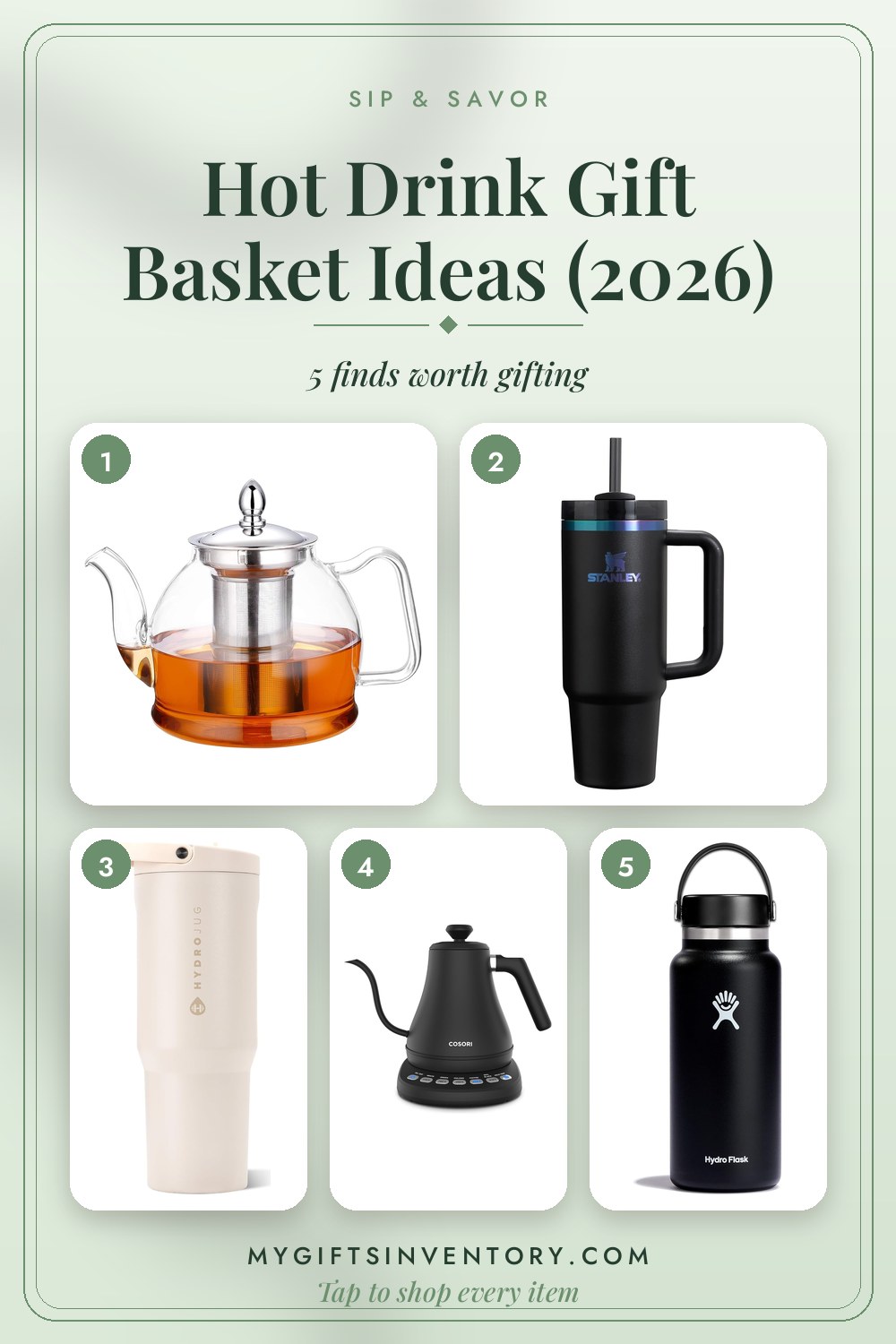
Coffee has also become a genuinely welcome gift in many Chinese cities, especially among younger, urban recipients who've developed a real coffee culture in the last decade. A nicely put-together set from a guide like gifts for coffee lovers under $50 works well as a hostess gift or a small thank-you, since it reads as thoughtful without veering into anything symbolically loaded.
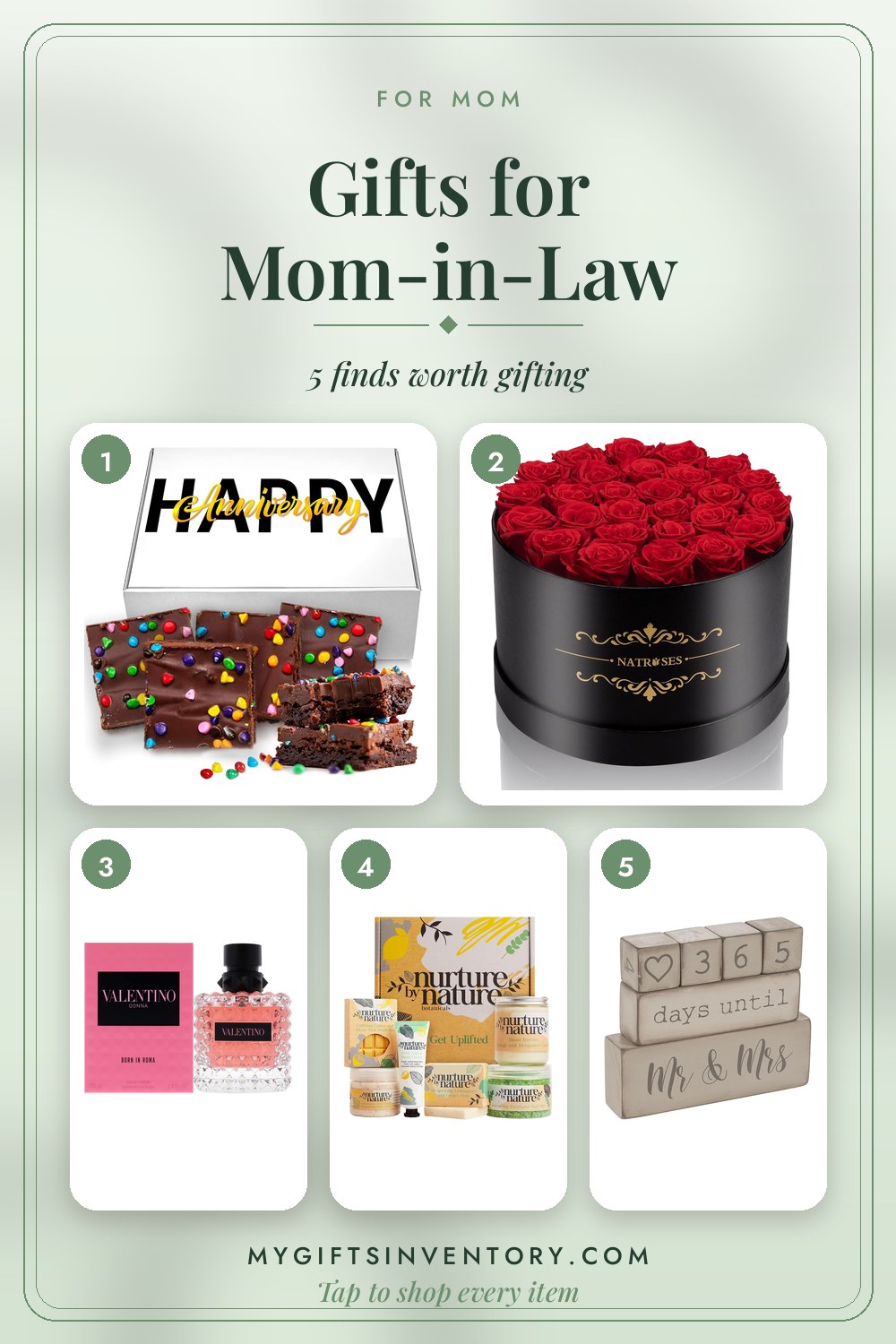
If you're choosing something for an older relative or a parent-in-law, lean toward practical, high-quality items over anything trendy. A guide built around gifts for a mom who has everything is a useful jumping-off point even outside its original context, since the instinct behind it (something genuinely nice rather than novel) matches what works well for elders in Chinese culture, where showing respect to age matters a great deal.
Business Gift Etiquette in China
Business gifting in China runs on the same core rules with a few extra layers. Gifts are typically exchanged at the end of a meeting or negotiation rather than the beginning, and they're usually modest rather than lavish, since anything too expensive can raise questions about intent or even bump against China's strict anti-corruption rules, which have made many companies and government officials more cautious about accepting gifts of real monetary value in recent years.
A branded item from your own company, a regional specialty from your home country, or a nice set of stationery or tea all work well. If you're putting together something for a group of business contacts or an office, a resource like corporate gift ideas under $50 is a solid starting point, since the instinct there (thoughtful without being over the top) translates directly. Just make sure whatever you choose avoids the number four in quantity, isn't wrapped in white or black, and isn't a clock, an umbrella, or a set of sharp desk tools.
Red Envelopes (Hongbao)
If there's one gift-giving tradition most people have at least heard of, it's the red envelope, or hongbao. These are given at Chinese New Year, weddings, birthdays, and to children or unmarried younger relatives by older family members. The money inside should always be crisp, new bills, never wrinkled or torn currency, and the amount should avoid the number four entirely.
Typical Amounts
Amounts vary widely by region, relationship, and the giver's income, but some common patterns include:
- Children or younger relatives at New Year: often 100 to 500 RMB (roughly $14 to $70), though amounts from wealthier relatives can run higher.
- Weddings: typically 200 to 1,000+ RMB depending on how close you are to the couple and local custom, often in amounts ending in 8 like 888 for good luck.
- Coworkers or casual acquaintances: smaller, symbolic amounts like 88 or 66 RMB are common and perfectly appropriate.
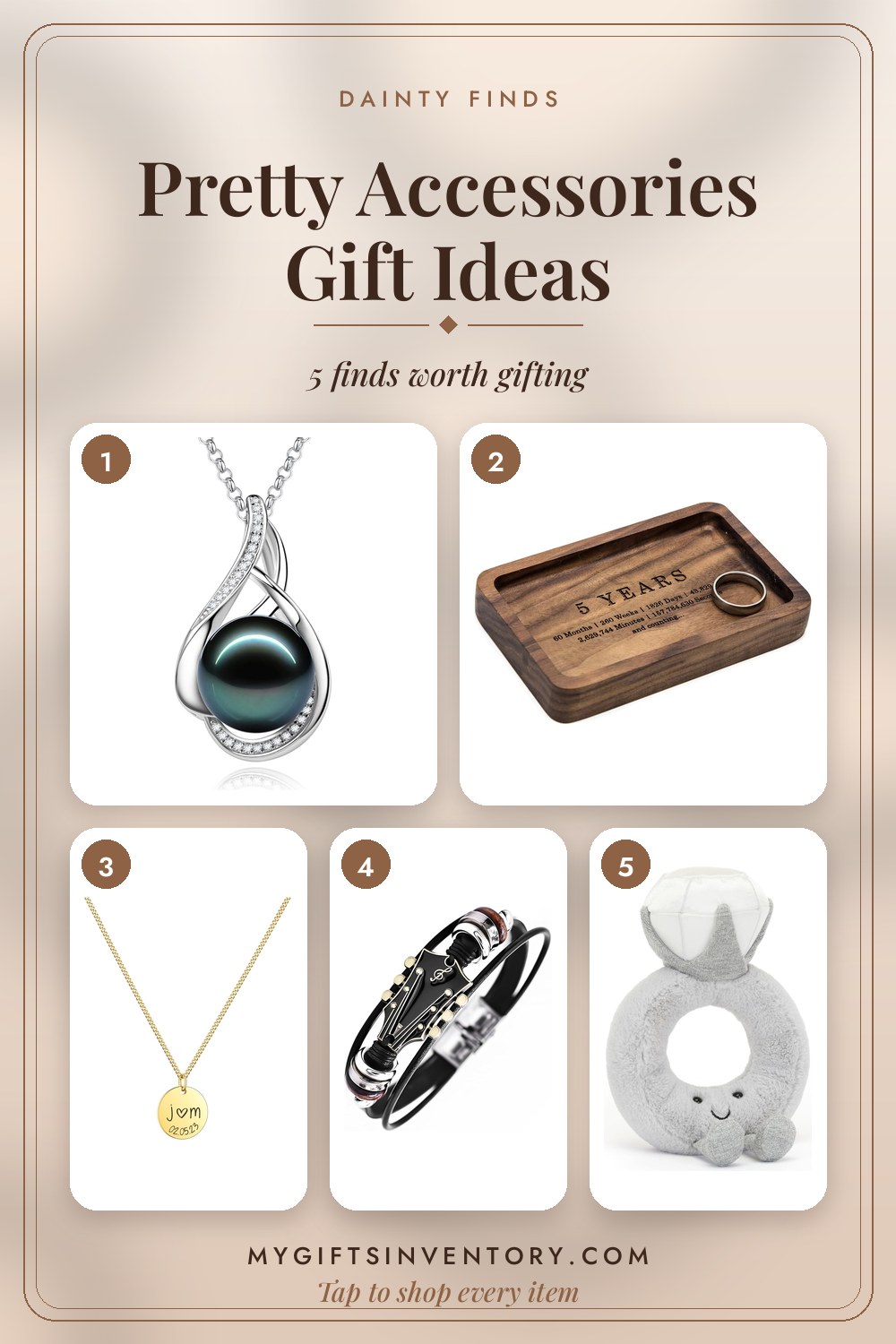
If you're attending a wedding and considering non-cash gifts instead of or alongside a hongbao, it's worth noting that Western-style registries aren't really part of Chinese wedding culture the way they are in the US, so cash in a red envelope remains the default and most appreciated option. If the couple has a stronger Western influence and you'd rather give an actual item, something from a guide on anniversary and milestone gift ideas can offer inspiration for meaningful, non-symbolic items, though we'd still suggest checking with a mutual friend or family member first since expectations vary a lot by family and region.
Wrapping and Presentation Details
Wrapping matters more in Chinese gift culture than it does in many Western ones, since the packaging itself carries meaning. Stick to red, gold, or pink paper for celebratory occasions. Avoid wrapping anything in plain white or black, and be cautious with blue as well in more traditional households, since it can carry somber associations depending on the region. A tidy bow or a simple red ribbon is plenty, there's no need for elaborate embellishment. If you're gifting cash, always use a proper red envelope rather than a plain white one, which is reserved for funeral money in Chinese tradition.
Gift Ideas to Go With This


Want more ideas? Browse our full guide: 20 Best Gifts Under $100 (2026): Thoughtful Picks They'll Actually Use
Frequently Asked Questions
Is it rude to give a gift with only one hand in China?
It's not considered a major offense, but using both hands is the polite standard and shows more sincerity and respect, especially with elders or in formal settings. If your hands are full, a brief apology as you offer it with one hand is fine, but two hands is the safer default whenever possible.
Why shouldn't you give a clock as a gift in China?
Giving a clock is considered deeply unlucky because the phrase "to give a clock" (song zhong) sounds exactly like the phrase for attending someone's funeral or watching them pass away. This homophone makes clocks and watches one of the most avoided gift categories, particularly for older relatives.
How much money should you put in a red envelope?
Amounts vary by relationship and region, but common ranges run from about 100 to 500 RMB for children and younger relatives, and 200 to 1,000+ RMB for weddings, often ending in the lucky number 8. The one firm rule is to avoid any amount ending in 4, since it echoes the word for death.
Should you open a gift in front of the person who gave it to you?
Traditionally, no. The polite approach in Chinese culture is to set the gift aside and open it later in private, since opening it immediately can come across as impatient or overly eager. This is one of the biggest differences from Western gift-giving norms, where opening it on the spot is often expected.
What colors should you avoid when wrapping a gift for someone in China?
Avoid plain white and black wrapping paper, since both colors are strongly associated with mourning and funerals in Chinese culture. Red and gold are the traditional choices for celebratory gifts, symbolizing luck and prosperity, with pink also acceptable for softer occasions.
Looking for an Actual Gift Instead?
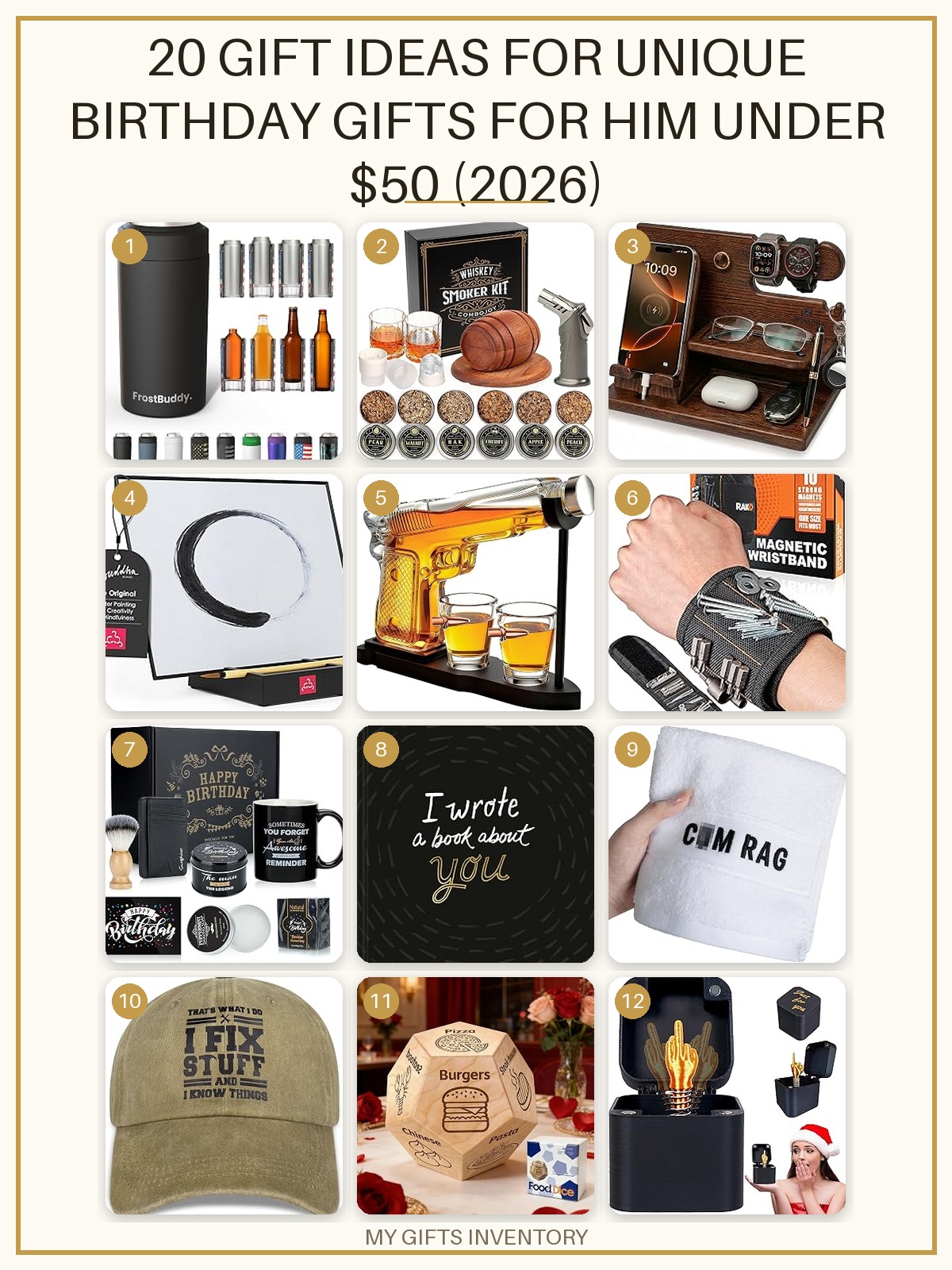
Gift Sets We Love Right Now
Every item picked, priced and linked, ready to buy.
More Gift Advice