Gift Giving in Japan: A Complete Etiquette Guide
From avoiding the number four to wrapping with two hands, here's how gift-giving customs in Japan actually work and how to get them right whether you're visiting, hosting, or sending a gift from abroad.
As an Amazon Associate, My Gifts Inventory earns from qualifying purchases. We only recommend products we'd genuinely consider buying ourselves.
If you're heading to Japan for a wedding, a business trip, or a visit to your partner's family, the question isn't really "what should I bring", it's "what am I about to get wrong without realizing it." Gift-giving in Japan runs on a set of quiet rules that most guidebooks skim over, and getting them backwards (wrong number of items, wrong wrapping color, opening a gift the second you receive it) can read as careless even when your intentions were generous. None of it is complicated once you know it, but it's exactly the kind of thing nobody tells you until you've already made the mistake.
Why Gift-Giving in Japan Works Differently
In Japan, gift-giving is less about surprising someone with a perfect object and more about maintaining a relationship through visible, correct gestures. There's a real concept called okaeshi, the practice of returning a gift of roughly half the value you received, which means an overly generous or overly expensive gift can actually put the recipient in an uncomfortable position rather than delighting them. This is part of why moderation matters so much here: a gift that's too lavish reads as either showing off or as placing a burden on the other person to reciprocate appropriately.
There's also a seasonal, almost obligatory rhythm to gift-giving that doesn't really exist in most Western gift culture. Twice a year, in midsummer (ochugen) and at year's end (oseibo), many people send gifts to bosses, clients, teachers, and relatives they feel indebted to, regardless of whether there's a specific occasion to celebrate. It's less "I saw this and thought of you" and more "it is this time of year, and this relationship calls for acknowledgment."
The Occasions That Actually Call for a Gift
Omiyage and Temiyage
Omiyage are souvenirs, almost always food, that you bring back for coworkers, friends, or family after any trip, even a short one. Temiyage is the cousin of that custom: a small gift you bring when visiting someone's home, typically something consumable like sweets, fruit, or tea rather than an object that will sit on a shelf forever. If you're looking for something in that consumable, crowd-pleasing category, a well-chosen box of good coffee or tea works well as a temiyage, and our guide to gifts for coffee lovers has options that translate nicely into this kind of gift even outside Japan.
Weddings, Funerals, and New Year
Weddings call for goshugi, a cash gift in a special decorated envelope. Funerals call for kouden, a condolence gift also given in cash but in a very different, somber envelope. New Year's brings otoshidama, cash gifts given to children in small decorated envelopes called pochibukuro. Each of these has its own envelope, its own bill condition, and its own amount conventions, which we'll get into below.
Ochugen and Oseibo
These twice-yearly gift seasons (roughly July for ochugen, December for oseibo) are aimed at people you feel a sense of gratitude or obligation toward: bosses, mentors, in-laws, business contacts. Food and drink gifts dominate here, often nicely boxed regional specialties, and the gesture matters more than the creativity of the choice.
What to Avoid Giving, and Why
This is the section that trips up the most well-meaning visitors, because the reasons are cultural and linguistic rather than obvious from the outside.
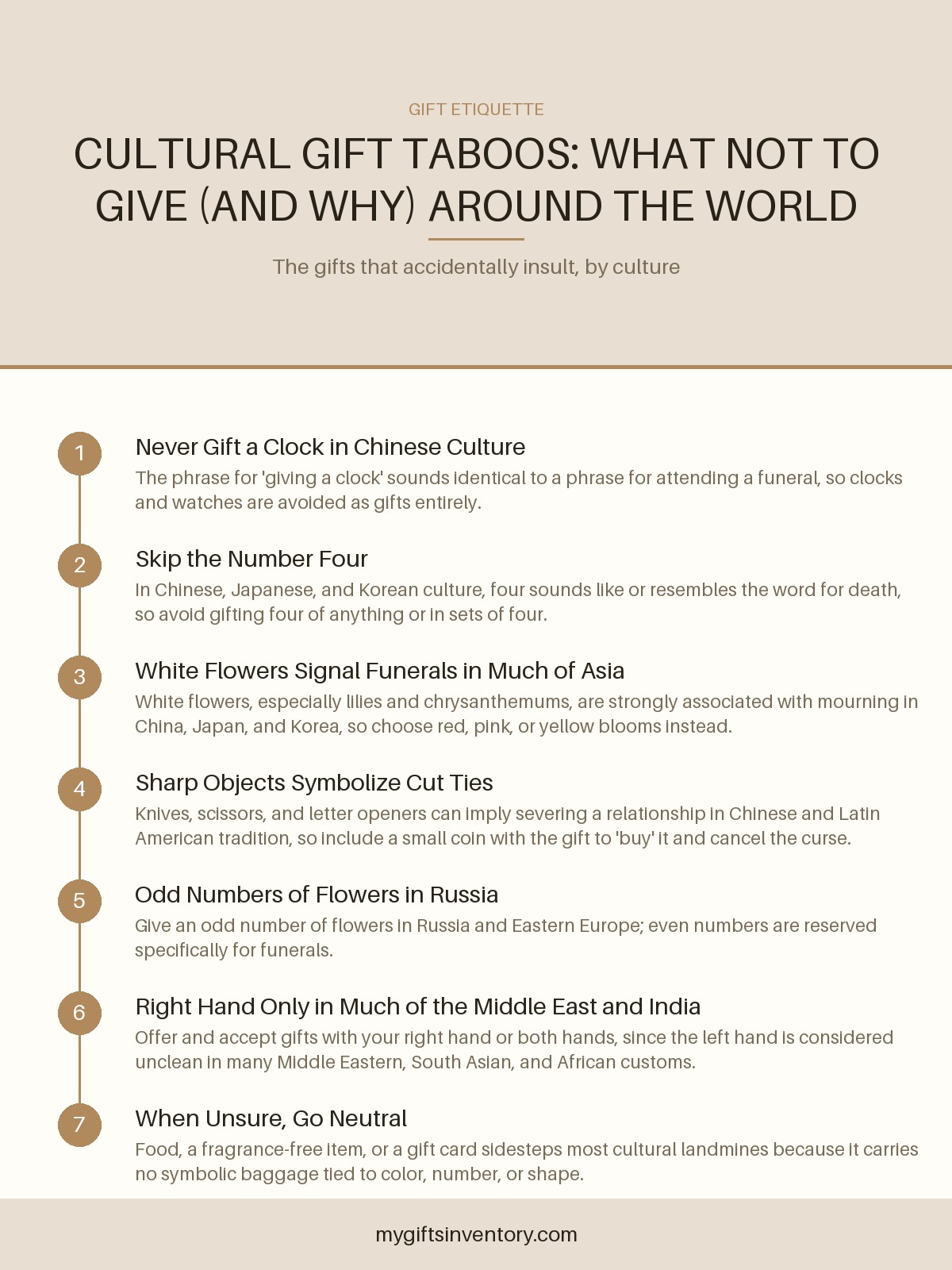
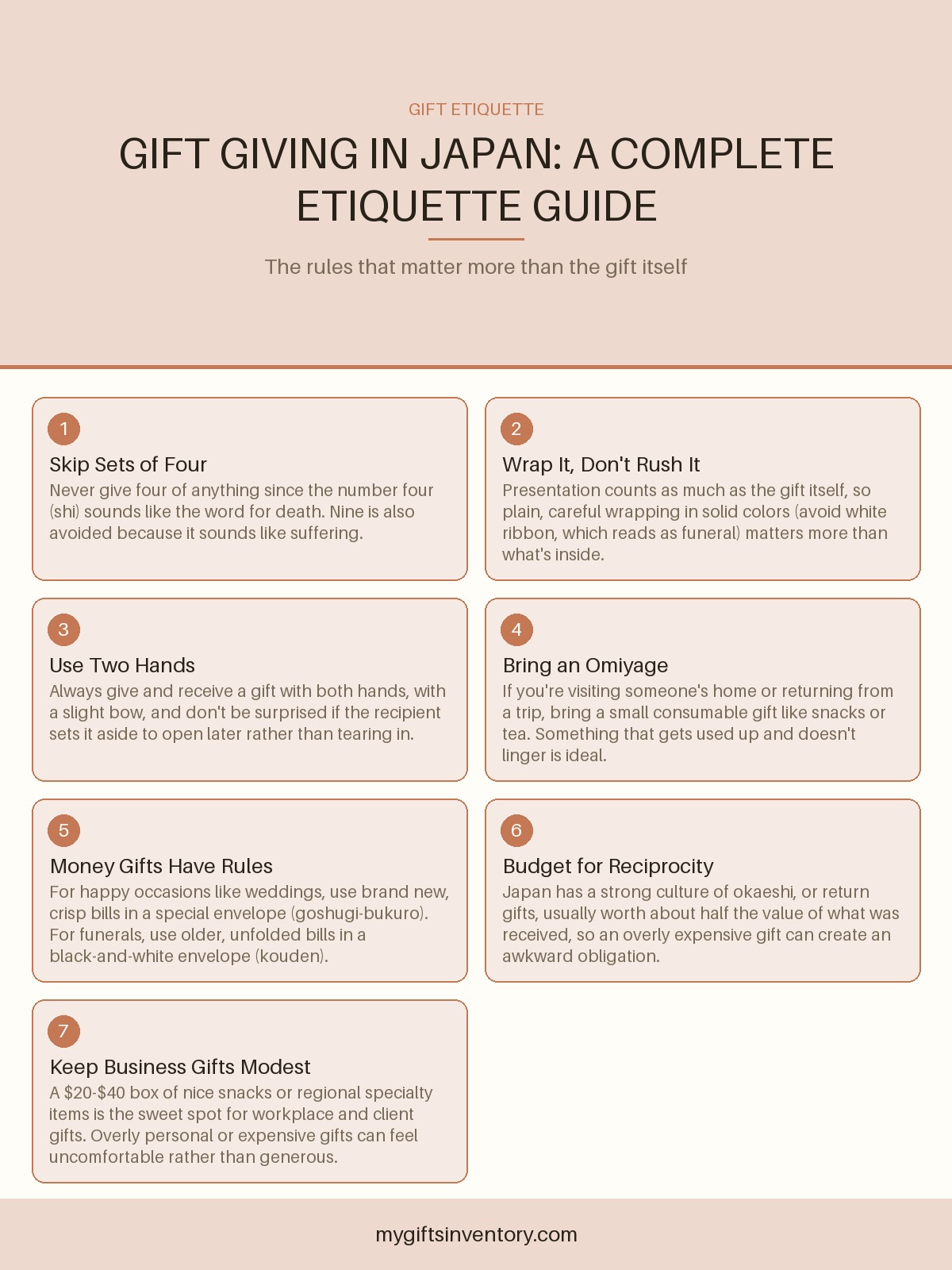
- Sets of four or nine items. The number four (shi) sounds like the word for death, and nine (ku) sounds like suffering or pain. Avoid giving four of anything, whether it's four teacups or four pieces of fruit.
- White flowers, especially lilies and chrysanthemums. These are strongly associated with funerals. Stick to other colors if you're bringing flowers at all, and know that potted plants are traditionally avoided for hospital visits since they're thought to encourage a longer stay (roots taking hold).
- Sharp objects. Knives, scissors, and other cutting tools can symbolize severing a relationship, so they're a risky choice for weddings or as a general gift between people who aren't extremely close.
- Clocks and watches, in some contexts. A clock can be read as suggesting someone's time (or life) is limited, which makes it a poor choice as a gift to an elderly relative in particular. Watches given between unequal-status colleagues can also carry an unintended "manage your time better" implication.
- Combs. The word for comb (kushi) contains sounds associated with death and hardship, making it another item that's traditionally avoided as a gift.
None of these are hard-and-fast laws that will end a friendship if broken, especially with younger, more internationally minded recipients, but they're worth knowing so you're making an informed choice rather than an accidental one.
Wrapping and Presentation Matter as Much as the Gift
How a gift looks when it's handed over carries real weight in Japan. Clean, careful wrapping in solid, muted or pastel colors is the norm; avoid pure white wrapping or ribbon since that's associated with funerals, and be thoughtful with red-and-white combinations, which are typically reserved for celebratory occasions like weddings and births. Many department stores in Japan will wrap purchases beautifully and correctly for the occasion at no charge if you simply say what the gift is for, which is worth taking advantage of if you're shopping there directly.
If you're gifting from home before a trip, or assembling something to bring along, thinking through presentation the way you would for choosing any thoughtful gift still applies here, just with an extra layer of care around color and symbolism that doesn't come up as often in Western gift-giving.
How the Actual Handoff Works
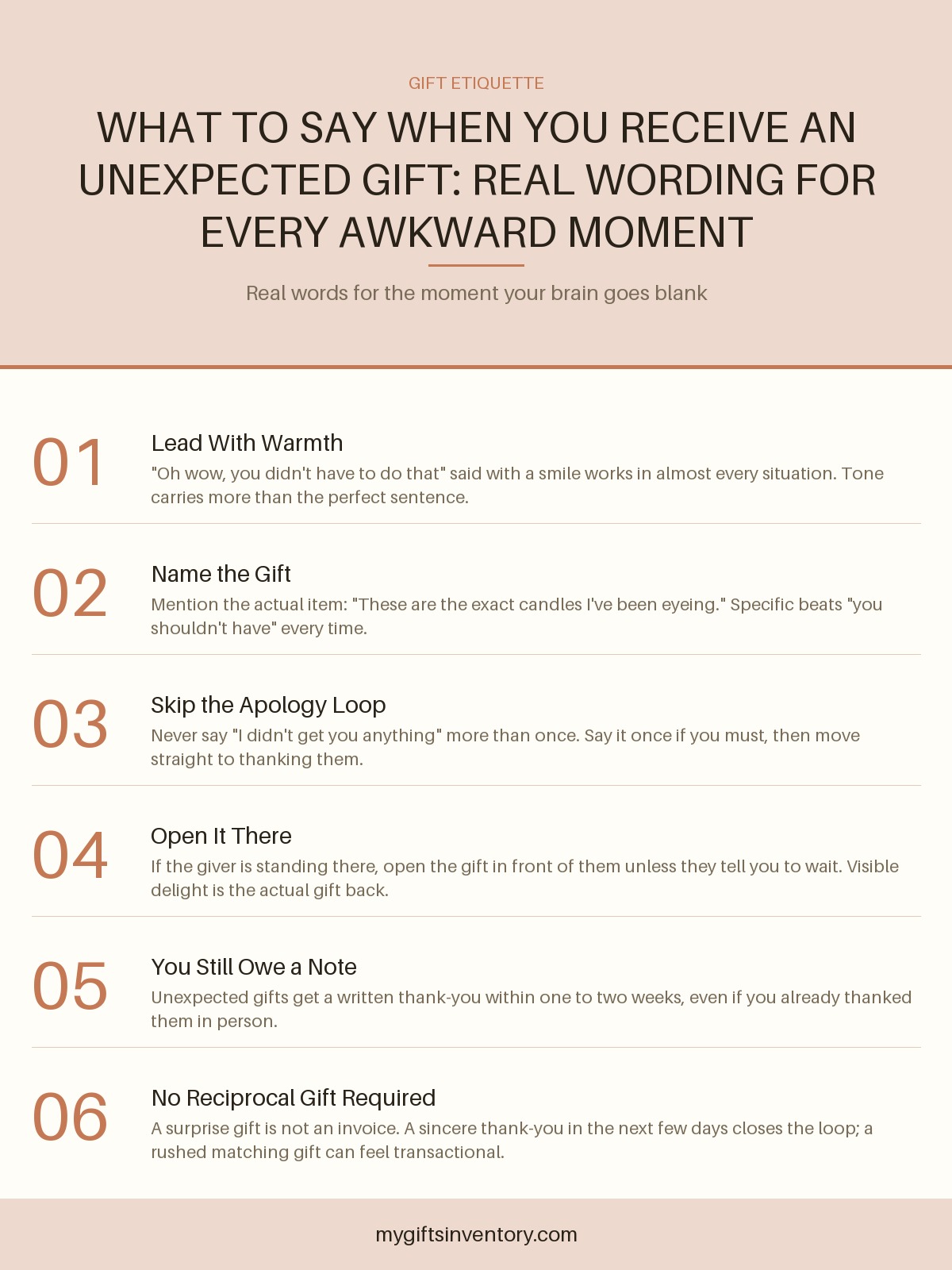
The exchange itself has its own small choreography. Gifts are given and received with both hands, usually accompanied by a slight bow, and it's common to orient the gift so the front or the writing faces the recipient as you hand it over. Verbal modesty is part of the ritual too; it's normal to downplay your own gift ("it's nothing much" or "I hope this is useful") even when you've put real thought into it.
One habit that surprises a lot of first-time visitors: gifts are frequently set aside to be opened later rather than torn open on the spot. This isn't coldness, it's consideration, since opening a gift immediately in front of the giver risks an visible reaction (disappointment, surprise at cost) that could feel awkward for either person. Don't take it personally if your beautifully wrapped gift gets politely set on a side table instead of opened in front of you.
Money Gifts: Envelopes, Bills, and Amounts
Cash is a completely normal and expected gift in Japan for several occasions, but the presentation rules are strict enough to be worth memorizing.
Weddings (Goshugi)
Wedding cash gifts go in a special envelope called shugi-bukuro, decorated with an ornamental cord called mizuhiki tied in a knot that symbolizes a bond meant to last. The bills inside should be brand new and crisp, ideally obtained from a bank specifically for this purpose, since using worn bills can read as not having prepared properly for the occasion. Typical amounts from a friend or colleague tend to fall in the range of 30,000 yen, and amounts are generally kept to odd numbers (avoiding four and often two, since gifts in even numbers can imply the couple should split).
Funerals (Kouden)
Condolence money goes in a black-and-white or black-and-silver envelope, and here the convention flips: bills should be used, not brand new, since crisp new bills can seem as though you anticipated the death in advance. The exact opposite instinct from a wedding gift, which is exactly why this trips people up.
New Year (Otoshidama)
Children receive small decorated envelopes called pochibukuro containing cash for New Year's, with amounts scaled to the child's age, from a few thousand yen for young children up to considerably more for teenagers.
Budgeting for Gifts in Japan
Because the culture of return gifts (okaeshi) is so strong, going too big with a gift can actually create pressure rather than generosity. A few rough benchmarks:
- Host or dinner-party gift (temiyage): roughly $10-$25, almost always something consumable
- Coworker or casual friend gift: roughly $15-$40
- Ochugen/oseibo seasonal gifts: roughly $25-$60 depending on how senior or important the relationship is
- Wedding cash gift from a friend: around $200-$300 equivalent (30,000 yen is the common benchmark), more from close family
- Business client gift: roughly $20-$50, favoring quality regional specialty items over anything flashy
If you're shopping for a general, well-received gift within that mid-range budget and want ideas that translate well regardless of the occasion, our roundup of home decor gifts for her under $50 and our list of unique gift ideas for women under $50 both sit comfortably in the range that works for many of these occasions, provided you skip anything from the avoid list above.
Business and Corporate Gift-Giving in Japan
Corporate gift-giving in Japan is more ritualized than in most Western business cultures. Gifts are typically exchanged at the start and end of business relationships, during the ochugen and oseibo seasons, and after any significant favor or introduction. Hierarchy matters here: a gift to a senior executive should generally be nicer or more clearly high-quality than a gift to a peer, but never so extravagant that it could be read as an attempt to influence a decision, since that crosses into territory that can feel more like a bribe than a courtesy.
Boxed food items, particularly something recognizable as a specialty from your home region or country, are the safest and most appreciated choice. If you're prepping for a work trip or client visit and want a starting point that fits comfortably within typical corporate gift budgets, this list of corporate gift ideas under $50 is a reasonable place to start, just double check anything you shortlist against the sets-of-four and sharp-object rules before it goes in your suitcase.
A Few Practical Notes for Visitors
Gift cards, while common in the US and UK, aren't a strong cultural fit for most personal gift-giving occasions in Japan; cash in the correct envelope or a thoughtfully chosen physical item is almost always preferred. If you're bringing gifts from abroad, pack a few extra small omiyage-style items (individually wrapped sweets travel well and are easy to distribute) since you'll likely end up giving more of them than you originally planned, whether to a host family, a translator, or a colleague who goes out of their way to help you.
Gift Ideas to Go With This


Want more ideas? Browse our full guide: 20 Best Gifts Under $100 (2026): Thoughtful Picks They'll Actually Use
Frequently Asked Questions
Is it rude to open a gift in front of the person who gave it to you in Japan?
It's not considered rude exactly, but the more common custom is to set the gift aside and open it later, in private. This avoids putting either person in the position of reacting visibly to the gift's cost or content in the moment, so don't be offended if your gift isn't opened right away.
What number of items should I avoid giving as a gift in Japan?
Avoid giving four of anything, since the number four is pronounced similarly to the word for death, and try to avoid nine as well, since it sounds like the word for suffering. This applies to things like sets of teacups, pieces of fruit, or flowers in a bouquet.
How much cash should I give for a wedding gift in Japan?
A common benchmark for a friend or colleague's wedding is around 30,000 yen, given in brand new, crisp bills inside a decorated envelope called shugi-bukuro. Close family members typically give more, and amounts are generally kept odd (avoiding numbers like two or four) rather than round.
Do I need to bring a gift when visiting someone's home in Japan?
Yes, bringing a small gift called temiyage, usually something consumable like sweets, fruit, or tea, is the standard and expected courtesy when visiting someone's home. It doesn't need to be expensive, generally in the $10-$25 range is appropriate, but showing up empty-handed is noticeable.
What colors should I avoid when wrapping a gift for someone in Japan?
Avoid pure white wrapping paper or ribbon, since that combination is strongly associated with funerals. Solid, muted, or pastel colors are the safest choice, and red-and-white combinations are best reserved for clearly celebratory occasions like weddings.
Looking for an Actual Gift Instead?


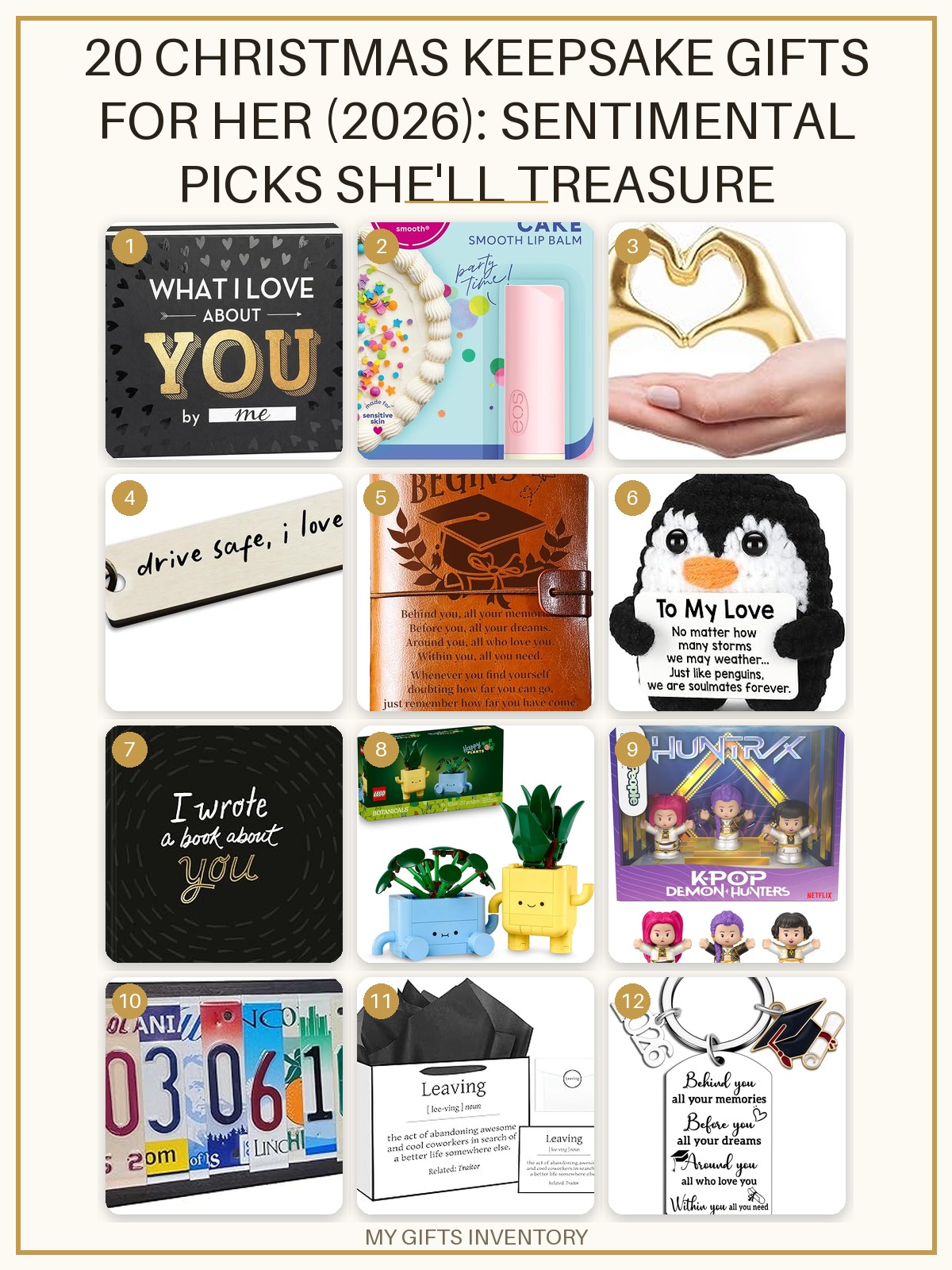
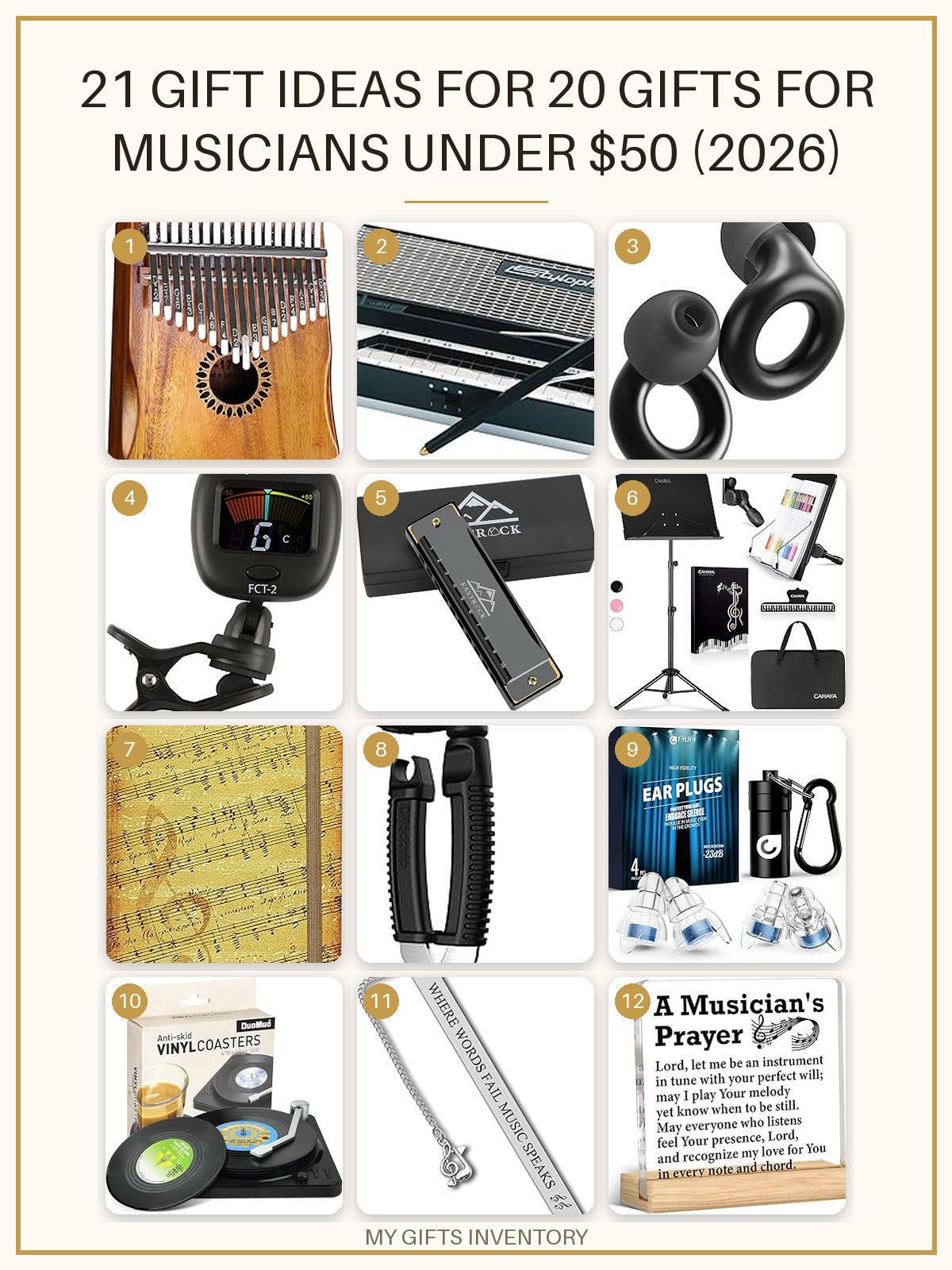
Gift Sets We Love Right Now
Every item picked, priced and linked, ready to buy.
More Gift Advice