Holiday Gift Giving Etiquette: Budgets, Cards, Wrapping, and Real-World Rules
From how much to spend on coworkers versus family to what actually belongs in the card, here is the practical holiday gifting etiquette we use so no one feels awkward or overlooked.
As an Amazon Associate, My Gifts Inventory earns from qualifying purchases. We only recommend products we'd genuinely consider buying ourselves.
The holidays arrive and suddenly the mental spreadsheet starts: who gets a gift, how much feels right, whether a card alone is enough, and what happens if the present misses the mark. We have all stood in a store aisle second-guessing ourselves or stared at a blank card wondering how to sound warm without overdoing it. This guide walks through the real etiquette of holiday gift giving so the season feels generous instead of fraught.
Start with the list, not the store
Before any shopping, write down every person you feel you should acknowledge. Immediate family, extended relatives you see regularly, close friends, your partner’s family, coworkers who exchange gifts, kids’ teachers or coaches, the neighbors who shovel your walk, and any host whose party you will attend. Then ruthlessly sort that list into three groups: must-gift, nice-to-gift, and card-or-gesture-only.
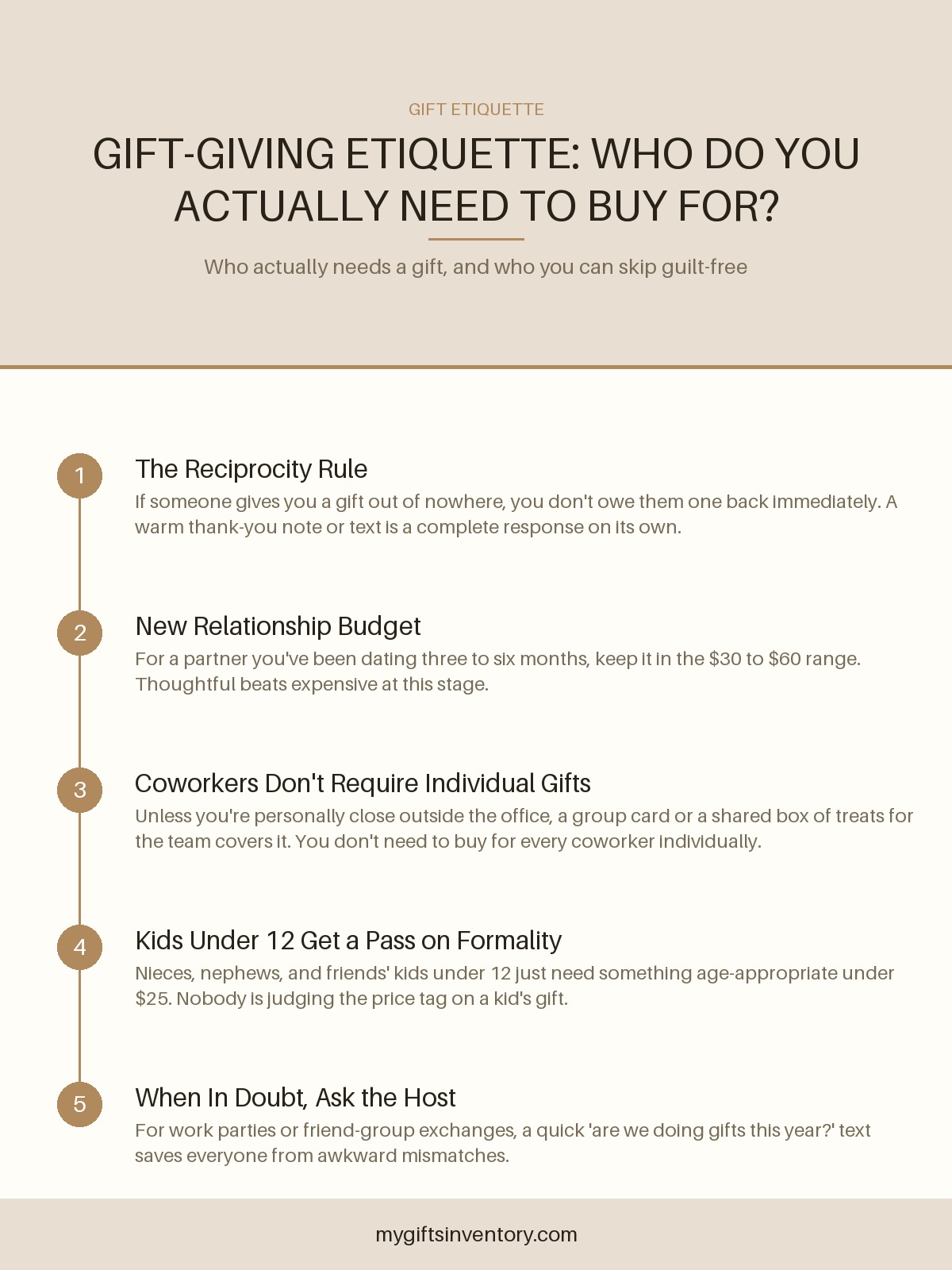
Reciprocity matters, but it is not a scoreboard. If someone has given you thoughtful gifts for years, matching their effort is kind. If a distant cousin sends a mass-printed card, a heartfelt note back is plenty. We protect our budgets and our peace by refusing to gift out of pure guilt. Once the list is honest, the rest of the etiquette falls into place more easily. For broader ideas on matching gifts to actual people rather than obligations, we often return to our guide on choosing the perfect gift.
Realistic holiday gift budgets by relationship
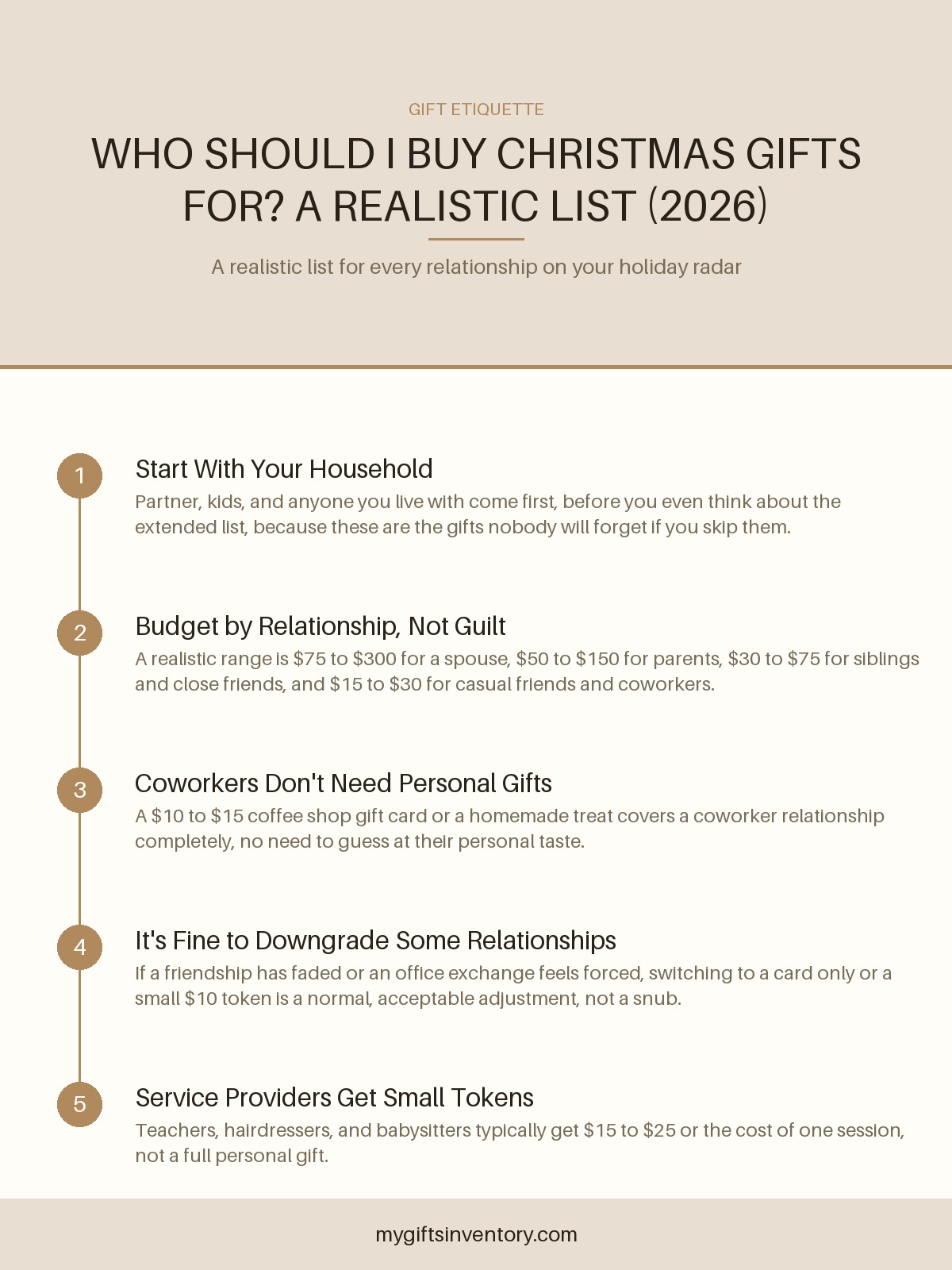
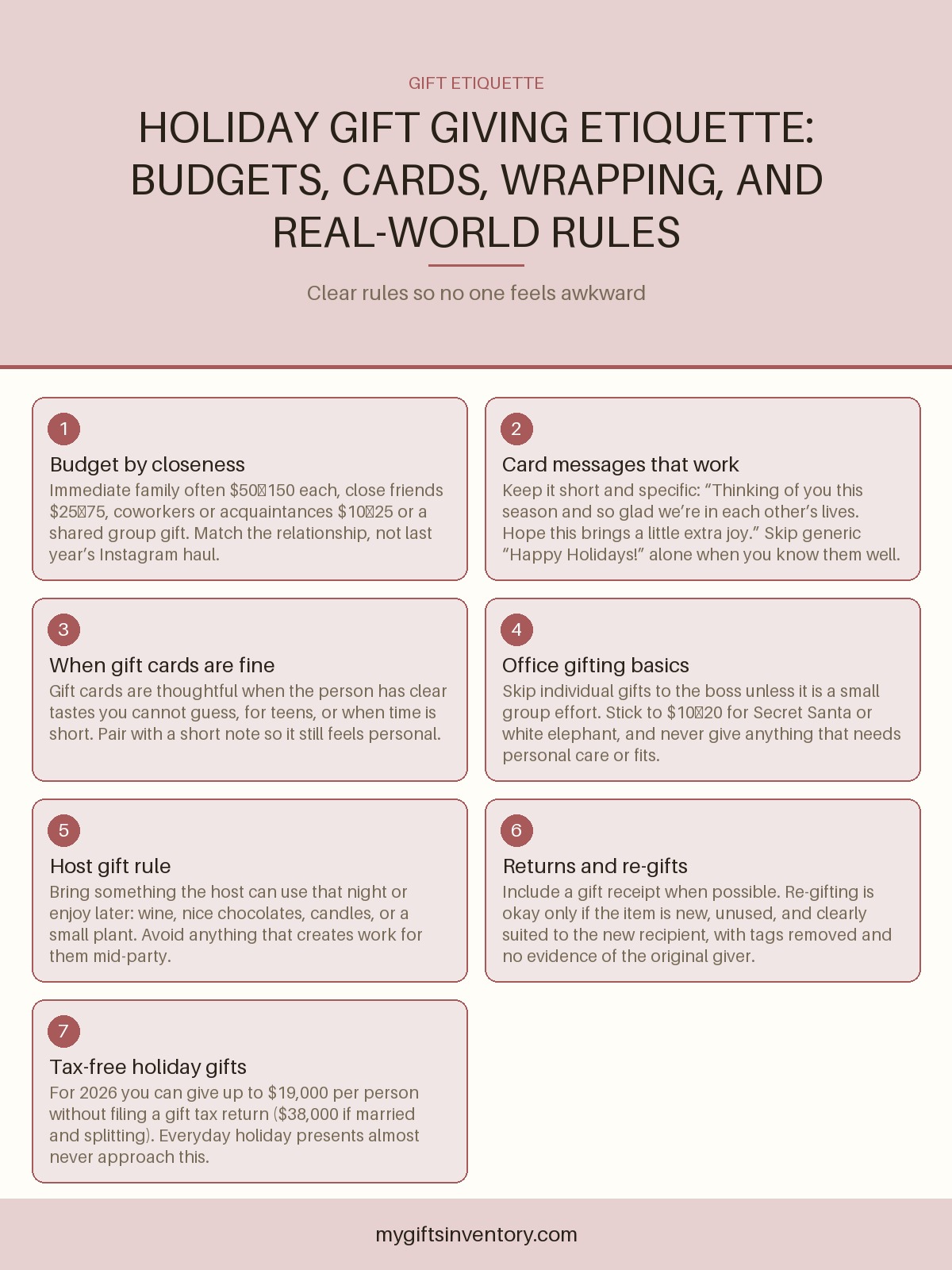
There is no universal dollar amount, yet ranges help us stay consistent and avoid the panic of last-minute overspending. These are the brackets we find work for most middle-income households in ordinary years. Adjust up or down for your cost of living and the overall number of people on your list.
Immediate family (partner, kids, parents, siblings you are close to)
$50 to $150 per person is a common sweet spot for adults. Younger children often land lower unless there is one bigger shared item. Partners sometimes go higher for a single meaningful present. The goal is thoughtfulness inside a number you can sustain every year without resentment.
Extended family and close friends
$25 to $75 usually feels right. Many families set an informal cap (everyone draws names and stays under $40, for example) precisely to keep things equitable. If you have a large extended group, a single family gift under $50 can replace individual presents and still feel generous. Our roundup of Christmas gift ideas for the whole family under $50 is built for exactly these situations.
Coworkers, acquaintances, teachers, service providers
$10 to $25, or a shared group gift, keeps things light. Teachers often prefer a small classroom item or a gift card paired with a note from the child. Building managers, mail carriers, and regular service people appreciate something simple and useful rather than elaborate. Stocking-stuffer scale works well here; see our picks for stocking stuffers for adults under $20 when you need many small, actually usable options.
Hosts and party gifts
$15 to $40 is standard for a host or hostess gift. Something consumable or immediately usable (nice bottle, box of good chocolates, quality candles, fancy nuts, a small plant) shows appreciation without creating storage or cleanup work in the middle of their event.
If money is genuinely tight this year, scale everything proportionally and lean harder on handmade notes, baked goods, or offers of help. People remember sincerity more than price tags. When you want something that still feels considered on a smaller budget, thoughtful gifts under $30 give plenty of concrete direction.
Timing and planning that actually reduce stress
Ideal shopping window for most of us is early to mid-November through the first week of December. That leaves room for shipping delays, personalization, and wrapping without midnight scrambles. If you celebrate on a different calendar (Hanukkah dates shift, for instance), reverse-engineer from the first night rather than from December 25.
Order custom or monogrammed items by early December at the latest. Ship out-of-town gifts so they arrive at least three to four days before the celebration. For local exchanges, having everything wrapped a week ahead means you can enjoy the gatherings instead of finishing bows in the car.
Last-minute is still recoverable. A well-chosen gift card from a store the person actually uses, paired with a sincere note, beats a panicked generic candle every time. Many grocery and big-box stores carry a wide range of cards; knowing exactly which brands and any fees involved helps. Keep a short list of reliable nearby options so you are never starting from zero on the 23rd.
What to write in a holiday gift card
The message does more emotional work than most of us admit. Aim for warm, specific, and short. Three to five sentences is plenty when a physical gift is attached. Longer is fine for a card-only gesture to someone you rarely see.
Close family or partner
“Another year of chaotic dinners, terrible movies, and the best company I could ask for. I love our life together. Merry Christmas / Happy Holidays, and here’s to more of the good stuff in the new year.”
Parents or in-laws
“Thank you for another year of steady love and the occasional emergency babysitting / recipe advice / pep talk. We are so lucky to have you. Wishing you a peaceful and joyful holiday season.”
Friends
“So grateful we get to do life side by side. May your days be full of the small things that make you happiest. Can’t wait to catch up properly in January.”
Coworkers or casual
“Wishing you a relaxing break and a fresh start in the new year. Thanks for making the everyday workdays better.”
Avoid empty superlatives and anything that sounds like it could have been copied from a package of generic cards. Name one real thing you appreciate about them when you can. If the relationship is strained, keep the note gracious and brief rather than forced or overly familiar. Sign with the names the recipient actually uses for you.
Wrapping, presentation, and the unboxing moment
Neat wrapping signals care. It does not require professional-level folds. Sturdy paper or reusable fabric wraps, a simple ribbon or twine, and a legible tag are enough. If you have multiple gifts for one household, consider one larger bag or box with tissue so the host is not drowning in paper on a busy morning.
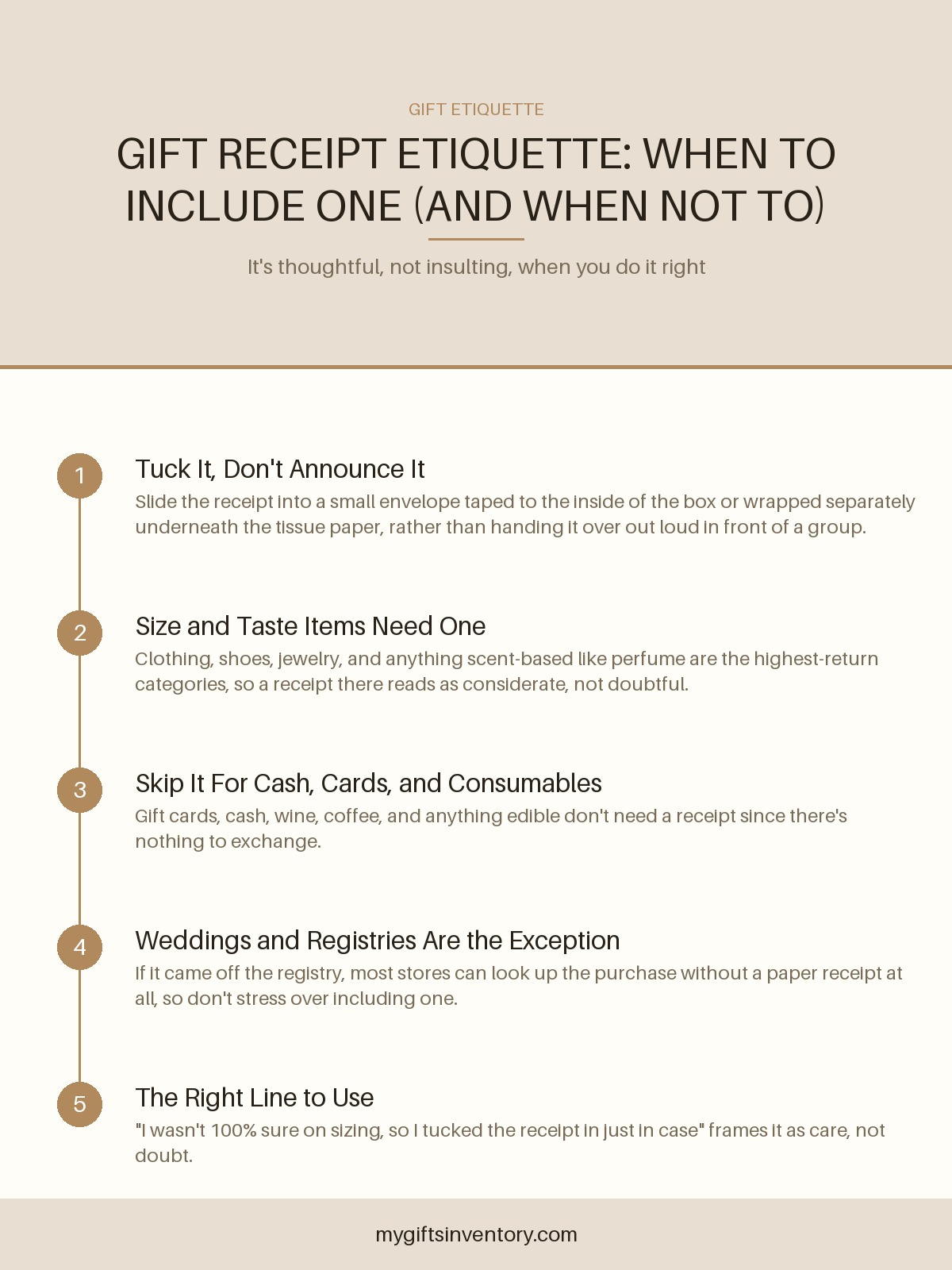
Include a gift receipt whenever the store offers one, especially for clothing, toys, or anything sized or colored. Tuck it under the tissue or tape it discreetly inside the card so the surprise stays intact but the option to exchange remains. For experiences or digital gifts, print or write clear redemption instructions.
Presentation matters more than perfection. A small handmade tag with their name in your handwriting often feels warmer than elaborate store bows. If you are terrible at wrapping, pretty gift bags with tissue are completely acceptable etiquette. No one is grading your corners.
Registries, wish lists, and asking without awkwardness
Wish lists and registries remove guesswork and reduce waste. When someone shares one, treat it as helpful information rather than a demand. You are still free to choose something off-list if you know them well. For group gifts (parents combining on a bigger item for a child, siblings going in on something for aging parents), a shared list or simple group chat keeps everyone aligned and prevents duplicates.
If you are the one who would love guidance, it is fine to say, “I’ve been into trail running / sourdough / that new series lately if anyone is stuck.” Or keep a quiet note on your phone you can text when asked directly. Demanding specific expensive items crosses the line; offering gentle direction does not.
Office, Secret Santa, and white elephant rules
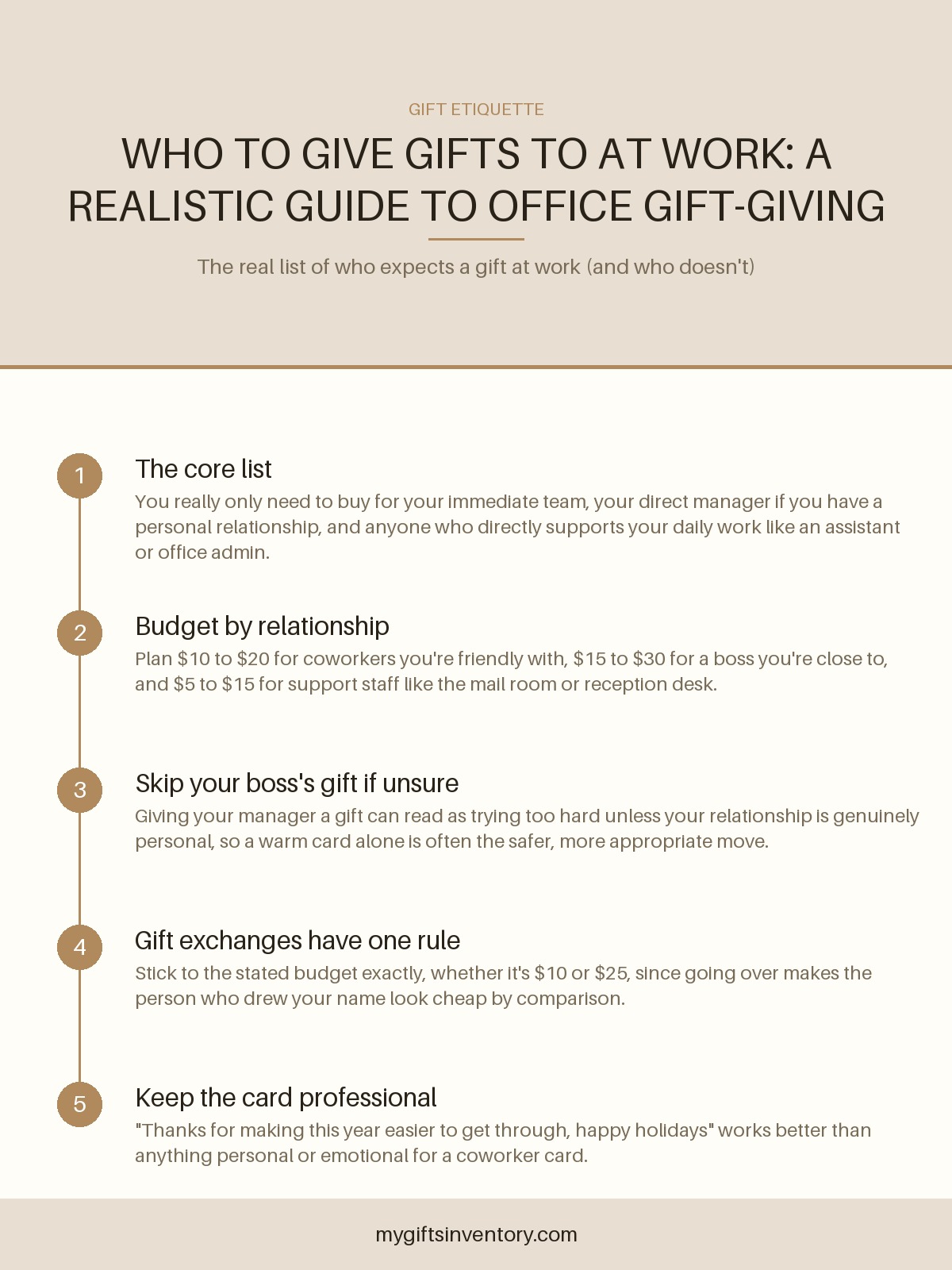
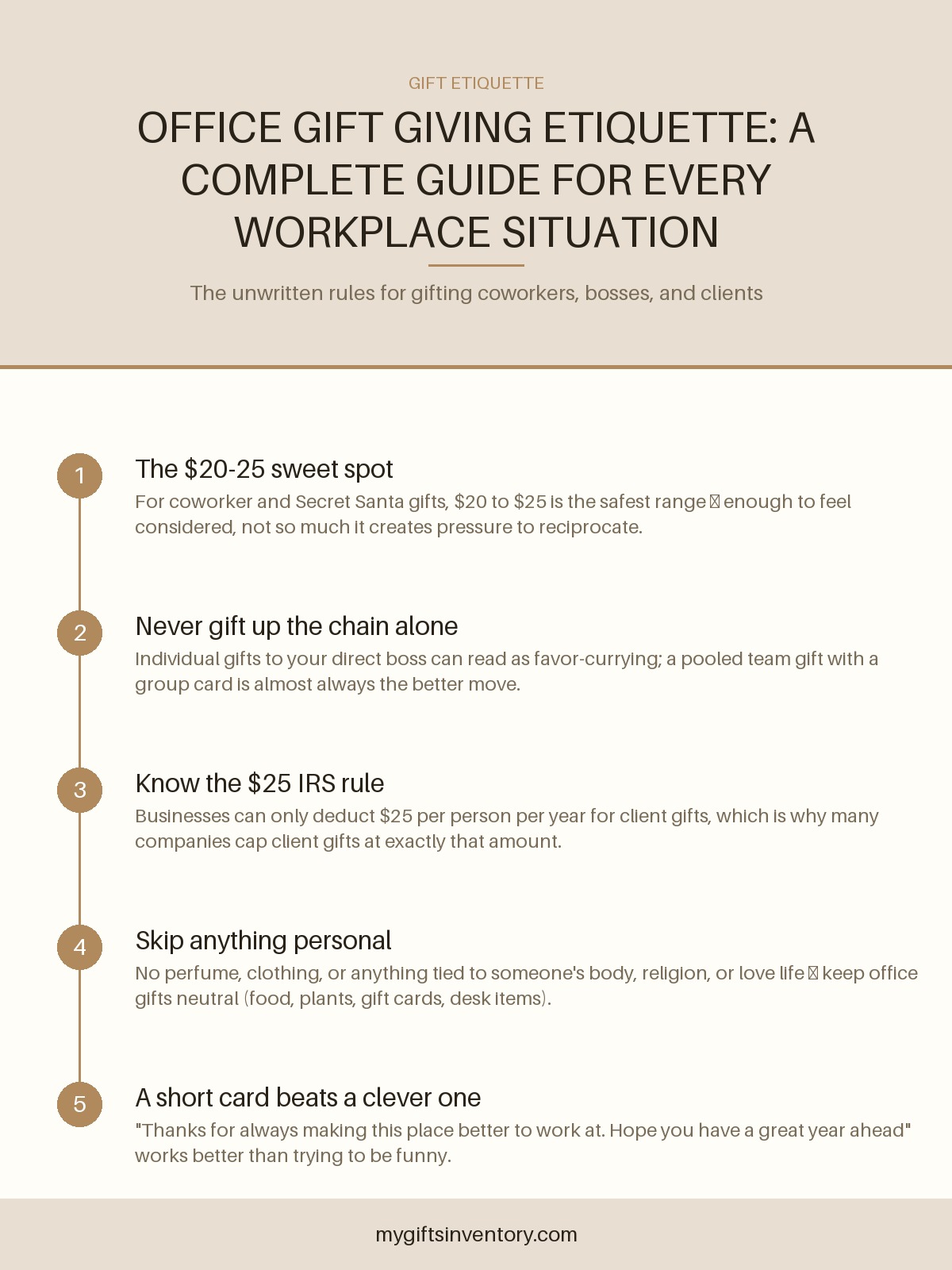
Follow whatever written or verbal guidelines your workplace already has. Typical Secret Santa or Yankee Swap limits fall between $15 and $25. Bring something most adults would find usable or amusing: nice chocolate, a good mug, small plant, puzzle, quality socks, or a fun desk item. Skip anything scented unless you know preferences, clothing that requires sizing, or jokes that could land wrong in a professional setting.
Individual gifts to a supervisor can create uncomfortable optics. A group card or shared small gift from the team is cleaner. For peers you genuinely like, a low-key coffee gift card or homemade treat is friendly without raising expectations for next year. If your office does not do an exchange, you are under no obligation to start one.
White elephant or dirty Santa games run on humor and light competition. Bring something you would not mind taking home yourself. The etiquette is to keep the roasting gentle and to respect any “ungiftable” house rules the host sets.
Gift cards, cash, and when they are the kind choice
Gift cards get a bad reputation they only partly deserve. They shine when the recipient has specific tastes you cannot easily match, when they are saving for something larger, for teenagers who want autonomy, or when you are truly out of time and ideas. A card to a store or restaurant they already love, paired with a short personal note, reads as considerate rather than lazy.
Cash in a card is more common for younger relatives or cultural traditions where it is expected. In most adult friend and peer situations, a store or experience card feels more finished. Always check whether the card has activation fees or expiration quirks before you buy, and give the person a quick way to check the balance later if needed.
Re-gifting, returns, and the “I love it” white lie
Re-gifting is acceptable when the item is brand new, in original packaging or pristine condition, clearly suited to the new person, and free of any indication it came from someone else (no old gift tags, no monogram that does not match). Do not re-gift within the same social circle where the original giver might notice. When in doubt, donate instead.
Returns are normal. Most of us have received well-meant items that simply do not fit our lives. If you receive something you cannot use, a polite thank-you is still required. You never have to announce the return. If the giver asks later how you are enjoying it, a gentle “It was so thoughtful, though it ended up not being the right fit so I exchanged it for something I’ll use constantly” is honest enough.
When you open a gift in person, lead with gratitude for the gesture. Specific praise helps (“The color is beautiful” or “I’ve been wanting to try this”) even if the item itself is not perfect. Save any exchange decisions for private time. The relationship is the point; the object is secondary.
Kids, teachers, and multi-household holidays
For children’s gifts, coordinate with co-parents or other households when possible so the child does not receive three versions of the same toy while missing something they truly wanted. Teachers and coaches usually receive the most joy from a sincere note written by the child plus a small consumable or classroom supply. Check school policies first; many limit or prohibit certain items.
When families blend or gather across traditions, ask early about any restrictions (allergies, religious considerations, “no gifts this year, just presence”). Respecting a “no gifts” request is itself good etiquette. Showing up with food to share or an offer to help clean up often means more than another wrapped box.
The quiet tax note most people never need
For 2026 the IRS annual gift tax exclusion is $19,000 per recipient ($38,000 for a married couple who elect gift splitting). Ordinary holiday presents sit nowhere near this threshold. You would only need to think about filing Form 709 if you gave one person more than that amount in a calendar year. Direct payments for tuition or medical expenses paid straight to the institution also do not count against the exclusion. This is simply background knowledge so large family gifts (help with a down payment, big shared experiences) stay clear of surprises.
Putting it all together without losing the joy
Good holiday gift etiquette is mostly about attention and proportion. We notice who is actually in our lives, we spend in ways we can repeat without bitterness, we write notes that sound like us, and we leave room for the reality that not every present will be perfect. The people who matter will feel the care. Everyone else will appreciate the grace of a simple, kind gesture.
If you take nothing else from this, let it be permission to simplify. A shorter list, a firm budget, and a few truly considered gifts beat a stressed sprawl every time. The holidays are already full. Thoughtful etiquette just keeps the giving part from tipping into overwhelm.
Frequently Asked Questions
How much should you spend on a holiday gift for a coworker?
Most office exchanges work well at $10 to $25. If there is no formal limit, stay on the lower end unless you know the person well outside work. A small shared team gift or a card alone is also perfectly acceptable when individual gifting feels forced.
Is it rude to give a gift card for the holidays?
No, especially when paired with a personal note and chosen for a place the recipient already likes. Gift cards are practical and appreciated by many people, particularly teens, busy parents, and anyone saving toward a bigger goal. The note is what keeps it from feeling impersonal.
What do you write in a holiday card when you are also giving a gift?
Keep it to a few warm, specific sentences. Mention something real about your relationship or a simple wish for their season, then sign off. Example: “So glad we get to celebrate another year together. Hope this small something adds a bit of ease to your days. Happy holidays.”
Are you supposed to give a hostess gift at every holiday party?
Yes if you were invited to someone’s home. Bring a small, usable item the host can enjoy without extra work that night: wine, nice treats, candles, or a simple plant. For large open-house style gatherings the expectation softens, but a modest gesture is still gracious.
What is the polite way to handle a gift you do not like or cannot use?
Thank the giver sincerely in the moment for the thought. Later, use the gift receipt if one was included, or quietly donate or re-gift under the usual rules. You do not need to inform the giver unless they ask directly, in which case a kind, brief explanation that you exchanged it for something you will use is enough.