How to Ask for No Gifts: Polite Wording, Etiquette & Real Scripts That Work
Asking for no gifts can feel awkward, but clear wording on invites and gentle follow-ups keep everyone comfortable. Here is exactly what to say for birthdays, weddings, holidays, and more.

As an Amazon Associate, My Gifts Inventory earns from qualifying purchases. We only recommend products we'd genuinely consider buying ourselves.
You love the people coming to celebrate, yet the thought of more stuff makes your shoulders tense. Maybe the house is full, money is tight this year, or you simply want the day to be about connection instead of unwrapping. Asking for no gifts is completely reasonable. The hard part is saying it so no one feels rejected or confused.
We have all been on both sides of this request. Below is the practical wording, placement, and follow-through that actually reduces leftover presents while keeping relationships warm.
Why the Request Feels So Tricky
Gift-giving is a social signal of care. When we say “no gifts,” some guests hear “I do not value your effort.” Others panic because they do not know what to do with their hands or their budget. Kids’ parties add another layer: grandparents and aunts often treat presents as their main love language.
Clarity plus a soft alternative solves most of the friction. People relax when they know exactly what is expected and still have a way to show up with something if it matters to them.
Where and When to Say It
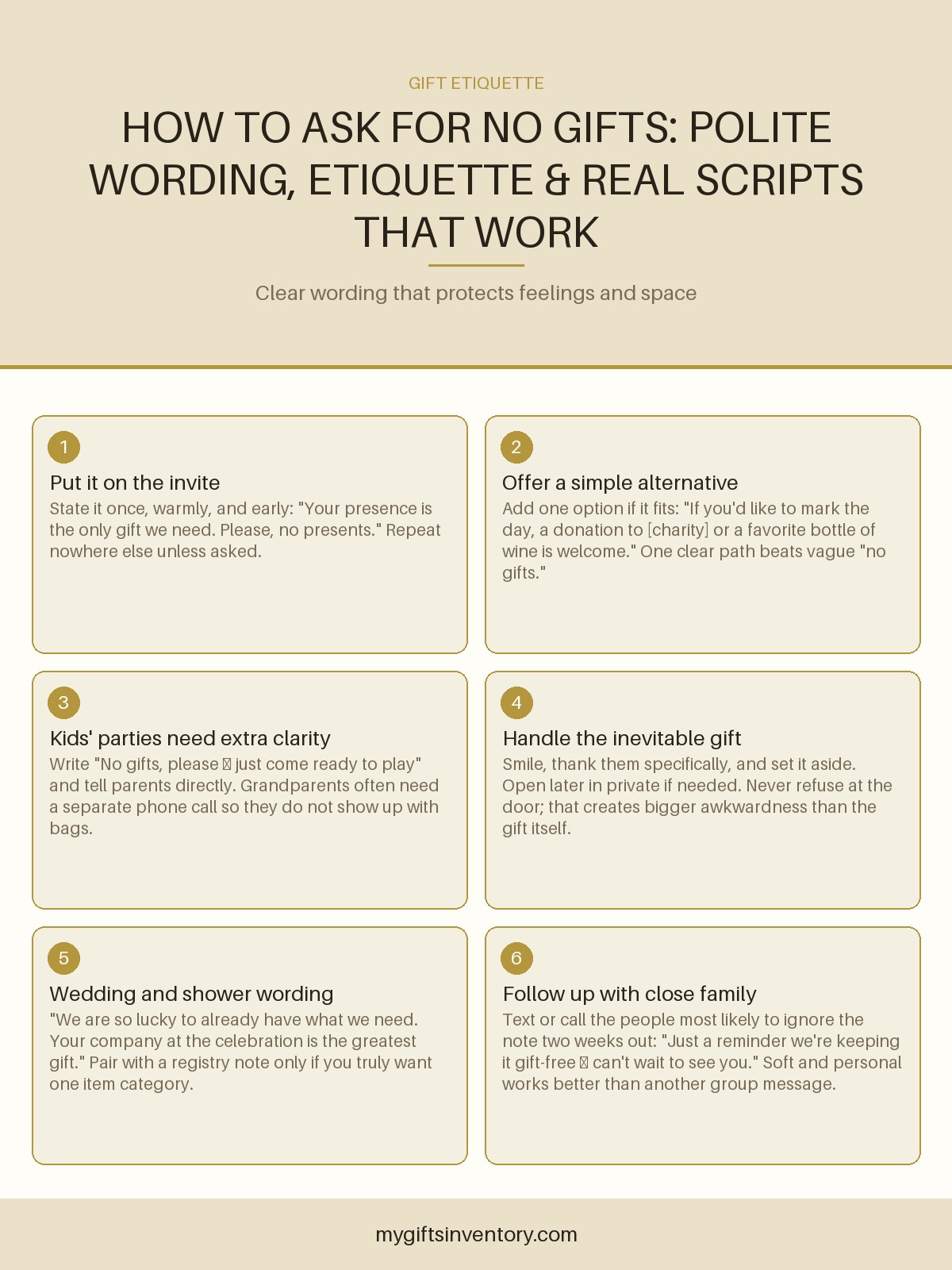
Put the no-gifts line on the invitation itself, whether paper, email, or digital. Guests decide what to bring the moment they RSVP, so the earlier they see it the better. For a birthday three weeks out, the invite is perfect. For a holiday open house, include it in the first group text or Evite.
One clear sentence is enough. Repeating it in every reminder can start to sound defensive. Save personal follow-ups for the handful of people you know will struggle with the idea: older relatives, close friends who always over-give, or coworkers who treat every event like a potluck-plus-presents situation.
If the gathering is last-minute, a quick text works: “Super casual birthday drinks Friday. Please, no gifts — just bring yourself.”
Exact Wording That Lands Well
Tone matters more than perfect grammar. Warm, short, and specific beats formal or jokey. Here are scripts you can copy and adjust.
Birthday (adult)
“I’m so glad you’re coming to celebrate. Your presence is the only present I want — please, no gifts!”
Or slightly softer: “I’ve got more than I need these days. Skip the wrapping paper and just come ready to eat cake.”
Kids’ birthday
“No gifts, please — [Name] has plenty of toys and just wants friends to play with. Your kid’s company is the gift.”
Add for good measure: “If you feel you must bring something, a favorite book to share or a donation to the local animal shelter is lovely.”
Wedding or vow renewal
“We are lucky to already have a home full of what we need. The greatest gift is celebrating with you. Please, no presents.”
If you still want a small registry for out-of-town guests who insist, say so plainly rather than leaving it vague.
Baby shower or sprinkle
“We’re keeping the focus on [parent] and baby. Diapers or a favorite board book are welcome if you’d like to contribute; otherwise your presence is plenty.”
Many parents prefer this over a full “no gifts” because practical items actually get used.
Holiday party or open house
“Come for food, drinks, and good company. Please leave gifts at home — we’ve got everything we need.”
When you want a charitable option
“In lieu of gifts, a donation to [specific organization] would mean a lot to us. Or just bring your smiling face.”
Name the charity. Vague “give to charity” leaves people unsure and often results in random presents anyway.
Offering Gentle Alternatives
A total vacuum makes some guests uncomfortable. One concrete alternative gives them an easy out. Popular low-pressure options include:
- A bottle of wine or their favorite snacks to share at the party
- A handwritten note or photo
- A donation in the guest of honor’s name
- An experience to plan together later (coffee date, walk, concert)
If someone still wants to give a small physical token, point them toward useful, low-clutter ideas rather than leaving them guessing. For the person who “has everything,” our roundup of thoughtful gifts for moms who already have full shelves stays practical and personal. For tight budgets or kids’ parties where a tiny something feels necessary, the best gifts under $20 keep it light and usable. And when the goal is simply better matching of gift to person, the fundamentals in choosing the perfect gift help everyone avoid waste.
Consumables work especially well: gourmet treats, coffee, or a simple self-care item that disappears. Guests feel generous; you do not end up storing another candle you did not choose.
Special Cases and Pushy Relatives
Grandparents and certain aunts often ignore the note. Call or text them privately a week or two ahead: “I know you love spoiling the kids, and we love you for it. This year we’re really trying to keep toys down. Would you be up for a special outing or a contribution to their college fund instead?” Most soften when they hear the reason and get an alternative that still feels like giving.
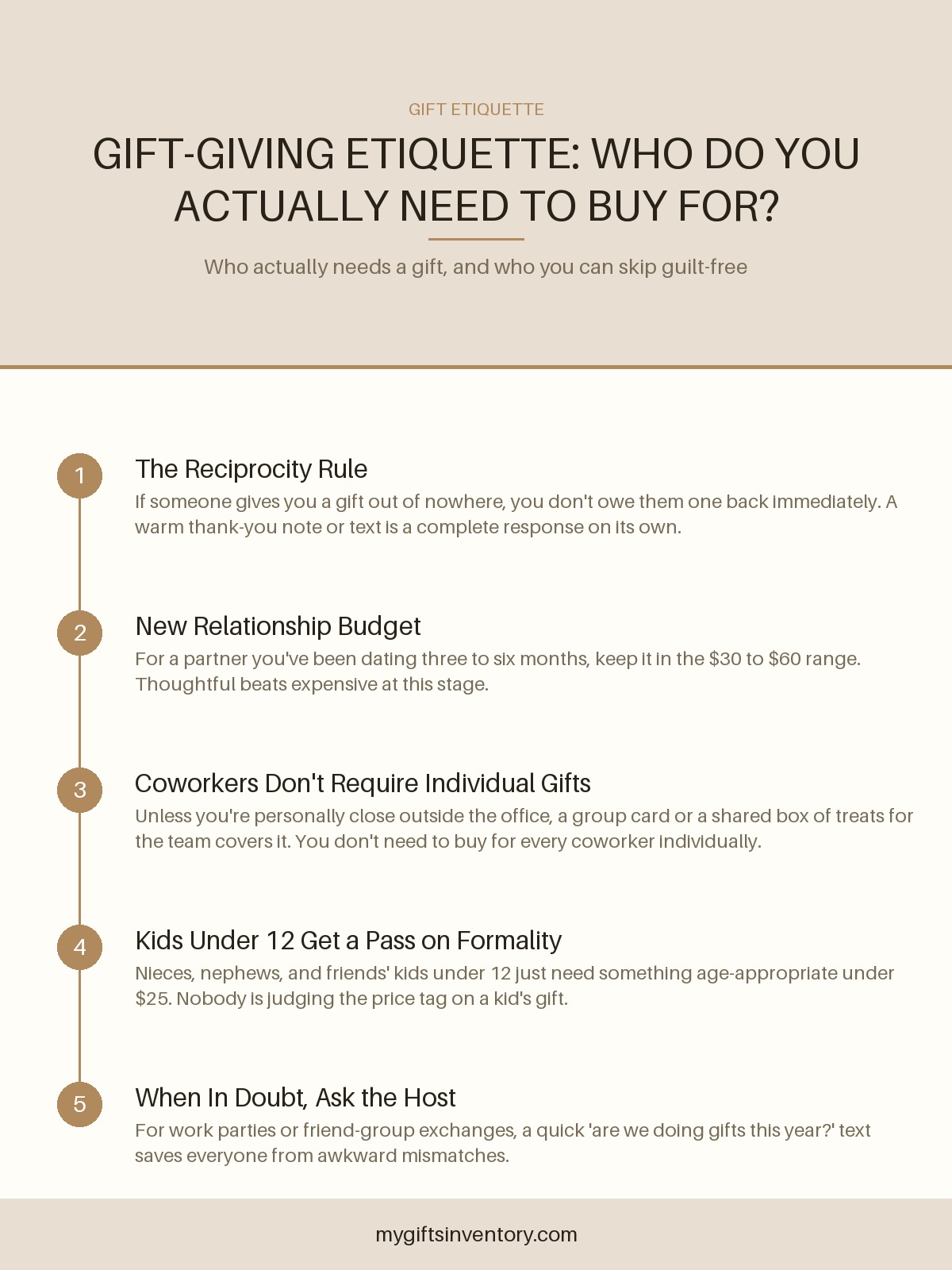
For coworkers or group settings, keep it lighter and collective. “We’re doing a no-gift birthday lunch in the break room — just bring yourself and maybe a story about [person].” Peer pressure works in your favor here.
Host-gift culture is different. If you are invited to someone else’s home and they have not asked for no gifts, a small consumable or bottle is still polite. The no-gifts rule applies to your own event.
What to Do When Someone Brings a Gift Anyway
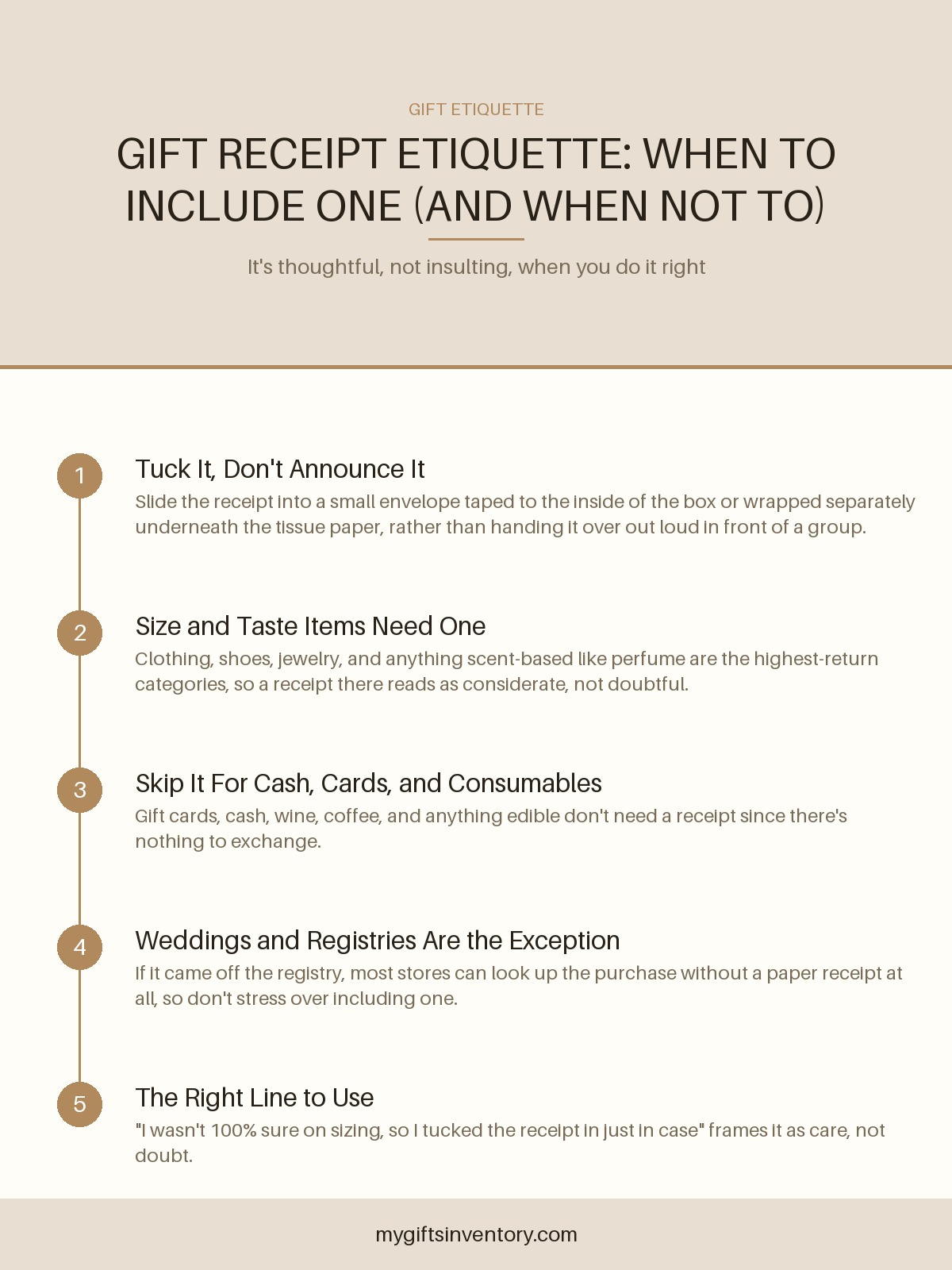
It will happen. Smile, say thank you by name, and set the package aside without opening it in front of everyone if that feels easier. “You are so thoughtful — thank you. I’m going to save this for later so I can enjoy it properly.” Then move the conversation on.
Open it after the party, send a genuine thank-you note, and use or donate the item without guilt. Refusing a gift at the door usually creates more discomfort than accepting it gracefully. The goal was fewer presents, not a perfect score.
If the same person repeatedly ignores the request, a private conversation later can help: “I really meant the no-gifts note. It would actually make me happier if we kept future birthdays simple.” Most people adjust once they understand it is about your preference, not a rejection of them.
Weddings, Holidays, and Bigger Gatherings
Weddings amplify everything. Guests travel, spend on clothes and hotels, and feel the cultural weight of a present. A clear line on the website and invite helps: “Your presence is present enough. We kindly request no gifts.” If you have a charity or honeymoon fund, link it once without pressure.
For multi-generational holidays, decide as a household first. Then communicate early to the wider family. Some families shift to white-elephant or experience exchanges. Others set a firm dollar cap or “homemade only” rule. Consistency year to year trains everyone.
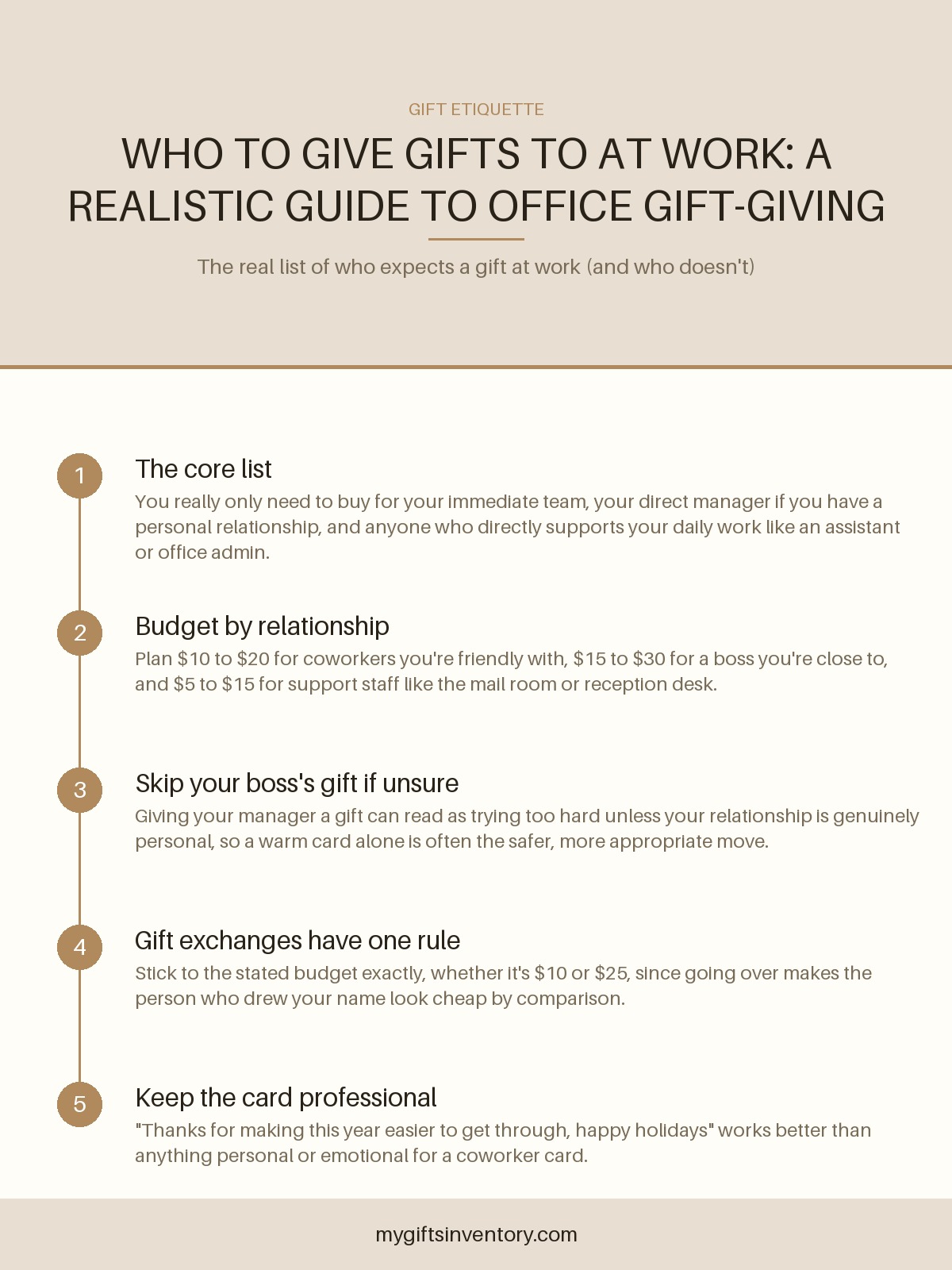
Corporate or office celebrations follow similar logic. A simple “no gifts, just good food and company” keeps the focus professional. If the group still wants to mark the occasion, a shared experience or a single group card often feels better than a pile of random items. For inspiration on low-obligation office gestures, the ideas in corporate gifts that do not feel like chores stay useful even when the official request is none.
Making the Day Feel Special Without Presents
Guests sometimes worry the celebration will feel flat. Counter that by leaning into the non-stuff parts: a favorite meal, a playlist, a short toast, photo booth props, or a group activity. For a child, a themed craft or outdoor game replaces the gift table energy. For adults, good food and unhurried conversation do more than another scented candle.
If you yourself feel odd receiving nothing, remember that the people who matter will still show care through time and attention. The ones who only relate through shopping were always going to be a lighter connection.
A Quick Planning Timeline
Four to six weeks out: decide your stance and any alternative. Draft the invite wording.
Three weeks out: send invites with the clear line.
Two weeks out: personally message the three to five people most likely to over-give.
One week out: final headcount. Mentally prepare your gracious acceptance script for the inevitable package.
Day of: enjoy the people. Handle gifts with thanks and set them aside.
Day after: thank-you notes for anything that arrived, plus a general “so glad you came” message to the group.
Asking for no gifts is not selfish. It is a boundary that protects your space, your budget, and often the planet from more unused objects. Done with warmth and a little specificity, most guests feel relieved rather than offended. They get to skip the store, you get to skip the clutter, and the day stays about the reason you gathered in the first place.
Frequently Asked Questions
Is it rude to ask for no gifts?
No. It is considerate when done kindly and early. Most people appreciate the guidance, especially when money or storage is tight. Rudeness comes from sounding demanding or failing to thank anyone who still brings something.
What should I do if someone brings a gift after I asked for none?
Accept it graciously with a specific thank-you, set it aside, and open it later. Send a note afterward. Confronting them at the party usually makes everyone uncomfortable. A private conversation only becomes useful if the same person keeps ignoring the request at future events.
How do I ask for no gifts at a kids’ birthday party?
Put a clear line on the invite: “No gifts please — just come ready to play.” Follow up with grandparents and close relatives by phone or text so they hear the reason and an alternative such as a book or donation. Kids rarely mind; the adults need the clarity.
Can I still have a registry if I say no gifts?
Yes, but be transparent. “We kindly prefer no gifts, but if you wish to contribute we have a small registry of experiences and practical items” works. A full traditional registry paired with a strong no-gifts message confuses people. Choose one primary message.
What are good alternatives to suggest instead of physical gifts?
Donations to a named charity, a bottle of wine or dessert to share, a handwritten letter, or a future shared experience all work well. Consumable or low-clutter options let generous guests participate without filling your closets. Keep the alternative list to one or two choices so the decision stays easy.