How to Politely Ask for Cash Gifts (Wording That Doesn't Feel Awkward)
Real wording, placement tips, and etiquette rules for asking guests for cash instead of gifts at weddings, showers, graduations, and milestone birthdays.
As an Amazon Associate, My Gifts Inventory earns from qualifying purchases. We only recommend products we'd genuinely consider buying ourselves.
There's a specific kind of stomach-drop that happens when you realize you need money for a house down payment, a honeymoon, or student loans more than you need another candle or picture frame, and you have absolutely no idea how to say that out loud without sounding grabby. You're not imagining the awkwardness. Cash requests still make a lot of people flinch, even though it's one of the most useful gifts anyone can receive. The good news is that there's a right way to do this, and it has nothing to do with being blunt or apologetic.
Why This Feels So Uncomfortable (And Why It Doesn't Have To)
Most of the discomfort around asking for cash comes from an old, unspoken rule that gifts are supposed to be a surprise, chosen with thought, and never explicitly requested. But that rule was built for a world with fewer housing costs, fewer destination weddings, and a lot less student debt. Plenty of guests genuinely prefer writing a check because it's fast, it's useful, and it removes the guesswork of picking something the couple or graduate actually wants. The key is separating the request itself from how it's delivered. A direct ask on a printed invitation reads as tacky. The exact same request, worded warmly and placed in the right spot, reads as thoughtful and considerate of your guests' time.
The Golden Rules Before You Write A Single Word
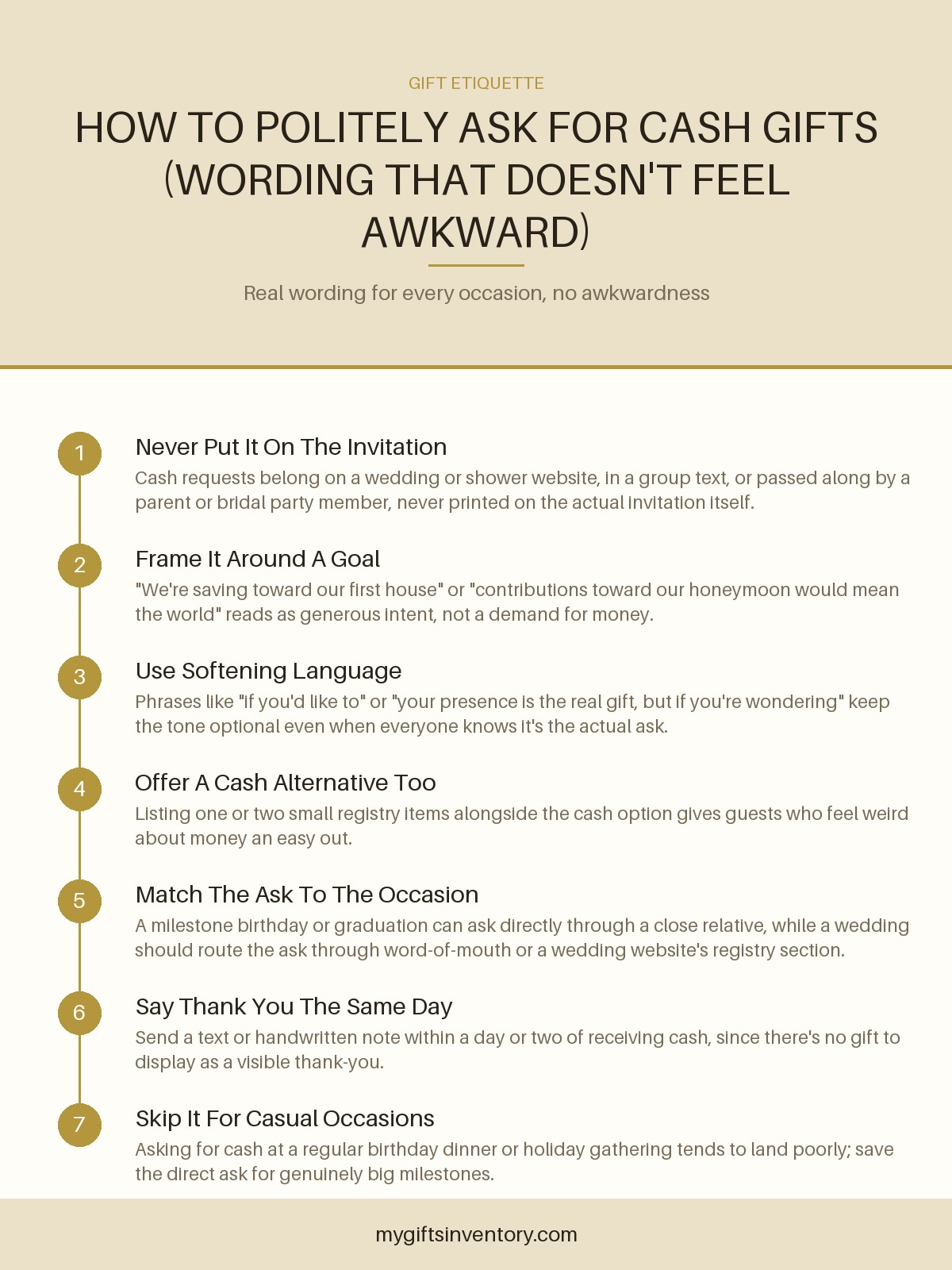
Never Put It On The Invitation Itself
This is the one rule almost every etiquette source agrees on, and for good reason. An invitation is meant to invite someone to celebrate with you, not to bill them. Save the cash mention for a wedding website, a shower website, a group text, or word passed along informally by a parent or close friend.
Frame The Ask Around Something Specific
"Cash gifts appreciated" sounds transactional. "We're saving toward our first home together" or "contributions toward our honeymoon in Portugal would mean so much" gives guests a reason to feel good about writing that check. It shifts the tone from a demand to an invitation to be part of something.
Always Leave An Alternative
Even if cash is genuinely what you want, list a couple of small registry items or link to a gift guide category alongside it. Some guests will always feel more comfortable giving a physical object, and that's fine. If you're stuck for ideas to round out that list, a piece like Choosing the Perfect Gift: Tips and Ideas for Every Person and Occasion is a good one to point people toward if they ask what else you might like.
Wedding-Specific Wording
Weddings are where cash requests come up most often, largely because couples are combining households and budgets are tight after the venue and catering bills come in. Here's language that works well on a wedding website's registry page:
- "The greatest gift is having you celebrate with us. If you'd like to give something beyond your presence, a contribution to our new home fund would be deeply appreciated."
- "We're a little older and already have a fully stocked kitchen, so instead of a traditional registry we're collecting funds for our honeymoon. There's a link below if you'd like to contribute."
- "In lieu of a traditional registry, monetary gifts toward our first home are welcome and appreciated, though your presence at our wedding is truly the only gift we need."
For couples who want to give guests something more substantial to consider, especially close family who are planning to give a larger amount, it can help to have a sense of what a meaningful cash gift actually looks like at that price point. A guide like 20 Gift Ideas for Best Gifts Under $1000 is useful context for anyone weighing a bigger check against a bigger physical gift.
Baby Showers And Bridal Showers
Showers are trickier because there's already an established gift-opening tradition built into the event. If cash is what's actually needed, the softest approach is having the host mention it verbally when people ask what to bring, or including a line on the shower invitation like: "Diapers and cash contributions toward the nursery are always appreciated, alongside anything from our registry." Because showers are smaller and more intimate than weddings, a little more directness is forgivable here than it would be for a wedding invite.
Graduations And Milestone Birthdays
For graduations, cash is practically the default expectation already, which makes this one of the easiest asks to make gracefully. A parent or the graduate themselves can simply say, "She's saving for her first apartment after graduation, so cash or gift cards are her favorite kind of gift right now" when someone asks what to bring. For milestone birthdays like a 40th, 50th, or 60th, the framing usually works best around an experience: "Instead of gifts, we're asking friends to contribute toward the trip we've always wanted to take" reads far better than a flat request for money.
Retirement And Farewell Gifts
Workplace cash collections are their own category, usually organized by a coworker rather than the retiree, which sidesteps the awkwardness of anyone asking for themselves. An email like "We're pooling money for a farewell gift for Priya's last week, contribute what feels right to you by Friday" keeps amounts private and optional. If the group ends up wanting to give something alongside the cash, a browse through 21 Corporate Gift Ideas Under $50 That Won't Feel Like an Obligation can help round it out without anyone feeling pressured to spend more.
Where To Actually Say It
The placement matters as much as the wording. In order of how appropriate each channel is for a direct cash mention:
- Best: A dedicated wedding or shower website, a group text among close friends, or verbal word-of-mouth through a parent, maid of honor, or close friend who guests naturally ask "so what do they need?"
- Fine in casual settings: A group chat for a milestone birthday trip, an office email for a retirement collection, a family group text for a graduation gift.
- Avoid: The invitation itself, a thank-you card sent in advance, or anything that reads like it was mailed specifically to request money.
What About Anniversaries?
Milestone anniversaries, especially 25th and 50th ones, are another occasion where cash gets requested more often than people admit, usually to help fund a big trip or a renewed set of rings. The same rules apply: route it through a family member or an anniversary party invitation line rather than asking directly. If you're helping plan one and want a sense of what's typically given at each year, 21 Anniversary Gift Ideas by Year Under $100 is a useful reference for gauging what guests might expect to spend either way.
A Gentle Alternative: Gift Cards Instead Of Cash
If asking outright for cash still feels like too much, gift cards occupy a comfortable middle ground for a lot of families. They feel slightly more like a gift while still giving the recipient control over what they buy. Mentioning a couple of favorite retailers on a registry page, and linking to something like Walgreens gift cards or CVS gift cards for everyday practical needs, gives guests an easy default if cash feels too forward for them personally.
Saying Thank You For A Cash Gift
Because there's no physical object to reference in a thank-you note, cash gifts actually need a slightly more specific note than a typical gift would. Mention the amount is optional, but mention what it's going toward is not. Something like: "Thank you so much for your generous gift, we're putting it straight toward our down payment fund and thinking of you every time we look at houses" feels far warmer than a generic "thanks for the gift" line. Send it within a few days, not weeks, since cash gifts tend to get acknowledged faster than wrapped ones simply because there's less to unwrap and photograph.
Gift Ideas to Go With This


Want more ideas? Browse our full guide: 20 Best Gifts Under $100 (2026): Thoughtful Picks They'll Actually Use
Frequently Asked Questions
Is it rude to ask for cash instead of gifts?
It's not rude as long as the request is worded warmly and placed somewhere other than the invitation itself, such as a wedding website or passed along by a close family member. Framing it around a specific goal, like a honeymoon or first home, makes it feel like an invitation rather than a demand.
How do you word a wedding invitation for cash gifts?
You don't put it on the invitation at all. Instead, use a wedding website line like "In lieu of a traditional registry, contributions toward our first home would be deeply appreciated" and let guests find it there or hear about it through the bridal party.
How much cash is appropriate to give as a wedding gift?
Typical ranges run from about $75 to $150 per person for a friend or coworker's wedding, and $150 to $300 or more for close family or a couple you're very close to, though this shifts based on your region and the formality of the event. Many guests also base the amount loosely on covering their own plate cost at the reception.
Can you ask for cash on a baby shower invitation?
A soft mention works better than a direct line on the invitation, such as the host saying "diapers and cash contributions toward the nursery are appreciated, alongside anything from the registry" when guests ask what to bring. Because showers are more intimate gatherings, a little more directness than a wedding is generally forgiven.
What should you write in a card when giving cash instead of a wrapped gift?
A short personal note works better than an explanation of why you chose cash. Something like "Wishing you both a lifetime of happiness, we hope this helps with whatever you need most right now" keeps the tone warm without drawing attention to the fact that there's no box to open.
Looking for an Actual Gift Instead?
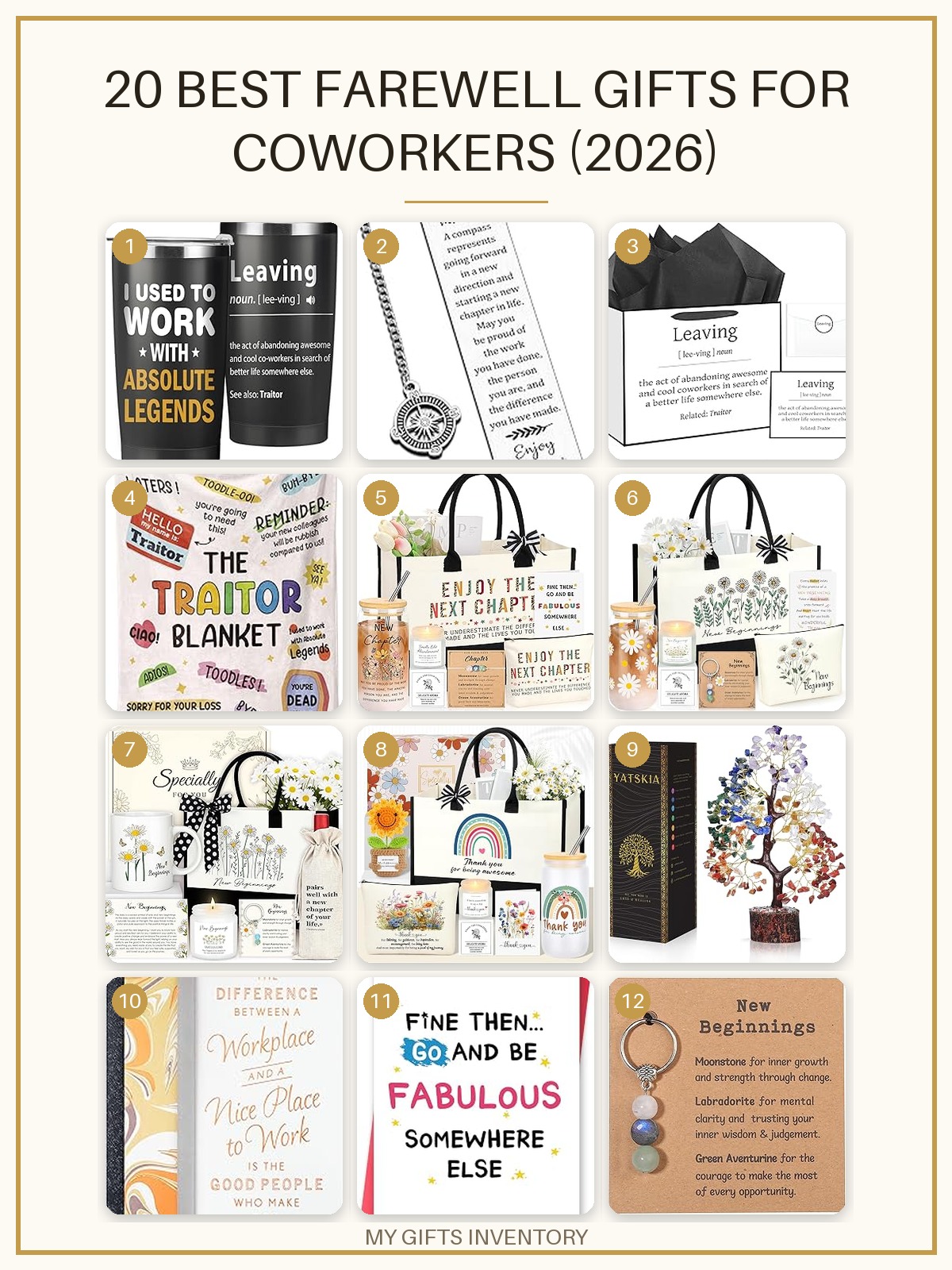

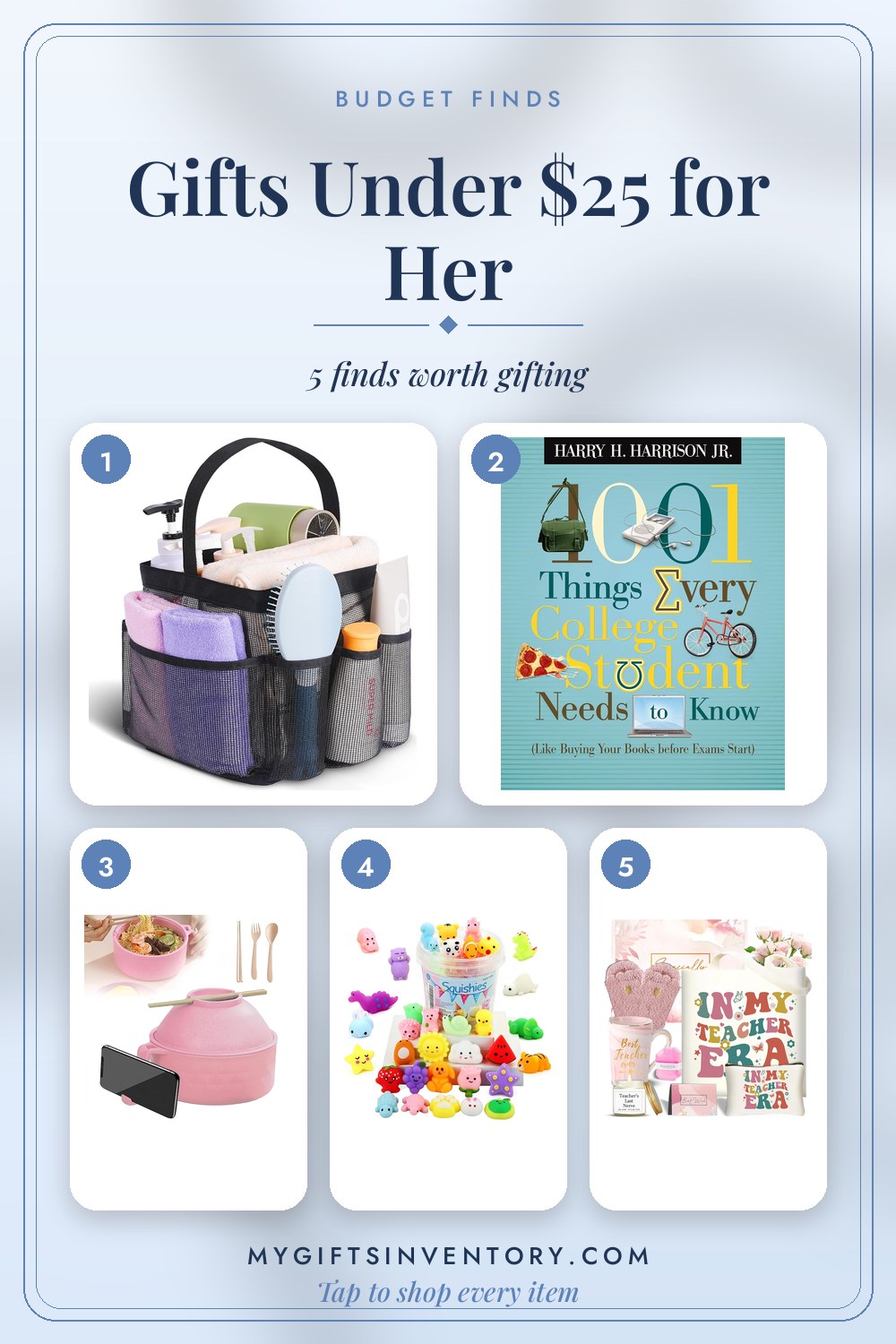
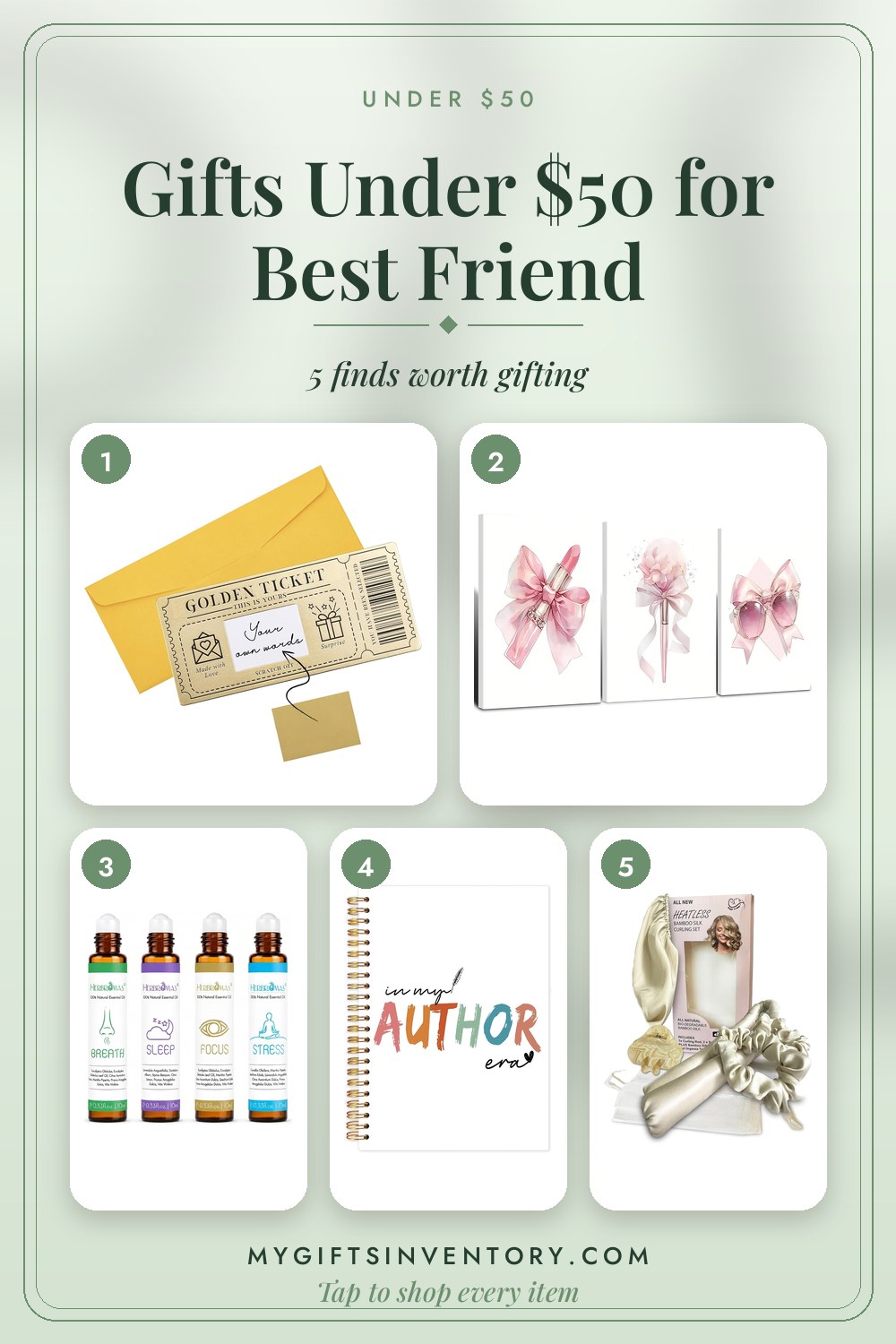
Gift Sets We Love Right Now
Every item picked, priced and linked, ready to buy.
More Gift Advice