Office Gift Giving Etiquette: Budgets, Rules & What to Write in the Card
Office gifts are a minefield of budgets, hierarchies, and group chats. Here's how much to spend, what to give your boss, and how to handle the awkward parts.
As an Amazon Associate, My Gifts Inventory earns from qualifying purchases. We only recommend products we'd genuinely consider buying ourselves.
You've got a group chat going about the office gift exchange, a card circulating that you need to sign by Thursday, and someone just asked whether you're chipping in for the boss. Suddenly a simple question ("what do I get my coworker?") has turned into a small social minefield. We hear this one a lot, and the good news is that office gift giving runs on a handful of unwritten rules once you know them. Below is what we'd tell a friend who asked us over coffee.
The Three Rules That Govern Everything Else
Before you think about a single present, get these three principles straight. Almost every awkward office gift situation traces back to breaking one of them.
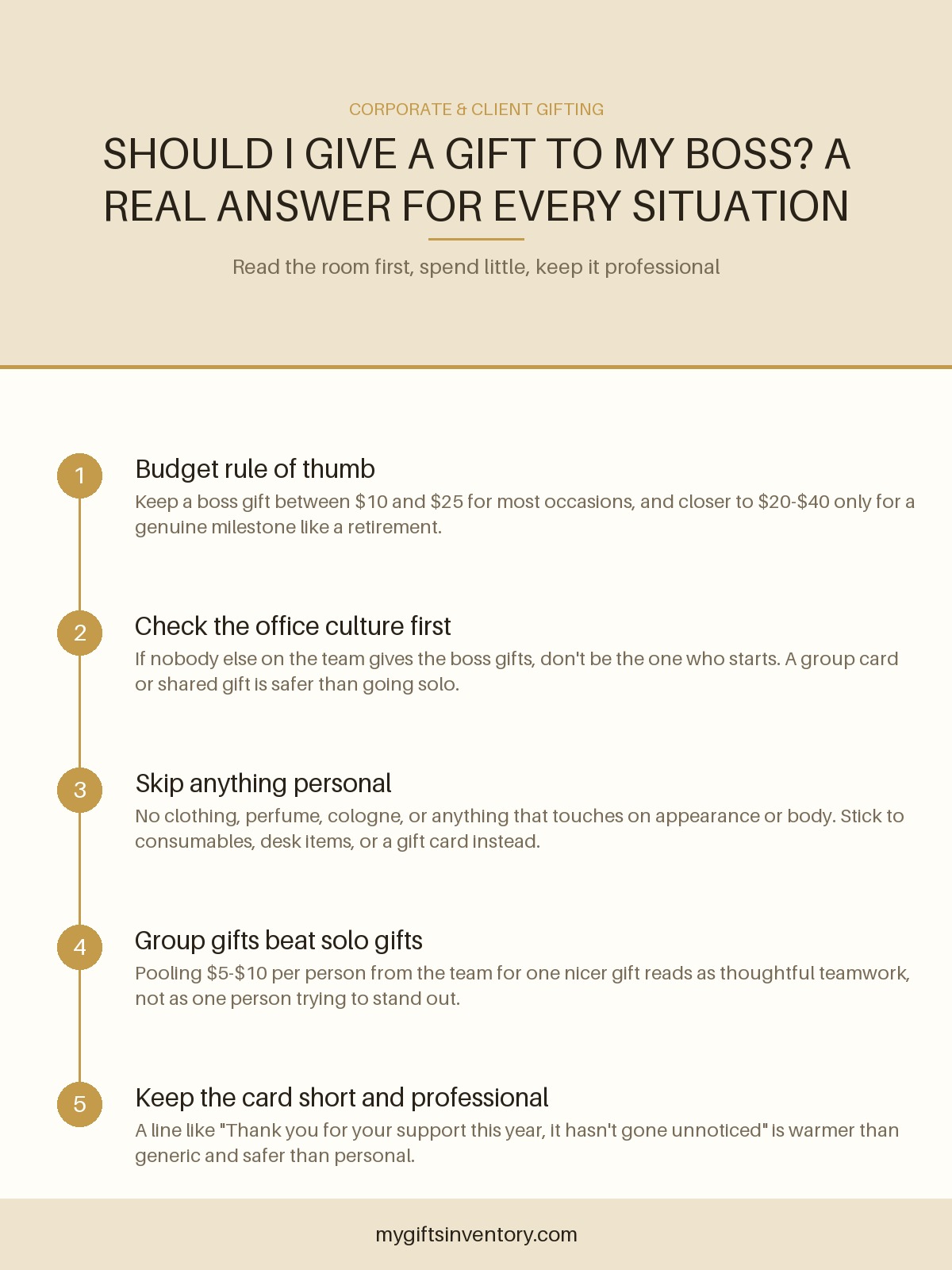
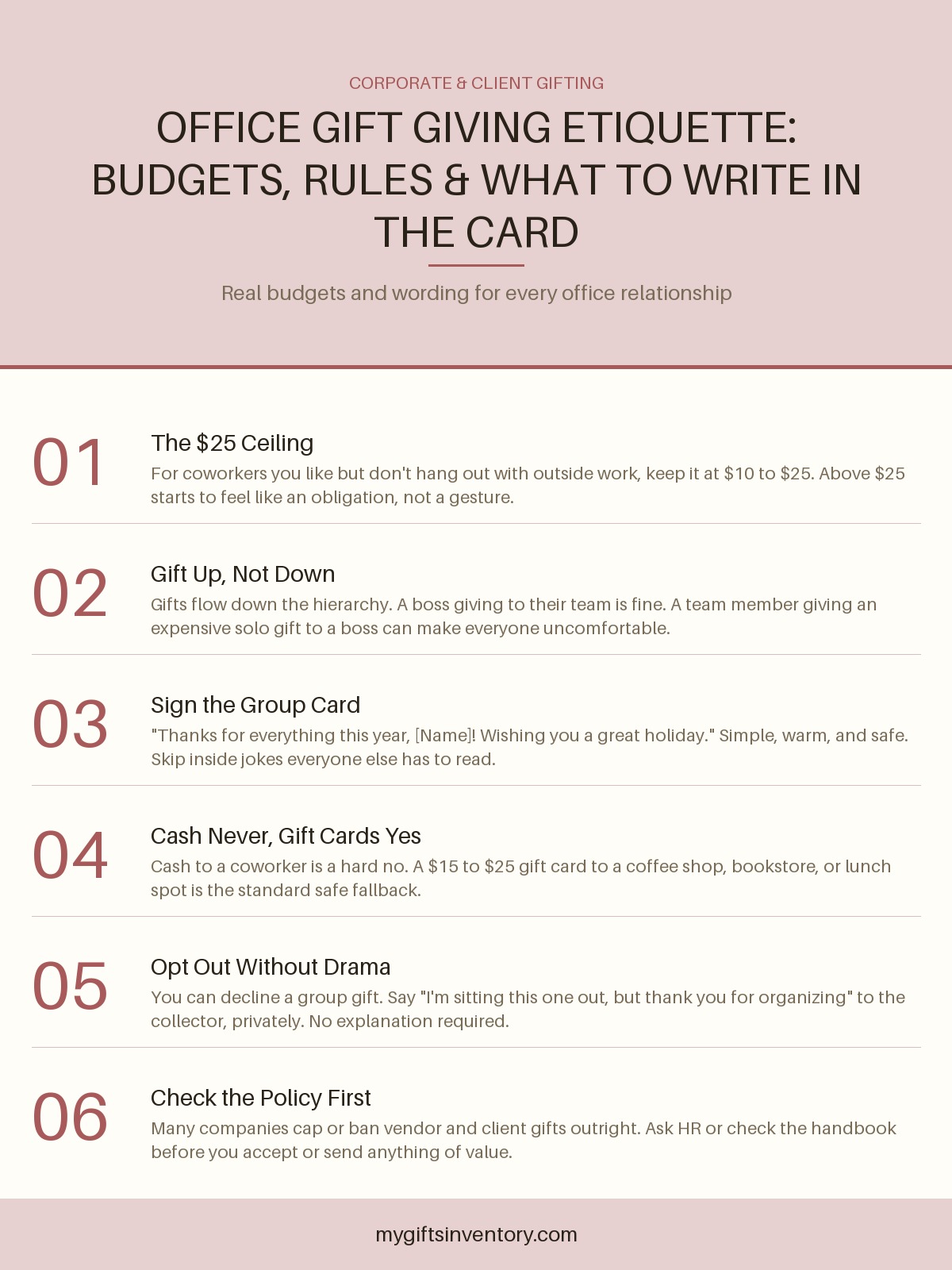
Rule one: gifts flow down, not up. In a workplace, it's normal and expected for a manager to give something small to their direct reports. It's a lot trickier the other way around. A junior employee giving an expensive solo gift to their boss can create real discomfort, because it looks like favor-currying and makes the boss wonder if they now need to reciprocate in kind. If your team wants to acknowledge a manager, do it as a group with a modest pooled gift and a card everyone signs.
Rule two: keep it professional, not personal. Perfume, lingerie, alcohol, anything about someone's body, weight, or appearance, and anything overtly romantic are all off the table. So is anything with a political or religious message unless you genuinely know the person's views and the workplace culture supports it. What's left is a wide, safe middle: food, coffee, desk items, plants, gift cards, experiences, and small useful things.
Rule three: opt out gracefully, never loudly. You are allowed to skip a gift exchange, a collection, or a holiday event. You are not allowed to make the person organizing it feel bad for asking. "I'm sitting this one out, but thanks for pulling it together" sent privately to the collector is all you need. No justification, no debate.
How Much to Spend: Real Numbers by Relationship
Money is where most of the anxiety lives, so here are numbers we'd actually use. These assume a typical U.S. office; adjust slightly for cost of living and company culture.
Your immediate team (peers you work with daily)
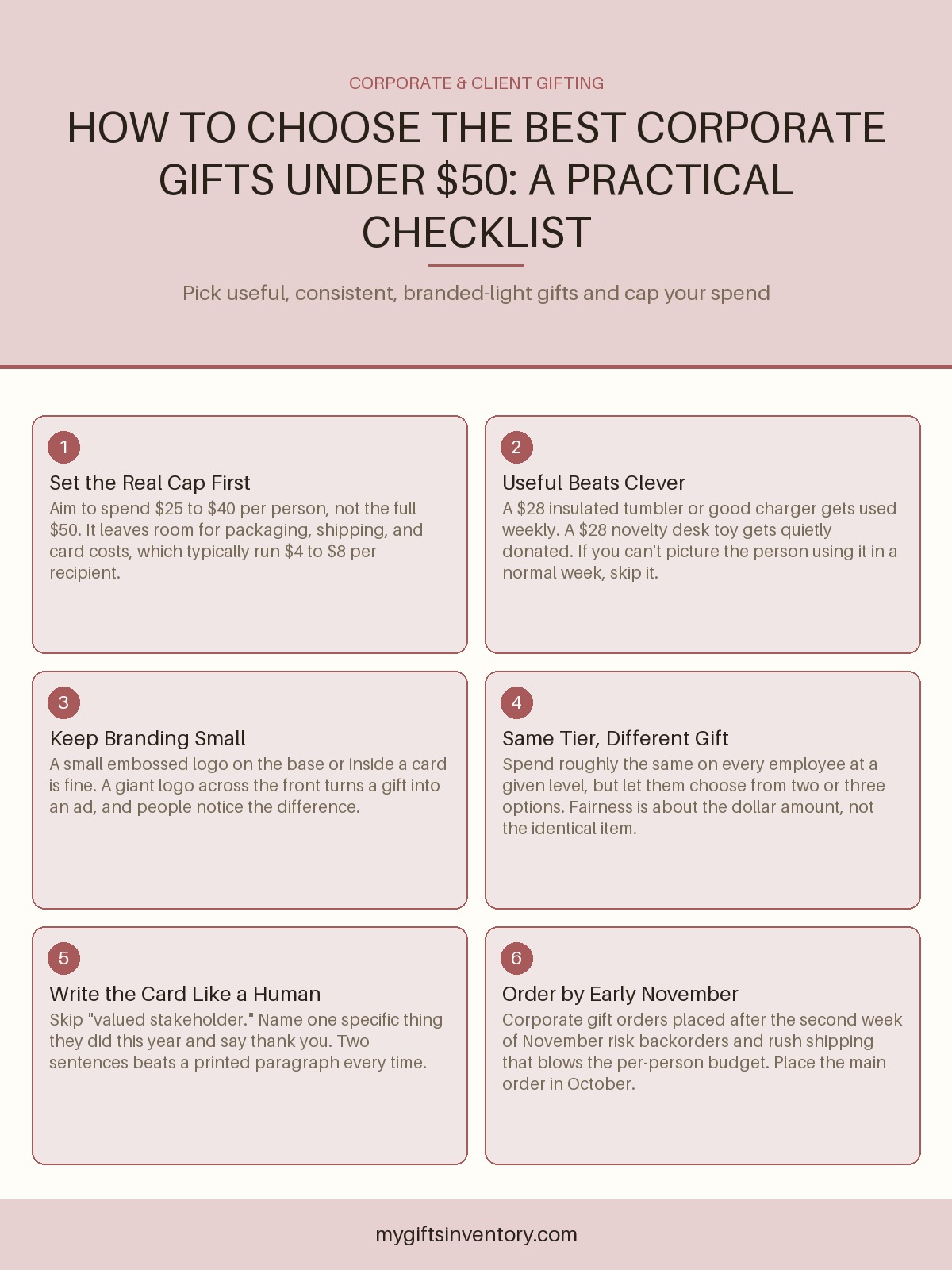
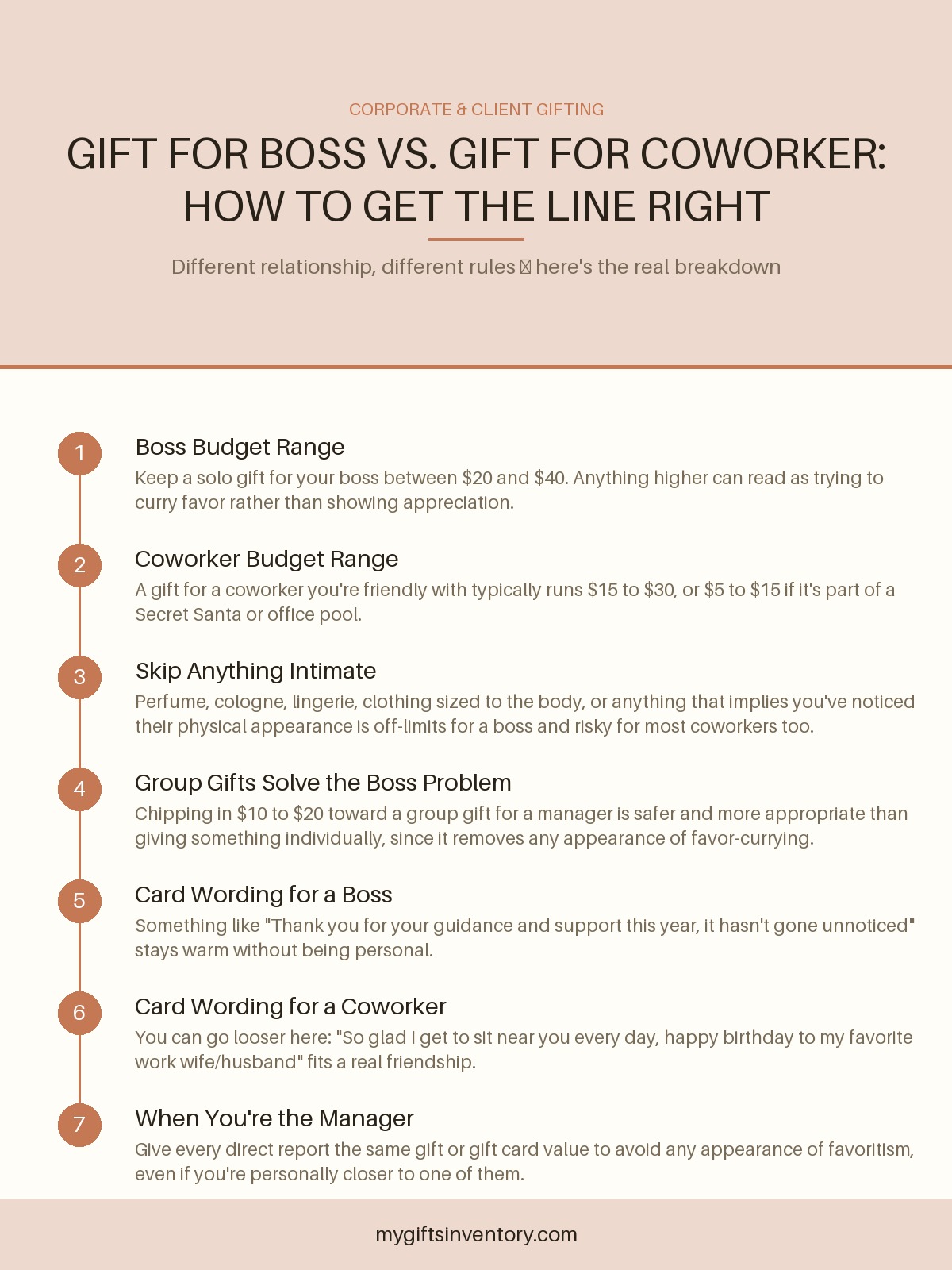
$10 to $25 per person is the standard sweet spot. If you're doing gifts for four teammates, budget $40 to $100 total. If you're covering eight or more people, switch to a single shared gift like a treat basket for the team instead of individual presents.
Your boss or manager
If you're giving solo, $15 to $25 max, and ideally as part of a group. If your team pools money, $5 to $15 per person chipping in is the norm, so a ten-person team assembles a $50 to $150 gift. Anything much above that starts to feel like it needs to be reported somewhere, and some companies actually require that.
Your direct reports
This is where a manager can be more generous without it being weird. $25 to $50 per report is common, and it should be equal across the team unless there's an obvious reason (like a milestone) to do something extra for one person. Public unevenness causes problems.
Secret Santa or white elephant exchanges
The cap is the cap. If it says $20, you spend $20. Not $22, not $18 with a bonus homemade item. The whole point of the cap is that nobody has to feel weird, and quietly over-spending ruins that for everyone involved.
People you barely know
A card, or a card with a $5 coffee gift card tucked in, is completely sufficient. Nobody expects a real present from the person two desks over whose name they had to look up.
Client and Vendor Gifts: The Rules Are Different
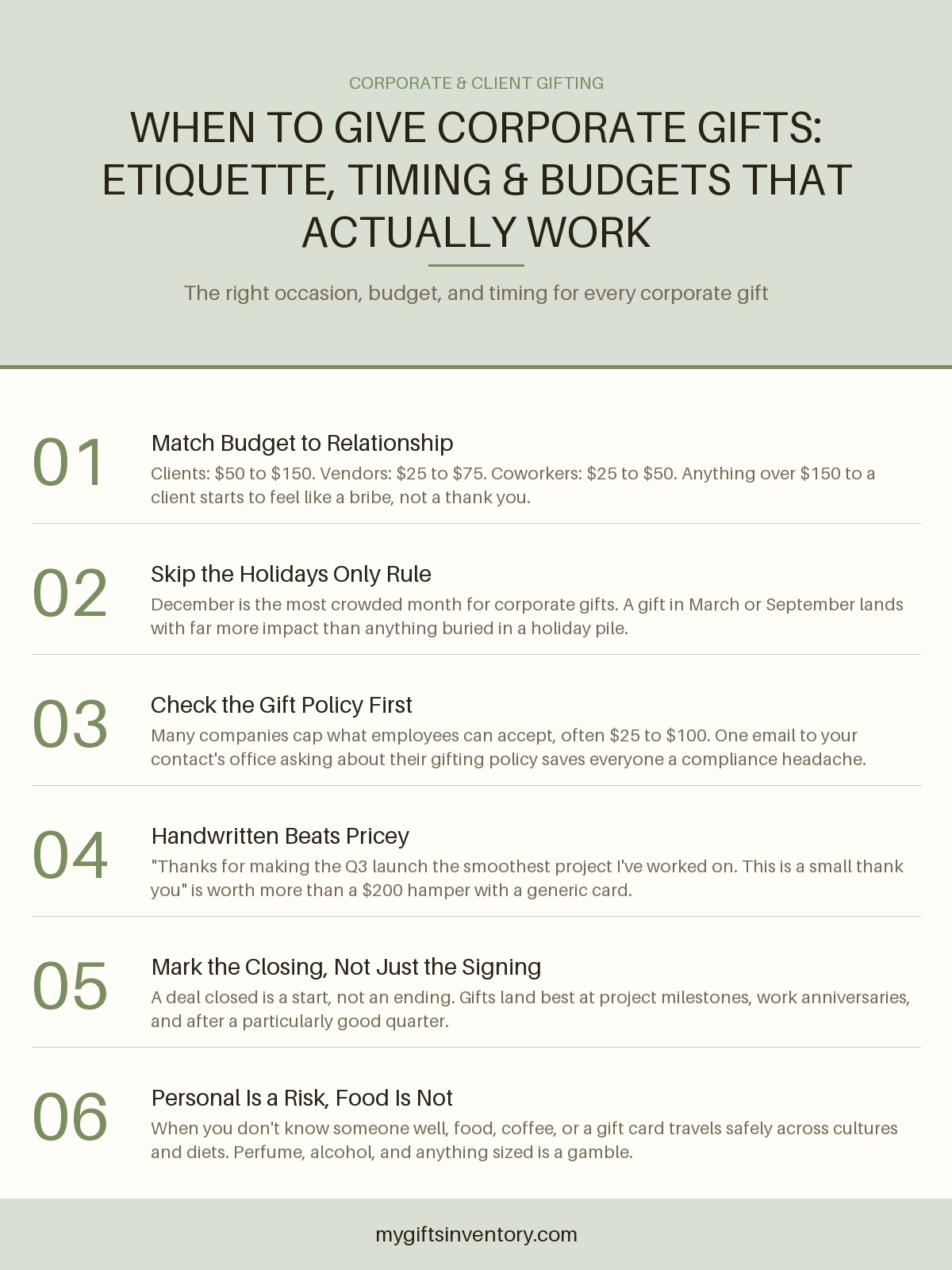
Gifts to clients, vendors, and business partners fall under a different set of norms than coworker gifts, and many employers have a written policy governing them. Two things to check before you buy anything:
Your own company's policy. Many organizations cap what you can give or accept from external parties, and some ban it outright. Ask HR or search your employee handbook for "gifts" before you assume you're free to send a nice bottle of wine to a client contact.
Their policy. Governments, healthcare organizations, and financial firms often have strict gift limits for employees, sometimes as low as $25 or a flat prohibition. A well-intentioned gift that puts your contact in a compliance bind is worse than no gift at all, so a quick "does your company have any rules about this?" is a completely normal question to ask.
When in doubt, the safest client gift is something consumable and shareable with a modest price tag: a good box of chocolates, a coffee subscription, a nice notebook. Nobody has to disclose a tin of cookies.
Gift cards are also a clean option if you know the person's tastes at all. If you're going that route, we've put together breakdowns on how to check the balance on gift cards at brands like Trader Joe's and Spotify, which is handy when someone hands you a card and you want to confirm it's loaded before you plan your order.
The Group Gift: How to Run It Without Making Enemies
Organizing a collection is a small logistical job with a lot of social landmines. Here's how we'd do it.
Set the amount clearly and once. "We're collecting $15 each for Maria's gift, Venmo me by Friday" is all anyone needs. Changing the number, adding a "suggested" and then a "minimum," or chasing people repeatedly all make it worse.
Never name names about who hasn't paid. If someone hasn't chipped in by the deadline, message them privately once. If they don't respond, let it go and cover the shortfall or scale the gift down.
Set the gift budget before you collect, not after. If you collect $15 from eight people, you have $120. Decide what that buys and buy it. Don't collect first and then scramble for something to spend it on, which is how people end up with a $200 vase nobody wanted.
Make opting out frictionless. A simple "no pressure, let me know either way" in the original message does most of the work. People opt out because of money, personal beliefs, or a rough week, and none of that is your business.
What to Actually Get: Categories That Always Work
Once you've settled the budget and the relationship, the specific gift gets much easier. These categories land well almost universally in office settings:
- Food and drink that doesn't require knowing dietary restrictions: good coffee beans, premium tea, a nice box of chocolates, a snack assortment.
- Desk upgrades that fit a standard workplace: a quality pen, a small plant, a desktop organizer, a nicer mug. We have a whole roundup on insulated tumblers and bottles if you want something in the $25 to $40 range that gets used every single day.
- Gift cards to a coffee shop, bookstore, streaming service, or local lunch spot. Uninspired, but reliably appreciated.
- Experiences when your workplace allows: a pair of movie tickets, a museum membership, a class the person has mentioned wanting to take.
- Things they've mentioned wanting during the year. Keep a small note on your phone. This is how good office gifts actually happen.
If you're shopping for a colleague and you know roughly what they're into, our headphone gift guide covers everything from budget earbuds to premium over-ear options, and noise-canceling anything is a genuinely useful gift for someone with a long commute or a loud office. For something smaller and more personal, body care and candle gift sets work well when you know the person and don't want to default to a mug.
The Card Matters More Than the Gift
People remember what you wrote. They mostly forget what you spent. A generic "Happy Holidays!" from a boss to their team reads as an obligation. Even five specific words change that.
Wording for a coworker
"Happy holidays, [Name]! Working with you on [project] this year was genuinely a highlight. Enjoy the break."
"Thanks for being such a great teammate this year. I hope the holidays are restful and full of good food."
"Happy holidays! May your inbox stay empty for at least two weeks."
Wording for your boss
"Thank you for a great year, [Name]. I've learned a lot working with you, and I'm grateful for it. Happy holidays."
That's it. Warm, brief, and professional. Don't get cute, don't reference anything that'll read awkwardly in a group card, and definitely don't put anything in there you wouldn't want HR to see.
Wording for your team, from a manager
"Thank you all for an incredible year. Every one of you made this team better, and I don't say that lightly. Enjoy the holiday, and I'll see you in January."
Add one specific line about each person if you're writing individual cards. That specificity is the whole gesture.
What to write inside a group card
Sign your name. Add a short line, not an essay. Group cards scroll fast, and an overly personal note from one person makes everyone else's two-word sign-off look lazy. Save the real note for the individual card.
Handling the Awkward Parts
Someone gave you a gift and you didn't get them one
Thank them sincerely in the moment, then reciprocate small within a week or two. A coffee gift card, a nice box of chocolates, or a genuinely thoughtful card is more than enough. Don't apologize repeatedly or make a production of it. The gift was a gesture, not a transaction.
You don't celebrate the holiday
You don't have to participate. If you want to stay in the social mix without observing anything specific, "I don't celebrate, but I hope you have a great holiday" is warm and clean. If you want to exchange gifts but avoid the holiday framing, offer a "winter gift" or a general year-end thank-you instead.
Someone gives you something expensive and you feel obligated
You're not. Etiquette doesn't require matching value. Send a handwritten thank-you and let it stand. If the person repeatedly escalates, that's a them problem, not a you problem.
You have no idea what to get them
Ask. "Hey, I want to get you something small for the holidays. Anything you've had your eye on?" People love answering this. It saves you from buying a fourth scented candle for someone who hates scented candles.
Your office banned gifts entirely
A card is still fine almost everywhere. If even that's restricted, a sincere emailed thank-you or a kind word in person costs nothing and means a lot.
Planning Timeline So This Isn't a Thanksgiving-Eve Panic
Office gifts are easy to get right if you start early and impossible to get right if you start the day before. Here's the timeline we'd actually use:
- Early November: Figure out your budget and who's on your list. Check your company's gift policy if any gifts go external.
- Mid November: Kick off any group collections so people have time to pay. Confirm the Secret Santa cap and roster.
- Late November: Buy physical gifts. Shipping gets slower and stock gets thinner the closer you get to December.
- First week of December: Buy gift cards, order any custom or engraved items, write your cards.
- Second week of December: Hand things out before the office starts thinning out for travel. Most teams are missing at least a third of their people by the third week.
The one thing that saves people more than anything else on this list is writing card messages early. Sitting with a stack of blank cards on the last day before break is how "Happy Holidays!" from a stranger happens.
Gift Ideas to Go With This


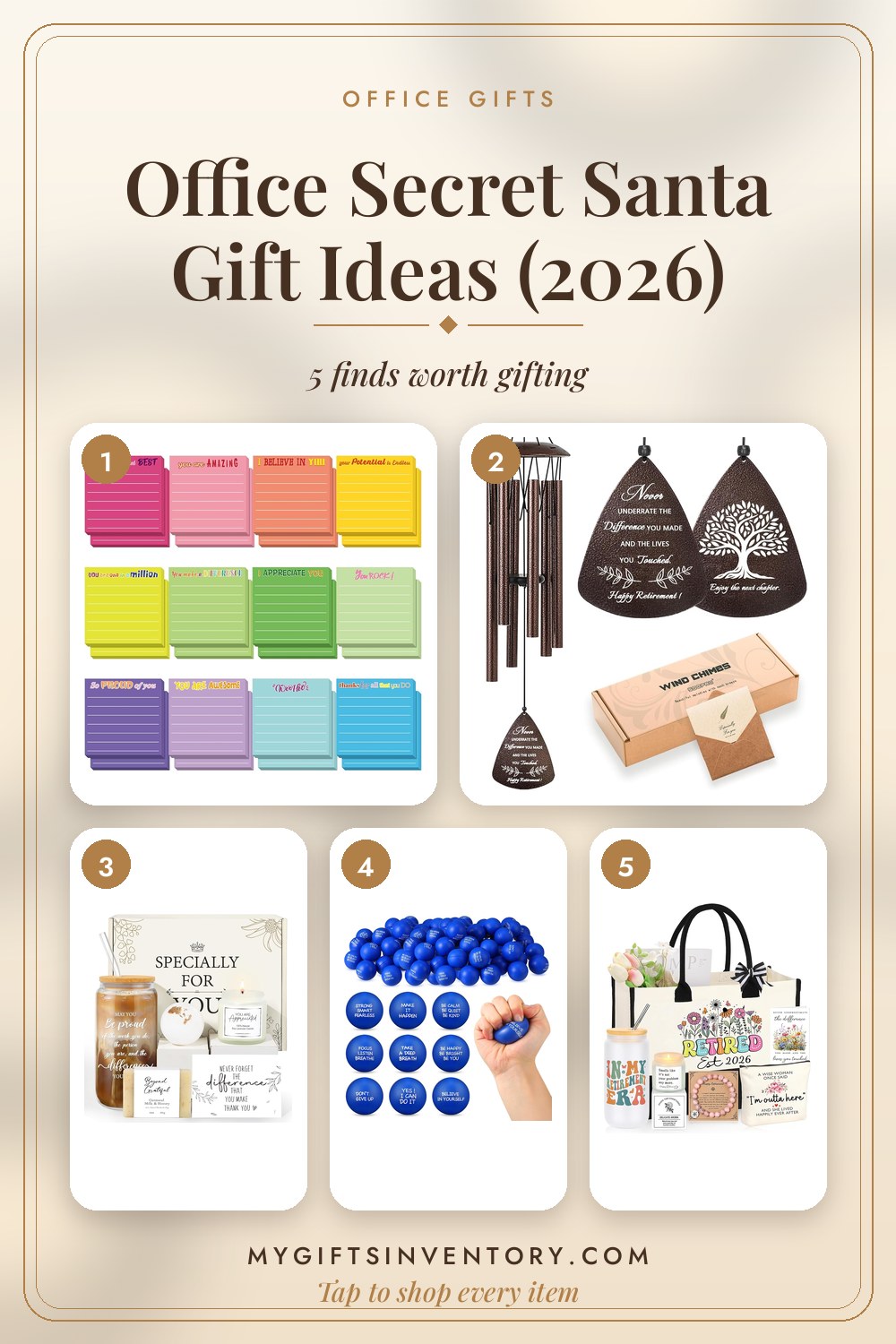
Want more ideas? Browse our full guide: 21 Corporate & Employee Gift Ideas Under $50 (2026) That Won't Feel Like an Obligation
Frequently Asked Questions
Is it okay to give a gift to my boss?
Yes, but keep it modest and preferably group-organized. A pool of $5 to $15 per person from the team is standard, and anything individually above $25 starts to look like favoritism. Avoid cash and avoid anything personal. If your boss has said they don't want gifts, respect that and stick to a card.
How much should I spend on a coworker gift?
For a peer you see every day, $10 to $25 is the normal range. For acquaintances and colleagues you rarely interact with, a card or a $5 gift card is plenty. For direct reports, managers often spend $25 to $50, and the amount should be equal across the team.
What do I do if I can't afford to participate in the office gift exchange?
Skip it, and tell the organizer privately that you're sitting this one out but appreciate them organizing. You do not owe anyone an explanation. A card is a free and perfectly adequate alternative if you still want to acknowledge someone.
Is a gift card tacky for a coworker?
No. A gift card is one of the safest coworker gifts there is, because it avoids sizing, taste, dietary restrictions, and personal judgment entirely. A $15 to $25 card to a coffee shop, bookstore, or local lunch spot is warmly received nearly every time.
What should I write in a holiday card to a colleague?
Keep it short, warm, and specific. "Thanks for being such a great teammate this year. I hope the holidays are restful" is far better than a generic "Happy Holidays." Add one real detail if you have one, and skip inside jokes if the card will be read by other people.
Looking for an Actual Gift Instead?


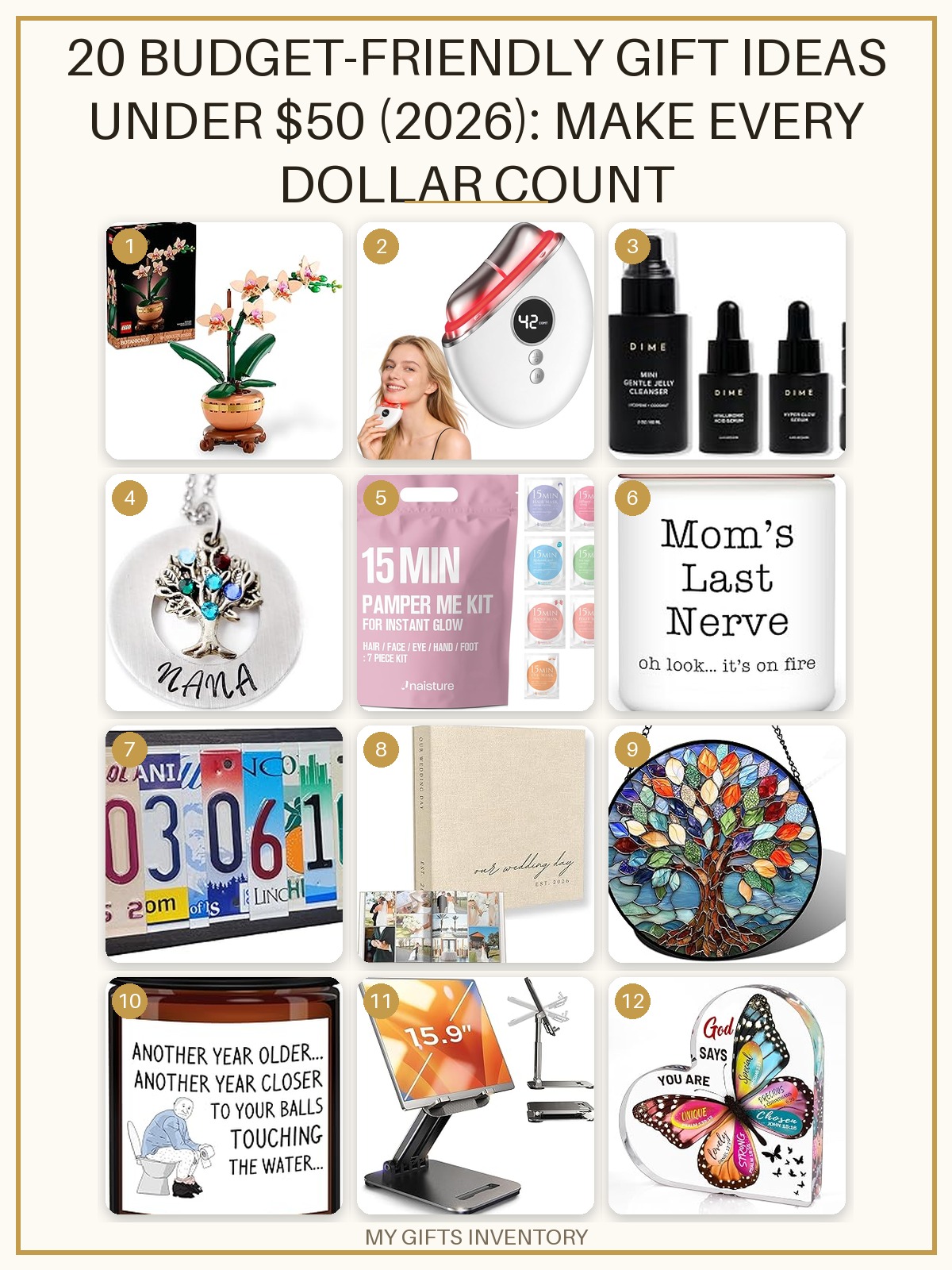
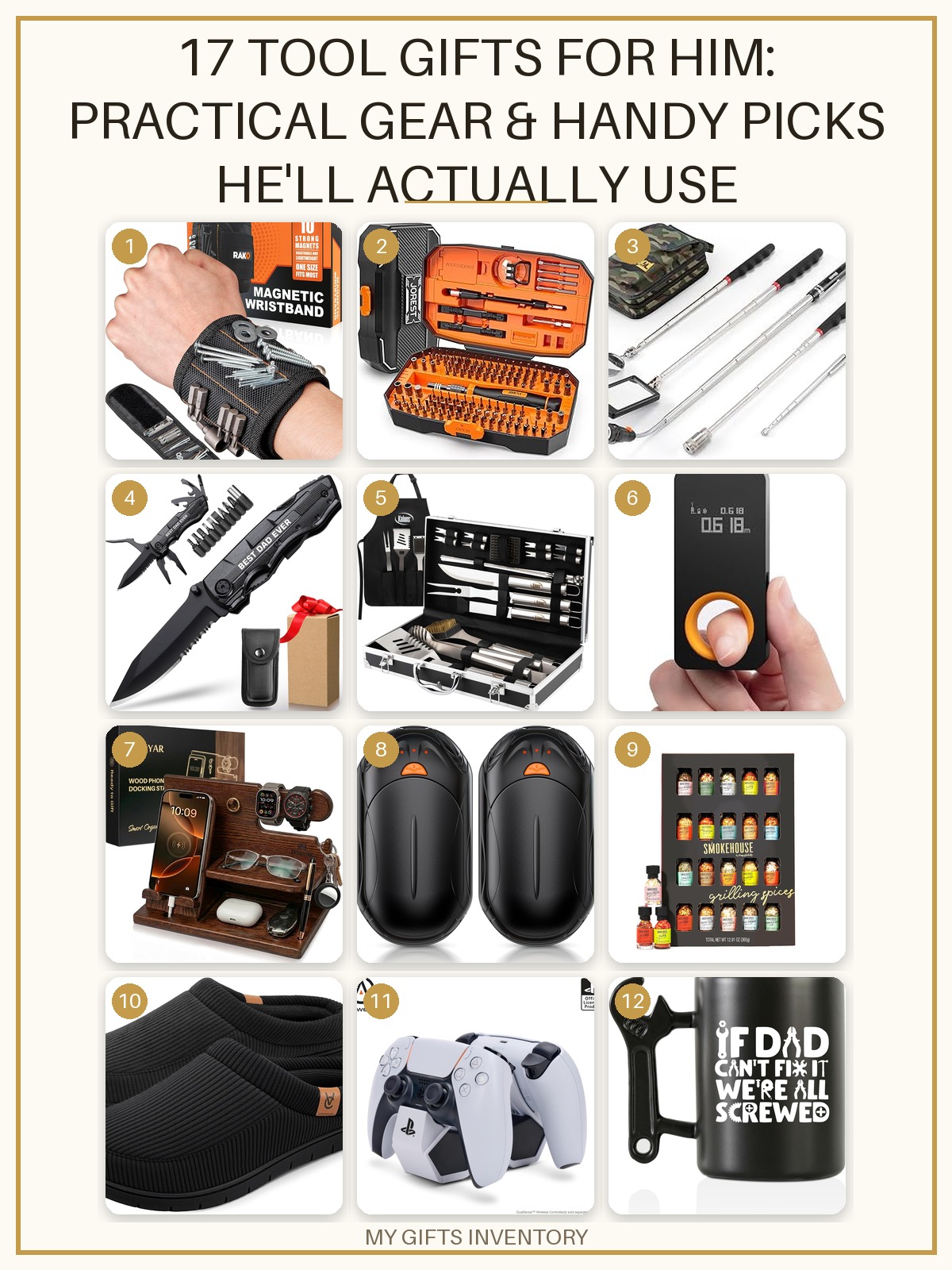
Shop Hand-Picked Gift Sets
Every item picked, priced and linked, ready to buy.

More Gift Advice