When to Give Corporate Gifts: Etiquette, Timing & Budgets That Actually Work
Corporate gifting has real rules about timing, budget, and what's appropriate. Here's when to give, when to skip, and how to do it without anyone feeling awkward.

As an Amazon Associate, My Gifts Inventory earns from qualifying purchases. We only recommend products we'd genuinely consider buying ourselves.
You're staring at a client's name in your CRM and wondering whether a gift is a nice touch or a compliance problem. Maybe your boss asked you to handle holiday gifting for twenty accounts, or a vendor just sent something lovely and you have no idea if you're supposed to reciprocate. Corporate gifting sits in that awkward space between business and personal, and getting it wrong can cost you more than getting it right earns.
We've thought through the timing question a lot, because "when" is usually the part people get stuck on. The honest answer is that there's no single date, but there are specific moments that make a gift feel thoughtful instead of obligatory, and a few moments where a gift will actively backfire. Here's how we think about it.
Start With the Question Behind the Question
Most people asking "when should I give a corporate gift" are really asking one of three things: is this occasion gift-worthy at all, will a gift make things weird, or am I going to get in trouble for this. Those are different questions with different answers, so let's separate them.
If you're gifting to a client or prospect, the stakes are relationship and compliance. If you're gifting to your own team, the stakes are morale and fairness. If you're gifting because you received something and feel obligated, the stakes are simpler than you think: you usually are not obligated at all, and a genuine thanks in writing is a perfectly complete response.
The Occasions That Genuinely Call for a Gift
Client and Vendor Relationship Milestones
A signed contract, a completed project, a first year of working together. These are the strongest corporate gift moments because they're specific, they're shared, and they're rooted in something that actually happened. A gift tied to a milestone reads as celebration. A gift that shows up out of nowhere reads as pressure.
The end of a project is especially good timing. Teams often feel a little overlooked once the work wraps, so a gift that arrives in that quiet week after launch tends to land harder than one sent at the signing.
Holiday Season, With Caveats
Yes, the holidays count, but this is the single most crowded gifting window of the year for anyone in business. Your gift is competing with dozens of others, and many of them are generic. If you're going to join the December pile, make sure the note is specific enough to survive it.
We'd argue the better play for holiday gifting is to send something in the first or second week of December, before the crush at the end of the month. It arrives when people still have time to notice it.
Work Anniversaries and Promotions
Internally, these matter more than the holidays for most people. A small gift on a five-year anniversary or a promotion signals that someone was paying attention, which is the entire point of a workplace gift.
Personal Life Moments, Carefully
New baby, wedding, significant illness. These are generous and welcome, but they carry real risk of being too much. Keep the gift small, keep it practical, and coordinate with HR if it's a company-wide collection so the person doesn't receive the same thing four times.
Thank Yous After Something Extraordinary
Someone stayed late for a launch, covered for you on a holiday weekend, or rescued a project from disaster. A gift here is gratitude with a receipt, and it's completely appropriate. This is the occasion people most often skip because they assume a thank-you email is enough. It's not, if the effort was genuinely above and beyond.
The Occasions to Skip, or Handle Differently
Don't gift during an active negotiation or procurement process. A gift that arrives mid-deal, even a small one, looks like an attempt to influence an outcome rather than a gesture of gratitude. Wait until the contract is signed.
Don't gift someone going through a layoff or reorganization, even with good intentions. It reads badly, and it can make a difficult situation worse for them.
Don't gift to compensate for something. If you missed a deadline, a gift basket doesn't fix it and pretending it does can feel cynical. Apologize directly, then send a thank-you later when you've actually delivered.
And don't gift people you've never worked with on the assumption that a gift will open a door. Cold gifting to prospects is closer to marketing than gratitude, and most people see it that way. If you want to build a relationship, invite them to something or send an article that's genuinely useful. Save the gift for after you've worked together.
What to Spend: Real Numbers by Relationship
Budgets are the part of corporate gifting that nobody wants to ask about and everybody wants an answer to. Here's what feels right to us based on what actually gets well received.
Clients
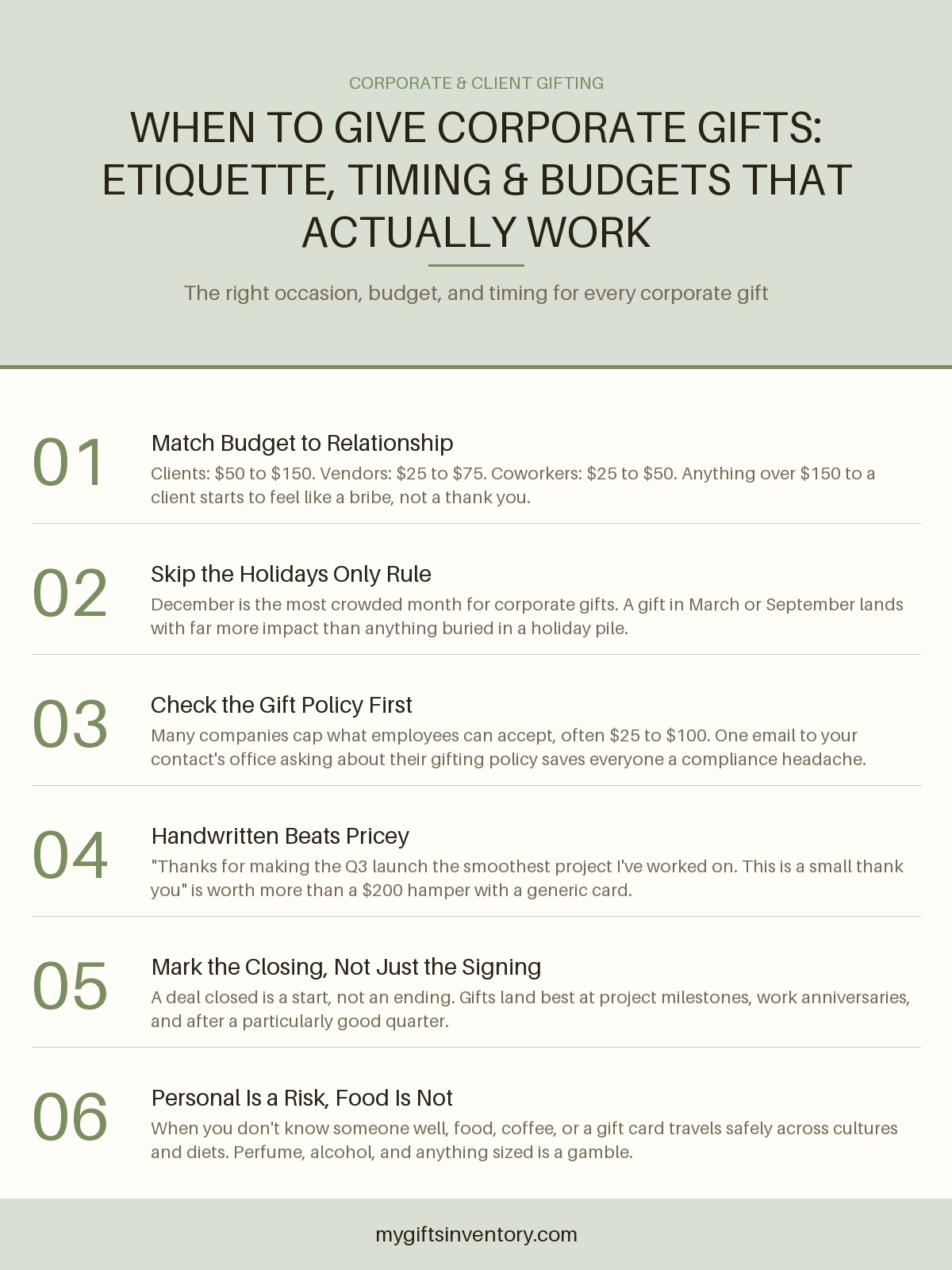
For an established client relationship, $50 to $150 is a comfortable range. Under $50 is fine and often appreciated, especially for smaller accounts. Above $150 to a client starts to look less like gratitude and more like a gift with strings. If a client relationship is worth a $300 present, the better version of that present is two thoughtful gifts across the year at different moments.
Vendors and Partners
$25 to $75 is the sweet spot. A vendor gift should feel like a genuine thank you, not a bonus. If you're sending something more substantial, consider a group gift (a catered lunch for their team) rather than an individual extravagance.
Coworkers and Direct Reports
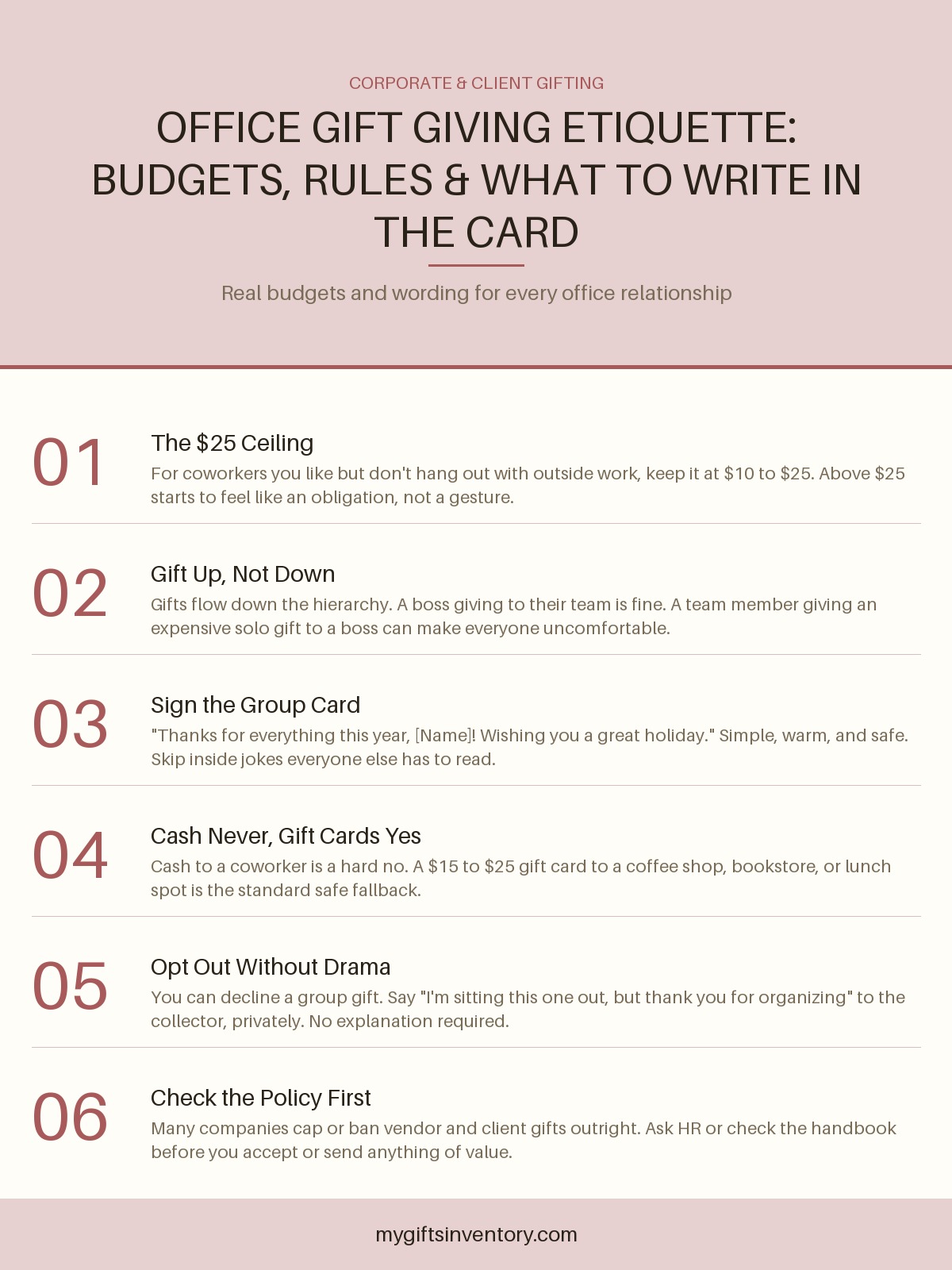
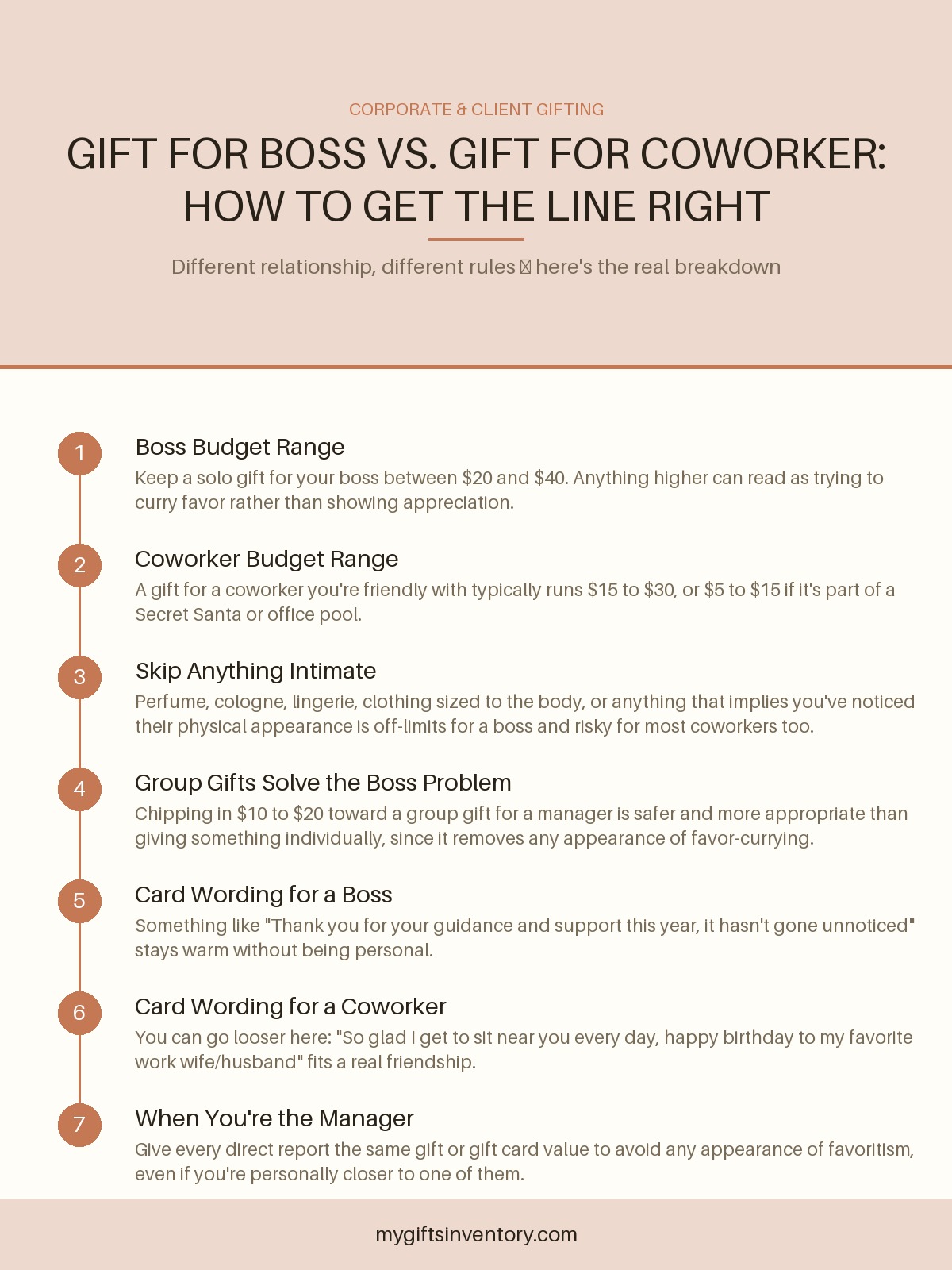
$25 to $50 per person is standard. For an entire team, the better approach is often one shared experience (a team lunch, a coffee delivery, an afternoon off) rather than individual parcels of uneven value. Uneven gifting within a team creates more tension than uniform gifting ever does. If you need ideas that sit in that range without feeling like an obligation, our guide to Christmas gifts for coworkers between $25 and $50 is built around exactly that problem.
Your Boss
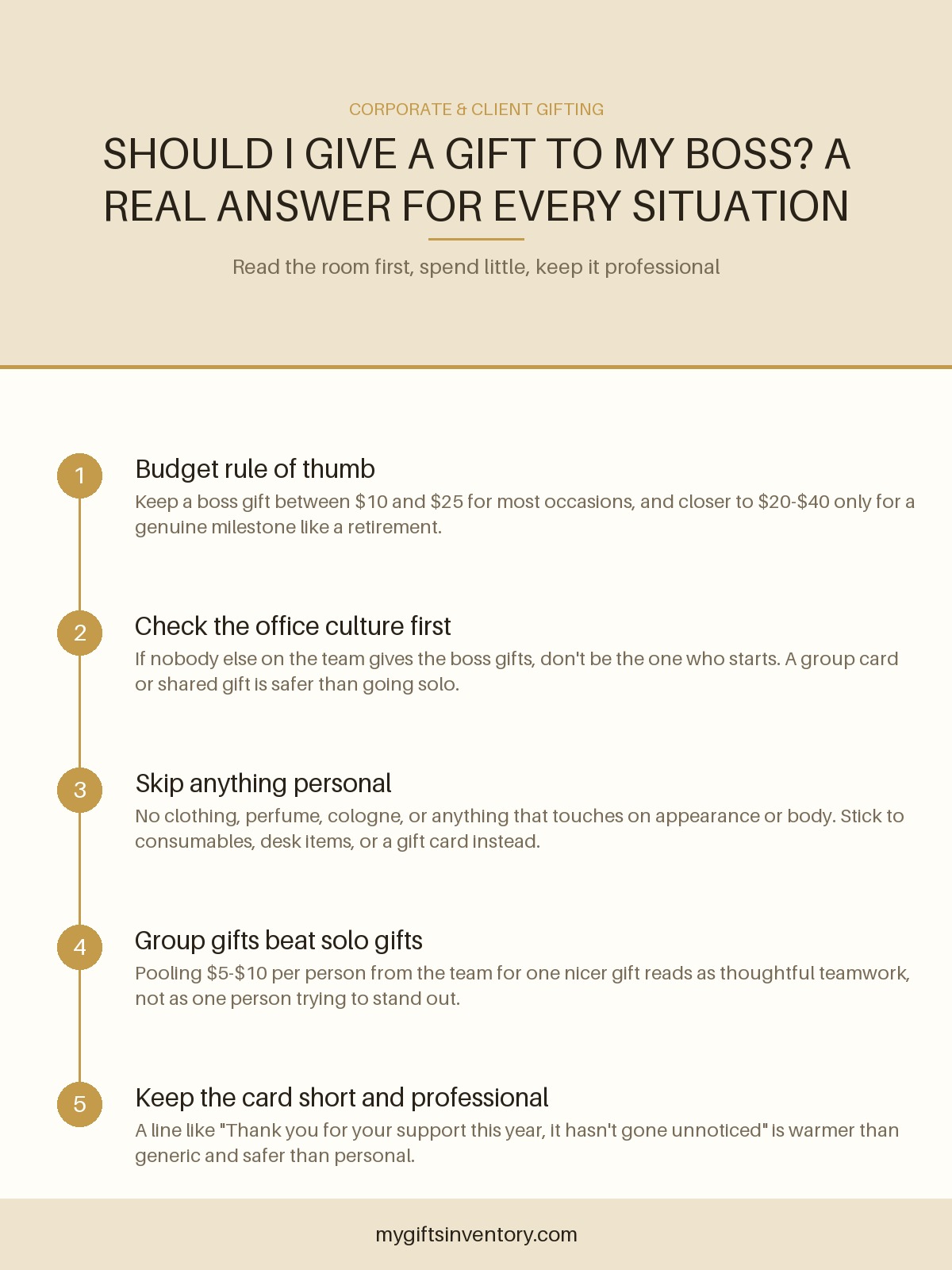
Group gifts are the way to go, and the budget should be modest, $20 to $40 from each contributor at most. A single employee buying a lavish gift for their manager creates a weird dynamic for everyone. A group card with a reasonable shared gift is the cleaner move.
The Compliance Question Nobody Wants to Ask
Many companies have gift policies that cap what employees can accept from vendors or clients. Caps commonly sit somewhere between $25 and $100, though this varies wildly by company, industry, and country. Public sector and healthcare organizations often have far stricter rules, sometimes banning anything beyond a token item or a meal.
Before you send anything to a client, it's worth a quick email to your contact asking whether their company has a gifting policy you should be aware of. That one question saves a lot of awkwardness on both sides, and it signals that you're being thoughtful rather than sneaky. If a client mentions they can't accept gifts, respect it fully and substitute a handwritten note. The note is often remembered longer anyway.
On the tax side, business gifts to clients in the US are generally deductible up to $25 per recipient per year, and this is a figure worth checking with your accountant each year, since the rules and thresholds do shift. If you're doing any gifting through gift cards, keep receipts and records for every recipient, because the recordkeeping is where most companies get tripped up. Speaking of which, if you're sending gift cards to clients, make sure the recipient can actually check the balance. Pages like the Saks Fifth Avenue gift card balance check guide are a useful reference to pass along with a higher-end retail card, and the same goes for anything you'd send from a specific brand.
How to Time the Delivery
Once you've decided to give, delivery timing matters more than most people realize.
For holiday gifts, ship so that delivery lands in the first half of December. Anything arriving after the 20th is likely to be opened alongside a pile of other gifts and forgotten. For a client gift tied to a milestone, send within two weeks of the milestone. Any later and the connection between the gift and the moment gets fuzzy.
For physical delivery to an office, aim for a Tuesday, Wednesday, or Thursday morning. Monday deliveries stack up over the weekend, and Friday deliveries get lost on someone's desk until the following week. If you're shipping directly from a vendor, confirm the recipient's current office address, because the number of corporate gifts that arrive at a former office or the wrong floor is genuinely surprising. This is exactly why a gift card can be the more reliable option when you're not sure where someone is working from. We have a full rundown of World Market gift cards and where to buy them if you want a flexible option that still feels curated.
What to Write in the Card
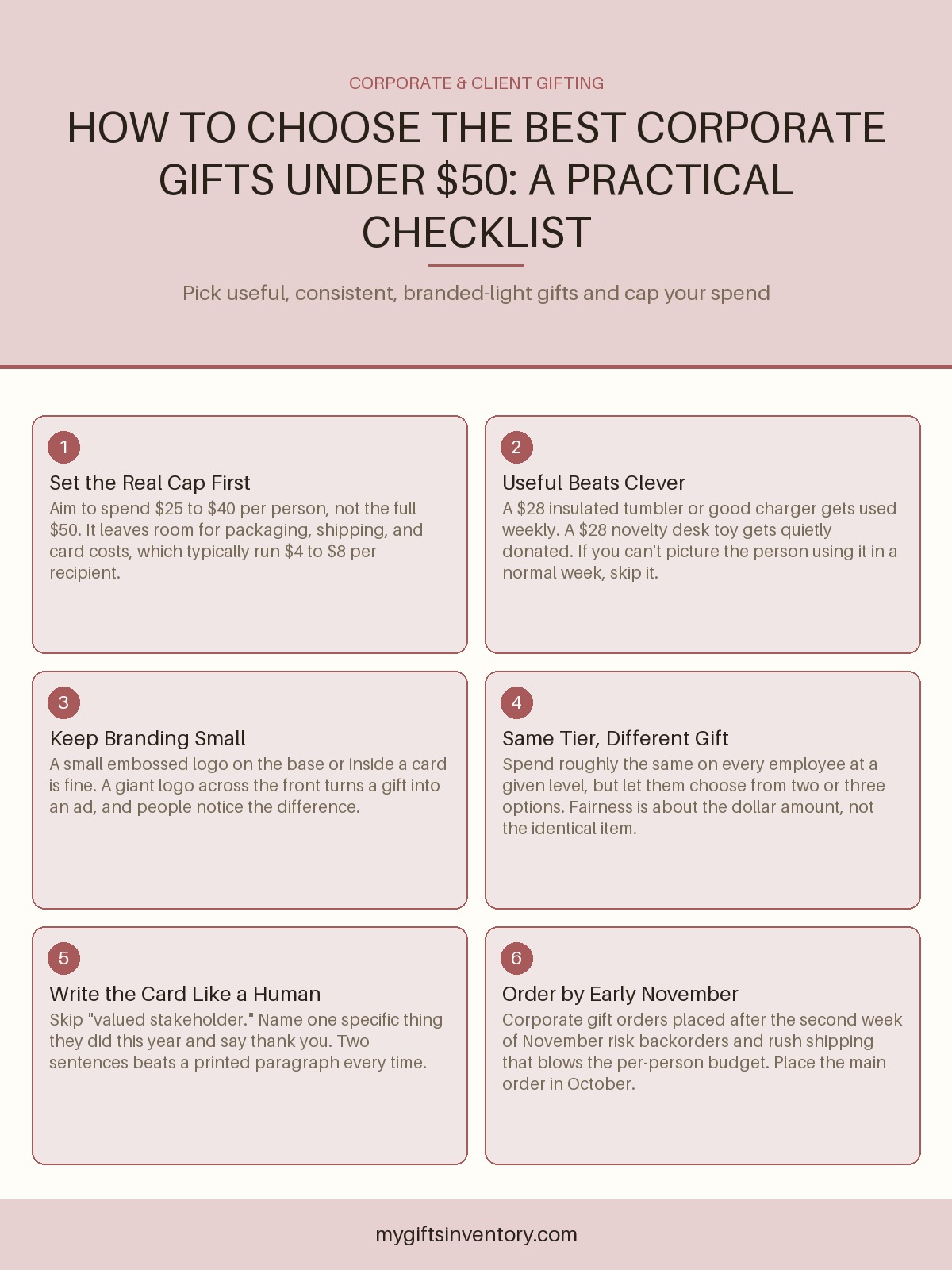
The card is where the gift either becomes memorable or fades into the pile. The formula that works: name the specific thing you're grateful for, keep it short, and sign it.
A few examples that actually work:
"Thank you for the calmest procurement process I've ever been through. Working with you made this easy. Enjoy the holidays."
"The dashboard rebuild would have taken us weeks without your team. Genuinely grateful for the last six months. Here's something small for whatever you're reading next."
"Congratulations on five years. The place is better for it."
Notice that none of these say "your business is important to us" or "we value your partnership." Those phrases are everywhere, and they read as templates. Specific beats effusive every time. If you only remember one rule, remember that. If you're looking for more card language, our guide to Christmas gadget gifts for him also includes notes on pairing a physical gift with a personal card, if you're gifting an individual rather than a company.
When a Gift Card Is the Right Answer
Gift cards have a bad reputation in corporate gifting, mostly because people send them badly. Sent with no note and no reasoning, a gift card feels lazy. Sent with a specific note explaining why you chose it, a gift card is often the most useful thing you can give someone you don't know well.
They're especially good for clients you rarely meet, teams whose preferences you don't know, and international recipients where shipping is expensive or customs are complicated. If you're sending a card to someone in the UK or Europe, the One4all gift card balance check is a quick reference your recipient might appreciate since that's a multi-brand card common across those markets. If you're gifting someone in the US who loves food, an Olive Garden card with a note about taking their team to lunch is more thoughtful than anything you'd have picked out blind. There's a quick Olive Garden gift card balance check page for that.
If you're sending a gift card, always include a physical or emailed card with the actual reason, and never send one to a direct report unless everyone on the team receives something comparable.
Planning Your Corporate Gifting Calendar
Most companies handle corporate gifting in a panic every December. A small amount of planning in advance solves almost every problem that makes gifting feel hard.
In January, set a per-recipient budget and a list of who gets what tier of gift. In February or March, send your first round of the year to clients who hit year-end successes, because they're the most likely to feel forgotten after a busy quarter. In June, send thank-yous to vendors who delivered well in the first half. In September or October, lock in holiday gifting orders early, since good vendors sell out and shipping gets slower as the year closes out. In December, deliver.
This spreads the spend across the year, avoids the "we have to send 40 gifts by Friday" scramble, and means each gift has a real reason behind it rather than the calendar.
When in Doubt
If you're unsure whether to give, err toward giving a smaller gift with a better note. A thoughtful $30 gift with two specific sentences in the card beats a $200 hamper with a company tagline every time, and it's far easier to get right. The occasions that call for a gift are usually the ones where you find yourself thinking, "I should really thank them for that." Trust that instinct. It's almost always correct.
Gift Ideas to Go With This


Want more ideas? Browse our full guide: 21 Corporate & Employee Gift Ideas Under $50 (2026) That Won't Feel Like an Obligation
Frequently Asked Questions
Is it appropriate to give a client a gift for no specific reason?
Yes, but tie it to something, even loosely. A gift sent "just because" reads as marketing, while the same gift sent with a note referencing a recent project or conversation reads as thoughtfulness. The reason can be small, but it should be real.
What's the typical budget for a corporate gift?
For clients, $50 to $150 is the standard range. Vendors and partners usually get $25 to $75, coworkers $25 to $50, and group gifts to your boss $20 to $40 per contributor. Above $150 to a client risks feeling more transactional than appreciative, and many recipients have caps below that anyway.
Should I give gifts to my team during the holidays?
Yes, but give evenly. Uneven gifts across a team create more friction than no gifts at all. A modest, equal gift per person (or a shared team experience instead of individual parcels) is the safer and more appreciated approach.
How do I handle receiving a gift I can't keep due to company policy?
Thank the sender genuinely and explain that your company has a policy they might not know about, then return the gift gracefully. Most people appreciate the heads-up and would rather know than unknowingly cause a problem. Respond warmly enough that the relationship isn't damaged by the return.
Is a gift card acceptable as a corporate gift?
Yes, especially when you don't know the recipient well or when shipping a physical gift is complicated. The key is including a note that explains why you chose that particular card. A gift card without a note feels careless; one with a specific reason feels like it was chosen for them.
Looking for an Actual Gift Instead?



Gift Sets We Love Right Now
Every item picked, priced and linked, ready to buy.


More Gift Advice