Regifting Rules: When It's Okay, When It's Not, and How to Do It Right
Regifting can be smart and kind when you follow clear etiquette. Here's exactly when it works, the hard no's, and how to pass something on without anyone feeling slighted.
As an Amazon Associate, My Gifts Inventory earns from qualifying purchases. We only recommend products we'd genuinely consider buying ourselves.
We've all been there. You open a lovely package, smile politely, and immediately know this thing is never going to live in your house. Maybe the color is wrong, the size is off, or you already own two. Stashing it forever feels wasteful. Throwing it out feels rude. So the quiet question pops up: can we just pass it on to someone who will actually love it?
Regifting has a bad reputation because people have done it badly. Done with care, though, it is practical, kind to the planet, and often more thoughtful than buying something generic under pressure. Here are the real rules we follow so no one ends up hurt or embarrassed.
The Core Principle: The New Person Has to Be Happier Than You Were
Regifting is not about clearing your closet. It is about matching an unused item with someone who will use and enjoy it. If you cannot picture the new recipient lighting up, keep looking or buy something else. A gift that sits in the next person's closet is just delayed clutter.
When the fit is right, regifting can feel more personal than a last-minute purchase. You already know the item is nice because someone once chose it for you. Now you are choosing the right home for it.
Hard Rules: When Regifting Is Never Okay
Some situations are automatic no's. Breaking these is how regifting stories become cautionary tales.
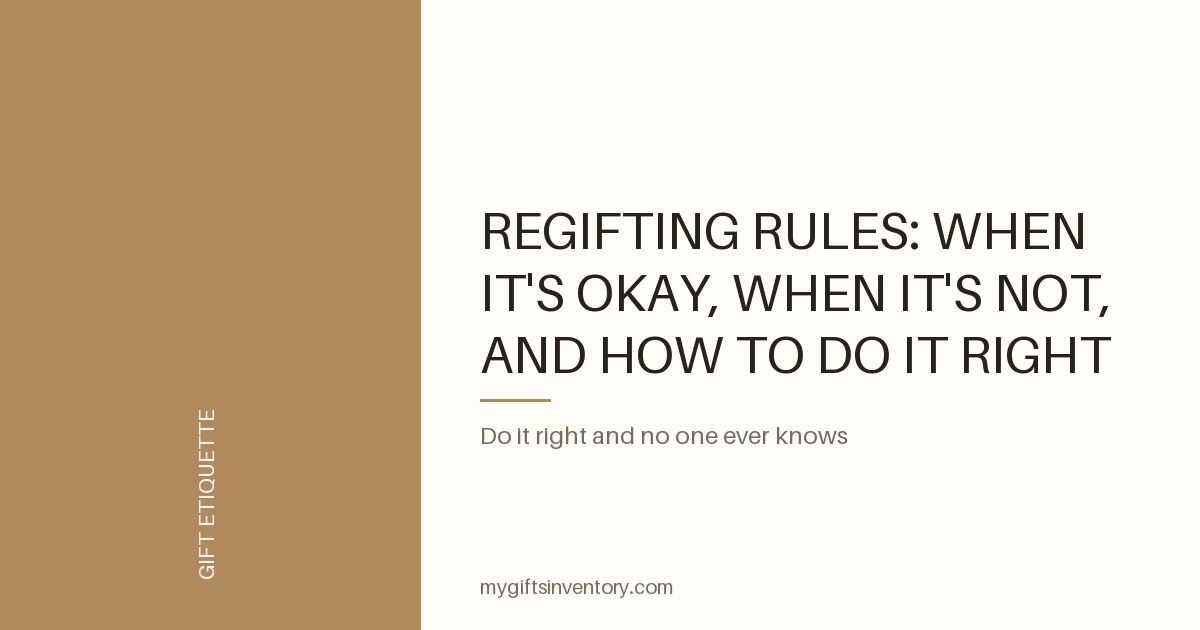
Never give it back to the original giver or their close circle
This is the biggest rule. If Aunt Maria gave you the vase, it cannot go to anyone who might mention it to Aunt Maria, post a photo she will see, or bring it to a family gathering. That includes her kids, her best friend, and the group chat she is in. The original giver should never learn the item moved on.
Never regift anything used, damaged, or personalized
The item must look brand new. No scuffs, no missing pieces, no pet hair, no leftover packing peanuts stuck in the corners. If it came sealed, leave it sealed. Personalized items (monograms, engraved names, custom photos, handwritten notes still attached) are off-limits. Those were made for you. Passing them on feels like erasing the first person's effort.
Never regift for high-emotion occasions
Weddings, milestone birthdays (30, 40, 50), major anniversaries, baby showers where you are close to the parents, and sympathy gifts are not the place for something that once belonged to someone else. Those moments call for something chosen specifically for the person and the relationship. Casual birthdays, hostess thank-yous, office Secret Santa, white elephant swaps, and low-key holiday exchanges are safer territory.
Never leave evidence
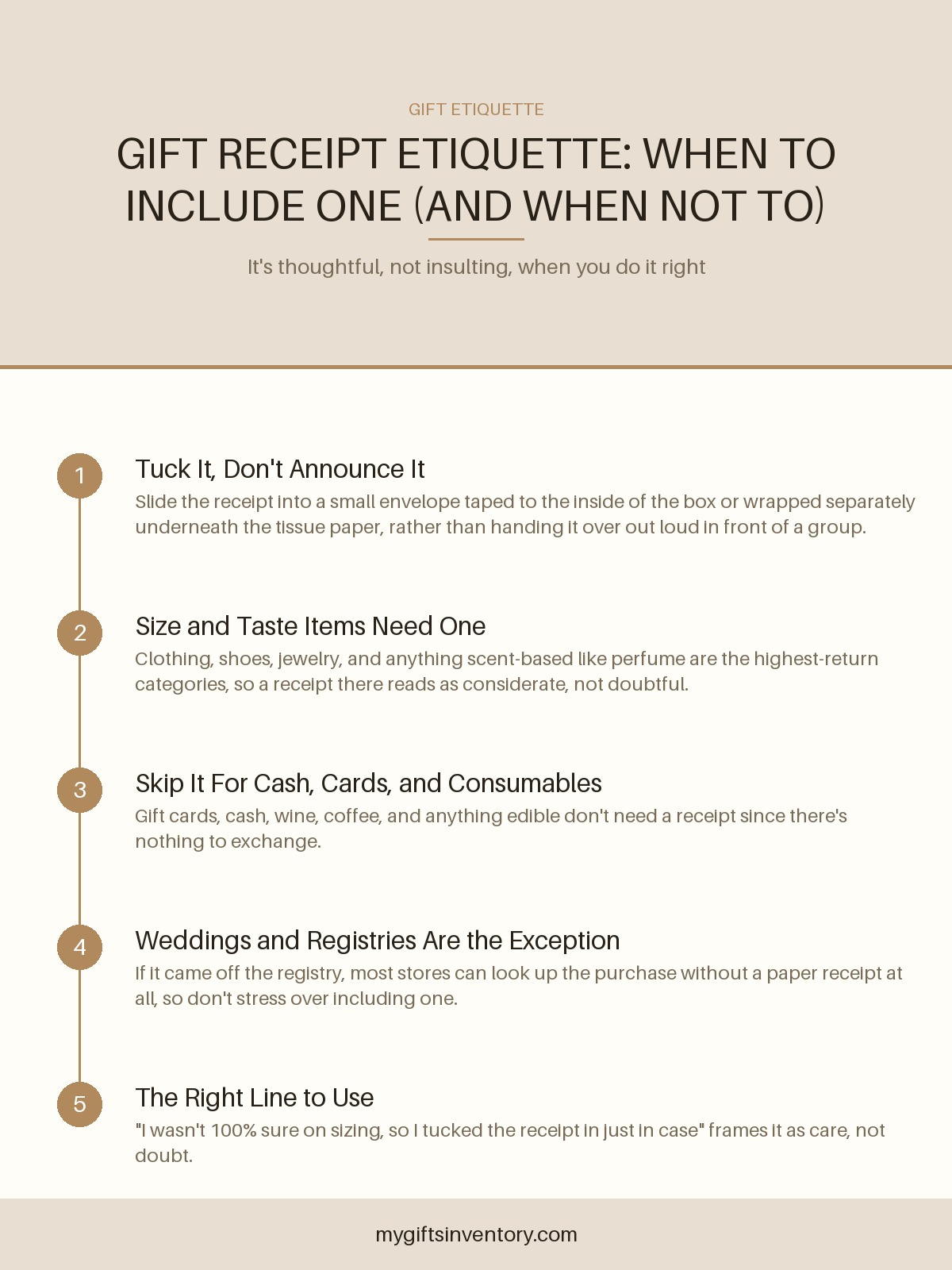
Old gift receipts, price tags, store stickers, the original card, or wrapping paper with the first giver's handwriting still on it will get found. People look. Remove everything. Rewrap from scratch.
When Regifting Is Actually Fine (and Sometimes Smart)
Plenty of everyday situations make regifting the better choice.
- You received a duplicate of something you already own and love.
- The style, scent, color, or size simply does not work for your life, but you know someone whose life it will fit.
- It is a quality item that feels wasteful to return or donate when a friend would use it immediately.
- You are the kind of person who ends up with multiple candles, lotions, kitchen tools, or home accents every holiday season.
- The new recipient has mentioned wanting exactly this kind of thing.
In these cases, passing it on keeps a good object in use and frees you from guilt storage. Just treat the new giving moment with the same care you would give a purchased gift.
How to Regift Without Getting Caught (or Feeling Sleazy)
Execution matters as much as the decision.
Inspect and reset the item completely
Check for dust, fingerprints, bent corners, or any sign it has been opened or handled. Wipe it down. If it is clothing or textiles, make sure it still has tags and has never been worn or washed. For electronics or gadgets, confirm everything is in the box and unused. Then strip every identifying mark.
Rewrap like it is brand new
New paper, new bag, new ribbon, or a simple tissue-and-box presentation. Do not reuse the original wrapping even if it looks nice. The goal is that the item feels freshly chosen. A clean presentation also helps you feel better about the whole thing.
Write a normal card
You do not need to invent a story. A short, warm note works: "Saw this and thought of you" or "Hope this makes your evenings a little cozier" or "Knew you'd put this to better use than I would." Keep it light and focused on them. Never reference where it came from.
Time it so the circles do not overlap
If the original gift came from a work Secret Santa, do not regift it inside the same office. If it came from a family holiday, wait until a completely separate friend group or a different season. Distance in time and social circle is your friend.
What Makes a Good Candidate for Regifting
Some categories travel well. Others do not.
Strong candidates: unopened candles and diffusers, quality kitchen tools still in packaging, nice home accents that fit many styles, sealed gourmet foods or coffee with long shelf life, unused spa or self-care sets, classic books, and generic but well-made accessories. Many of the cozy home pieces and small thoughtful gifts people actually keep fall into this zone. If you are looking for fresh ideas in those ranges instead of recycling, our roundups of cozy home decor under $50 and relaxation and comfort gifts are full of things people tend to use right away.
Weaker candidates: anything sized specifically for the first recipient, trend-heavy fashion that dates fast, highly personal jewelry, opened beauty products, and items with strong brand or fandom ties that may not match the new person.
Gift cards can be excellent to pass along if the balance is full and current. Just verify first. If you would rather start fresh with a card someone can choose for themselves, check practical options like those available at major retailers.
Special Cases People Always Ask About
Wedding and registry gifts
If you received something from a couple's registry that you cannot use, the cleanest path is usually returning it (many registries make this easy) or donating it. Regifting a registry item to another couple risks the original couple spotting it later. Better to keep the circles separate.
Hostess gifts and small thank-yous
These are some of the easiest and most natural places to regift well. A nice candle, bottle of something good, or pretty kitchen item you will not use can become a perfect hostess gesture for someone else, provided it still looks new and fits their taste.
Kids' gifts and toys
Be extra careful. Kids talk. Packaging and "new in box" status matter a lot. If the toy has been opened or played with even once, it is no longer a clean regift. Many parents prefer to pass gently used toys directly to friends with a clear "we've outgrown this" note instead of wrapping them as new.
Expensive or luxury items
Higher-value pieces raise the stakes. If something cost real money, the original giver may remember it vividly. Only regift luxury items when you are completely certain the social circles will never cross and the new recipient will truly value it. Otherwise, consider selling and using the money toward something chosen, or keeping it.
Better Alternatives When Regifting Feels Wrong
Sometimes the item fails the tests above. You still have good options.
Return it if you still have the receipt or it came from a store with flexible policies. Many people quietly return unwanted gifts and no one is the wiser.
Donate it to a shelter, school, or charity that can use it right away. That turns an awkward object into something useful for someone who needs it.
Sell it and put the money toward a gift you know the next person will love. This is especially practical for higher-ticket items.
Or simply buy something new that fits. Thoughtful does not have to mean expensive. Plenty of well-chosen gifts under $30 or $50 feel personal when they match the recipient's actual life. If you want ideas that tend to land well, look at our guides for thoughtful gifts under $30 and choosing the perfect gift for any person and occasion.
Keepsake and personalized pieces are usually better bought fresh rather than passed along. When you want something they will hold onto for years, start with options made for them: see our collection of keepsake gifts worth holding onto.
A Simple Decision Checklist
Before you rewrap anything, run through this quickly:
- Is it unused and in perfect condition?
- Is it free of any personalization or identifying marks from the first giver?
- Will the new person actually like and use it?
- Is there zero chance the original giver (or their close people) will see it?
- Is the occasion casual enough that a well-chosen passed-along gift feels appropriate?
- Can I present it with fresh wrapping and a sincere note?
If every answer is yes, regift with a clear conscience. If any answer is no or "maybe," choose a different path.
Regifting done right is quiet, practical generosity. You keep a good object in circulation, you give someone something they will enjoy, and you avoid both waste and awkwardness. Follow the rules above and you will never be the person in the horror story. You will just be the person who always seems to give something that fits.
Frequently Asked Questions
Is regifting rude?
No, not when done carefully. Regifting becomes rude only when the item is used, personalized, given back into the original circle, or presented carelessly. Thoughtful matching and clean presentation make it a practical and often kind choice.
Can I regift a gift card?
Yes, if the balance is still full and the card has not expired. Check the balance first so you are not passing along a partially used or dead card. A fresh gift card bought for the person is often simpler, but a verified full-balance card is perfectly acceptable for casual giving.
What should I do if someone finds out I regifted their present?
Own it calmly and kindly if it happens. A simple "It was so nice I knew someone else would love it too, and I wanted it to be used" is better than elaborate excuses. Most people understand once they see you treated the item with respect. Prevention (keeping circles separate) is still the better strategy.
How long should I wait before regifting something?
There is no fixed calendar rule, but waiting at least a few months and choosing a completely different social circle reduces risk. Same-season regifting inside overlapping friend or family groups is where most problems start. Distance in time and people is what keeps it safe.
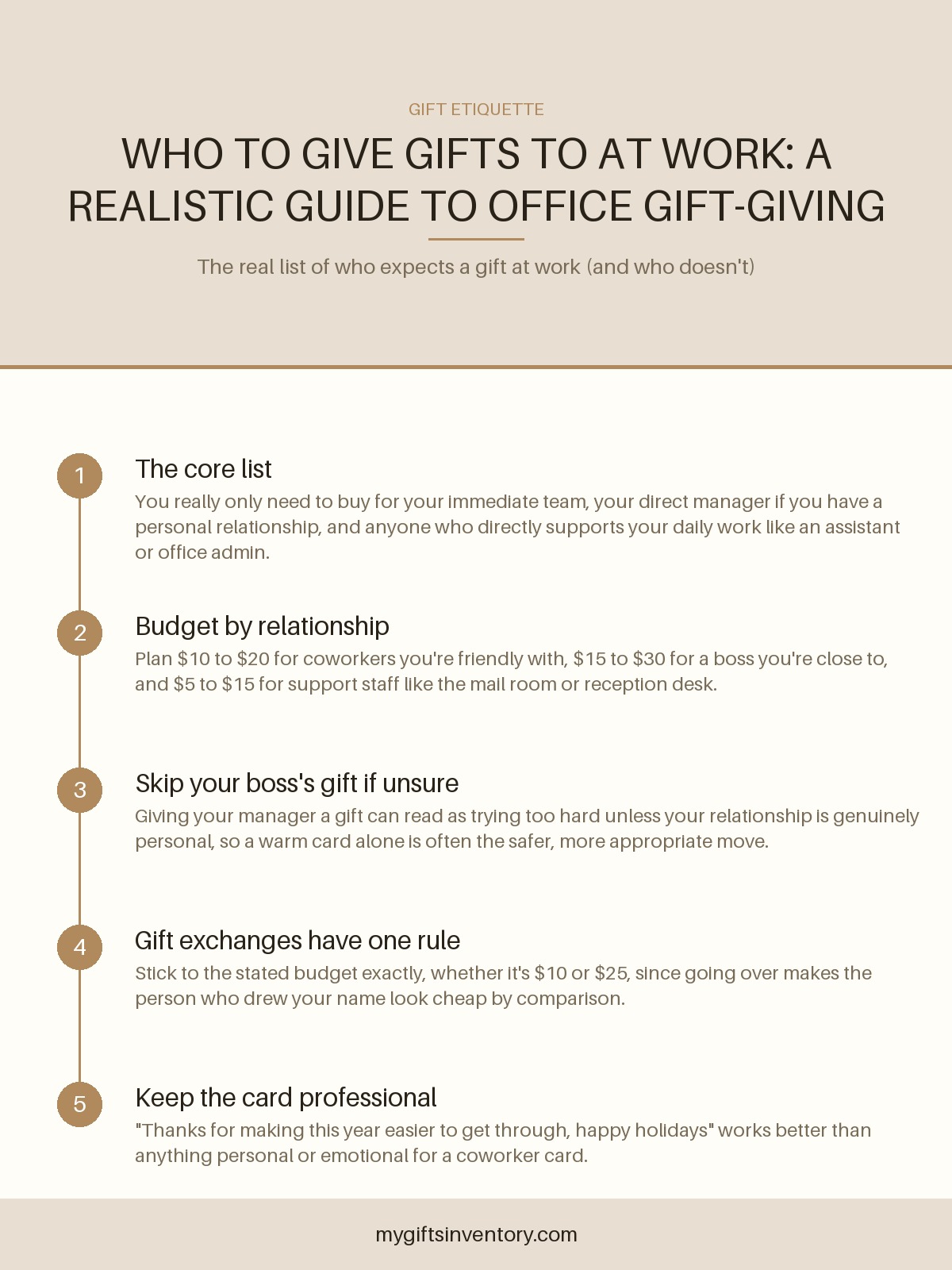
Is it okay to regift to a coworker or for office Secret Santa?
Yes, as long as the original gift did not come from the same workplace or a connected group. Office exchanges are actually one of the more natural places for clean, unused items to find a better home, provided the item suits the new person and looks new.