Art of Gift Giving: Etiquette, Budgets, Card Messages, Wrapping, and Returns
We share a practical, relationship-first approach to gift giving, including what to write in a card, how to wrap, and how to handle registries and returns without awkwardness.

As an Amazon Associate, My Gifts Inventory earns from qualifying purchases. We only recommend products we'd genuinely consider buying ourselves.
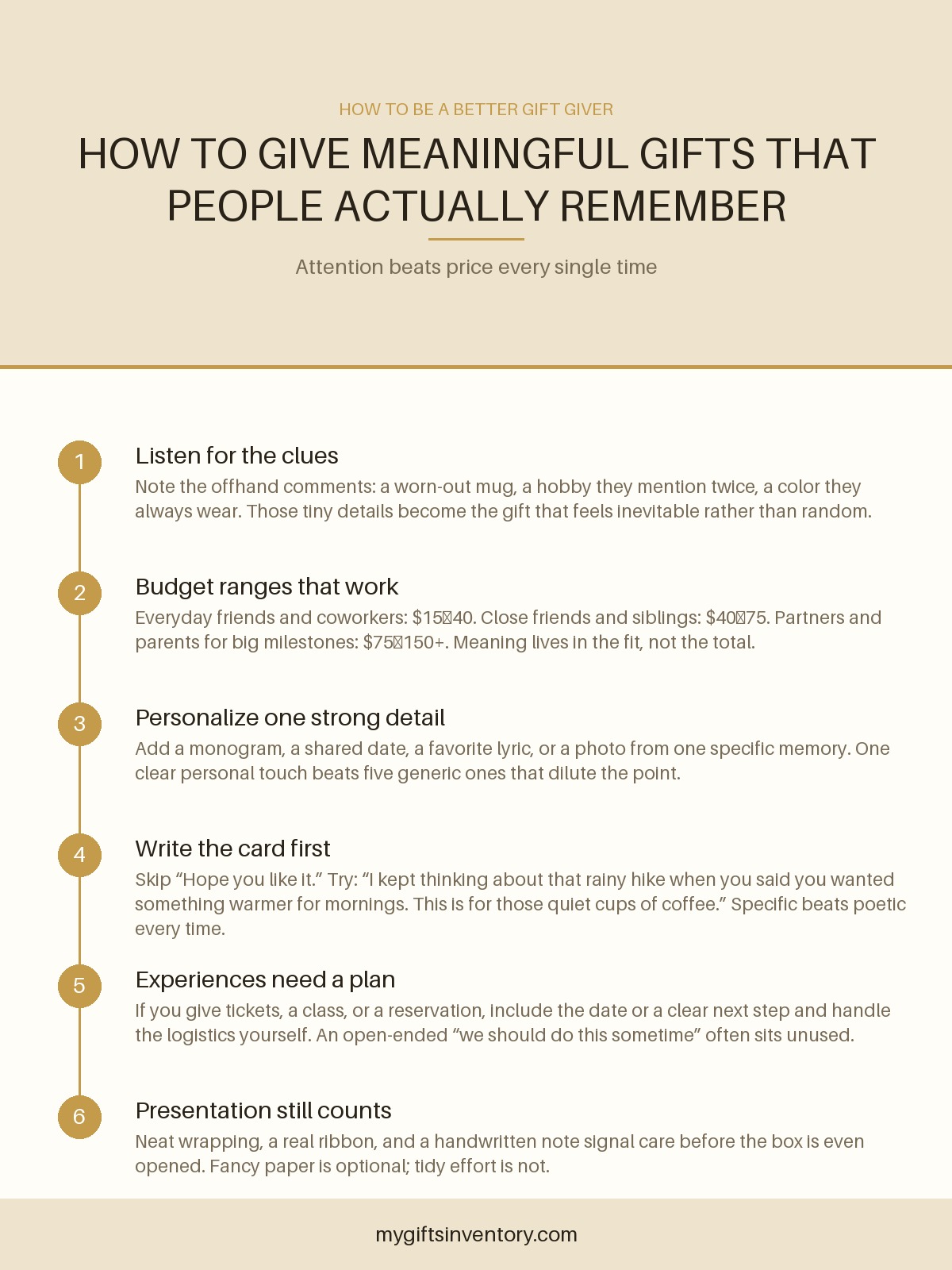
Right now, we can feel the pressure behind the search for gift-giving advice. We are standing in front of a cart, a registry, or a blank card, thinking: will this feel thoughtful or random? The “art of gift giving” is less about grand gestures and more about making the gift match the person, the moment, and our real constraints.
Below is our practical, etiquette-forward approach we actually use, from budgeting to wrapping to what to write in the card. Whether you are buying for a partner, a friend, a coworker, or a family member who “already has everything,” we help you make decisions that feel easy and look intentional.
Start with the real goal: what should they feel?
Most gift stress comes from aiming at the wrong target. If we ask, “Will they like it?” we end up guessing in the dark. If we ask, “What should they feel when they open it?” we make better choices faster.
Common “opening moments” we can plan for
- Comfort: A gift that helps their day go smoother, like cozy, practical, or low-effort.
- Belonging: A gift that connects to them as a person, not just their hobbies.
- Pride: Something that supports their work, goals, or a craft they are building.
- Connection: Shared time, a note that feels like you, or a treat that marks a memory.
When we cannot confidently guess an item, we lean into a gift experience or a “use it soon” option. That is also why we like pairing gifts with a card message that includes one real detail about them.
Set a budget that keeps your gift from becoming a chore
Budgeting is not about picking the lowest number and calling it discipline. It is about choosing a range that protects your time and your relationships.
Use a simple two-number budget
Pick:
- A comfort floor (what you can spend without regret)
- A ceiling (what you will not stretch past, even if you fall in love with an idea)
Then assign your gift type to that range. If you are in the under $50 zone, think “use it soon” or “small treat plus something personal.” If you are spending $50 to $150, you can often move into “nice, but still practical.”
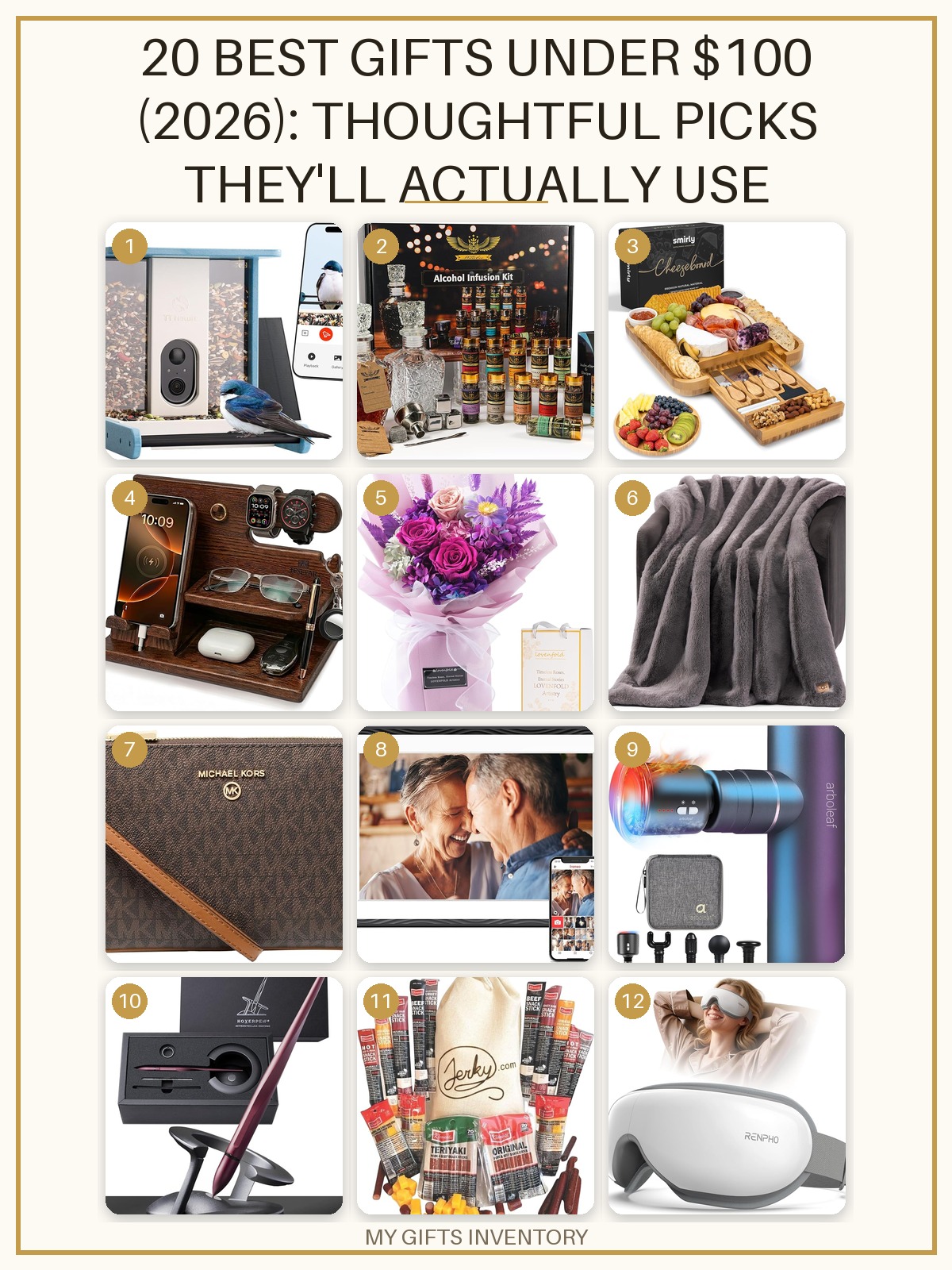
If you are choosing within a smaller budget, we recommend leaning on categories that naturally land well, like kitchen helpers, gourmet treats, or self-care sets. You can use our guides as a shortlist for the category itself, for example gourmet treats, wine, and coffee under $50, or self-care and spa gift sets under $50. The point is not that you must buy those specific items. It is that the category does the heavy lifting.
How to budget when you are buying multiple people
For group events, we use a “per person time tax” rule. If you are buying for 5 to 10 people, you need fewer decisions. We pick one or two repeating categories that we can shop quickly and wrap nicely. Example: everyone gets either a small self-care item or a gourmet treat plus a card message.
For coworkers or extended family, we also decide a standard approach ahead of time: one gift under a set ceiling, no surprises that require explanation.
Etiquette basics that prevent awkwardness
Gift etiquette is mostly about not making the other person do extra work. The “wrong” gift is rarely unkind. It is usually incomplete, unclear, or mismatched to the relationship.
Do we need to match the gift value?
We do not have to match dollar-for-dollar. What matters more is the thought level. If a gift is obviously chosen with care, the recipient reads it as respect, not a contest.
When a registry is involved
A registry is a request for practicality, not a suggestion for you to “pick whatever.” In most situations, we treat the registry as a priority list.
- If you can afford it: choose one of the main items the person marked as important.
- If you cannot: choose a lower-priced item on the registry that still matches their taste.
- If you want to add something: pair the registry gift with a small personal item or a card message that points to the occasion.
Handwritten vs. typed cards
If we can write clearly, handwritten wins every time. If we cannot, typed is acceptable, but we keep it personal and specific. The recipient should feel that a real person wrote the words.
What to write in a card: templates that sound like you
This is where gift giving becomes memorable. A card does not need poetry. It needs specificity.
A card formula that never feels generic
Write three parts:
- One specific compliment: “I love how you…”
- One memory or observation: “From that dinner…” or “When you helped…”
- One intention: “I hope this helps…” or “I cannot wait for…”
Ready-to-use card wording by relationship
- For a partner: “Thank you for being my calm place. I keep thinking about how you made even busy days feel manageable. I hope this adds a little joy to your routine.”
- For a friend: “You always show up with real kindness. I loved celebrating you and I am grateful you are in my life. This is for the moments ahead when you deserve an easy win.”
- For a parent: “Your support has shaped everything I do. I notice the small sacrifices you make, even when you do not say anything. I hope you feel appreciated every time you use this.”
- For a coworker (warm, not too personal): “I appreciate your steady help on the team. Your work makes things smoother for everyone. Hope you enjoy this and get a chance to recharge.”
- For “you already have everything”: “I know you keep your life nicely curated. I chose this because I thought of what you would enjoy using or trying. Thank you for being you, and for letting me be part of your year.”
Card do and don’t
- Do mention one detail you genuinely noticed.
- Do keep it short when the gift is clearly personal.
- Don’t over-explain. A gift is not a court case.
- Don’t write what they “should” do with it. Let them own the choice.
Wrapping: make it look intentional in 10 minutes
Wrapping is not just aesthetics. It is a first impression. When we wrap carefully, the gift feels considered even if the item is simple.
Our go-to wrapping checklist
- Pick a paper size that fits. Too small looks cramped, too big looks careless.
- Keep one side crisp. Smooth the top and press the corners neatly.
- Add a tag, not only a name. Include “For Sam” and the occasion if it is not obvious.
- Tuck the ribbon ends. Loose ends look rushed. Trim if needed.
If you are not sure what wrap style suits the person
We default to classic: solid paper or understated patterns, a simple bow, and one small accent like a sticker or a dried sprig. If it is a birthday for a teenager or a gamer household, we match the vibe with bolder colors, and we keep the tag legible.
If you want gift ideas that can pair naturally with neat wrapping, you might like category shortcuts like best gifts under $20 for smaller items that wrap beautifully, or gift baskets under $50 when you want something that looks “done” without being complicated.
Choosing the gift: how we avoid the two biggest mistakes
Gift giving usually goes wrong in two ways: we choose something we would love, or we choose something we think “they should” want. Both lead to mismatch.
Instead, choose from three evidence buckets
- What they say: a specific phrase they use, not a vague “I like it.”
- What they do: what they use repeatedly, keep on their desk, or reach for.
- What they care about: their projects, goals, family roles, and routines.
When we do not know what they want
We use a “safe thoughtful” strategy:
- Choose something in a category they already enjoy.
- Write a card that connects the gift to their personality.
- Keep the gift flexible by buying from a place with clear return rules.
Gift cards: when they help, and how to make them feel personal
Gift cards get a bad reputation because people treat them like an apology. We treat them like a tool when the recipient will genuinely use it, and we add a card message that explains why we chose that particular type of gift card.
When a gift card is the right choice
- They are hard to shop for.
- They have specific needs or preferences you cannot access.
- You are short on time but still want to be respectful.
Make the card feel intentional
Instead of “Sorry I didn’t know,” we write: “I chose this because you always pick the best stuff when you shop. I hope you get to use it on something you have been meaning to grab.”
If you are thinking about a store-specific gift card, it helps to know the practical details like where to buy it and what brands are offered. For planning, we use our retailer guides such as Walmart gift cards or Target gift cards so we can buy the right option without wasting time.
Planning timelines: when to buy so it feels calm
Gift planning does not need to be stressful, but it does need a timeline. We plan backward from the day the gift must be ready.
Suggested timeline (works for most birthdays and holidays)
- 6 to 8 weeks before: pick categories and check sizes or availability for anything that is not returnable easily.
- 3 to 4 weeks before: purchase items and order anything that might take longer than expected.
- 1 to 2 weeks before: wrap, write cards, and double-check names.
- Day before: final packing, charging any accessories, and putting gift bags and tags in one spot.
What changes for last-minute gifts
If you are shopping within 72 hours, you need fewer steps: easy wrapping, clear return options, and a card message that covers the emotional part. If you end up with a gift card, write a thoughtful note. That is what makes the difference.
Returns, exchanges, and receipts: protect yourself without overthinking
We want the gift to land well, but we also want peace of mind if it does not.
Before you wrap
- Check return policy windows. If it is a seasonal item, the “holiday extension” rules may apply.
- Keep receipts when possible. Store them with the card, not in the gift pile.
- Keep packaging. If the gift can be exchanged, packaging makes it smoother.
After the gift is given
If you need an exchange, do it quickly. The first weeks after a holiday often have the most straightforward process. If you borrowed or borrowed-time packaging, put everything back into place right away so the option stays open.
How to handle returns politely
If the recipient wants to exchange something, we never act surprised or offended. We say something like: “Of course. I want it to be something you will actually use.” That one sentence keeps the relationship comfortable.
Experience gifts and shared moments: the underrated option
Experience gifts work because they turn uncertainty into a memory. The trick is to choose something that fits their schedule and comfort level.
How to make an experience gift feel specific
- Include a date range in the card.
- Offer two possible times if it is something that requires scheduling.
- Plan a backup if weather or travel affects it.
Even if you are working within a smaller budget, you can design experiences that do not feel cheap. A coffee date, a short class, or a “together day” can be more meaningful than an item alone.
Corporate and group gifting: keep it respectful and simple
If you are buying for a team, a client, or a group you do not know well, avoid anything that could be interpreted as personal. Choose neutral items or a small shared experience approach, and write a card that speaks to appreciation, not inside jokes.
If you need inspiration for a corporate-friendly budget range, we like using our category guide such as corporate gift ideas under $50 for the tone and variety. It helps you avoid the common mistake of picking something that feels like paperwork.
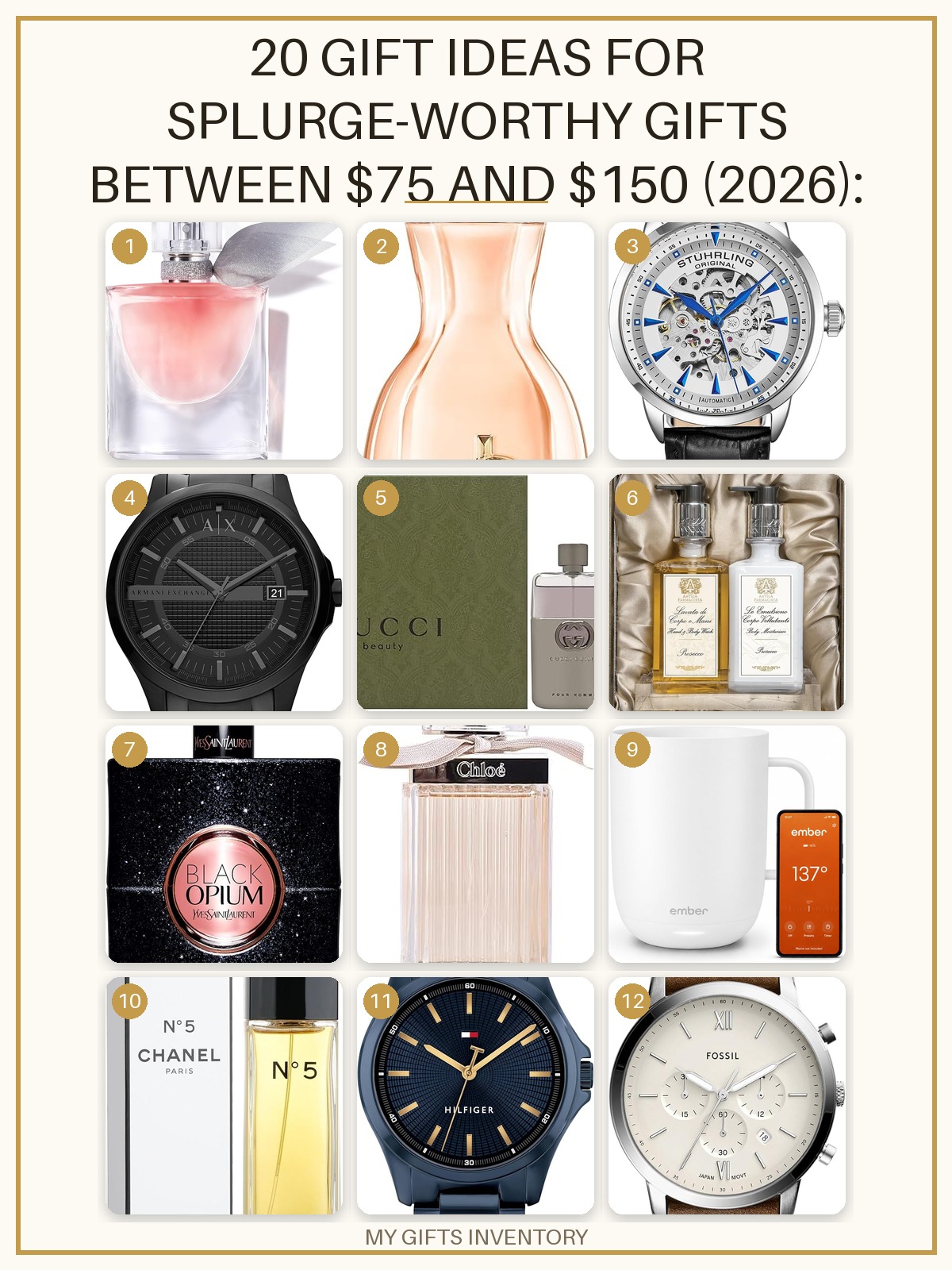
When you should consider “splurge” gifts
Sometimes, the best gift is not the biggest. It is the one that matches their current season. Splurges are most effective when they are tied to a real interest or a specific problem the recipient has.
If you know someone would appreciate an upgrade, use our range guide like splurge-worthy gifts between $50 and $150 to help you choose something that looks elevated but still feels practical.

Gift Ideas to Go With This


Want more ideas? Browse our full guide: 18 Keepsake Gifts Worth Holding Onto (2026): Personalized Picks They'll Treasure Forever
Frequently Asked Questions
What is the best budget for gift giving?
The best budget is a range you can repeat without stress, usually something like $20 to $50 for small occasions and $50 to $150 when you want the gift to feel “main character.” Set a floor and a ceiling, then pick a category you can confidently match to the person.
How do we write a card message that does not sound generic?
Write one specific compliment, add one memory or observation, and finish with an intention for what you hope the gift brings them.
Should we buy something from the registry?
If there is a registry, we treat it as a priority list, not a menu you can ignore. Choose one of the main items if you can, or pick a lower-priced registry item that matches what they chose.
Do gift cards count as thoughtful?
Gift cards count as thoughtful when we pair them with a personal note that explains why that option fits them. Keep the tone warm and respectful, and avoid wording that implies you are running out of ideas.
What should we do if we think the recipient will want to exchange the gift?
Keep receipts when possible, do not toss packaging immediately, and check return windows right away. If an exchange is needed, act quickly after the event while policies are still fresh.
Looking for an Actual Gift Instead?
Gift Sets We Love Right Now
Every item picked, priced and linked, ready to buy.
More Gift Advice