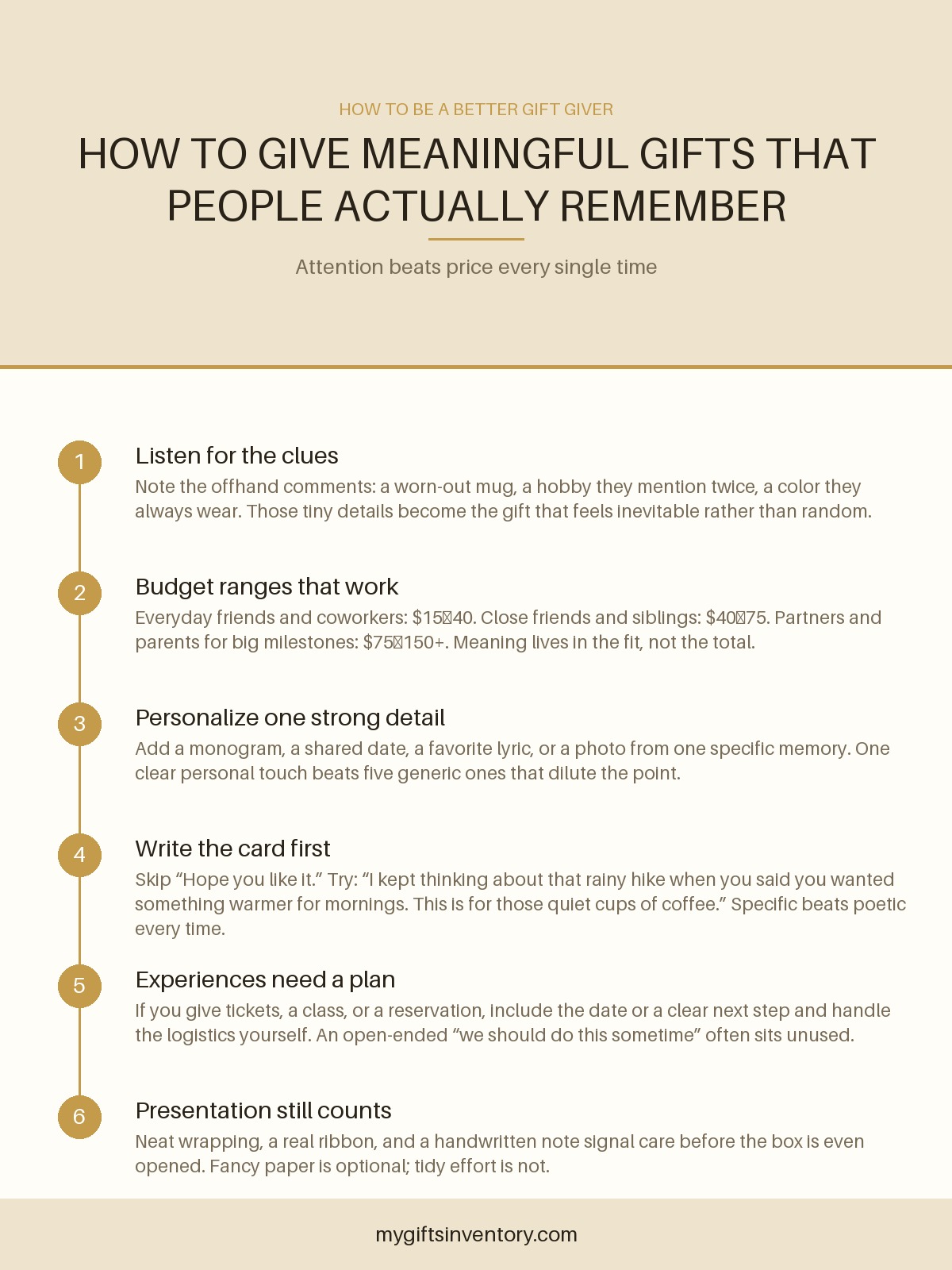
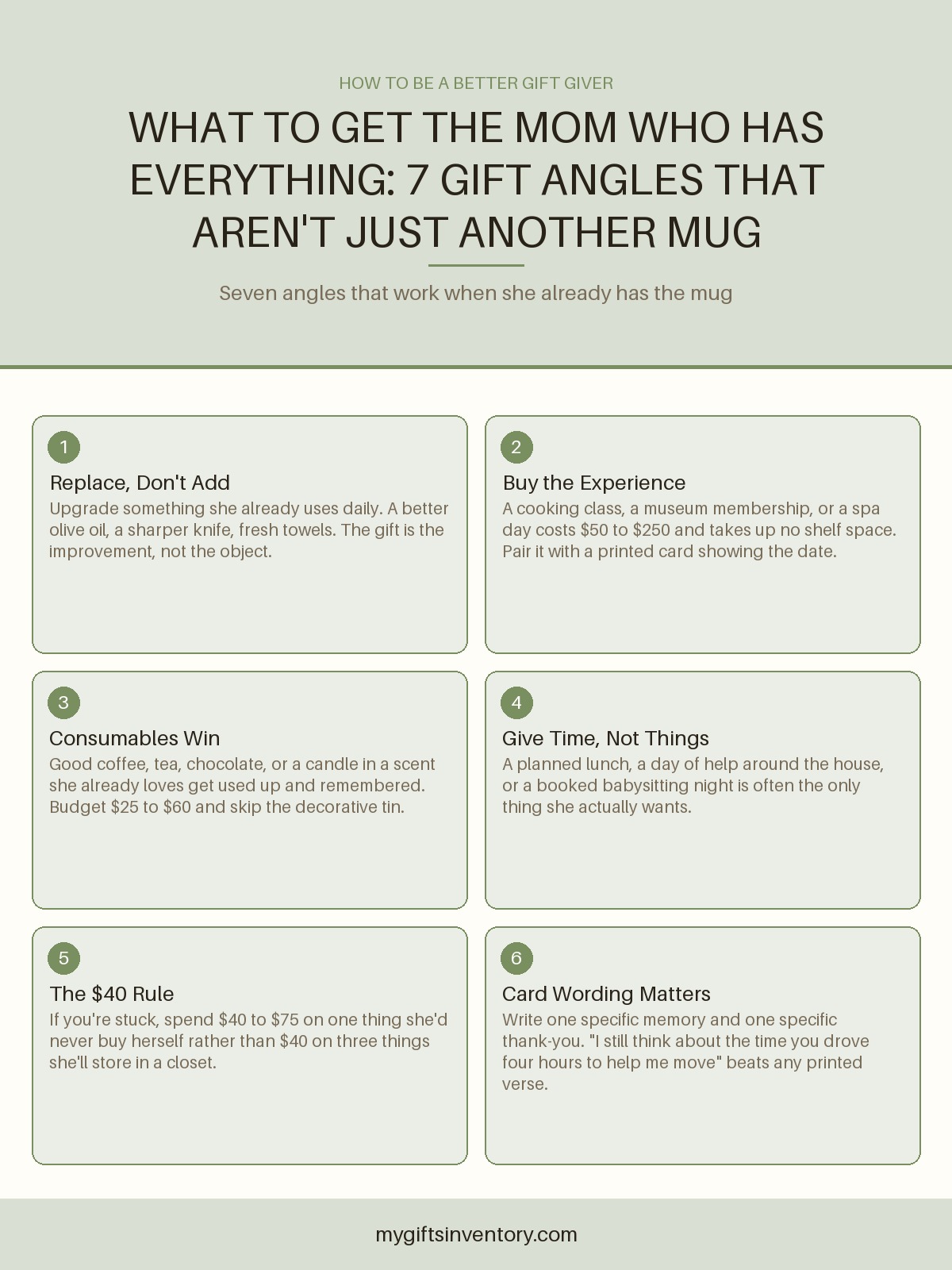
How to Pick a Gift for Someone: The Best Etiquette, Budget, and Card Tips
We use a simple decision process to match the gift to the person, the moment, and your budget. Plus: what to write, how to wrap, and what to do if sizes or preferences miss.

As an Amazon Associate, My Gifts Inventory earns from qualifying purchases. We only recommend products we'd genuinely consider buying ourselves.
We get it: the closer the date gets, the more “What if I pick the wrong thing?” starts taking over. You are searching because you want gifts that feel personal, not random, and you want to avoid the awkward moment when the recipient seems polite but clearly unsure.
So we use a calmer approach. We match the gift to how the person actually lives, we set a realistic budget before we browse, and we pair the gift with card wording and wrapping choices that make it feel considered from the first second.
Start with three answers only you can know
1) What is the occasion asking for?
Not all gifts are supposed to be the same emotional weight. A “thank you” gift is usually about appreciation and ease. A birthday gift can be playful or personal. An anniversary or milestone asks for more meaning, and it often needs a clearer “why you” story in the card.
Use this quick guide:
- Thank you / host gift: practical plus warm. The recipient should feel seen and helped.
- Birthday / holiday: personality-forward. Add an inside detail in the card to make it land.
- Milestone (wedding, graduation, new home): durable or memorable. The note should reflect the moment.
- Sorry / making amends: gentle, straightforward, no grand promises. Keep it sincere.
2) What does your relationship usually allow?
We think it is kinder to your future self to choose a “comfort level” early. If you are close, you can lean more personal and spend more time. If you are not, you can still be thoughtful without taking a guess on complicated preferences.
For example:
- Co-worker or acquaintance: safer choices are useful items, cozy consumables, or a gift card paired with a specific card note.
- Friend: you can reference shared memories and buy something that fits their hobbies or daily rituals.
- Partner or close family: it is worth going deeper on personalization, fit, or experiences.
3) What is your budget range that you will actually stick to?
Budgets are not about being cheap or lavish. They protect you from last-minute panic. A good budget range also helps you choose a “right-sized” gift concept.
Here is a practical way to set one:
- $10 to $20: small, useful, and paired with a card. Think: snacks, a tiny comfort upgrade, a journal, or a treat bundle.
- $20 to $50: we can usually land on something genuinely helpful. This is also a strong range for self-care and spa-style sets, like the gift ideas in 20 Gift Ideas for Self-Care & Spa Gift Sets Under $50 (2026).
- $50 to $150: more flexibility for a “main gift.” You can do personalized touches or a splurge without going off the rails.
- $150+: you are buying a statement. This is where personalization and quality matter most, and where 15 Luxury Gifts Worth the Splurge: Best Picks Over $150 (2026) becomes useful for calibrating what “splurge” really looks like.
If you are tempted to stretch your budget, we recommend you pick either a smaller gift with an excellent card or a clear single “main” item with a smaller add-on. Two good choices beat one stressful guess every time.
Choose the gift using a simple “person map”
Most gift mistakes happen when we choose the category first. We pick “something for coffee” or “something for cooking” before we ask what problem the person is currently solving, enjoying, or craving.
We use a quick person map. We look for:
- Where they spend attention: their desk, kitchen, car, gym bag, work bag, bedside.
- What they talk about repeatedly: a hobby, a comfort routine, a recurring annoyance.
- What they buy with their own money: it is a clue they already value that type of experience or item.
- What they have strong feelings about: for example, “I hate clutter,” “I love soft things,” “I keep losing chargers.”
Turn daily friction into gift ideas
Friction makes gifts practical and personal. If they always run out of something, improve the situation. If they keep forgetting something, gift a solution they will thank you for later.
Examples of friction we look for:
- “We are always scrambling to make coffee in the morning” becomes a gift that smooths that routine.
- “My place is tiny” becomes gifts that do more with less space.
- “I get overwhelmed by decisions” becomes a curated set with clear choices.
If your person is the type who loves living with a little extra comfort, we often start with a budget-friendly self-care angle. For instance, 20 Gift Ideas for Self-Care & Spa Gift Sets Under $50 (2026) is a helpful reference when you want “cozy” without overthinking.
Use the “will they use it within 30 days?” test
If the gift would sit in a drawer for months, we treat that as a red flag. A good gift should become part of their routine right away, whether that is daily, weekly, or every event they already look forward to.
As you browse, ask:
- Will they unwrap it and use it immediately or soon?
- Will it feel like a “you know me” surprise?
- Will it fit into their lifestyle without requiring a whole new setup?
Pick the gift format: item, experience, or “give them the choice”
We like to think of gifts as three lanes. The right lane depends on how well you know the person, how quickly you need to buy, and whether there is sizing or preference risk.
Lane 1: The single main gift (best when you know preferences)
This is the most satisfying lane for the recipient when the gift truly matches their style or needs. We choose this lane when we have enough clues to avoid a wrong-size or wrong-vibe situation.
We also like the “one main gift plus a small add-on” approach. The add-on is where you can be more fun without gambling on the core gift.
Lane 2: A small bundle (best for uncertain preferences)
Bundles are our favorite option when you know what they enjoy but not the exact pick. A bundle gives variety and reduces the risk that one item misses.
For budgets under $50, we often gravitate toward themed bundles. If you want an easy starting point for the “bundle mindset,” this guide to everyday-use options like kitchen and practical items can help you brainstorm: 20 Kitchen Gadgets Gift Ideas Under $50 (2026): Gifts They’ll Actually Use.
Lane 3: Gift cards done thoughtfully (best when you want zero guessing)
Gift cards are not a cop-out when they are paired with a warm reason and placed in the right context. We reserve gift cards for situations where sizing, style, or timing are too hard to predict.
When we choose a gift card, we think about how the recipient already spends money. For example, for a grocery-focused person, a store they shop weekly usually feels better than a card they would rarely use.
If you are choosing a store gift card, our brand guides help you compare what is available and how it works in that specific situation, such as Gift Cards at Walmart: The Complete List of Brands, Fees & Where to Buy (2026) or Gift Cards at Target: The Complete List of Brands, Fees & Where to Buy (2026).
Tip: If you can, write a card note that tells them why you picked that card. It turns “Here you go” into “I considered you.”
Etiquette and planning: how to buy without stressing
Use registries as guidance, not a personality test
If someone shares a registry, we treat it as a helpful map. It is normal to choose an item from it, but it is also normal to choose something adjacent as long as it does not undermine the intention.
When we are unsure, we do one of these:
- Choose a gift from the registry and add a card that acknowledges the moment.
- Choose a close alternative (same category, similar price band) when the registry is out of stock.
- Choose a gift card when the registry is too broad or contains items the recipient would rather pick themselves.
Plan timelines so returns and shipping do not become your emergency
We aim to avoid the last 48 hours whenever possible. Here are practical timelines we use:
- 2 to 3 weeks before: ideal for anything that requires shipping or personalization.
- 1 week before: works for many standard items if the store has good pickup options.
- 3 to 5 days before: we lean toward cards, small bundles, or in-store pickup with known return policies.
- Same day: usually gift cards plus a strong note and a plan for delivery.
If you are buying late, make it easier on yourself by choosing the safest gift lane. The best late gifts are the ones that do not depend on sizes, complicated preferences, or shipping windows you cannot control.
Respect the “no surprise risks” rule
There are a few categories where we are extra careful because returns can be awkward or the gift can miss the mark emotionally. We are cautious with:
- Anything that depends on sizing or fit
- Scents or makeup shades when we do not know their exact favorites
- Perishable gifts when timing is uncertain
- Expensive gifts that create pressure to “repay” with equal value
In these cases, we either choose a safer format or we use the card to clarify the intention: “This is a starting point, not a final decision.”
What to write in the card: words that make the gift feel personal
If the gift is the object, the card is the meaning. We like to keep card wording simple, specific, and relationship-appropriate.
A reliable card formula (works for almost anyone)
- Sentence 1: Why you chose the gift (tie it to a memory, preference, or moment).
- Sentence 2: What you wish for them (not a vague “hope you have a great time”).
- Optional Sentence 3: A warm closing (signature, plus a how-you-care line).
Examples you can copy and adjust
Birthday (friend): “Thinking about how much you love hosting, I picked something that will make your evenings feel a little easier. Hope you enjoy it and that this year brings you plenty of reasons to celebrate.”
Thank you (host): “Thank you again for having us. We left feeling cared for, and this is a small way to say we noticed all the details. We hope you relax and enjoy this.”
Anniversary (partner): “I love how we’ve built something steady and joyful together. I hope this gift reminds you how much I appreciate you, today and all year.”
Gift card (friend or co-worker): “I wanted to get you something you would actually use, so I’m giving you a little choice. I hope you pick something that feels fun and comforting.”
Card mistakes to avoid
- Don’t apologize for the gift. If you chose it, own it with warmth.
- Don’t over-explain budgets. Your note should focus on meaning, not numbers.
- Avoid generic lines only. “Happy birthday” is fine, but pairing it with one specific detail makes it land.
If you want a card-message angle tailored to a real relationship or occasion, we like starting with a broader “choose the perfect gift” approach as well, and we often reference Choosing the Perfect Gift: Tips and Ideas for Every Person and Occasion when we are stuck on what tone to use.
Wrapping that feels intentional, even when the gift is simple
Wrapping is not about extravagance. It is about signaling care. We want the unwrapping moment to feel like a little event, not a hurried drop-off.
Pick materials based on the vibe
- Cozy and personal: kraft paper, twine, and a small note card tag.
- Clean and modern: solid-color wrap, ribbon, and minimal embellishment.
- Playful: bright tissue, fun ribbon, and a “clue tag” inside the fold.
Do not hide everything
We like to include a small clue that invites curiosity. For example, tie a tag with a short line: “For your next coffee run,” or “A little comfort for busy nights.” It makes the wrapping feel like part of the gift, not just packaging.
For gift cards, wrap smart
If you are giving a gift card, we recommend you place it where it is easy to find. Add a small folded note explaining why you chose that card, then seal it in an envelope or card holder inside the wrapping.
That transforms the gift card from “transaction” into “thought.”
Returns and registry follow-up: the polite way to handle a miss
Even careful gifting sometimes misses. The goal is to repair the situation without making anyone feel judged.
Keep receipts when you can
We try to keep receipts for items that have size, preference, or compatibility risk. This is especially true for anything that could be returned without friction. If you do not have a receipt, we plan for a backup option before the gift is given.
If the gift is wrong, fix it quickly
If you gave the gift and later realize it is not going to work, we handle it promptly. We do not wait months, and we do not drop into the conversation with “I hope you can return it.” Instead, we offer a solution quietly: “I realized it might not be your style, and I’d like to fix it. What would you prefer?”
Timing for return conversations
- Within the first week: we give them time to enjoy the gift, then check in.
- If it is seasonal: align the correction with the season they missed, not the calendar date you bought it.
Gift etiquette with registries
If you did not buy from the registry and you are worried, the card can help. You can include a line like, “I hope this fits your plans,” or, “I chose something adjacent to what you’ve been building.” It reassures them you were paying attention.
When you are stuck: decision shortcuts for real-life scenarios
“I know they like it, but I do not know their exact preference.”
Go for a bundle, a theme, or a safe consumable. Small variety reduces the chance of picking the wrong flavor, texture, or style. You can also choose “comfort” gifts, like cozy or spa-style items, and we like using categories such as those in 20 Gift Ideas for Self-Care & Spa Gift Sets Under $50 (2026) to build options quickly.
“They already have everything.”
We pivot to experiences or useful upgrades. Think: a better routine, more convenience, or something that removes a recurring annoyance. If you go experience, make it easy to book and use.
“I forgot until the last minute.”
Our safest last-minute choices:
- A gift card plus a card note with a reason
- A small bundle ready to use immediately
- An in-store pickup item that you can exchange easily
“I do not know their budget comfort.”
Choose a gesture that matches the relationship level instead of trying to guess their spending habits. A thoughtful $25 gift with great wording can feel more generous than a $75 guess that misses.

Frequently Asked Questions
How do we pick a gift when we do not know the person that well?
We start with something useful, broadly appealing, and low-risk, then we support it with a card that sounds personal. If there is sizing or strong preference risk, we switch to a gift card paired with a specific reason you chose it.
What budget should we spend on a gift?
We pick a range based on the occasion and your relationship, not just what you can afford. If you want a simple starting point, a “thank you” can be $15 to $30, while birthdays and holidays often land between $25 and $100, with milestones usually higher.
What should we write in a card if the gift feels a little “safe”?
We write a sentence about why we chose that “safe” gift in the first place, then we add a wish for how it will fit their life. Example: “I chose something easy to enjoy because you’ve been so busy lately, and I wanted to make one part of your week feel lighter.”
Should we buy from the registry or choose something else?
We treat the registry as helpful guidance, especially for big-ticket items or when timing matters. Choosing something else is usually fine if it stays in the right spirit and price band and we do not create extra hassle for the recipient.
What if we realize after giving the gift that it was the wrong choice?
We fix it quickly and privately, and we focus on solutions rather than blame. We can offer an exchange, a replacement, or a different gift option, and we keep the tone supportive: “Let’s make this work for you.”
Looking for an Actual Gift Instead?
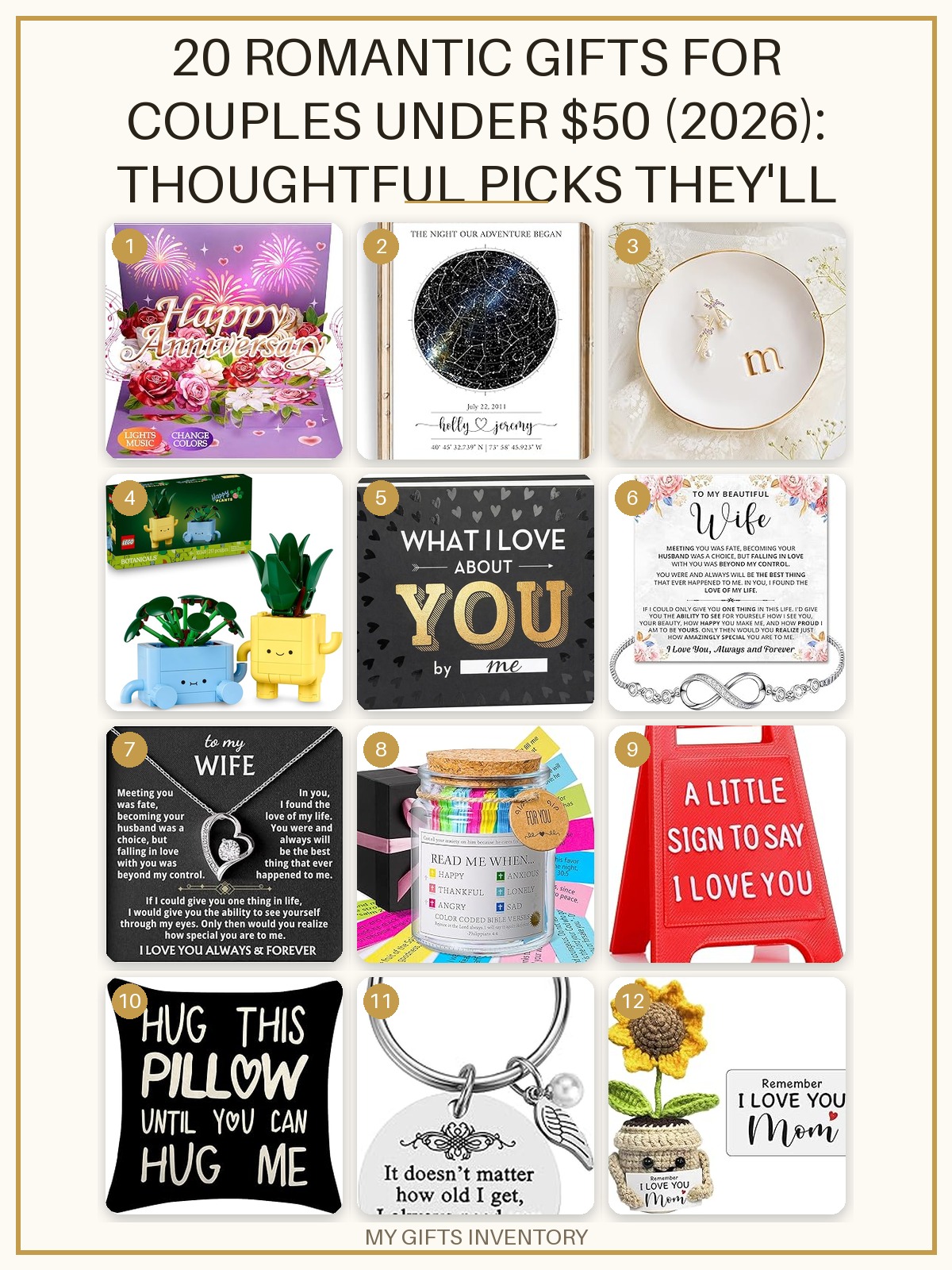
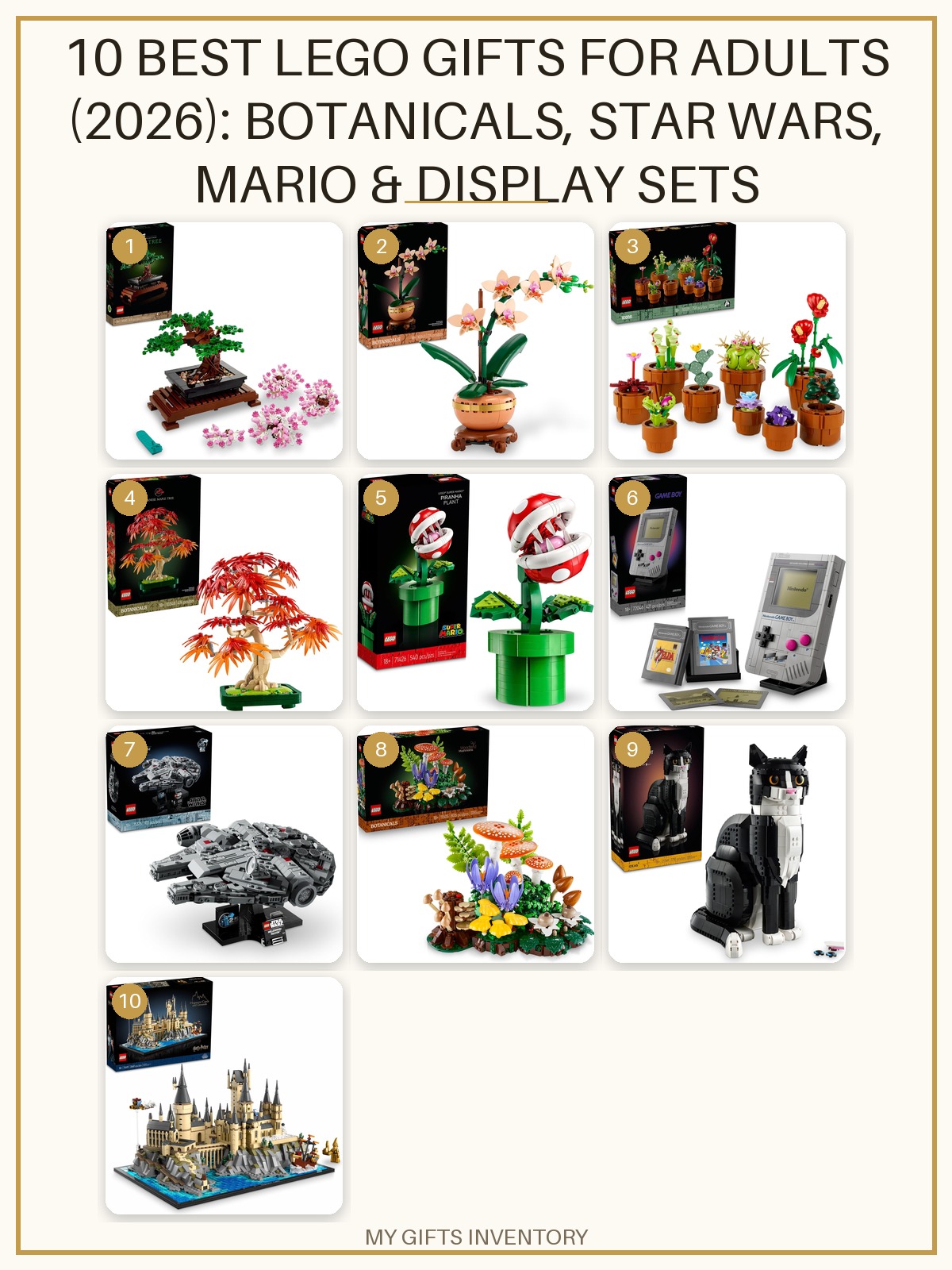
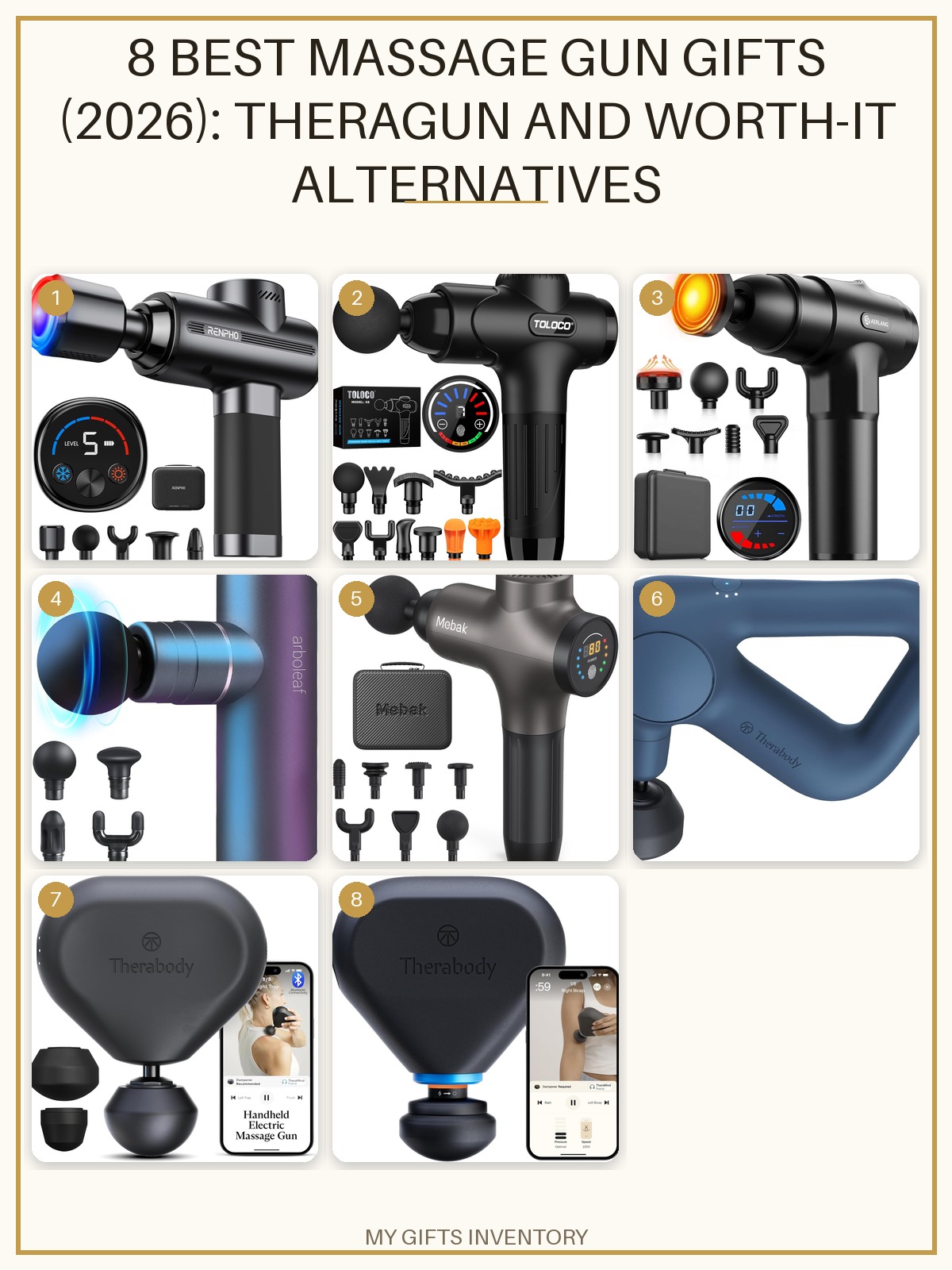
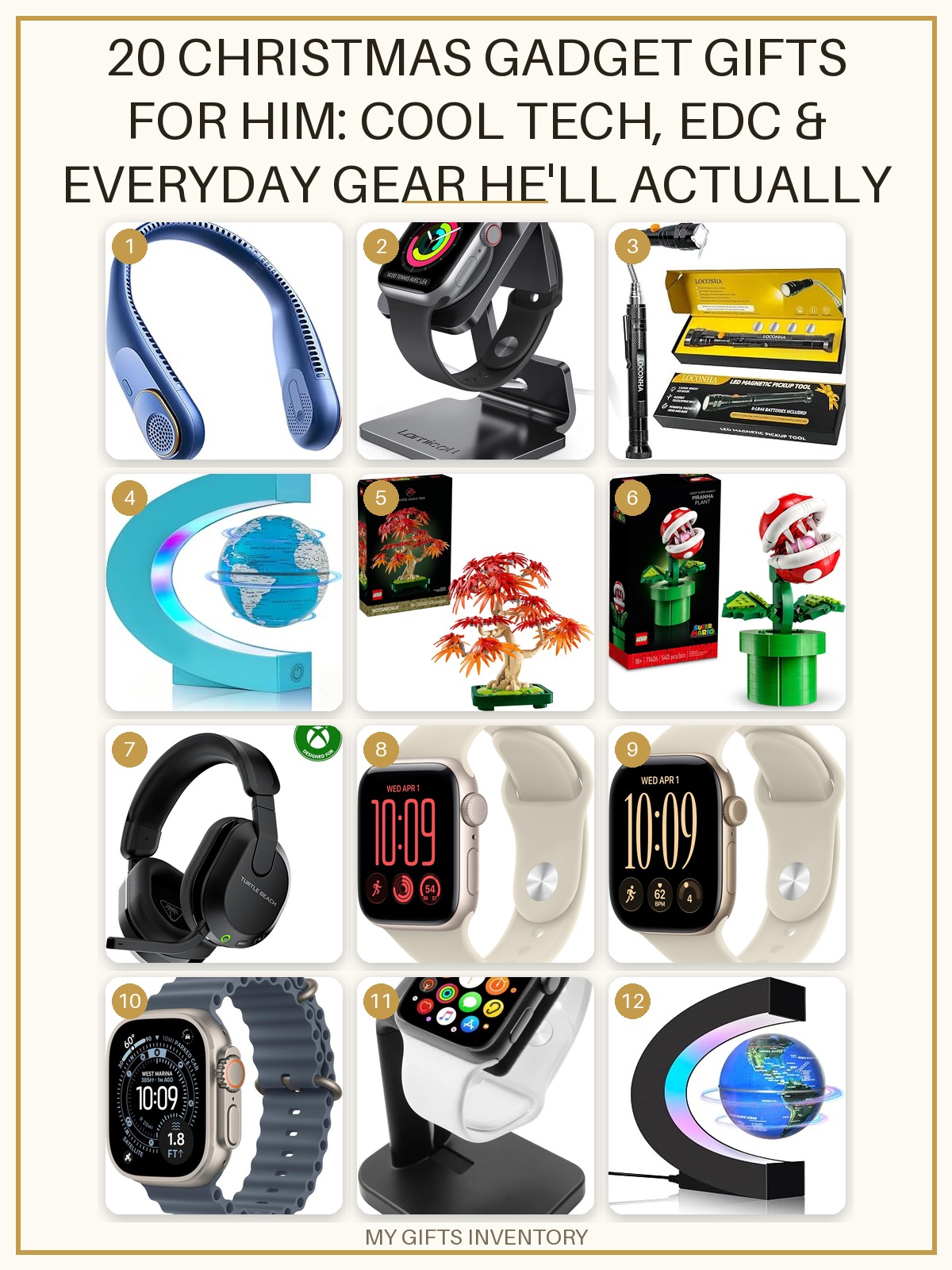
Shop Hand-Picked Gift Sets
Every item picked, priced and linked, ready to buy.
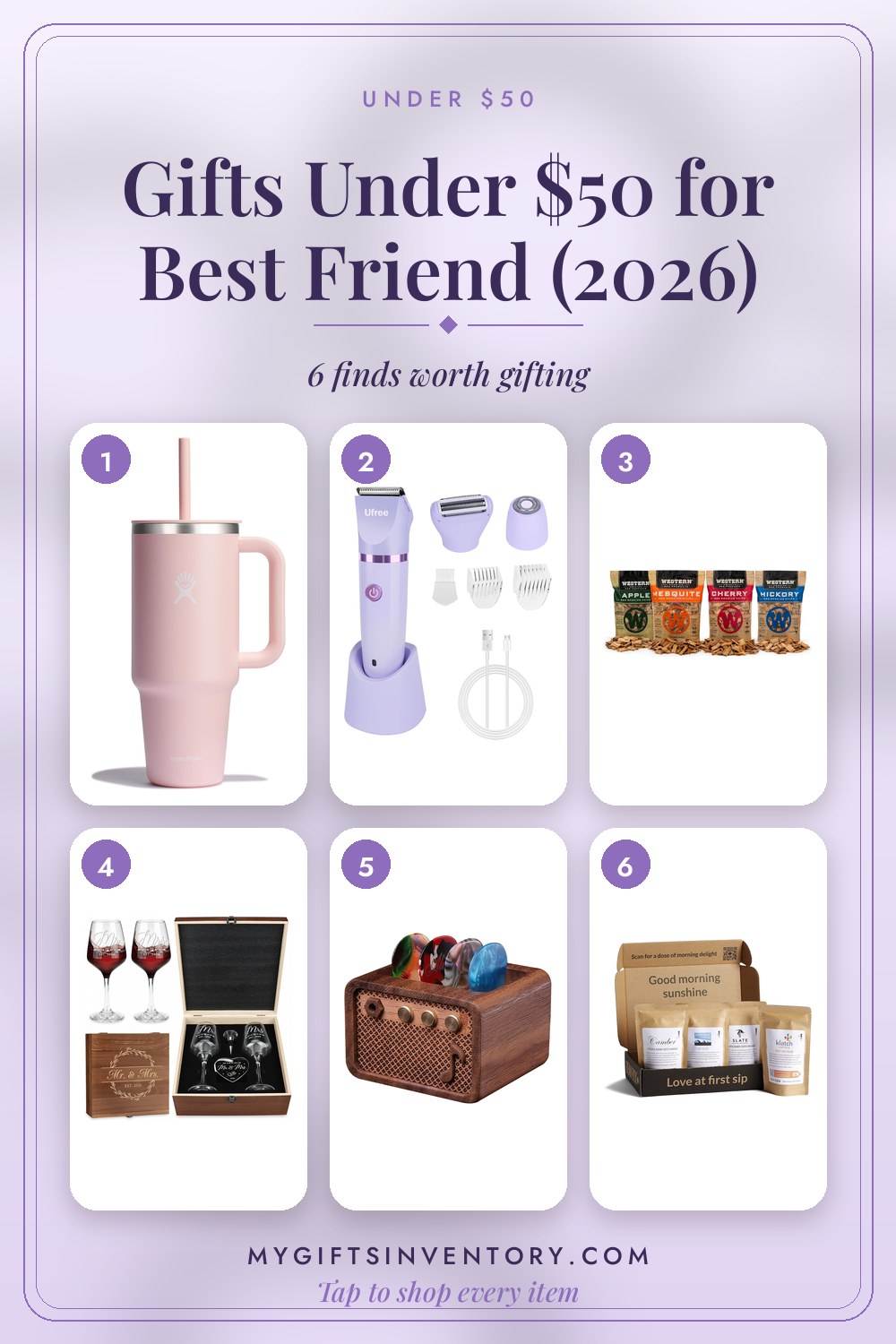
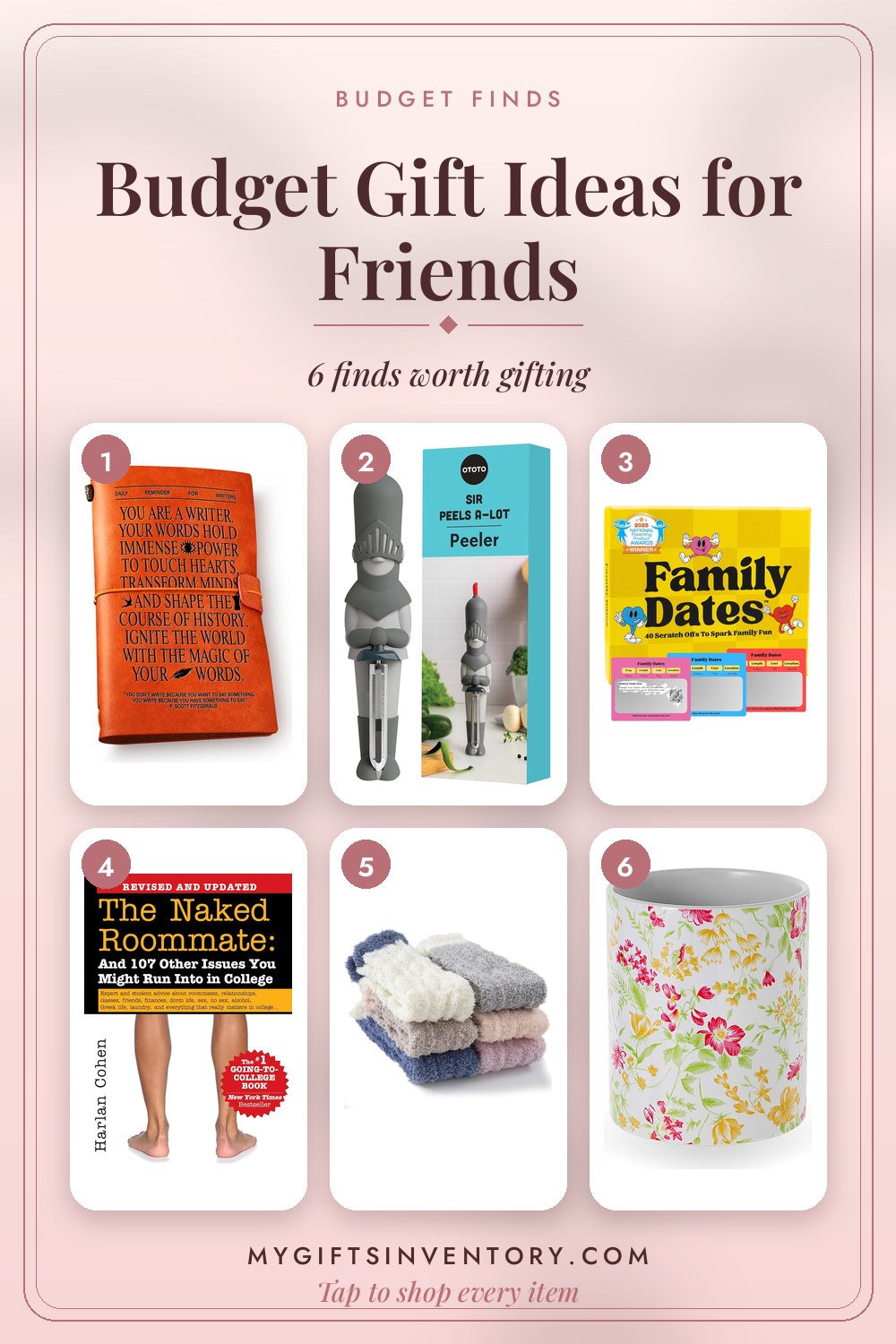
More Gift Advice