How to Be Thoughtful With Gifts: Etiquette, Budgets, Cards, Wrapping, and Planning
Thoughtful gifting is mostly about knowing the person, planning a little ahead, and communicating care in the details. Here’s how we choose gifts, write cards, handle budgets, and avoid common etiquette mistakes.

As an Amazon Associate, My Gifts Inventory earns from qualifying purchases. We only recommend products we'd genuinely consider buying ourselves.
We get why you are searching this. You want your gift to land as care, not as a last-minute purchase that the person will politely set aside. And you are probably trying to figure out what “thoughtful” means when there is a budget, a registry, a time crunch, and real life in the way.
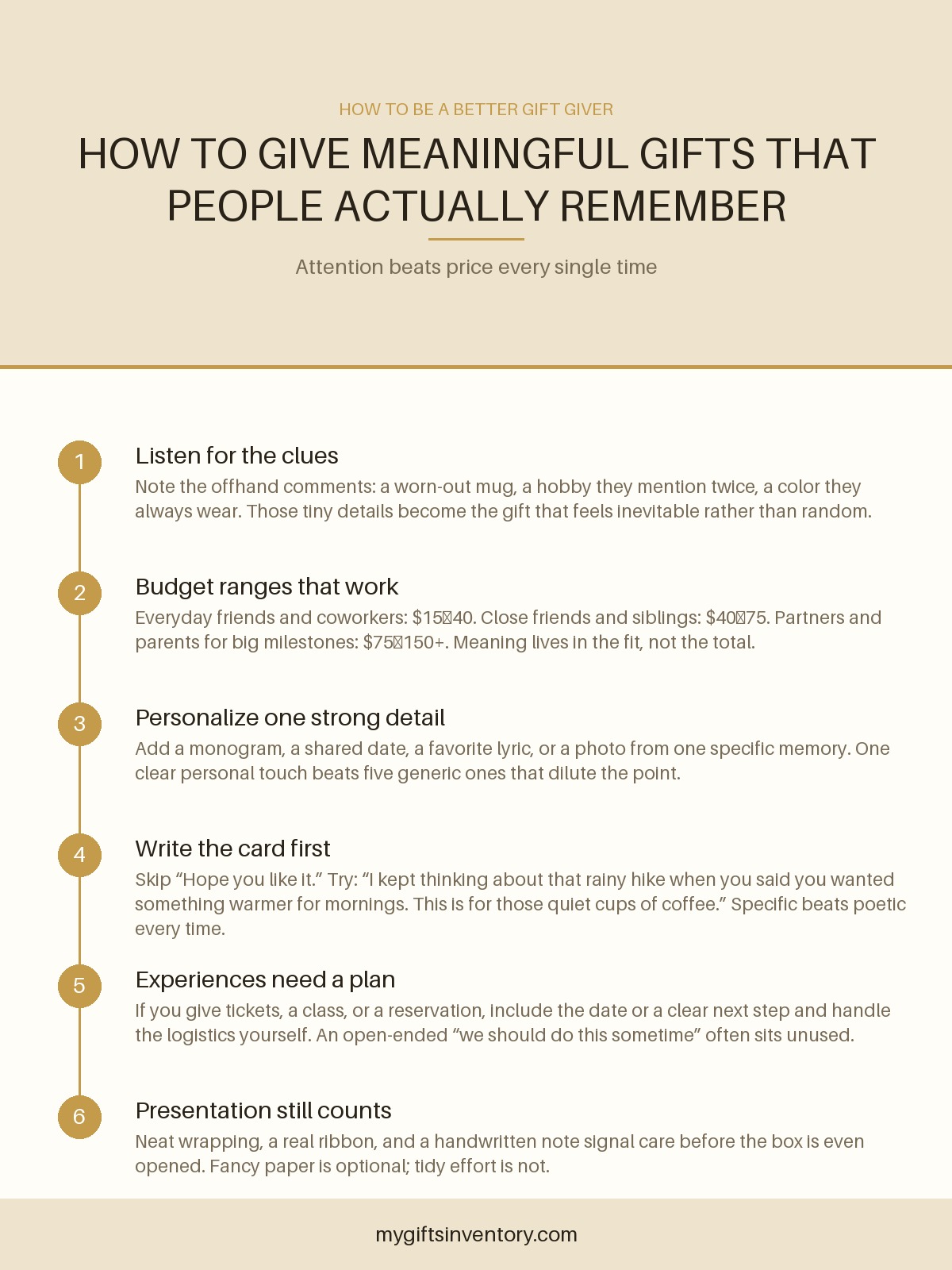
We think thoughtful gifting is a practical skill. It is a mix of knowing the recipient, choosing a format that fits the occasion, and communicating your intent in small, readable details like the card, the packaging, and the way you follow (or respectfully adapt) gifting norms.
Start with the kind of thought that shows up
When people say “be thoughtful,” they often mean “do the extra work.” But the extra work is not random. It is the work that helps the gift make sense to the recipient.
Use a quick “person-first” checklist
Before we shop, we take five minutes to write:
- Three concrete preferences: what they actually choose, wear, or enjoy
- Two patterns: how they spend time, what they complain about, what they get excited for
- One life detail: a trip, new job, upcoming move, new baby, busy season, hobby they are restarting
Thoughtful gifts usually match at least two of those details. If we cannot connect the gift to their real life, we keep looking.
Choose the “gift job” before you pick the item
Every gift does one main job:
- Comfort when they are stressed
- Convenience when their life is busy
- Celebration when something deserves a moment
- Connection when you want to say you pay attention
- Support when they are learning, training, healing, or building
Once we know the job, we can choose something that supports it. That is what turns “a thing” into “a thoughtful choice.”
Budgets without guilt: how to be considerate with money
Budget questions are where anxiety lives, because spending too little can feel careless and spending too much can feel like pressure. We approach budgets like a constraint we can design around.
Pick a category number, not just a single dollar amount
Instead of thinking, “I should spend $X,” we pick a range based on relationship and role.
- Casual acquaintance or coworker: often $10 to $25 for something practical plus a genuinely kind card
- Friend or extended family member: often $25 to $75, depending on your involvement in the occasion
- Partner, parent, or someone you are close to: often $50 to $150+, especially if the gift is meant to be a “this is for you” moment
- Host or VIP (wedding party lead, major milestone): can go higher, but it should match the significance
If those ranges make you feel stuck, use a different lever: time. A gift you spent an hour thoughtfully curating can feel more generous than a larger gift you bought while rushing.
When your budget is smaller, shift the “value” to effort
We have never met a thoughtful person who only solved gifting through price. If your budget is under $20, we aim for one of these:
- A small item that matches a specific habit (their preferred treat, a desk need, a comfort thing)
- A “mini set” (two or three related items) that makes the gift feel intentional
- A personal note that includes a real detail about why you chose it
If you want a starting point, we like using gift lists for structure, not as a substitute for personalization. For example, you might browse ideas like 45 Best Gifts Under $20 (Highly-Rated Picks) for 2026 and then swap one element to better match the person.
When your budget is higher, avoid the “premium but impersonal” trap
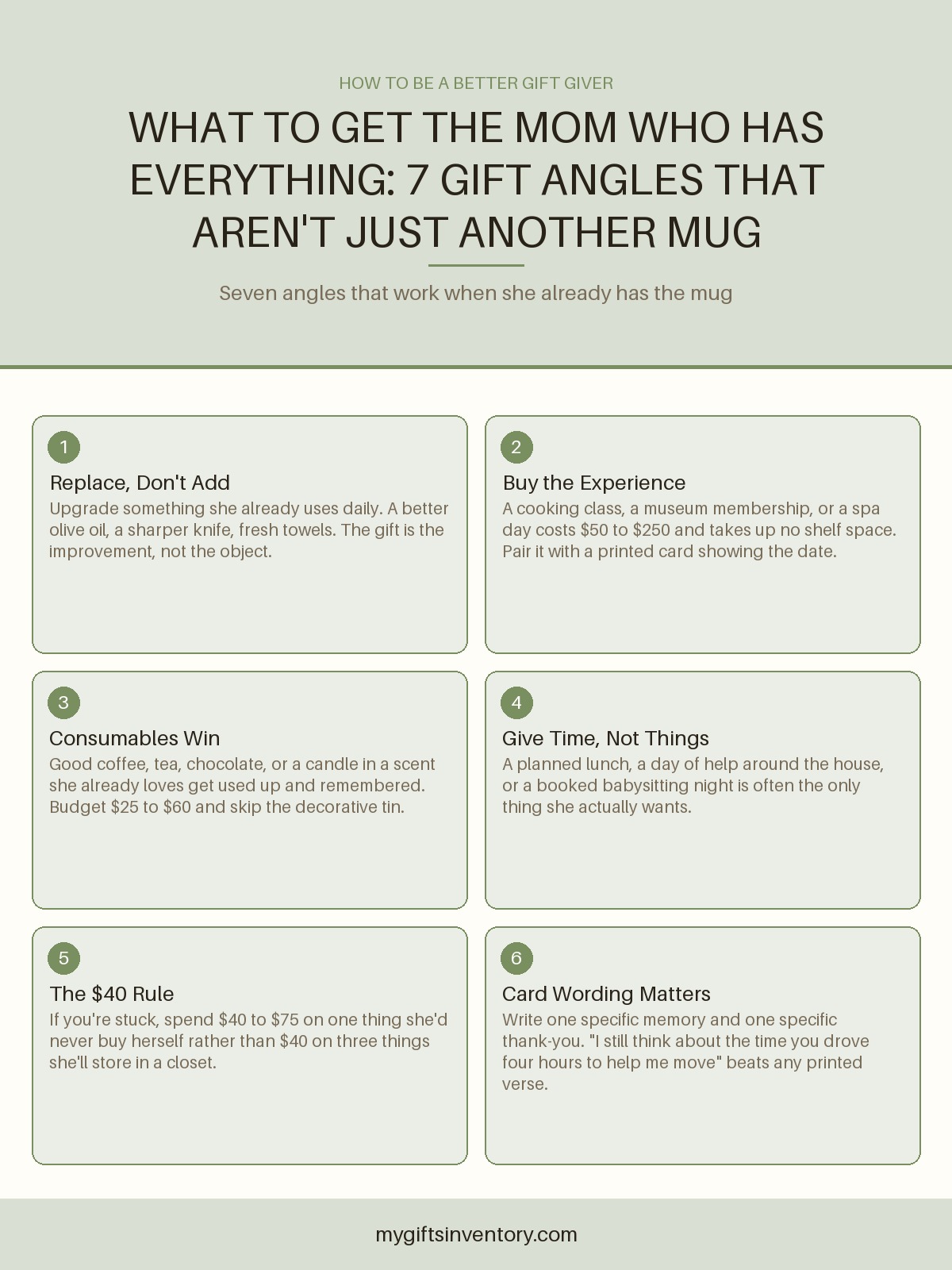
Spending more does not automatically create thought. A higher budget can tempt us into buying something impressive but generic. Instead, we look for signals that it is meant for them:
- A style match (color, texture, vibe)
- A lifestyle match (what they do on weekends, what they keep meaning to try)
- A life-match (the timing, the milestone, the season)
If you are aiming for the “splurge” lane, we recommend pairing the premium choice with a card that explains the connection. If that is the vibe you want to lean into, this can help structure ideas: 15 Luxury Gifts Worth the Splurge: Best Picks Over $150 (2026).
What to write in the card: the easiest place to be thoughtful
A card is not a legal contract. It is a channel for warmth, and people remember it. If you are worried your gift is not “perfect,” the card can still make the moment feel right.
Use the 3-part card formula
We write cards in three parts, usually in 2 to 4 sentences total:
- What I’m celebrating or what this moment is
- Why I chose this (one specific detail)
- What I hope happens next (a feeling or outcome)
Card wording examples by situation
Birthday card (gift plus memory):
“Happy birthday, Jamie. I keep thinking about that dinner we had last summer and how much you love trying new places. I hope this makes your next meal out feel even more special. Can’t wait to celebrate you.”
Anniversary card:
“Happy anniversary. Thank you for building a home and a life with me. I chose this because it reminds me of the small ways we make ordinary days better. Wishing you more weekends like ours.”
Thank-you card after help (practical and specific):
“Thank you for stepping in when we needed you. I still remember how you handled everything so calmly and how you checked in after. This is a small way to say we notice and we appreciate you.”
Sympathy or difficult season:
“I’m so sorry you are going through this. I don’t have the right words, but I want you to know you are not alone. If it would help, we are here for meals, errands, and anything you need.”
What not to do
- Avoid “You’re so hard to shop for.” Even if it is true, it puts the pressure back on them.
- Avoid apologizing for the gift in the card (“I hope you like it”). Instead, write what you hope it helps them do or feel.
- If you are giving a gift card, skip long explanations. One sentence is enough, like: “I picked this because I know you will choose exactly what you want.”
If you are using a gift guide approach, still personalize the card
We love using gift ideas as a starting point, but the card is where the gift becomes yours. If you want ideas for a specific life moment or person, you can combine that structure with your own “why this” sentence. For example, for a more romantic or personalized anniversary vibe, this might spark options: 20 Gift Ideas for Personalized Anniversary Gifts Under $75 (2026).
Wrapping that feels intentional, not performative
Wrapping is one of the fastest ways to show care because the recipient sees it before they see the gift. Thoughtful wrapping is mostly about tidiness, sizing, and a small “reason” detail.
Simple rules we follow
- Size matters: the item should sit comfortably, not rattle and not stretch the paper.
- Clean folds: no wrinkled corners, no tape that looks slapped on.
- Correct closure: the bow and tape should not hide damage.
- A legible tag: add a tag with their name and a short reason, like “For your coffee mornings” or “For your new apartment calm.”
When wrapping is not worth the stress
If the recipient is receiving it at a party and will open it immediately, we keep it simple. If the recipient is sensitive to clutter, we prioritize a neat bag or a minimal wrap. If you are gifting something bulky, use a clean carrier and put the card where it is easy to find.
Don’t forget the “experience of opening”
We like adding one small moment of anticipation: a ribbon that is easy to remove, tissue that does not stick, or a note tucked into the opening layer. The goal is for the reveal to feel calm and delightful.
Registries: how to be thoughtful without undermining the surprise
Registries are confusing when you want to be both considerate and original. We treat them as a communication tool, not a rulebook you cannot adjust.
If there is a registry, what “thoughtfulness” looks like
In our experience, thoughtful registry gifting means:
- Buying from the registered items when possible
- Double-checking that the item is still available
- Choosing a card message that sounds like you made the decision thoughtfully
If you want to be different, be respectful
If you are choosing outside the registry, we try to do it in ways that do not duplicate or complicate their setup. A safe approach is to buy a practical add-on that complements what they registered for, like a consumable, a support item, or a gift that fits how they live.
Gift cards can be thoughtful in registry situations
Gift cards can be a thoughtful “I support your taste and convenience” move. They work especially well when you do not know their exact size, shade preferences, or day-to-day needs.
If you are considering a gift card through a common store, it can help to check the options and details in advance. For instance, you can use our store guides like Gift Cards at Target: The Complete List of Brands, Fees & Where to Buy (2026) to keep yourself from guessing. The goal is not to overthink, it is to avoid surprises for the recipient.
Returns and exchanges: protecting the recipient without adding friction
People worry that returns are rude or that they are admitting they did not shop well. The truth is that return policies exist for a reason, and thoughtful gifting includes respecting the recipient’s fit and preferences.
What we do before giving
- We keep the receipt and we note the store and policy right away.
- We check return windows so we are not counting on too much time later.
- We consider whether an exchange would be easier than a refund for that person.
When a gift receipt is appropriate
If you are giving something that depends on sizing, fit, or taste, a gift receipt can be a kindness. We do not hide the kindness behind awkward explanations. Instead, we keep the card warm and we let the practical support speak quietly.
Big etiquette mistake to avoid
Please do not hand over something and then ask the recipient to “take it back if you don’t like it.” It turns their experience into work. If the gift might not land perfectly, build in an exchange-friendly path before you hand it over.
Last-minute thoughtful gifts: still possible
If you are shopping close to the date, you can still be thoughtful. You just shift from “perfect find” to “good match with a clear connection.”
What to do when you have 24 to 48 hours
- Choose a safe category: cozy, consumable, practical, or experience-based
- Buy for their routine: what they do every week, not what they might need someday
- Write a card that links the gift to your observation: that is where the thought lives when you cannot curate a slow, ideal search
- Wrap neatly: clean paper and a tidy tag take less time than people think
When we recommend going with a gift basket approach
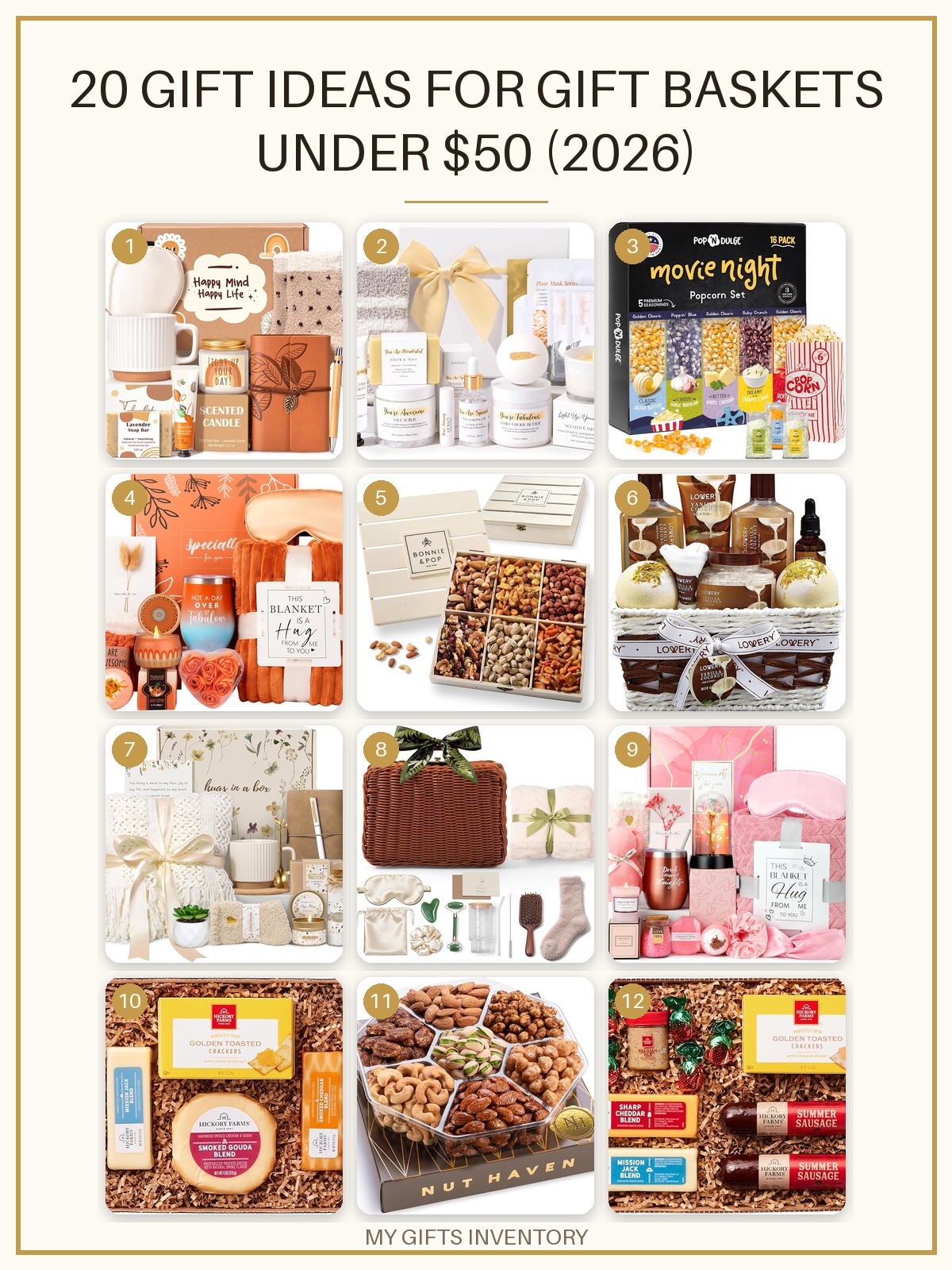
Gift baskets work well for last-minute gifting because they let you cover more than one preference in one package. If you like that format, you can use idea structure like 20 Gift Ideas for Gift Baskets Under $50 (2026) and then swap the “theme” to match the person, like comfort movie night, home spa, or snack exploring.
Thoughtful gift planning timeline (so you do not panic)
One reason people search this topic is that gifting can sneak up on us. We keep a simple timeline so we can stay calm.
6 to 8 weeks before
- Pick the occasion-specific approach: practical, celebratory, sentimental, or experience
- Confirm the details: date, dress code (if relevant), whether there is a registry
- Start a short shortlist of 3 options
2 to 4 weeks before
- Buy the gift if it is time-sensitive
- Choose the card wording draft, even if you do not finalize the card yet
- If shipping, allow extra days for delivery and returns
1 week before
- Confirm the final plan: who hosts, where to park, when you will arrive
- Pack the gift in a way that survives travel and reduces last-minute stress
- Decide whether you need exchange backup
Day before or day of
- Print or write the card
- Check wrapping supplies and make it presentable and simple
- Put the gift receipt in the same place as the gift
Experience gifts: thoughtful in a different way
Experiences can feel exceptionally thoughtful because they are about time together or a personal moment. The etiquette is a little different though.
Make the logistics part of the thought
When we give an experience, we help with at least one of these:
- We include a date range and some flexibility
- We give a gentle suggestion on timing, like “weeknights tend to be calmer”
- We add a small accessory that makes it easier to enjoy, like parking tips or what to bring
Card message for experiences
We like cards that invite them to choose the moment. Example: “I hope you get a little break for yourself. When you decide on your day, let me know and I’ll plan around it.”
Corporate and group gifting: thoughtful without awkwardness
Work gifts and group gifts can feel tricky because you need to be appropriate and not create obligations. Thoughtfulness here looks like tone and restraint.
If you are gifting as part of a group
- Align on a shared budget so people feel fair
- Add one consistent card that thanks the recipient, written in a way that does not sound personal but still feels warm
- If someone contributes differently, use that to create more personalization, not more pressure
Corporate gifts under smaller budgets
We often recommend categories that are useful, neutral, and not overly personal. For structure, you can use ideas like 21 Corporate Gift Ideas Under $50 (2026) That Won't Feel Like an Obligation and then customize the card to the relationship and the occasion.
When you should give a gift card instead
Sometimes a gift card is the most thoughtful choice, especially when you are uncertain about size, style, or what they would actually use. It is not a cop-out when you treat it like a considered option.
Make the gift card feel personal
We do that by writing a card message that explains the why. Example:
- “I wanted you to pick what feels right for you right now.”
- “I chose this because I know you will use it on something you actually want.”
- “This is for your next comfort treat.”
Check balance basics so the gift is usable
If you are giving a gift card and you want the gift to work smoothly, it helps to make sure you know how to check the balance. Our gift balance guides can help with the practical “will it work” part. For instance, if you are using a major retailer card, you can check the balance guide like Walmart Gift Card Balance: How to Check It before you hand it over.

Frequently Asked Questions
What makes a gift feel thoughtful instead of random?
A thoughtful gift connects to something you genuinely noticed about the person, like a routine, preference, or a specific life moment. We also think the card should do part of the work by explaining why you chose it in simple, specific language.
How much should we spend on a gift?
We base the amount on your relationship and your role in the occasion, not on pressure to match someone else’s spending. A practical approach is to pick a comfortable range you will not resent, then add extra personalization when the budget is smaller.
What should we write in a card if we are not sure the gift is perfect?
Write what you hope the gift helps them do or feel, plus one real detail that shows you paid attention. Avoid apologizing for the gift, and replace it with warmth and a clear connection.
Do we need to follow a registry?
If there is a registry, it is usually the clearest signal for what the recipients need and want. Choosing from the registry is the most considerate option, and if you go off-registry, we suggest doing it carefully so you are not duplicating something they already planned for.
Is it rude to give a gift receipt?
It is not rude when the gift depends on sizing or personal preference, and it can genuinely protect the recipient from a stressful return. We keep the card normal and warm, and we let the practical support stay quietly in place.
Looking for an Actual Gift Instead?
Gift Sets We Love Right Now
Every item picked, priced and linked, ready to buy.
More Gift Advice