Psychology of gift giving: how to choose, write, and wrap without awkwardness
We use practical psychology to help you pick gifts that feel personal, write cards that land, and avoid common etiquette mistakes. Includes budgeting, planning timelines, and what to do if you need a return.

As an Amazon Associate, My Gifts Inventory earns from qualifying purchases. We only recommend products we'd genuinely consider buying ourselves.
We get it. You searched “psychology of gift giving” because you can feel the pressure: you want to be kind, you want it to land, and you do not want to accidentally communicate the wrong thing. Gift anxiety usually comes from the same place, even when the details differ. You worry the gift will say “I do not know you” or “I waited too long,” even if your intentions were good.
Here is how we handle it. We treat gifts like messages made of choices. The psychology matters because humans interpret signals fast. When you align your budget, timing, and card words with the kind of care you actually mean, the gift feels natural instead of constructed.
What psychology says about why gifts feel “right” (or wrong)
At the risk of oversimplifying, we all evaluate gifts in three quick ways: attention, fit, and meaning. Attention is whether you made time and effort. Fit is whether the gift matches their life, tastes, and practical needs. Meaning is the emotional story the gift tells, whether it is gratitude, celebration, sympathy, or just “I’m thinking of you.”
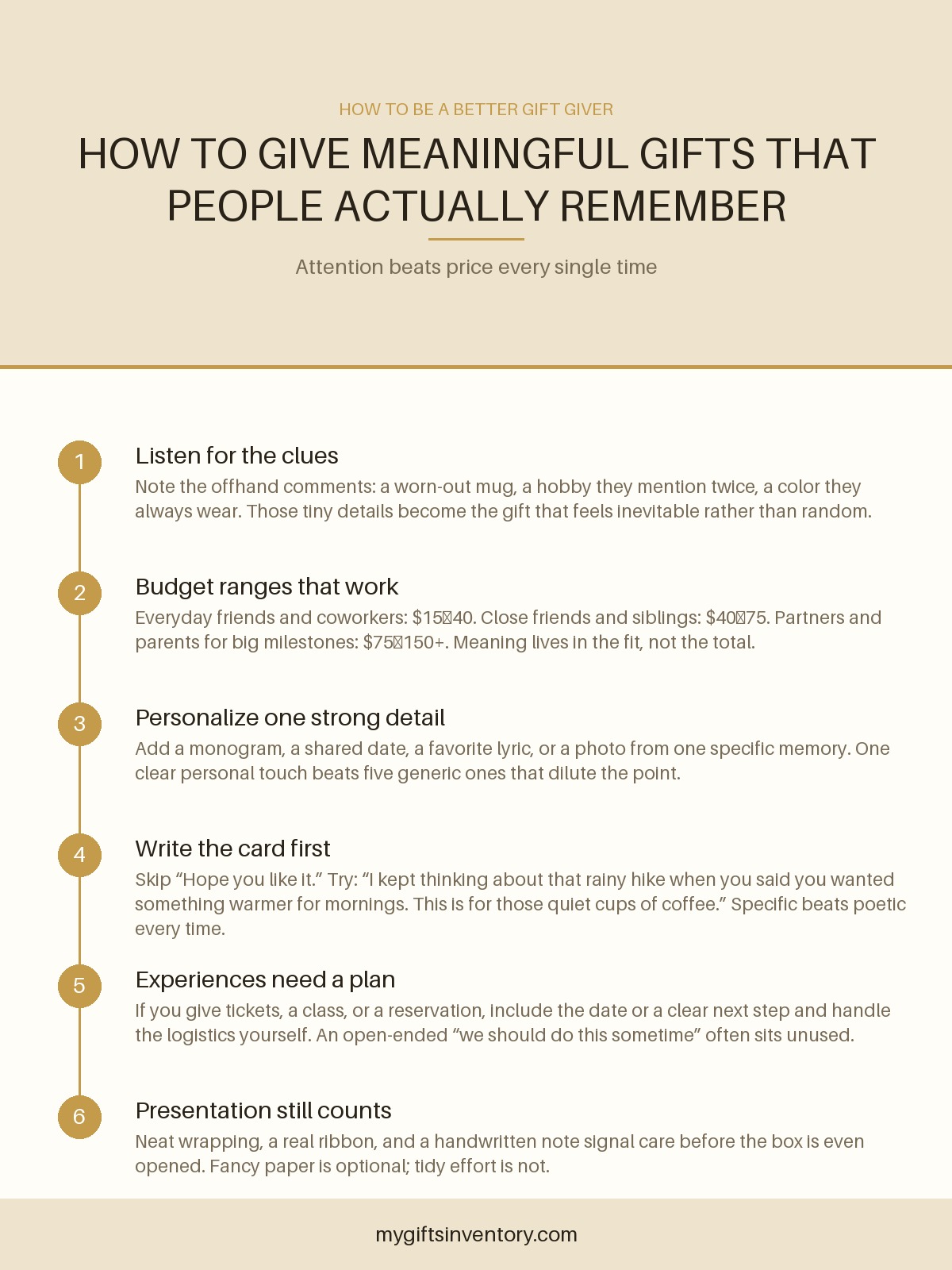
1) Attention beats extravagance
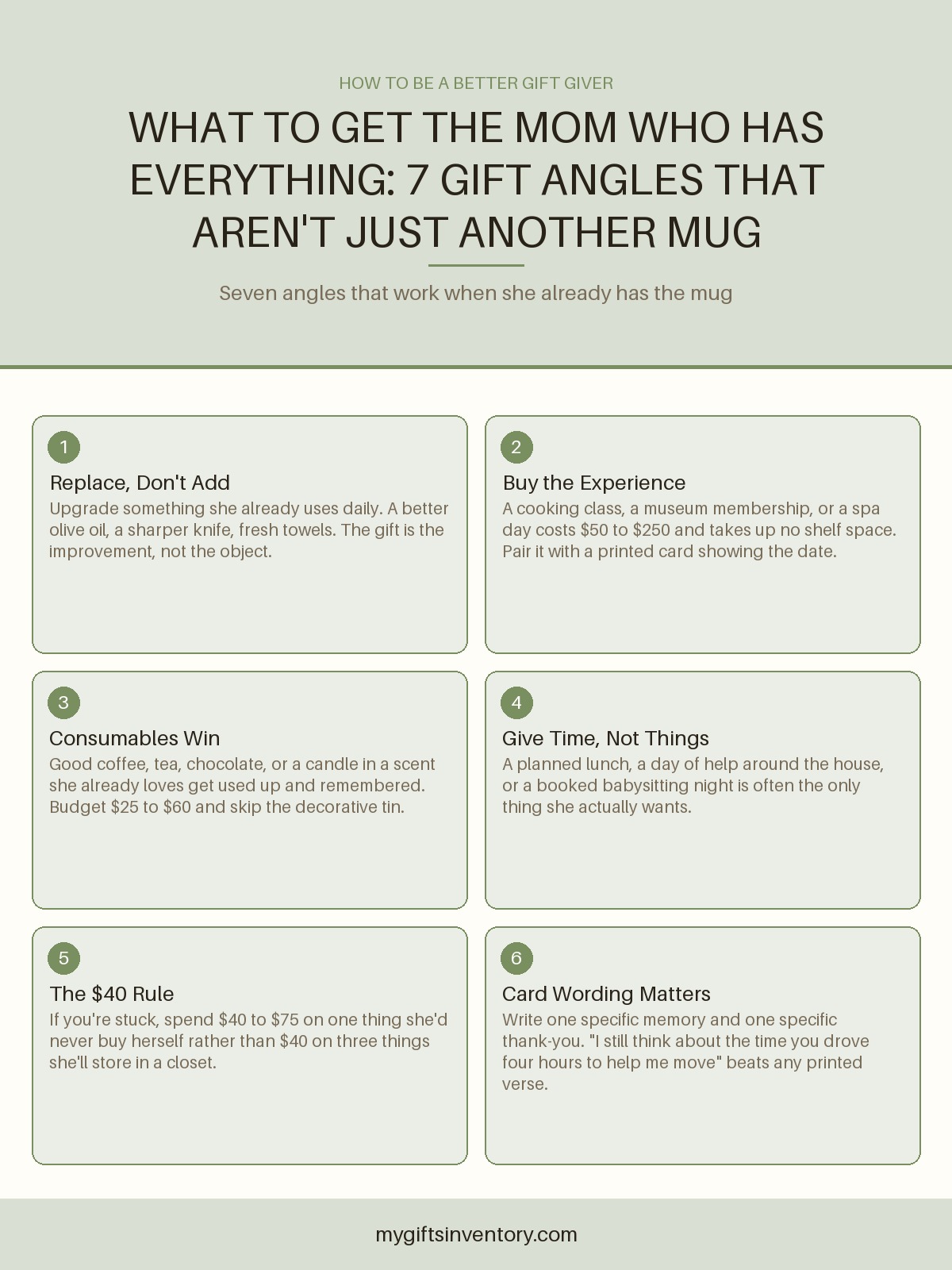
We have noticed how often people are disappointed by gifts that look expensive but feel generic. The psychology is simple. People read effort as care. A well-chosen item from a clear budget, plus a card that is specific, often outperforms something pricey that could have gone to anyone.
That is why it helps to choose a “care plan” before you shop. For example: “I will keep it under $75, I will buy by a specific date, and I will write two concrete details in the card.” Your brain relaxes when you have a plan. And your recipient feels it.
2) Fit is a mix of values and logistics
Fit is not just “do they like it.” Fit includes whether they can use it, where it will live, and whether it matches their routines. If they cook once a week, a complicated gadget might collect dust. If they hate clutter, a bath set may be better as a small, curated bundle than a drawer-full of extras.
We often recommend thinking in categories of use: daily, occasional, and “nice to have.” If you can, pick one gift that fits their daily rhythm and one supporting detail that connects to their personality.
3) Meaning is about the story you activate
Meaning is where your card does most of the work. Even when the gift is simple, the card can make it feel tailored. When we write card messages, we focus on three elements: a specific memory or observation, an emotion, and a hopeful future use.
Example for a birthday where you are giving something small but thoughtful: “I loved seeing you light up when you talked about ___. I picked this because it feels like your kind of ___. Happy birthday. I hope it becomes part of your __.”
Choosing the right gift: a framework that prevents overthinking
When people search for the psychology of gift giving, they usually want a method they can trust. Here is one we use that is surprisingly calming because it is structured.
Step 1: Name the occasion emotion (not just the event)
Birthdays and holidays are labels. The emotional job of the gift changes. Are you celebrating growth, saying thank you, repairing distance, expressing sympathy, or helping someone feel seen? Once you name that emotion, you can pick signals that match.
- Gratitude: practical help or something aligned with their effort.
- Celebration: something that makes the moment feel special.
- Support: comfort and reduced stress, not just “fun.”
- Repair: a gift with a clear “I remember you” connection and warm words.
Step 2: Decide what kind of “personal” they want
Some people love personalization. Others feel pressured by it. A helpful middle ground is “specific, not loud.” You can be personal without making it a production.
We use two questions:
- Would they feel delighted by a message that references their interests?
- Or do they prefer simple recognition, like “I hope you enjoy this” plus one specific reason?
Step 3: Match effort to closeness
Psychologically, effort is interpreted differently depending on your relationship. A coworker gift should feel appropriate and light. A partner gift can be more intimate. A friend gift might balance sentiment with their personality.
If you are unsure, pick a baseline: for someone closer to you, write more specifics in the card; for someone less close, keep the card sincere but brief, and make the gift choice more practical.
Gift budgets: how to stay kind to your wallet without feeling cheap
Budget anxiety is real because we do not want to signal “I’m not willing.” The psychology fix is not “spend more.” The fix is to align your budget with a plan that includes attention and fit.
A realistic budgeting approach that still feels personal
Use a “three-number” budget you can remember:
- Gift: where most of the money goes
- Card: small, but meaningful
- Buffer: 10% for shipping, last-minute needs, or exchange
Example: If your total budget is $90, you might do $75 for the gift, $10 for card supplies or a small add-on, and $5-6 buffer. That is not about being stingy. It is about preventing chaos, which is what usually causes the awkward feeling.
Budget ranges by scenario
These are not hard rules, just practical anchors:
- Under $20: great for acquaintances and “I’m thinking of you” moments. Use it for something specific and usable, and keep the card short but real.
- $20 to $50: strong for friends, teachers, and casual celebrations. Aim for one clear “use case.”
- $50 to $150: good for partners, milestones, and people who benefit from upgrades or experiences.
- $150+ splurges: best when you can explain the meaning in the card. If you cannot say why it matters, pick something else.
If you want ideas that match these budget lanes, we often point people to 20 Gift Ideas for Gift Baskets Under $50 (2026) when they want something that feels abundant without needing a huge spend.
Card wording: the psychology of what people read between the lines
Cards can feel like a trap. Either we write something generic and hope it passes, or we overthink and then freeze. The psychology of card writing is that recipients do not need poetry. They need evidence of you paying attention.
Card formula we love: Specific + Emotion + Hope
We suggest this structure because it is easy to remember and it reliably sounds like a real person wrote it.
1) Specific: reference something you noticed, experienced, or appreciated.
2) Emotion: name what you feel about them or what the occasion means.
3) Hope: say what you hope happens next or how you want them to feel.
Examples you can copy (and personalize)
Birthday: “I loved getting to watch you ___. I picked this because it reminded me of your ___. Hope this is a great year with plenty of __.”
Thank you: “Thank you for ___. I noticed how much you __, and it meant more than you know. I hope you get a quiet moment to enjoy __.”
Sympathy: “I’m so sorry you’re going through this. I’m thinking of you and your family. If it would help, we can __. You are not alone.”
Partner: “Every time I see you __, I’m reminded why I’m lucky. I chose this because it feels like us, and I hope it makes everyday life a little more __.”
What to avoid
- “I hope you like it.” It sounds like uncertainty.
- Over-apologizing for the budget. If you do not mention money, you remove the psychological sting.
- Long life stories. Keep it focused. Your gift already carries one message.
Wrapping and presentation: the part of the message people do not realize they are reading
Wrapping is not just for looks. It sets expectations about care. Psychologically, a gift that looks tidy makes people assume the giver considered the recipient, even if the contents are similar to something else.
Simple wrapping that always works
- Use clean paper and neat corners. If the wrapping is messy, the gift feels rushed.
- Tape in a few secure places. Not a web of tape that looks chaotic.
- Add one detail. Ribbon, a small ornament, or a tag that matches the card.
- Keep it aligned with the person. A minimal style for someone who likes clean aesthetics is still “personal.”
Fragile or bulky items
If you are wrapping something that does not behave, it is okay to skip fancy wrapping. Secure packaging is still presentation. You can use a gift bag plus tissue, or a box plus a ribbon. The psychology is about reassurance and neatness, not perfection.
Registries: how to use them without losing the “thoughtful” feeling
Registries are one of the easiest ways to prevent disappointment, but they can feel emotionally loaded. Some people worry that using a registry means giving something impersonal. In reality, registries reduce friction. They respect time and budgets, and they prevent duplication.
If there is a registry
- Choose something on it when you can. That is the most respectful “fit” signal.
- If you want to go off-registry, make sure it clearly matches the category they registered for and consider messaging the host for confirmation.
- Keep the card focused on your reason for the specific choice, not on the mechanics of the registry.
If there is no registry
Then you can use the “three-number” approach again. Practical item, small personal detail, and one emotional line in the card.
Gift cards and alternatives: when the psychology is actually better than you think
Gift cards get a bad reputation, but psychologically they can be a very considerate choice when they reduce the risk of a wrong gift. The difference is not the card. The difference is how you frame it.
How to make a gift card feel personal
Write one sentence that explains the purpose, then keep it warm. Example:
“I wanted you to pick something you truly want, so I chose a gift card for your convenience.”
Or if you are close: “I know you have been eyeing ___. This is for you to grab it when you’re ready.”
Where to buy and what to expect
There is a lot of practical variation in fees and brand options, so we recommend planning around it. If you are considering a specific retailer, we have guides that list the major options and help you avoid surprises. For example, you can compare details across popular stores like Walmart via our complete gift cards guide, or review Target options with our Target gift cards list before you decide.
If you prefer a food or experience angle, gift cards can still work as long as your card message makes the “why” clear.
Returns, exchanges, and the etiquette people forget
Even when you do everything right, sometimes a gift does not work. The psychology changes based on whether the recipient feels safe to handle it. Your goal is to make the return path feel normal, not like a failure.
When to include a receipt
- If you can, include a receipt or follow the store’s policy. It is practical, and it respects the recipient’s time.
- If you do not know their preferences, a receipt reduces risk.
What to write if you are giving something returnable
Keep it simple and kind. One line is enough: “If it is not quite right, I can help you with an exchange.” Avoid making it sound like you expect them to dislike it.
Returns after holidays
Timing matters because return windows can close quickly. If you are gifting during seasonal peaks, we suggest doing two things:
- Check the return policy at purchase time.
- Save the receipt immediately, ideally in a folder labeled with the recipient’s name.
Planning timeline: how to reduce gift stress without overcommitting
Gift psychology includes the giver’s stress level. When we rush, we buy “whatever is available,” and we write cards without enough specifics. That is how awkward gifts happen. A simple timeline prevents it.
A practical timeline we recommend
- 3 to 4 weeks before: confirm guest counts, set budgets, and brainstorm gift categories.
- 2 to 3 weeks before: purchase gifts and save receipts.
- 7 to 10 days before: finalize wrapping supplies and plan any gift cards.
- Night before the event: write the card with your three-part formula and address envelopes.
If you are behind
If you are within 3 to 5 days of the occasion, focus on risk reduction. That means:
- Choose something with a clear use case.
- Write a specific card note that explains the choice.
- Consider a gift card if you truly do not know what will fit.
For people who want quick gift lane ideas under a budget threshold, we often point shoppers to 20 Gift Ideas for Gourmet Treats, Wine & Coffee Gift Ideas Under $50 (2026) when time is tight and the “fit” can be checked through their known preferences.
Psychology-based gift ideas by intent (not just by category)
This is where everything becomes more intuitive. Instead of asking “what should I buy,” we ask “what should the recipient feel?” Here are intent-based directions that map to real life.
If you want them to feel celebrated
- Choose something connected to a habit they enjoy.
- In the card, name one trait you admire and one reason it matters now.
If you want them to feel supported
- Pick practical comfort, not pressure to entertain.
- In the card, offer one concrete help option if appropriate, like errands or a meal plan.
If you want them to feel understood
- Lean into specifics you actually observed.
- Small personalization beats big guesses. Keep the message grounded in reality.
If you are aiming for that “splurge but still thoughtful” feeling, we also see people succeed with mid-to-upper range gifts when they can tie it to a clear meaning. For that lane, 20 Gift Ideas for Splurge-Worthy Gifts Between $50 and $150 (2026) is a good place to find ideas that tend to feel like an upgrade without needing to go extravagant.
If you want to avoid awkwardness
- Avoid items that require sizing if you cannot confirm.
- Choose mainstream gift options when you are not sure, then make the card highly specific.
- When unsure, prioritize returns or exchange-friendly purchases.

Frequently Asked Questions
What is the psychology behind why people sometimes dislike gifts?
People usually dislike gifts when they feel low attention, weak fit, or unclear meaning. A gift can look nice but still land as “generic” if the card is vague or the item does not match their real routines.
How do we write a card that does not sound generic?
We write cards that feel personal by including one specific observation plus a real emotion and a short hope. A simple formula is: “I noticed ___. It made me feel ___. I hope you ___.“
What budget feels safe without making it awkward?
We suggest using a realistic range and planning buffer, then matching effort to the relationship. For many people, $20 to $50 works well for friends and casual celebrations, while $50 to $150 often feels right for partners or milestones.
Is it rude to use a gift card instead of a physical present?
It is not rude if you frame it with intention. We recommend writing one sentence explaining why the gift card is thoughtful, such as giving them choice and reducing the risk of a wrong item.
When should we buy gifts to avoid last-minute stress?
We aim to buy gifts 2 to 3 weeks ahead and write cards the night before the event. That gives us time to confirm fit, keep budgets steady, and avoid rushed purchases that lead to disappointment.
Looking for an Actual Gift Instead?
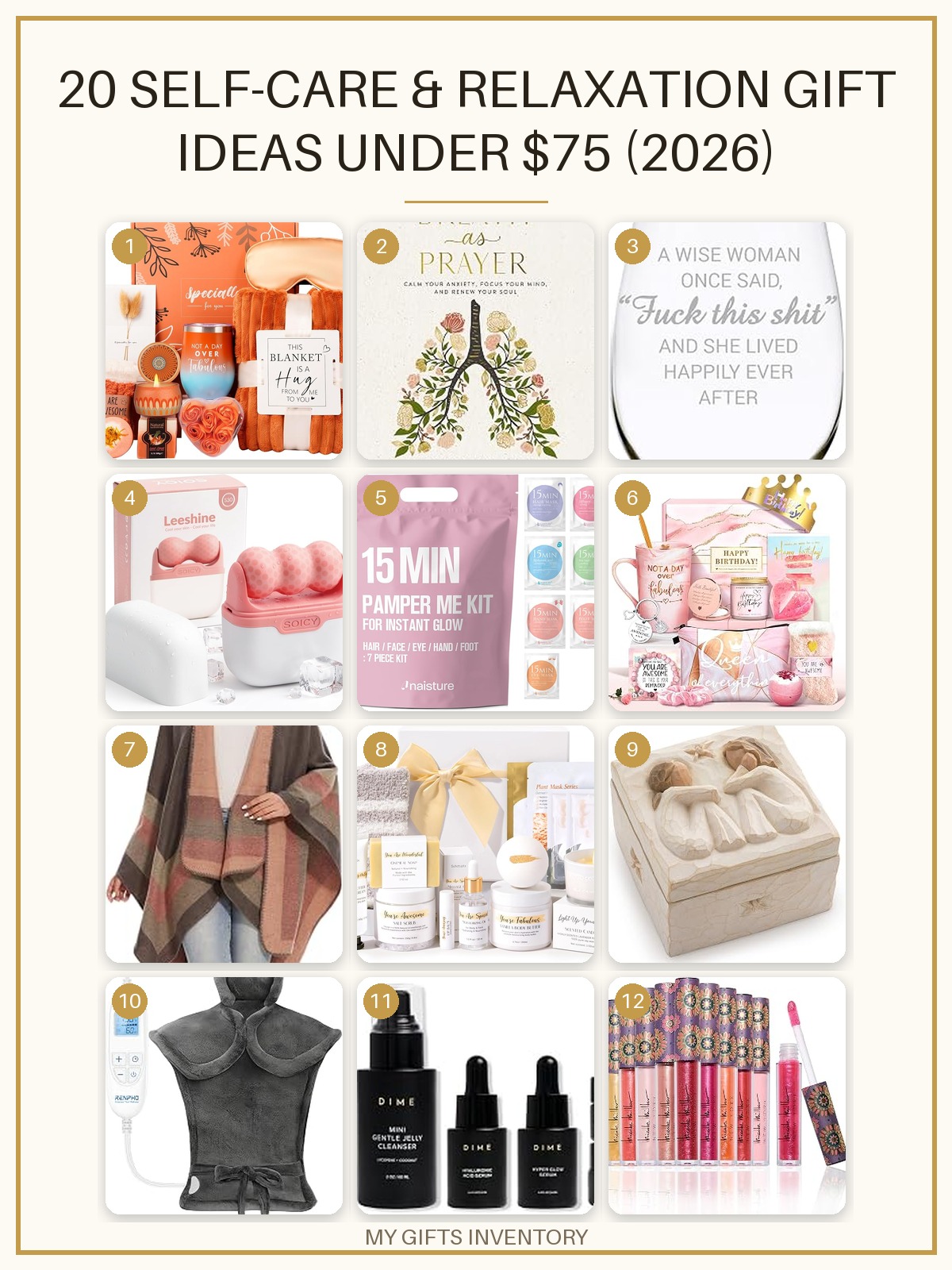
Gift Sets We Love Right Now
Every item picked, priced and linked, ready to buy.
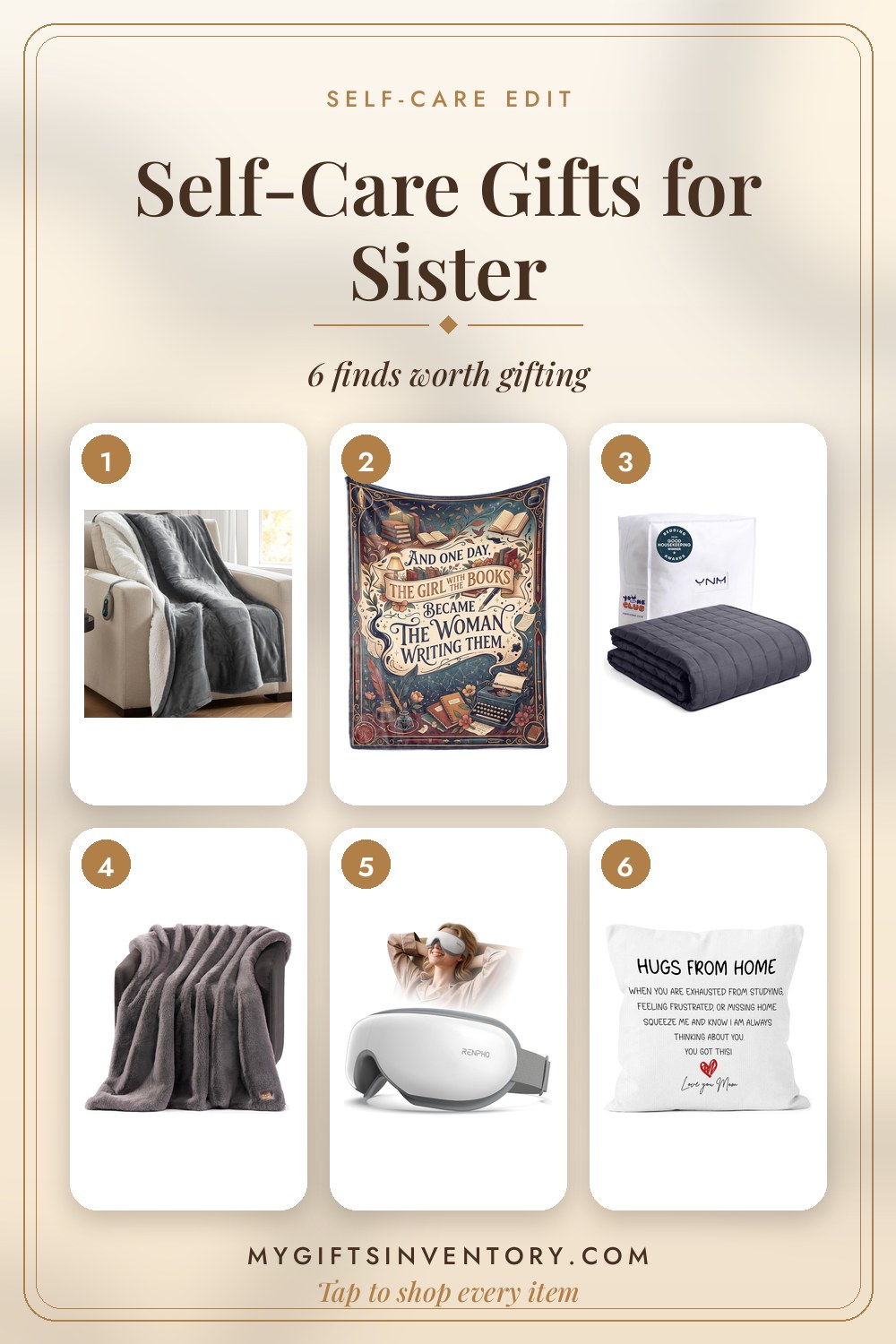
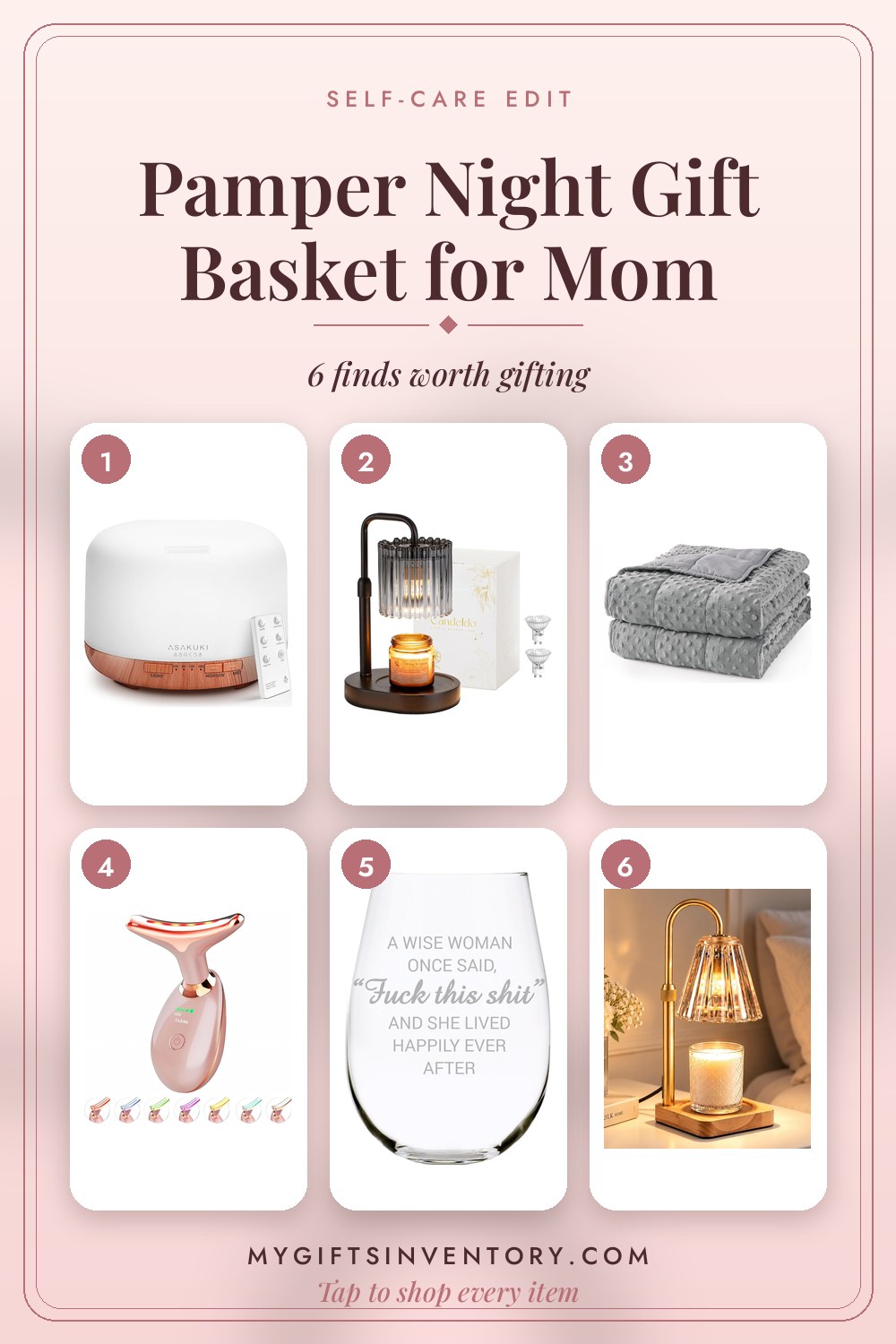
More Gift Advice