How to Find a Perfect Gift for Someone Who Has Everything (Practical Ideas & Etiquette)
We use a simple process to find gifts that still feel special, even when your recipient already owns everything. Includes card wording, budgeting, and last-minute plans.

As an Amazon Associate, My Gifts Inventory earns from qualifying purchases. We only recommend products we'd genuinely consider buying ourselves.
We get it. When someone “has everything,” shopping can feel less like finding a gift and more like trying to hit a moving target while everyone’s time is limited. You are not searching for more stuff, you are searching for something that will land in the specific way they actually care about.
In this guide, we’ll walk through a process that works in real homes and real schedules. We’ll cover budgets, card wording, wrapping, registries, returns, and how to plan so you do not end up scrambling with a last-minute guess.
Step 1: Stop thinking “What do they want?” and start asking “What do they not have to deal with?”
When someone has everything, their closet or pantry is not the real bottleneck. The bottleneck is usually time, energy, convenience, or access to something that fits their taste without requiring effort from them.
Try this in 10 minutes: the “friction scan”
We do this with ourselves first, then with the person. We look at their routines and ask where they seem to:
- Borrow the same thing repeatedly (tools, chargers, a certain snack, a specific book or playlist).
- Postpone a task (organizing, cleaning, meal planning, yard work, appointments).
- Have expensive habits they rarely “treat” themselves with (coffee upgrades, dining out, classes).
- Spend money on, but never feel satisfied with (because it is not quite right).
Then we turn “friction” into a gift category. If the friction is time, we lean experience or services. If it is consistency, we lean consumables they will actually use. If it is access, we lean a card or a “pick your date” plan.
Match the gift to their “taste,” not the price tag
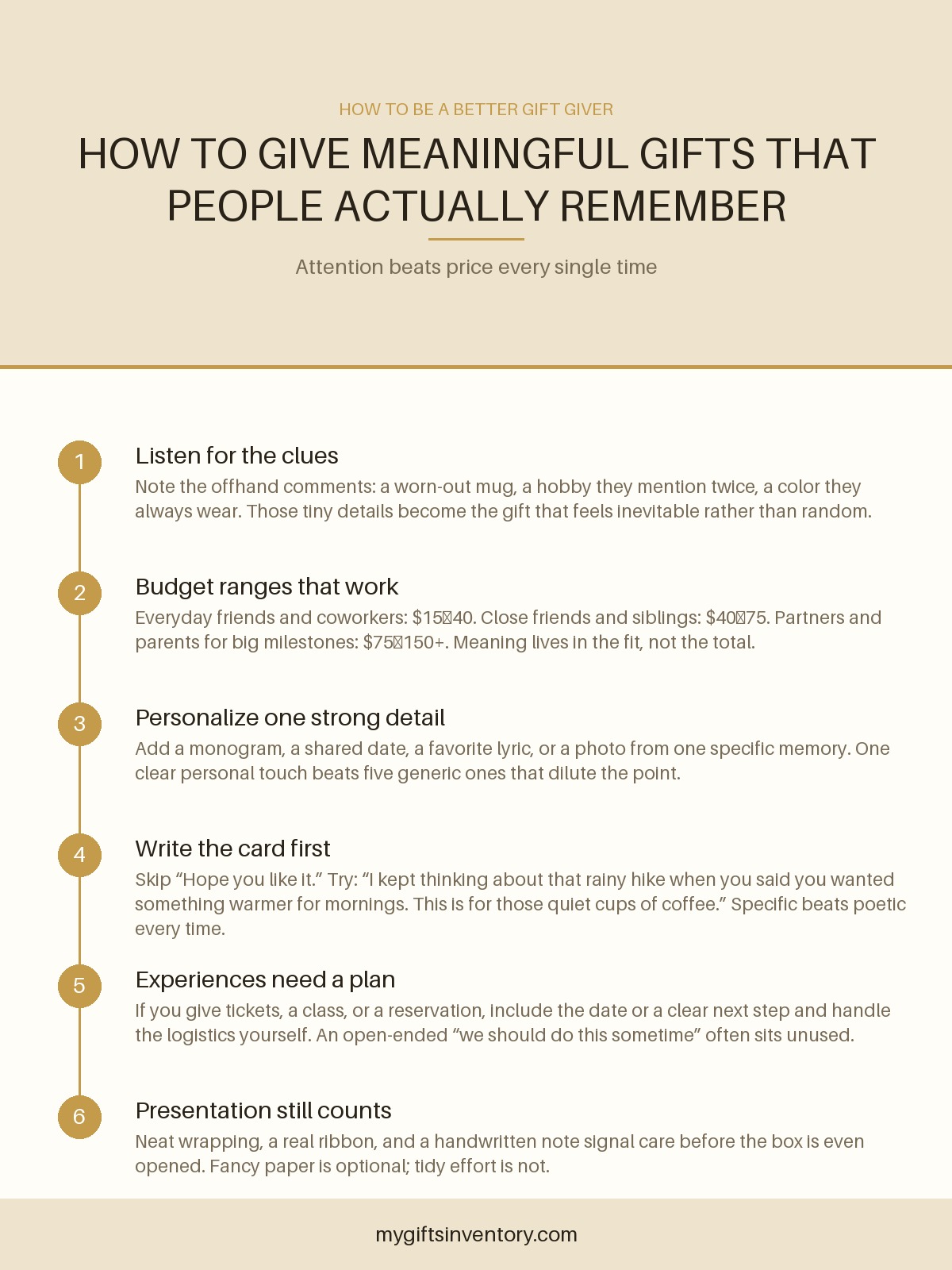
People with everything can still be underserved by generic gifts. Instead of chasing novelty, we chase fit. A small gift that feels like “this is exactly them” often beats a larger gift that is merely expensive.
If you need a gentle place to start when you have no strong clues, browse our gift-ideation page for broader framing: Choosing the Perfect Gift: Tips and Ideas for Every Person and Occasion.
Step 2: Pick a gift type that still feels special even when they own the “thing”
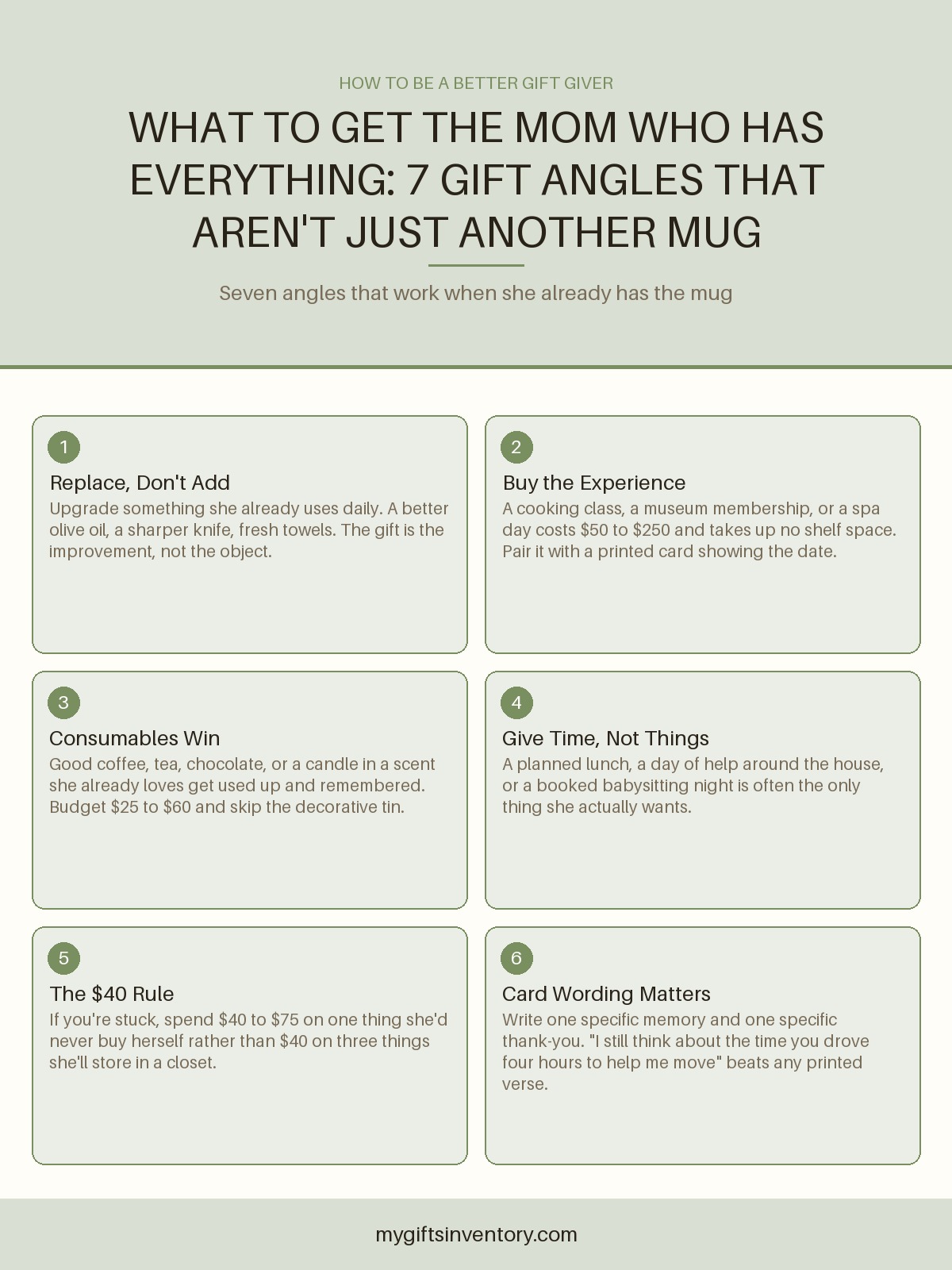
When the person already has the physical item, the special part shifts. We focus on one of these angles: personalization, time, story, or upgrade.
Angle A: The “you planned it” gift (time and access)
This is our favorite workaround for “they have everything.” The best version is something they do not have to coordinate alone. Examples:
- A booked class or guided activity (their hobby, their interest, their skill level).
- A date-night plan with two options for the evening, plus a simple “how to decide” note.
- A session that reduces effort, like meal planning support or a guided shopping trip for a particular need.
Card note idea for this angle:
“I wanted to give you something you do not have to plan. Pick the day that works best for you, and I’ll handle the rest.”
Angle B: Upgrade the ritual, not the collection
We look for rituals they already do and make them easier or better. This is where consumables and small treat gifts shine because they feel like care, not accumulation.
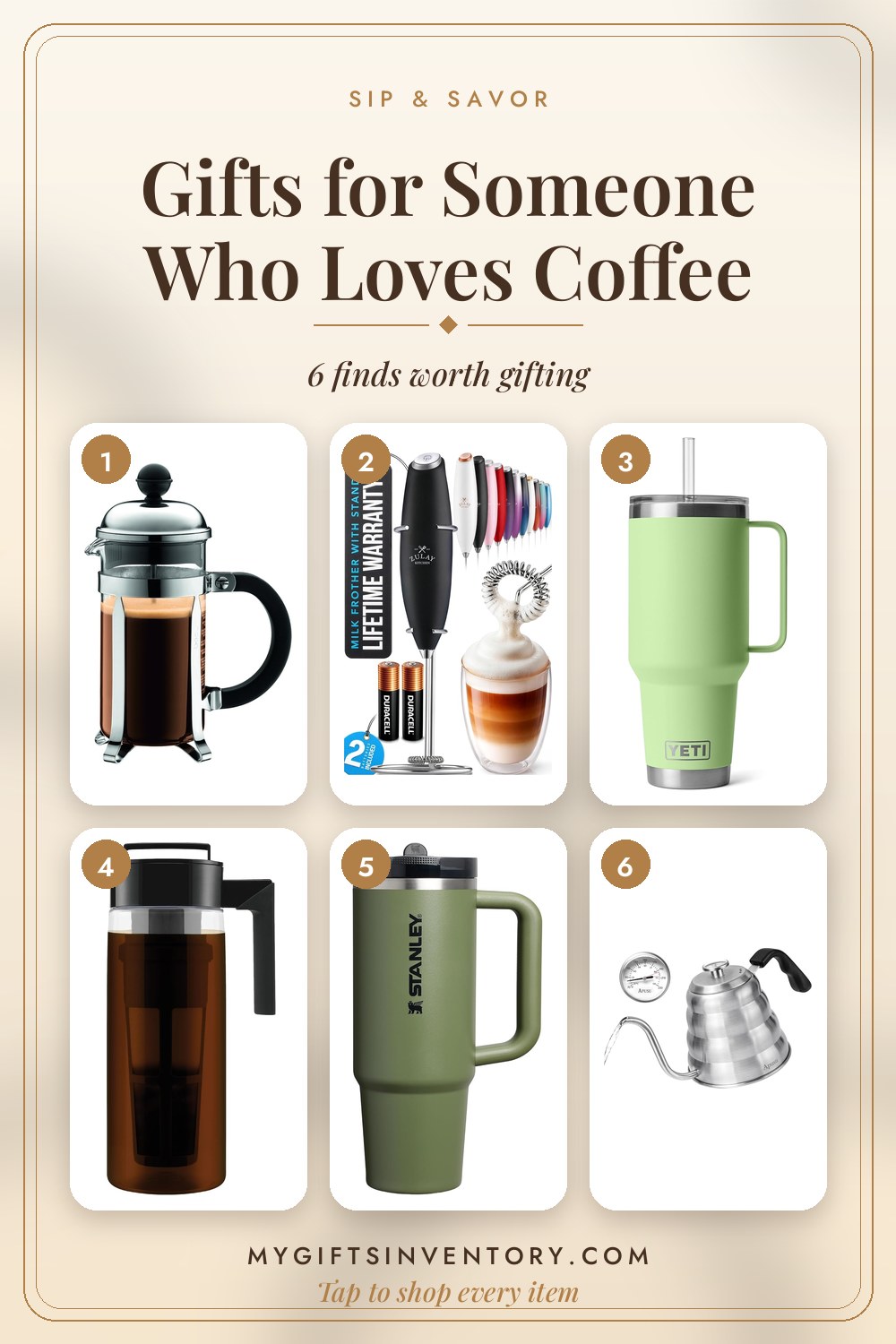
For coffee lovers, we often land on a “ritual gift” category like the ones in our guide: 20 Gift Ideas for Coffee Lovers Under $50. The winning move is not the specific item, it is the promise: “This supports the habit you already enjoy.”
Angle C: Personalize the meaning, not just the object
Personalization works best when it adds clarity: why this, why now, why you. If you are stuck, we ask ourselves:
- What do they say they love, but never buy for themselves?
- What do they care about that other people overlook?
- What memory involves them being happiest?
Then we translate that into either a thoughtful item, a handwritten note, or both. If you are aiming for a “gift with a story” feel under a certain budget, we also use curated ideas like: 20 Gift Ideas for Gourmet Treats, Wine & Coffee Gift Ideas Under $50 (2026).
Angle D: The “they can choose” gift that still feels considered
A gift card can feel lazy when it is handed over without thought. It feels considerate when you frame it like a recommendation with boundaries.
We like “pick from options” language. For example, instead of “Here’s a card,” we write:
“For the next month, use this for a treat you actually want. Ideally one at a time, one week apart, so it feels like a small reset.”
If you are considering store options, we have a practical reference for popular retailers and what they offer: Gift Cards at Target: The Complete List of Brands, Fees & Where to Buy (2026).
Step 3: Decide your budget in a way that prevents regret
Budgeting is not just about the number. It is about how you will handle “unknowns.” When someone has everything, you need a budget plan that covers two possibilities: you hit perfectly, or you need a graceful fallback.
Use a simple three-tier budget method
We set a main amount and a fallback amount.
- Tier 1: $10 to $25 (low risk, high thought)
- We pair one meaningful card with a small consumable treat or a “ritual starter.”
- This works best for coworkers, neighbors, and anyone you do not know deeply.
- Tier 2: $25 to $75 (best for “they have everything”)
- We lean toward a small experience, a personalized item, or a gift card with clear framing.
- This is where you can make the gift feel tailored without guessing a huge purchase.
- Tier 3: $75 to $200+ (upgrade or premium experience)
- We focus on access, reservations, classes, or a high-quality “upgrade the ritual” gift.
- We still include a card that tells the recipient exactly what you meant.
How to handle the “what if I pick wrong?” problem
We use these fallback patterns so we are never stuck.
- Pattern 1: Small gift + choice
Example: a favorite snack or grooming treat plus a card for what they actually want next. - Pattern 2: Higher quality with easier exchange
Example: choose something likely to fit (and comes with a straightforward way to exchange), then write the note so they feel supported, not pressured. - Pattern 3: Experience card with a date prompt
Example: “Pick the day. Two options included.” The gift is the plan.
Step 4: Etiquette matters, even when the gift is “just” choice
There are a few etiquette moves that instantly make a gift feel right for someone who has everything.
If you are giving a gift card
- Do not act like it is an apology. A gift card can be a convenience gift, a timing gift, or a choice gift. We frame it as care.
- Add a “why this” line. Example: “This is for an evening out you choose.”
- Include a timeframe. Even a simple “Use it this season” helps them treat it like a planned moment.
For common retailer and brand options, we keep things practical in guides like Gift Cards at Kroger: The Complete List of Brands, Fees & Fuel Points (2026) so you can choose with fewer surprises.
If you are buying a “something for me” gift
For gifts that benefit them personally, we avoid guilt language. Instead of “You deserve this,” we use clarity language:
- “For the mornings you look forward to.”
- “For your next reset week.”
- “For the hobby you keep returning to.”
Step 5: Write a card that does more than say “Happy Birthday”
We use cards like a bridge between the gift and the relationship. When someone has everything, the card becomes the thing that proves you paid attention.
Our go-to card formula (works for almost any occasion)
- One specific observation about what you’ve noticed or appreciated.
- One sentence of meaning explaining why this gift fits.
- One invitation for them to enjoy it, pick a date, or use it soon.
Card wording examples you can copy and personalize
For a gift card with intention:
“Thank you for being the kind of person who makes plans easier for everyone. I wanted to give you something that lets you choose exactly what you want next. Use it this month and pick a treat that feels like a reset.”
For an experience or date-night style gift:
“I noticed how much you enjoy getting out and doing something just for you. This is for a planned moment. Pick a day that works, and we’ll make the rest happen.”
For a ritual upgrade:
“You have the best coffee habit in our group, and I love how it sets the tone for your mornings. This is for making that ritual even better. Enjoy it slowly.”
For an understated “you have everything” recipient:
“I know you already have a lot, so I focused on something you will actually use and look forward to. Here’s to a small moment that feels like care.”
Step 6: Wrapping and presentation when the gift might be exchangeable
We wrap for confidence and clarity. If there is a choice component, we make it obvious from the outside so there is no awkward moment.
Simple wrapping rules that always work
- One main reveal. Avoid a dozen tiny surprises that can feel chaotic.
- Use a tag that sets expectations. Example: “Open this, then pick your date.”
- Match the vibe. Clean and calm for formal relationships. Fun and colorful for close friends or siblings.
If you want the gift to feel “special” without being complicated
We like a two-step approach: a nice wrap for the card, plus a clear insert for any choice element. It keeps the moment elegant even if the recipient will decide how to use the gift later.
Step 7: Registries, returns, and the quiet things that make your gift feel smooth
When someone has everything, you might be tempted to skip registries. We actually recommend you treat registries as information, not instructions. Even if the person is past the stage for a typical registry, similar signals exist: wish lists, experiences they mention, or recurring themes.
Registry etiquette: what we follow
- Do not buy off-registry items without a reason. If you do, make it meaningful, not random.
- If you are buying an item, prioritize size and fit clarity. Clothing is a common “oops” area for people who have everything but still might be particular about sizing or style.
- Keep the receipt-like proof if you are uncertain. Not as insurance against the person, but as protection against mistakes.
Returns: how to be respectful without being vague
If you need to include “exchangeability” information, keep it kind and short. A simple line in the card works:
“If it is not quite the right fit, you can exchange it. But I hope you love it.”
Last-minute plan (because it happens to everyone)
If you have only a few days, we steer you away from high-guess purchases and toward low-stress options.
A 48-hour gift rescue plan
- Day 1: Write your card first using the “observation, meaning, invitation” formula.
- Day 1: Choose one of these: a small ritual consumable, a simple upgrade item, or a framed choice gift.
- Day 2: Wrap with a tag that explains what to do next.
If delivery timing is tight
- Choose options with reliable pickup or instant delivery when possible.
- Put the “how to enjoy” instructions in the card so the recipient can start enjoying immediately, not when a shipping box arrives.
Occasion-specific ideas that keep their meaning
Even when the recipient “has everything,” the occasion gives you a key. We align the gift to what the moment asks for: celebration, gratitude, togetherness, or comfort.
Birthday
We aim for a gift that feels like a chapter in their year. That can be a small indulgence, a booked moment, or a card that invites a specific plan.
Anniversary
We focus on continuity. We prefer “remember this later” or “do this together soon” energy over random upgrades. If you need idea seeds, you can use occasion framing from our category pages like: 21 Anniversary Gift Ideas by Year Under $100 (2026).
Holiday
We lean toward experiences and gift cards framed as seasonal rituals. Holidays are busy, and choice makes the gift usable when their calendar allows it.
Where “gifts for people who have everything” go wrong
- They overbuy. More stuff does not fix mismatched meaning.
- They underwrite the card. If your gift is choice, the card should provide the framing.
- They ignore practicality. If the recipient travels, consider portability. If they are busy, consider timing.
- They forget the relationship. A thoughtful gift can be small. A big gift can still feel impersonal.

Frequently Asked Questions
What’s the best gift for someone who has everything?
The best gift is one that removes friction or creates a meaningful moment, not one that tries to out-buy their belongings. We usually choose an experience, a ritual upgrade, or a choice gift framed with a clear “why this fits” note.
Should we give a gift card if they already have everything?
Yes, a gift card can be a thoughtful choice when it is personalized and framed. We recommend adding a card line that guides the recipient toward when to use it and what kind of moment you hope it creates.
How much should we spend if we do not know what they want?
We use a three-tier approach: $10 to $25 for a small meaningful treat, $25 to $75 for the sweet spot of usefulness and fit, and $75 to $200+ for upgrades or planned experiences. If you are unsure, plan a fallback so you are never trapped by your first guess.
What should we write in the card when the gift is “just a choice”?
We write one specific observation, one sentence of meaning, and one invitation. For example: “I noticed you’ve been craving more time for yourself, so I picked a gift that lets you choose the moment. Use it this season and pick a date.”
How do we wrap a gift card so it does not feel impersonal?
Wrap the card and add a tag that explains what to do next, especially if you want them to pick a date or a specific plan. A simple, polished presentation plus clear card wording makes it feel intentional rather than last-minute.
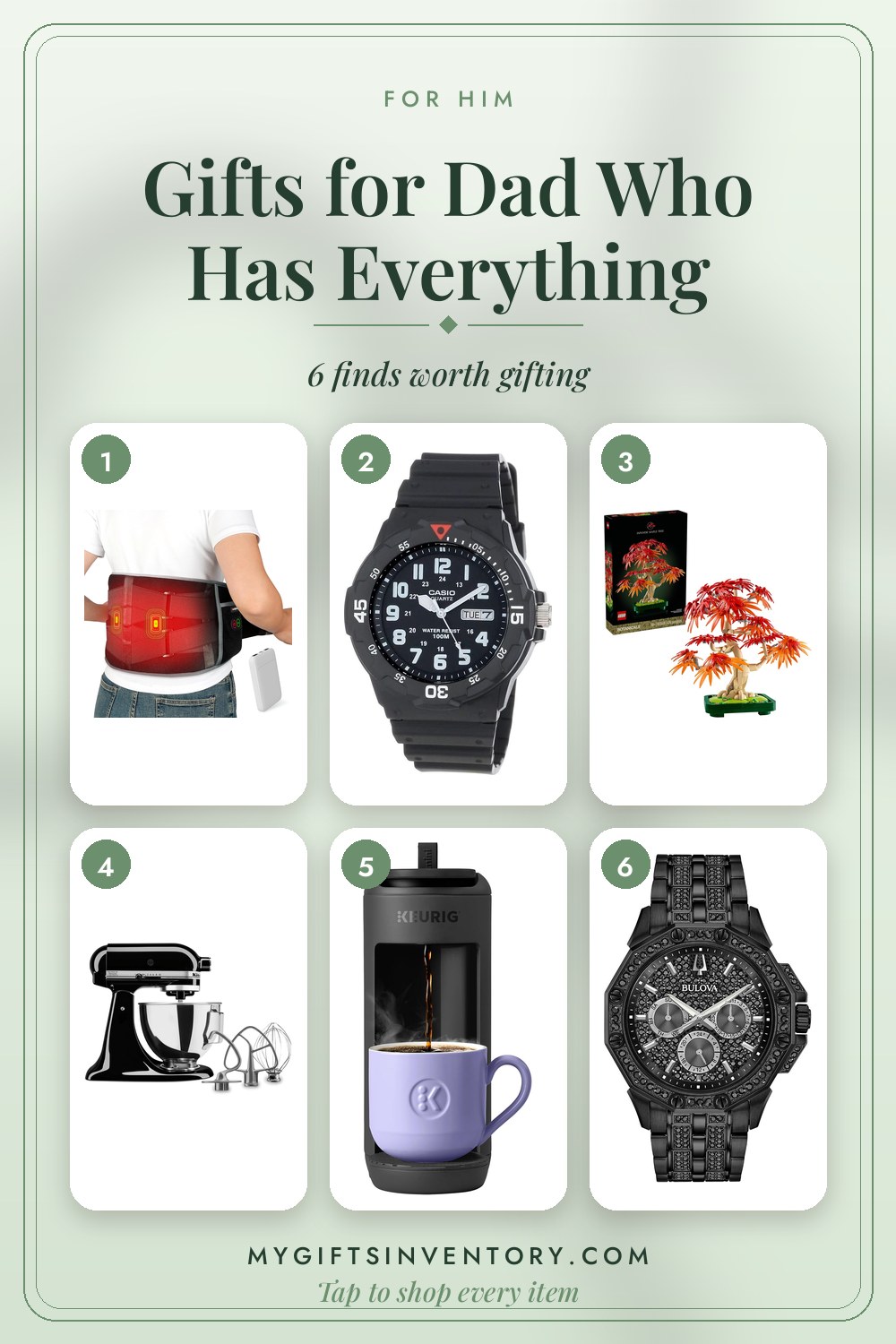
Looking for an Actual Gift Instead?
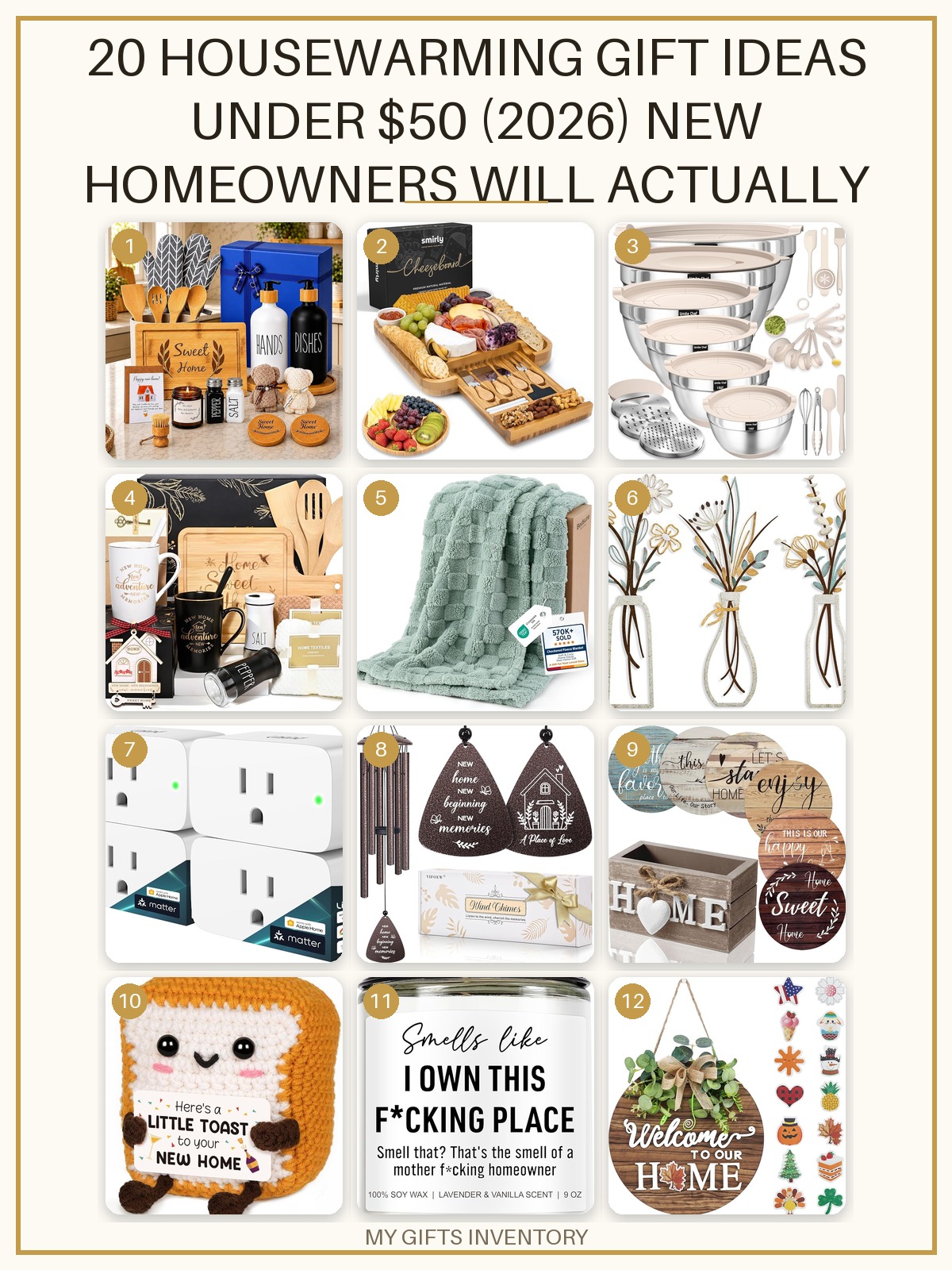
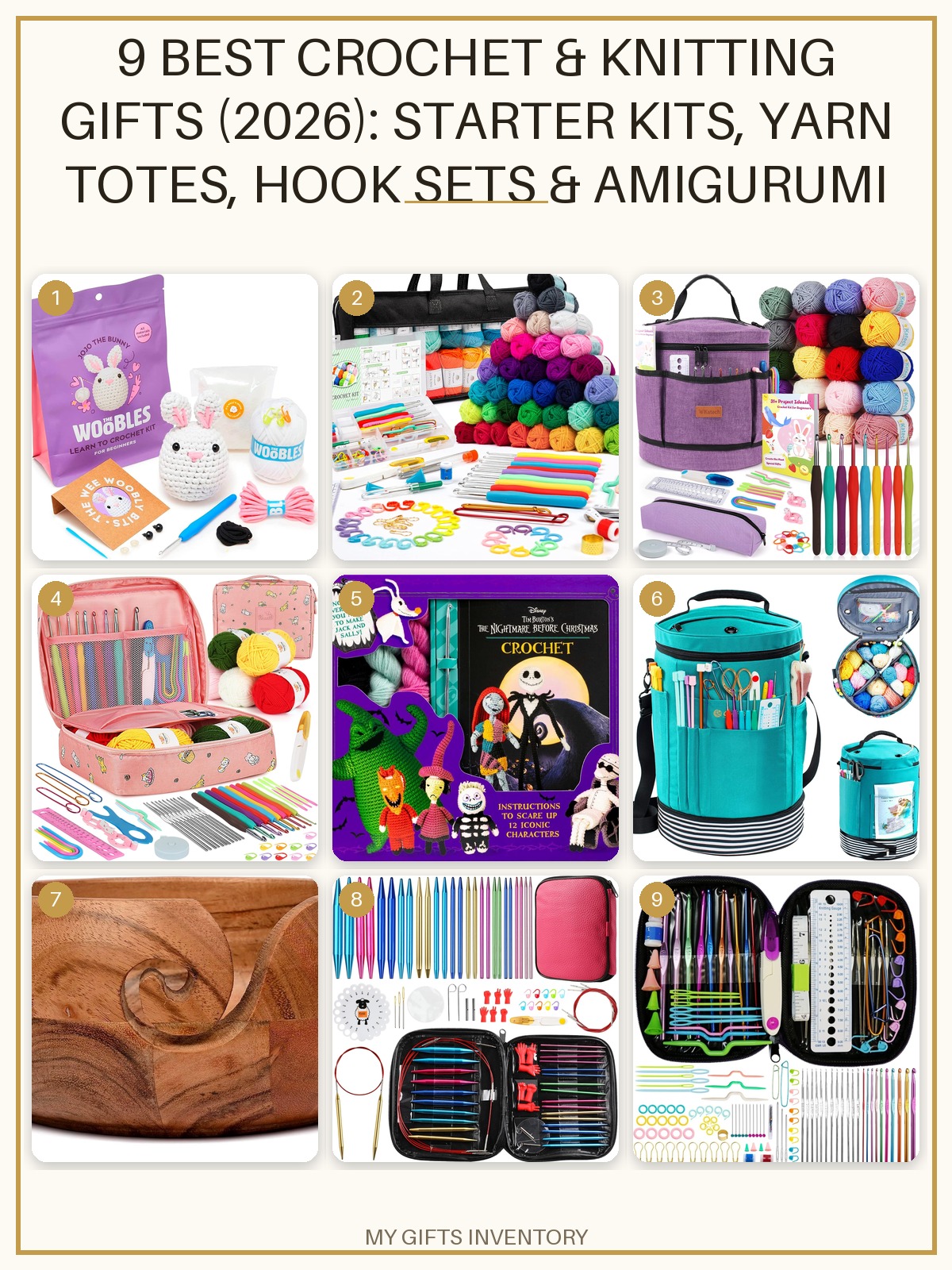
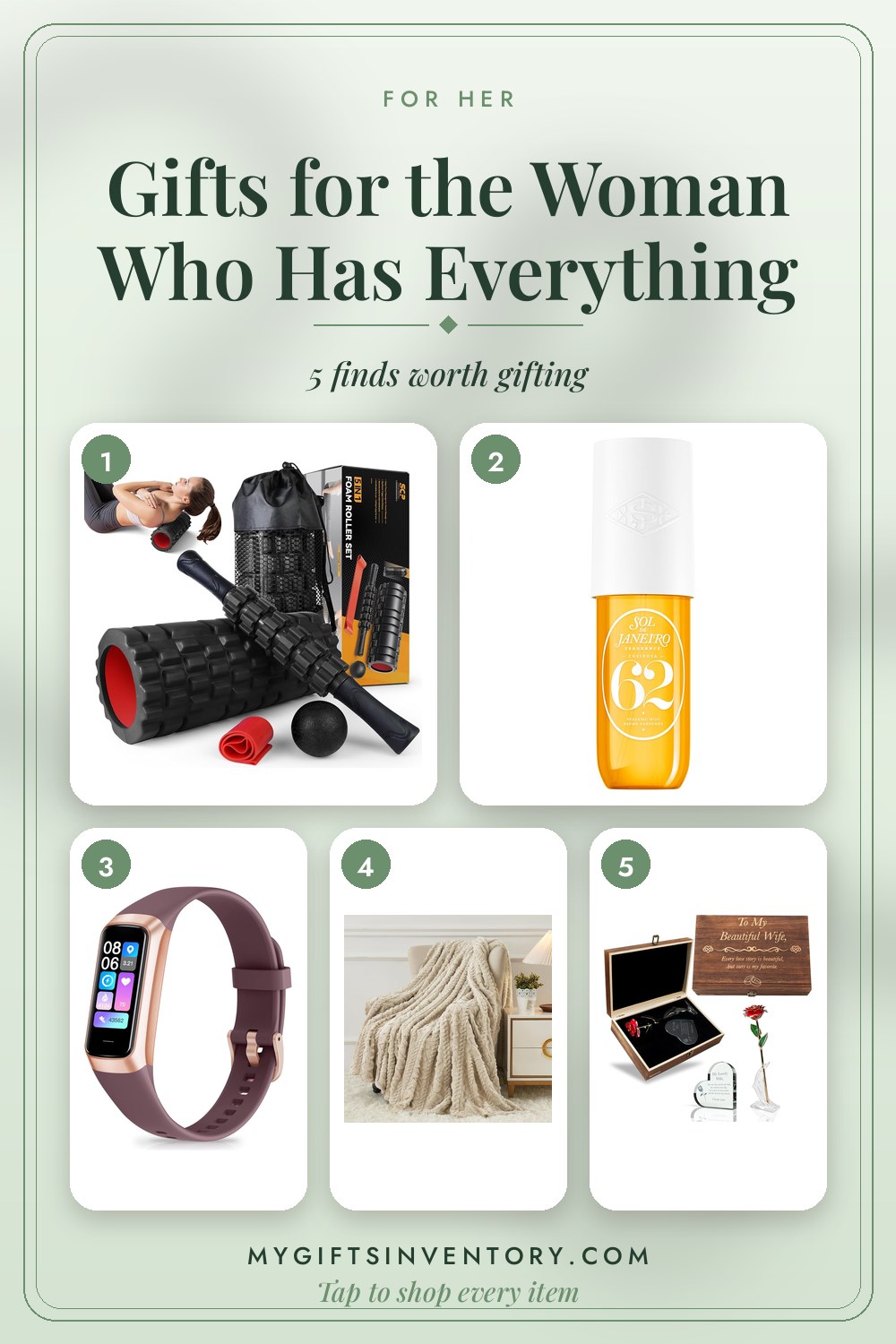
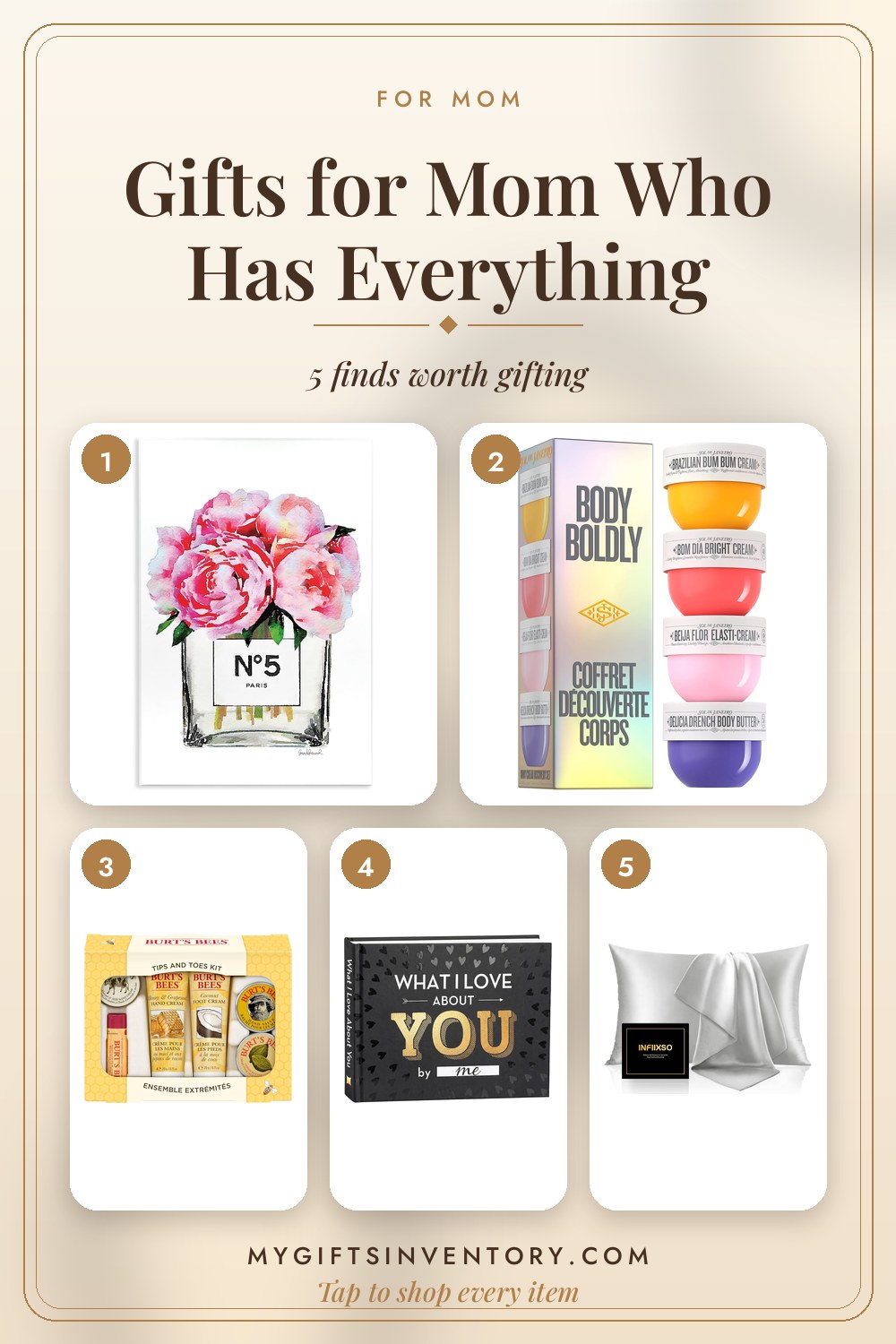
Gift Sets We Love Right Now
Every item picked, priced and linked, ready to buy.
More Gift Advice