Gift Etiquette in the United States: How Much to Spend, What to Write & Real Rules
From birthday budgets and wedding gifts to hostess presents, cards, wrapping, and when cash or gift cards feel right, here’s practical U.S. gift etiquette that helps you give thoughtfully without the stress.
As an Amazon Associate, My Gifts Inventory earns from qualifying purchases. We only recommend products we'd genuinely consider buying ourselves.
You are staring at an invitation or a calendar reminder and the usual questions hit: How much is enough? Is a gift card lazy? What do I write in the card so it does not sound generic? Will they open it right away or think I am rude? U.S. gift etiquette is more flexible than many cultures, but the unwritten rules still matter, and getting them wrong can leave everyone feeling a little awkward.
We put together the practical guide we wish we had years ago. Real budget ranges by occasion, actual card wording, wrapping and presentation notes, when cash or registries make sense, host gifts, returns, and the small gestures that signal you paid attention. No guilt trips, just clear advice you can use this week.
Core Principles of American Gift Etiquette
Americans generally open gifts in front of the giver when it is practical. The reaction is part of the exchange, so holding off until later can feel dismissive unless the setting is crowded or chaotic. Praise the gift even if it is not perfect. Commenting that you already own one or that it is the wrong size comes across as ungrateful. Save any exchange plans for private time later.
A handwritten note or at least a few sincere sentences in the card almost always matters more than the price tag. Cash and gift cards have become widely accepted for many occasions, especially weddings, graduations, and adult birthdays, but presentation still counts. Never ask what something cost, and avoid re-gifting in a way that leaves original tags or cards visible.
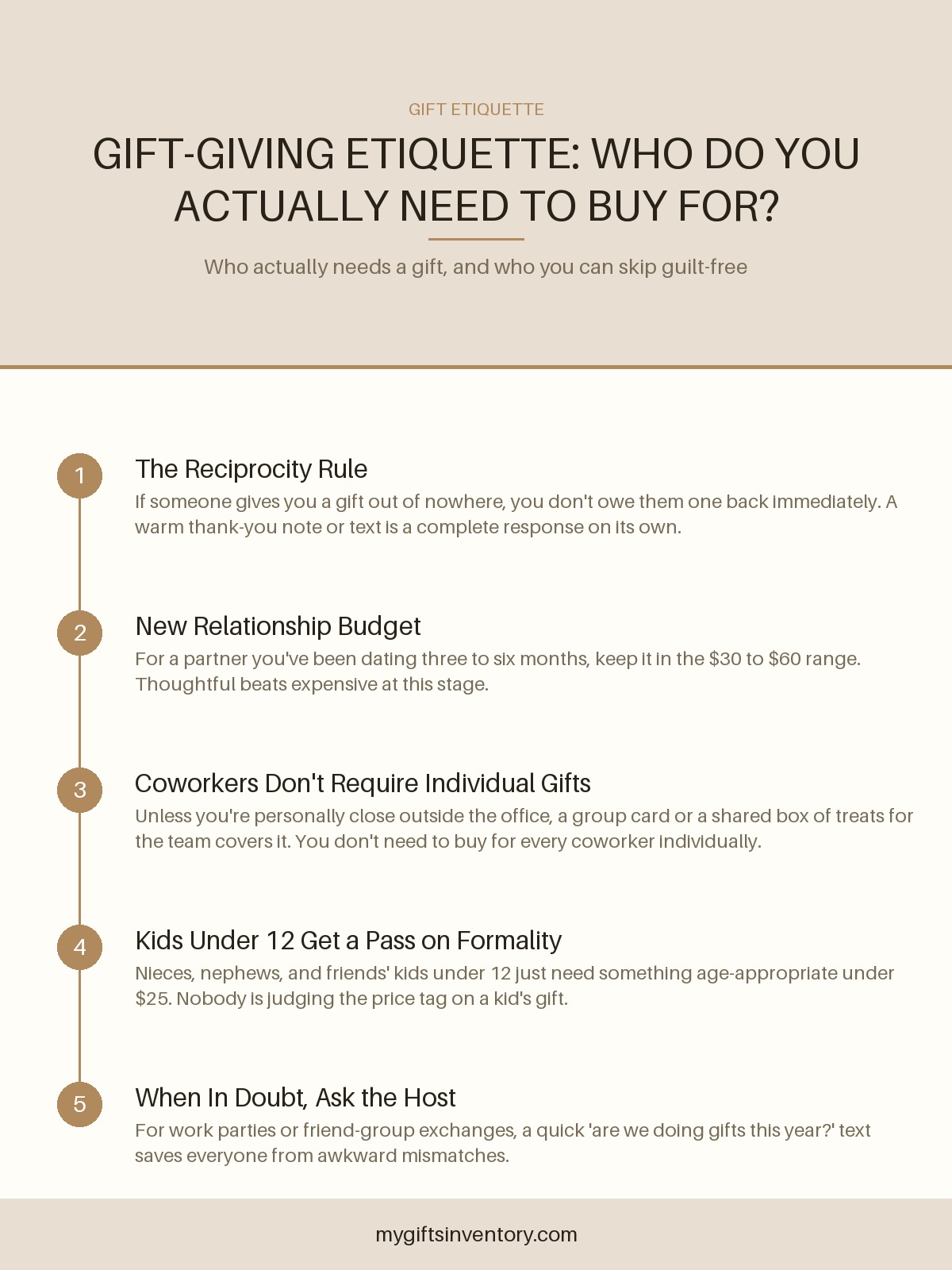
Power dynamics matter. Gifts to bosses, teachers, clients, or service providers should stay modest and professional so no one feels pressured or compromised. Group gifts or small tokens work better than expensive individual presents in those cases.
Most important: stay inside your own budget. Etiquette never requires debt. A smaller, thoughtful gift with a real note beats an oversized one that strains you.
How Much to Spend by Occasion
Ranges vary by region, your relationship, and whether you are attending a big event. Use these as planning anchors, not rigid rules. Adjust for travel costs, group gifts, or personal finances.
Birthdays
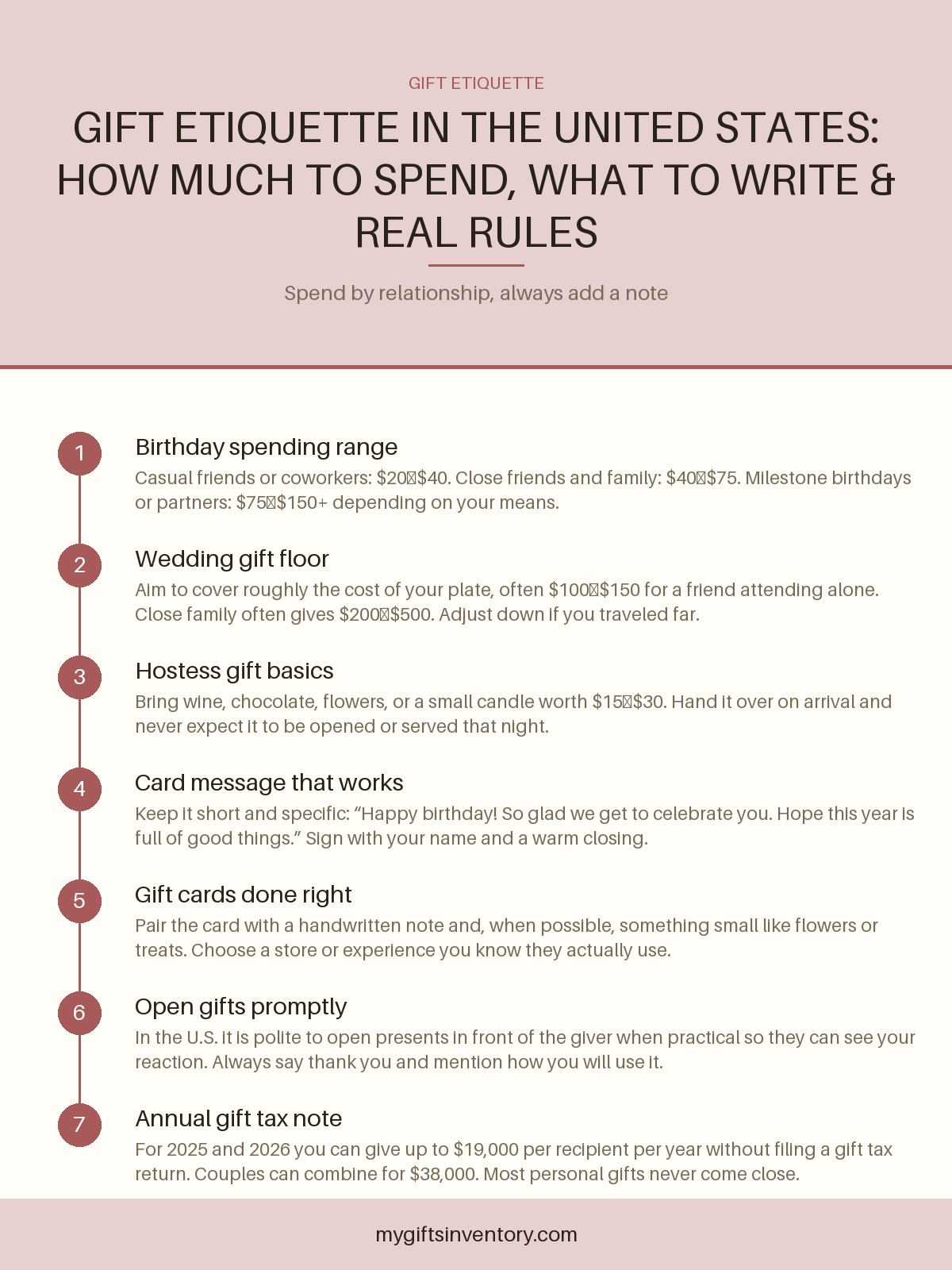
For a casual friend, coworker, or acquaintance, $20 to $40 is solid. Close friends and immediate family often land in the $40 to $75 range. Partners, milestone ages (30, 40, 50), or someone hosting a big party can go $75 to $150 or more if it feels right. Kids’ parties frequently settle around $20 to $40 unless you are family. If you need ideas that feel thoughtful without climbing the price ladder, our roundup of thoughtful gifts under $30 has plenty of options that still land well.
Weddings
A common modern guideline is to cover roughly the cost of your reception plate. In many parts of the country that puts a friend attending alone around $100 to $150. Couples attending together often give more. Close friends or wedding-party members may land $150 to $300. Immediate family frequently gives $200 to $500 or contributes to a larger registry item or experience. Coworkers or distant acquaintances can stay at $50 to $100, especially if you are not attending. If the couple has a registry, use it. If money is tight after travel, a smaller gift plus a warm card is perfectly acceptable. For couples watching their own budgets, budget-friendly wedding gifts under $50 can still feel generous when chosen with care.
Baby Showers and First Birthdays
Expect $40 to $75 for most friends, $50 to $100 for closer relationships, and more from family. Registries dominate for good reason. Practical items, books, or a contribution toward a bigger need all work. Some parents now gently request no toys or suggest a small cash “fiver” toward a specific goal. Follow their lead when they give one.
Holidays and Christmas
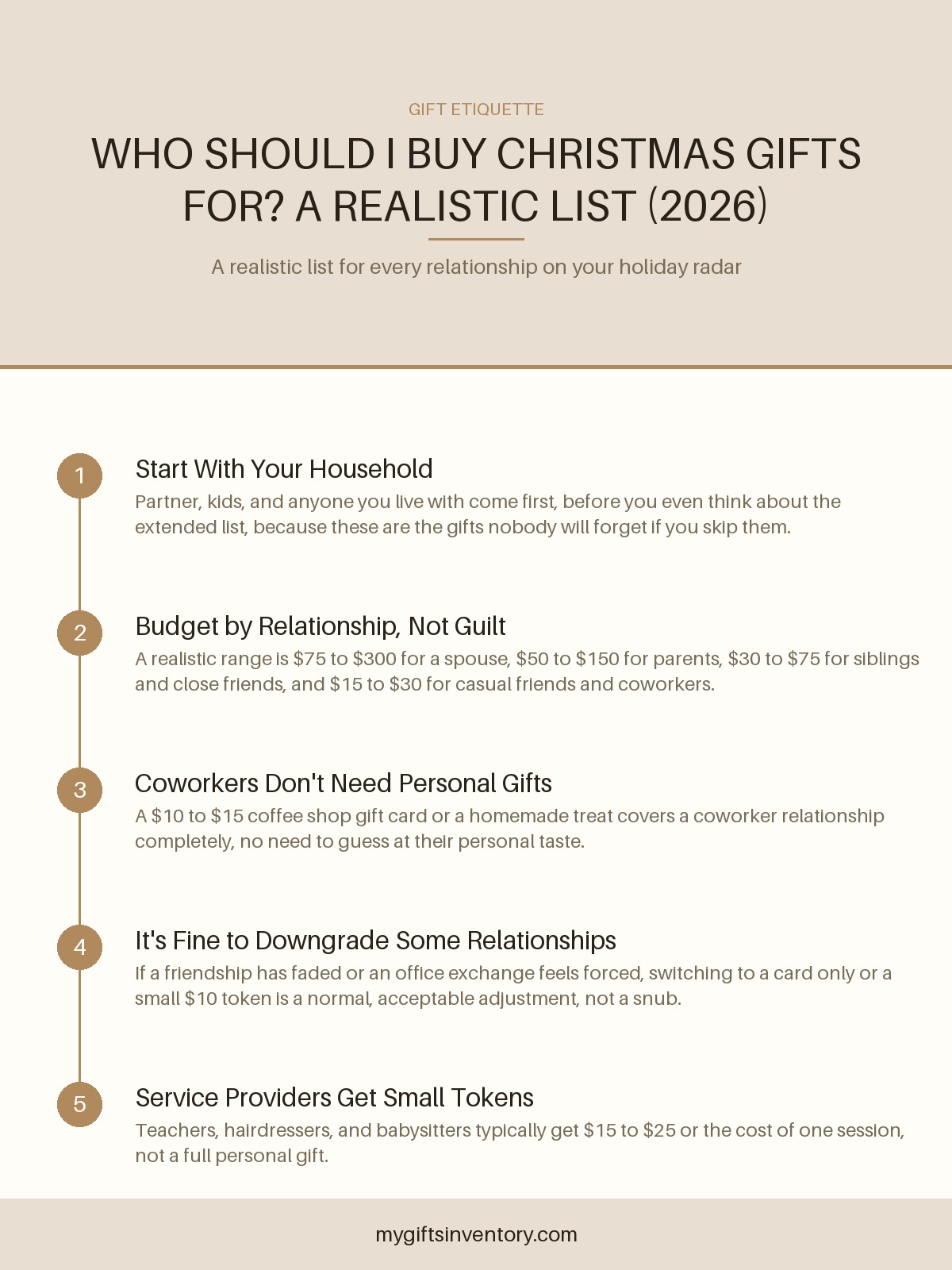
Family exchanges vary wildly by household tradition. Many adults set a $25 to $50 cap for Secret Santa or white-elephant style swaps at work or with extended family. Immediate family gifts often run higher, but the “onion method” helps: put the people closest to you at the center and spend more there, then work outward so outer-circle folks get a card or small token if the budget is stretched. Stocking stuffers under $20 keep the fun going without blowing the total.
Anniversaries and Romantic Occasions
For a partner, think about the year and your shared style more than a fixed number. Many couples land between $50 and $150 for non-milestone years. Milestone anniversaries often justify a bigger keepsake or experience. If you are shopping for him and want solid options that stay reasonable, take a look at anniversary gifts for him under $100.
Host or Hostess Gifts
When you are invited to a dinner party, overnight stay, or holiday gathering, bring something in the $15 to $30 range: a bottle of wine, nice chocolate, flowers, a candle, or specialty food. Hand it over when you arrive. Do not expect the host to open or serve it that evening. If the invitation says “no gifts,” a small consumable is still a kind gesture and rarely refused.
Teachers, Coaches, and Service Providers
Keep these modest, often $10 to $25 or a group collection. Consumables, gift cards to popular spots, or classroom supplies are safer than personal items. End-of-year or holiday timing is common.
What to Write in the Card
Blank cards intimidate people, but short and specific almost always wins. Mention the occasion, add one personal detail or wish, and sign off warmly. You do not need poetry.
Birthday examples:
- “Happy birthday! So glad we get to celebrate you this year. Hope it’s full of good things and zero drama.”
- “Another trip around the sun. Thanks for being the friend who always shows up. Enjoy your day.”
Wedding:
- “Congratulations! Wishing you both a marriage full of laughter, patience, and really good coffee. So happy for you.”
- “What a beautiful day. May your life together be even better than this celebration. With love from both of us.”
Host thank-you or hostess gift note:
- “Thank you for having us. Your home always feels so welcoming. We loved every minute.”
General closing lines that work: “With love,” “Thinking of you,” “So glad to celebrate with you,” or simply your names. If you are giving cash or a gift card, a line about how you hope they use it (“Treat yourselves to a nice dinner” or “Put this toward those concert tickets”) makes it feel intentional.
Skip anything that comments on age, weight, relationship status, or past awkwardness. When in doubt, shorter is kinder.
Wrapping, Presentation, and Opening
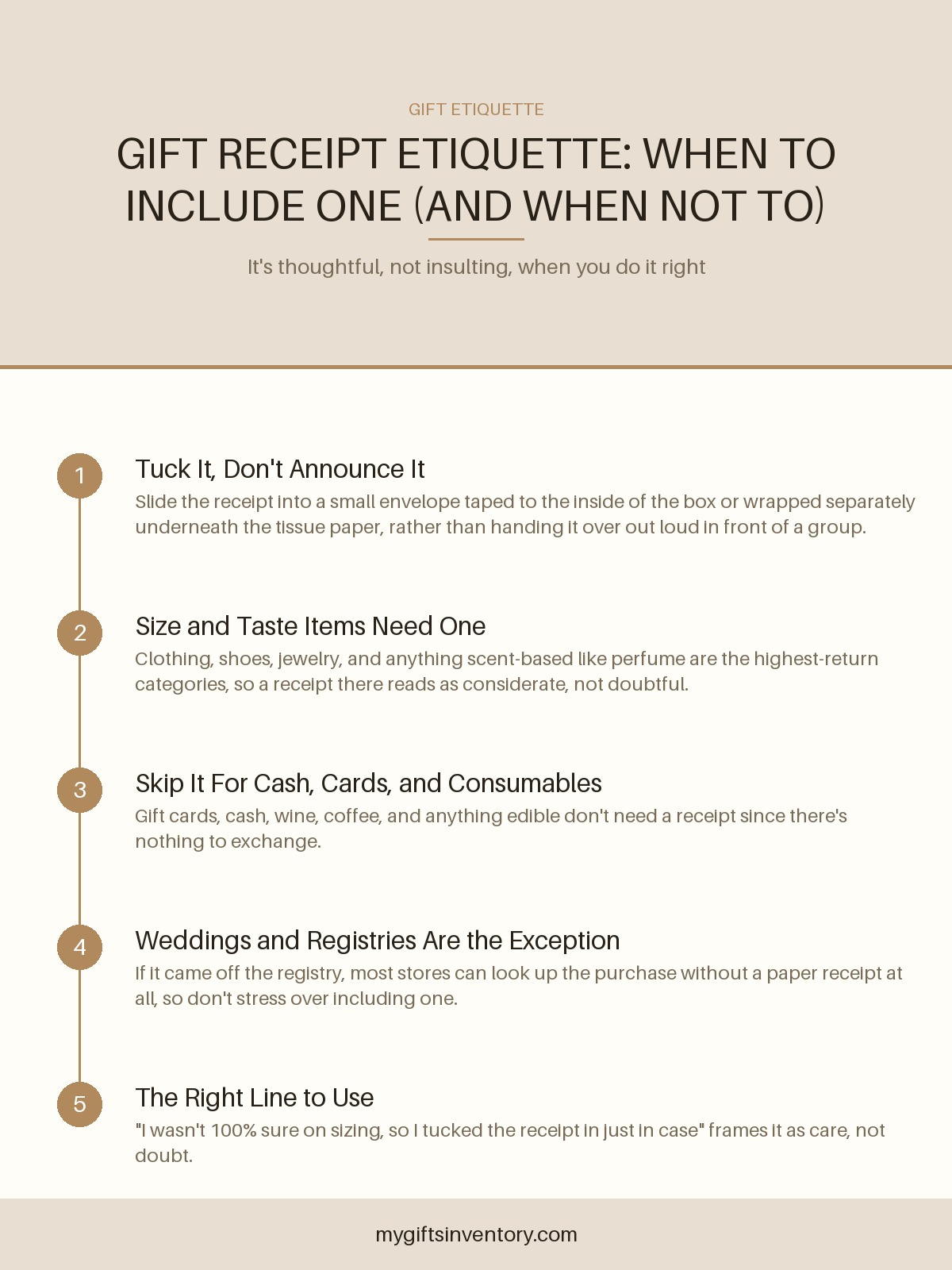
Neat wrapping or a sturdy gift bag signals care. Reusable bags, fabric wraps, or simple kraft paper with a good ribbon all look intentional. Include a gift receipt whenever possible for clothing, home goods, or anything size- or taste-dependent. Americans treat returns and exchanges as normal, not rude.
If you are giving a gift card, put it in a proper card or small presentation folder rather than handing over a bare plastic rectangle. A little extra packaging elevates it. For physical gifts, double-check that tags and prices are removed.
When you receive a gift, open it if the giver is watching, smile, thank them specifically, and say something about how you will use or enjoy it. “I can’t wait to try this” or “This will look perfect in the kitchen” goes a long way. Send a thank-you note or thoughtful text within a few days for anything beyond a casual exchange, and within a couple of weeks for weddings or showers.
Registries, Wish Lists, and When to Use Them
Registries are expected and appreciated for weddings, baby showers, and many housewarmings. They remove guesswork and reduce returns. Buying off-registry is fine if you know the couple well and choose something personal, but the registry exists so guests can give useful things without stress. Wish lists for birthdays or holidays have become common among friends and family; using them is considerate, not lazy.
If no registry exists and you are stuck, experiences, consumables, or a well-chosen gift card to a place they love are reliable backups.
Cash, Checks, and Gift Cards
Cash and checks are standard and often preferred for weddings and graduations in many communities. Pair them with a card that includes a short personal note. Venmo or other apps work among close friends and younger crowds, but a physical card still feels warmer for formal occasions.
Gift cards are widely accepted now for almost every casual or mid-level occasion. The etiquette key is knowing the recipient’s tastes and presenting the card nicely. A Target, Sephora, or favorite restaurant card lands better than a generic one. If you want a clear list of options and any fees, our guide to Target gift cards covers brands and details. For birthdays, especially for moms who are hard to shop for, a card plus a small extra often works beautifully alongside ideas from our birthday gift ideas for mom under $50.
Avoid giving gift cards or cash to very formal or hierarchical relationships unless you know it is welcome. And never make the amount feel like a scorecard.
Returns, Exchanges, and Regifting
Including a gift receipt is a kindness. Most people appreciate the option to exchange for size or color. If you receive something you cannot use, exchange it quietly. Regifting is acceptable when the item is new, unused, clearly suited to the new recipient, and stripped of any evidence of the original giver. Do not regift within the same social circle if there is any chance of discovery.
It is considered poor form to throw away or immediately discard a gift in a way the giver might learn about. If it truly cannot be used, donate it later without announcement.
Work and Corporate Gifting
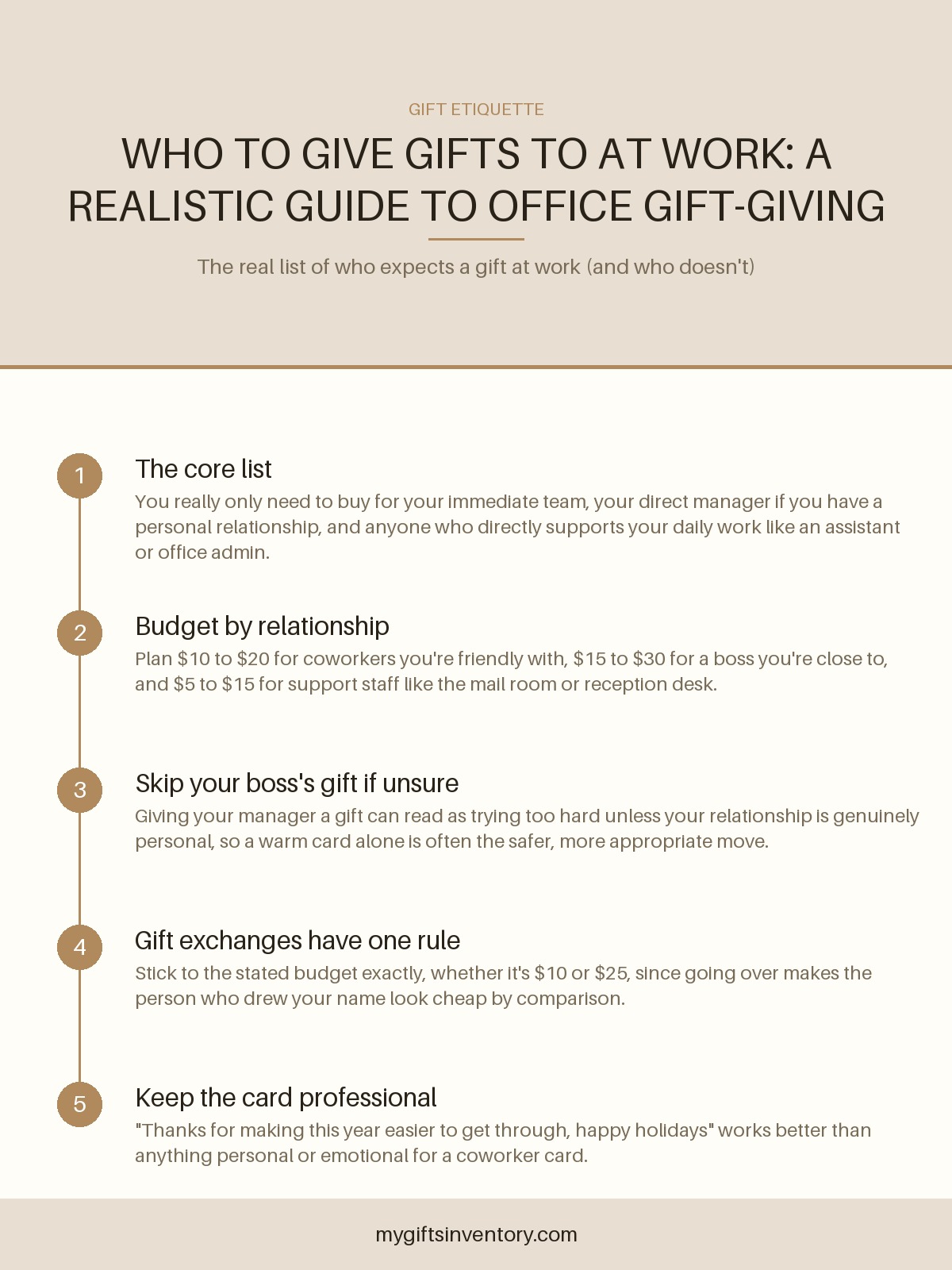
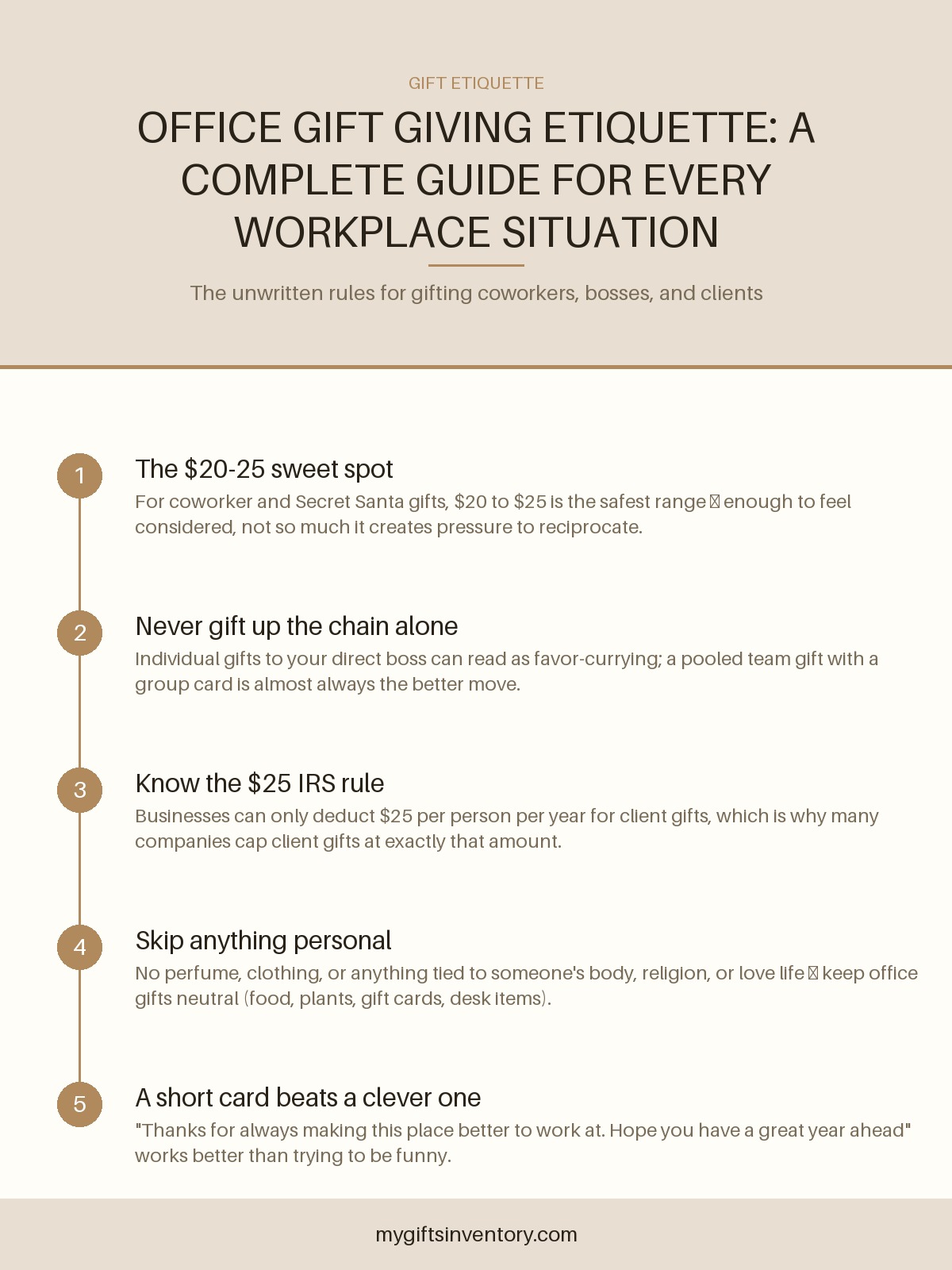
Office Secret Santa or white-elephant parties almost always have a stated budget. Stick to it. Going way over can make others uncomfortable. Gifts to bosses should stay light and professional: nice food, a plant, or a modest gift card. Avoid anything too personal such as perfume, clothing, or intimate items. Group gifts for big milestones (new baby, retirement) keep individual contributions reasonable and the gesture collective.
Timelines and Planning
For weddings, send the gift before the day or within a few weeks afterward. The old “one year” window has largely closed. Baby showers and birthday parties usually expect the gift on the day. Holiday shopping benefits from an early list and a firm total budget so December does not become stressful. Host gifts travel with you to the event.
If you are the one receiving, thank-you notes for wedding and shower gifts should go out within two to three months at the latest, sooner when possible. Digital thanks are fine for casual gifts; handwritten still feels special for bigger ones.
A Quick Note on Gift Taxes
For most of us this never comes up, but it is useful to know the current numbers. In 2025 and 2026 the annual gift tax exclusion is $19,000 per recipient. You can give that amount to as many people as you like without filing a return. Married couples can combine exclusions for $38,000 per recipient. Amounts above that usually just require a form and count against a much larger lifetime exemption. Ordinary birthday, holiday, and wedding gifts almost never approach these limits.
Putting It All Together
U.S. gift etiquette rewards thoughtfulness over perfection. Match the gesture to the relationship, stay inside your means, add a real note, and present it with care. Open gifts graciously when you receive them, say thank you like you mean it, and move on. The people who matter will remember how you made them feel far more than the exact dollar amount or whether the paper was flawless.
When you want concrete ideas that already fit common budgets and occasions, the linked guides above are there to make the next step easier. Give with intention, keep it kind, and you will almost always land on the right side of the etiquette line.
Frequently Asked Questions
Is it rude to give a gift card in the United States?
No, gift cards are widely accepted for birthdays, holidays, teacher gifts, and many other occasions. Present it in a card with a short handwritten note and choose a retailer or experience you know the person actually likes. For weddings some people still prefer cash or registry items, but a well-chosen card is rarely offensive.
How much should I spend on a wedding gift if I am attending alone?
A practical target for a friend is often $100 to $150, roughly covering the cost of your meal in many regions. Close friends or family may give more. If you incurred significant travel expenses, a slightly lower amount plus a warm card is completely acceptable. Always prioritize your own budget.
Do I have to open a gift right away in front of the giver?
When it is practical, yes. Americans usually expect to see the reaction. In a large party or chaotic setting it is fine to wait, but thank the person warmly in the moment and follow up later. Never leave a gift unacknowledged.
What is a good hostess gift for a dinner party?
Something in the $15 to $30 range that the host can enjoy later works best: wine, quality chocolate, a small plant, flowers, or a nice candle. Hand it over on arrival and do not expect them to open or serve it during the event.
Are thank-you notes still required?
For weddings, baby showers, and significant gifts, yes. Aim for a few weeks after the event. A short handwritten note or sincere digital message both count. For casual birthday or holiday exchanges a warm verbal thanks or quick text is usually enough, though a note always feels special.