Gift Giving in the Middle East: Etiquette Rules You Need to Know Before You Buy
Who gets a gift, what to bring, what to never hand over, and how much to spend. A practical guide to Middle Eastern gift etiquette across the Gulf, Levant, and North Africa.
As an Amazon Associate, My Gifts Inventory earns from qualifying purchases. We only recommend products we'd genuinely consider buying ourselves.
You're heading to Dubai for a client meeting, or your neighbor just invited you to an iftar dinner, or your daughter's friend is getting married in Amman, and now you're standing in a store wondering whether a bottle of wine is thoughtful or a disaster. That's the real question behind most searches on this topic. Middle Eastern gift etiquette isn't one set of rules, either. The Gulf, the Levant, and North Africa share some instincts and diverge sharply on others, and the single most useful thing we can tell you up front is this: when in doubt, give something meant to be shared, wrap it well, and hand it over with your right hand.
Why Middle Eastern Gift Etiquette Trips Up Western Visitors
Most gift advice written in English assumes a Western frame: open it now, gush over it, keep the receipt. Almost none of that applies cleanly in the region. Gifts there tend to be read as statements about the relationship, not about the object. A gift that's too expensive can create obligation. A gift that's too intimate can create discomfort. A gift that ignores religious practice can create a genuine problem. And a gift that's refused two or three times before it's accepted isn't being rejected, it's being received correctly.
We'd frame the whole thing around three ideas: appropriateness over impressiveness, generosity over precision, and relationship over occasion. Get those right and the specific object matters far less than you'd think.
The Short List: What to Give and What Never to Give
Safe, genuinely appreciated gifts
These work across most of the region and across most relationships:
- Dates, especially good ones. Medjool, Ajwa, Sukkari, presented in a nice box. This is the single most reliable gift in the Gulf. Skip the supermarket plastic tub.
- Perfume and oud. Fragrance is deeply embedded in hospitality culture. Oud, bakhoor, and rose attar are all well received. A small bottle of something excellent beats a large bottle of something generic.
- Saffron, cardamom, or a good spice set. Especially for someone who cooks or hosts.
- Fine tea or a coffee set. Arabic coffee (qahwa) with its small cups is a beautiful gift if the recipient serves coffee at home. A quality tea lover gift set travels well as a thank-you for a host.
- Something for the home. A good serving tray, a decorative bowl, an elegant cheese or serving board, or a well-made table linen. Hospitality objects land well because they are things the recipient can use to host others.
- Chocolates and sweets. Reliable, low-risk, and easy to size to the occasion. A tin from a good patisserie is better than a drugstore box.
- Tech and desk items for business contacts. A good tech accessory like a quality charger or cable organizer reads as thoughtful and modern without being intimate, which makes it one of the better options for a new professional relationship.
What to avoid
Some of these are absolute and some depend on the person. Read the person, not just the country.
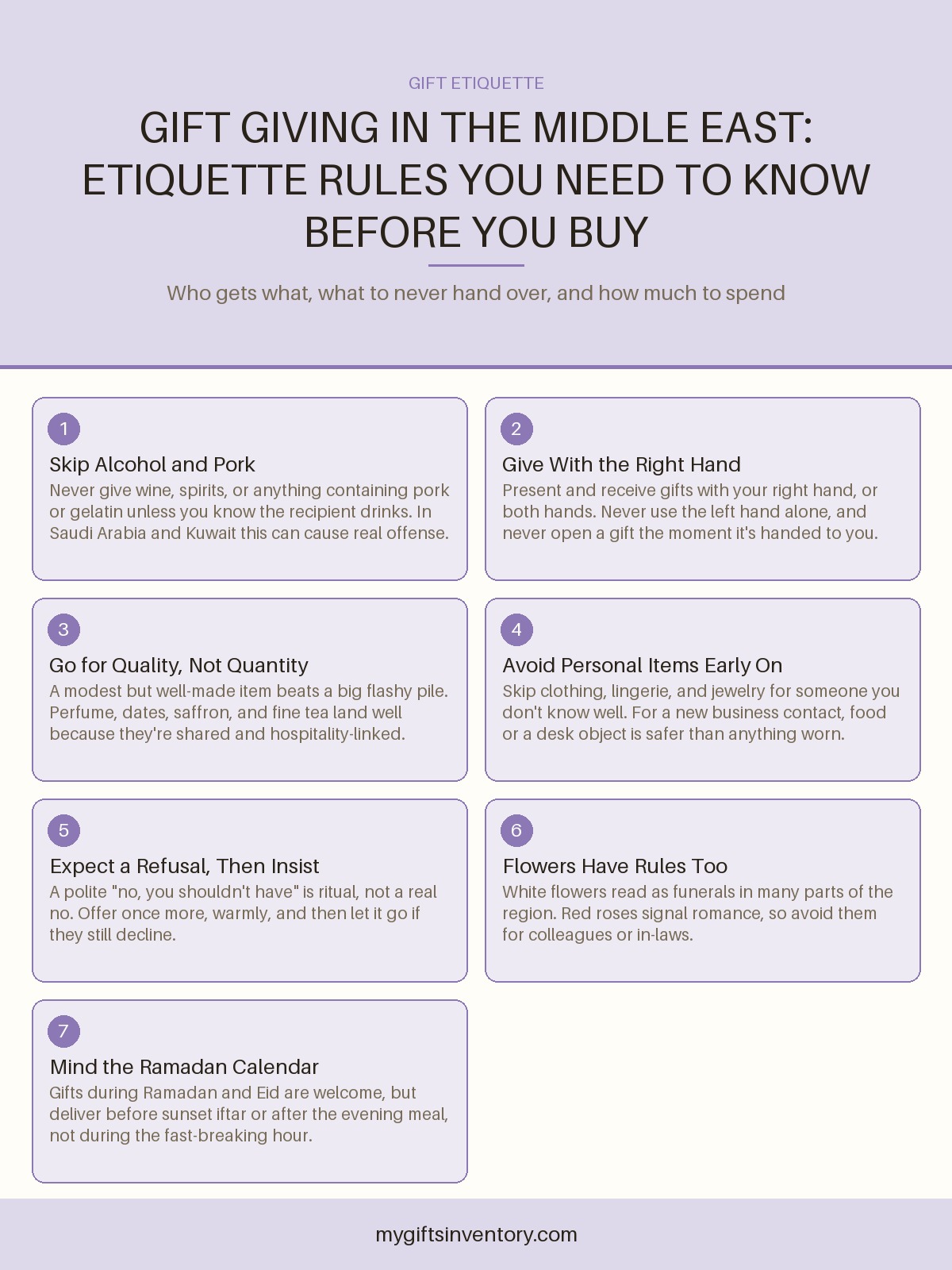
- Alcohol. In Saudi Arabia and Kuwait, giving alcohol is illegal territory and can create real trouble. In the UAE, Qatar, Bahrain, and Jordan, plenty of people drink, and a good bottle may be welcome from a close friend who you know drinks. But for business contacts, in-laws you don't know well, and anyone you haven't confirmed drinks, skip it. The downside is far worse than the upside.
- Pork and pork-derived products. Includes some gelatins, some marshmallows, and certain chocolates. Check labels on food gifts.
- Religious imagery or objects for non-Muslims, or Islamic items for people who may not be observant. A prayer rug is a lovely gift for someone you know prays. It's an odd gift for someone you don't know at all. Don't send religious items to people of other faiths as a "souvenir."
- Anything with dogs on it for observant Muslims. Minor, but real. Dog-themed mugs, calendars, and toys can be off-key.
- Clothing and jewelry for new or business relationships. Too personal, too fast. This is where things get awkward.
- Photographs of people. Avoid giving framed photos of the recipient, or of anyone, without asking. Some families are conservative about images.
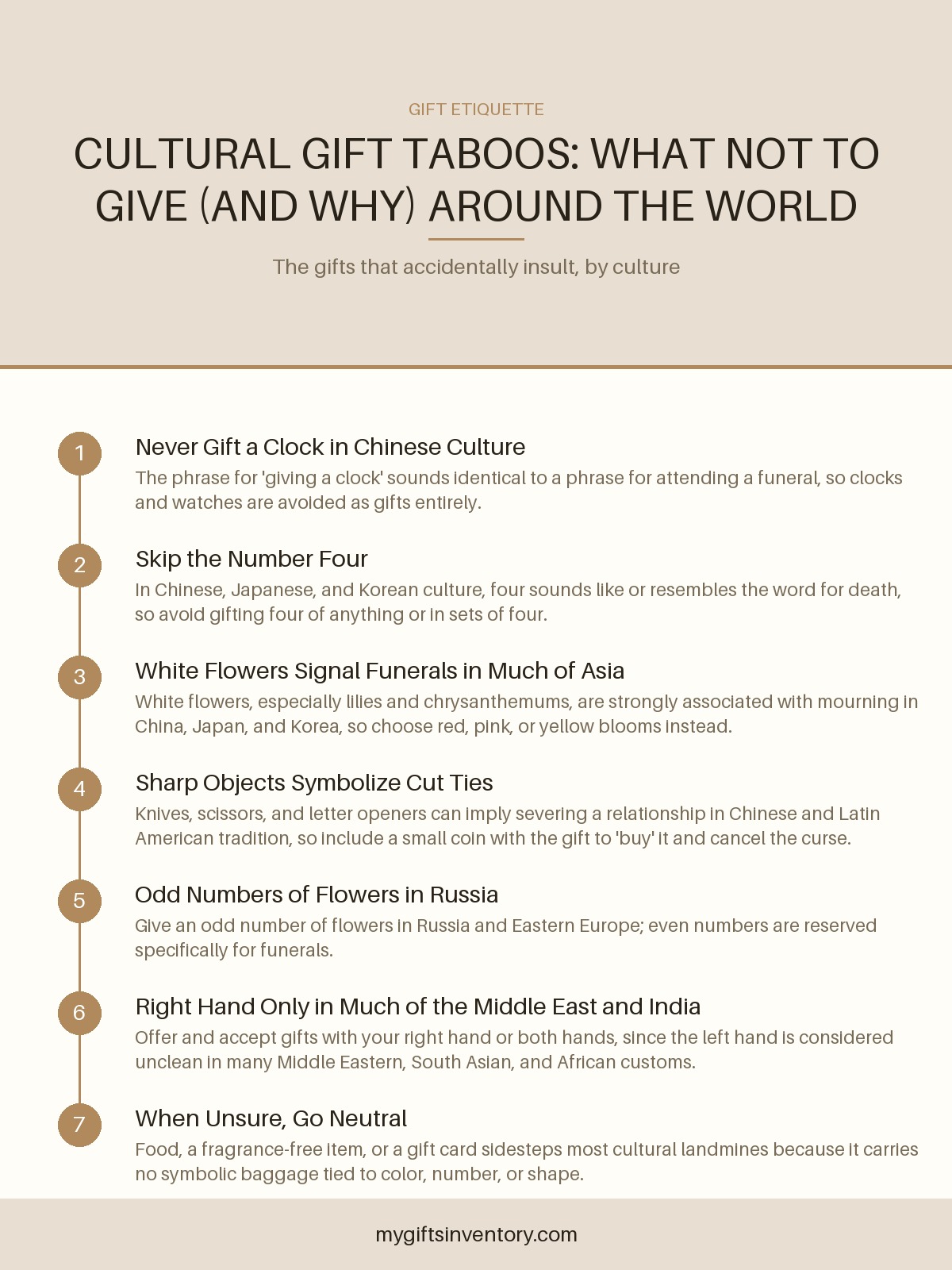
- Sharp objects for some recipients. Knives and scissors carry associations with severing a relationship in several regional traditions. A very fine kitchen knife may still be welcome from a close friend, but a set of knives as a wedding gift is a risk.
- White flowers. White blooms are associated with funerals in much of the region. Red roses mean romance. Yellow is fine. Pink and mixed bouquets are safe.
The Right Hand, the Wrapping, and the Refusal Dance
The physical presentation matters as much as the object. A few rules that hold almost everywhere in the region:
Give and receive with the right hand. The left hand is considered unclean in much of the region for cultural and religious reasons. If you're handing over something large or formal, using both hands is even better and reads as respectful. Don't offer a card, a gift, or a business card with your left hand alone.
Wrap it properly. Presentation matters. Loose items in a plastic bag feel careless. A box, ribbon, and a small card are worth the ten minutes. Avoid wrapping paper with pigs, dogs, or Santa Claus on it if the recipient is Muslim. Florals, geometric patterns, and solid colors in gold, green, or deep red are safe. Gold and green carry positive associations.
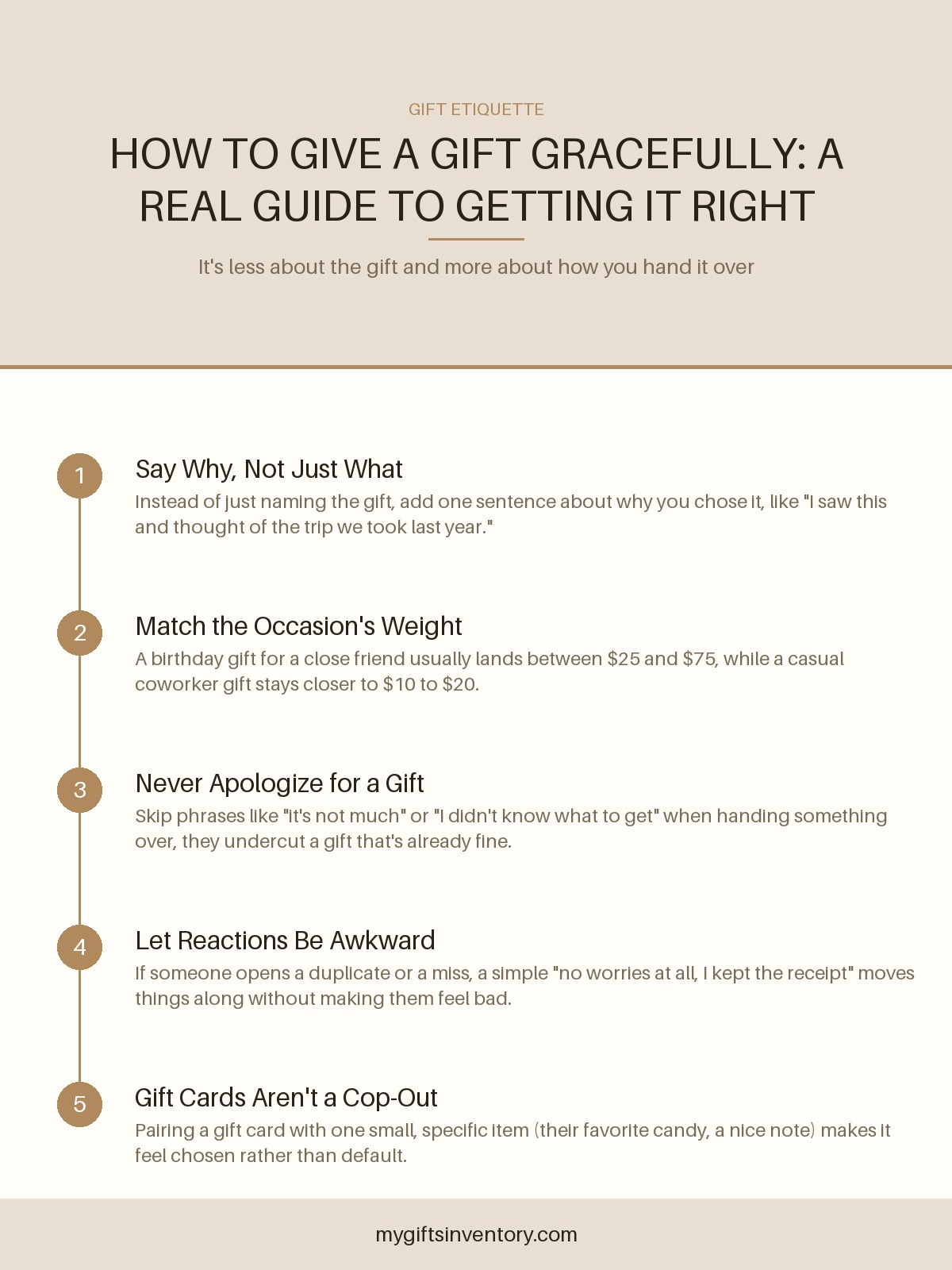
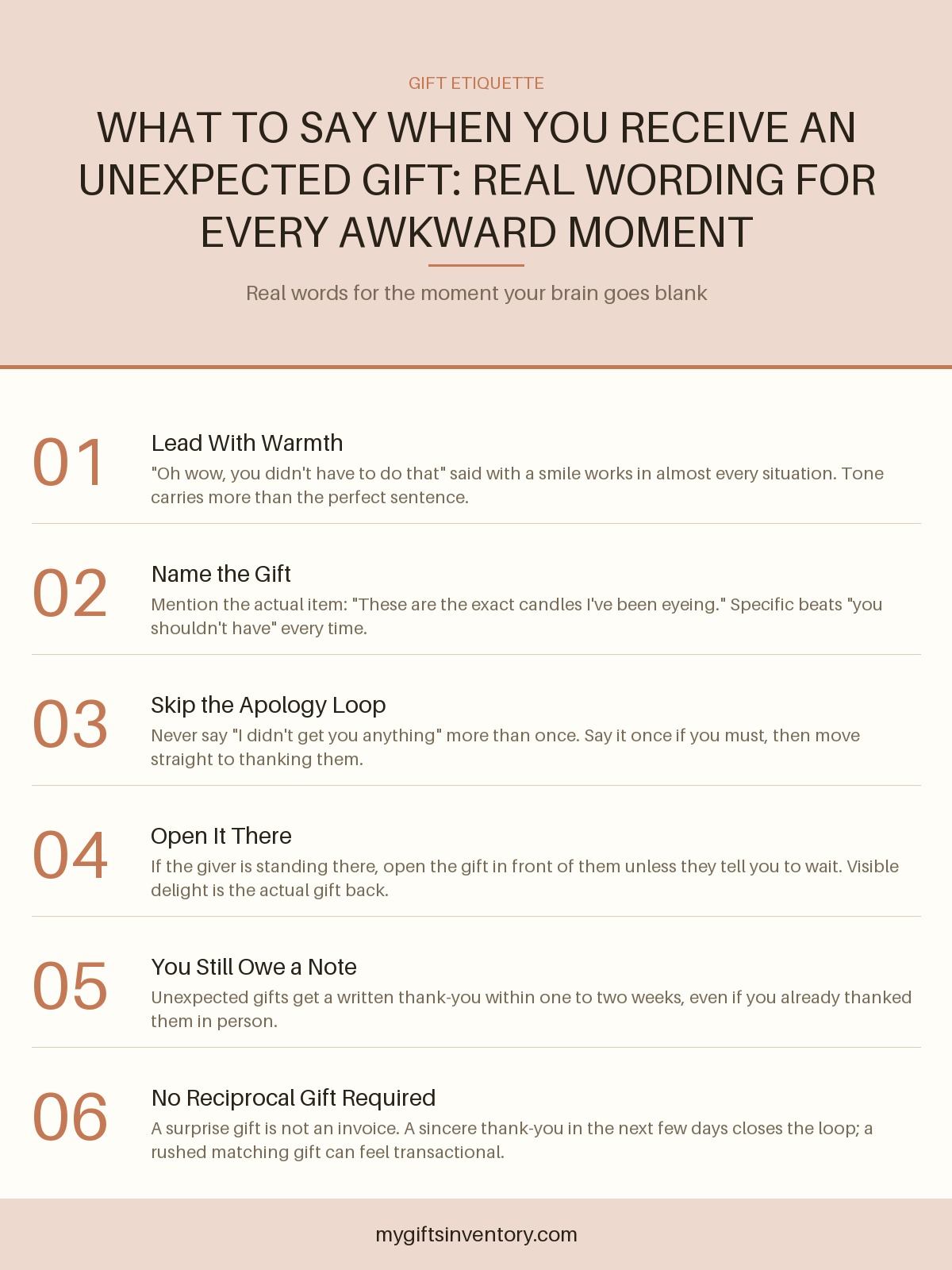
Don't open it in front of the giver. In most of the region, opening a gift immediately is not the custom and can put both of you in an awkward spot, especially if the gift is modest. Say thank you, place it aside, and open it later. Follow the recipient's lead if they insist.
Expect a polite refusal. "No, you shouldn't have, this is too much" is standard. Offer again, warmly and without pressure. If they decline twice more, accept it and move on. Don't push a fifth time; that reads as aggressive.
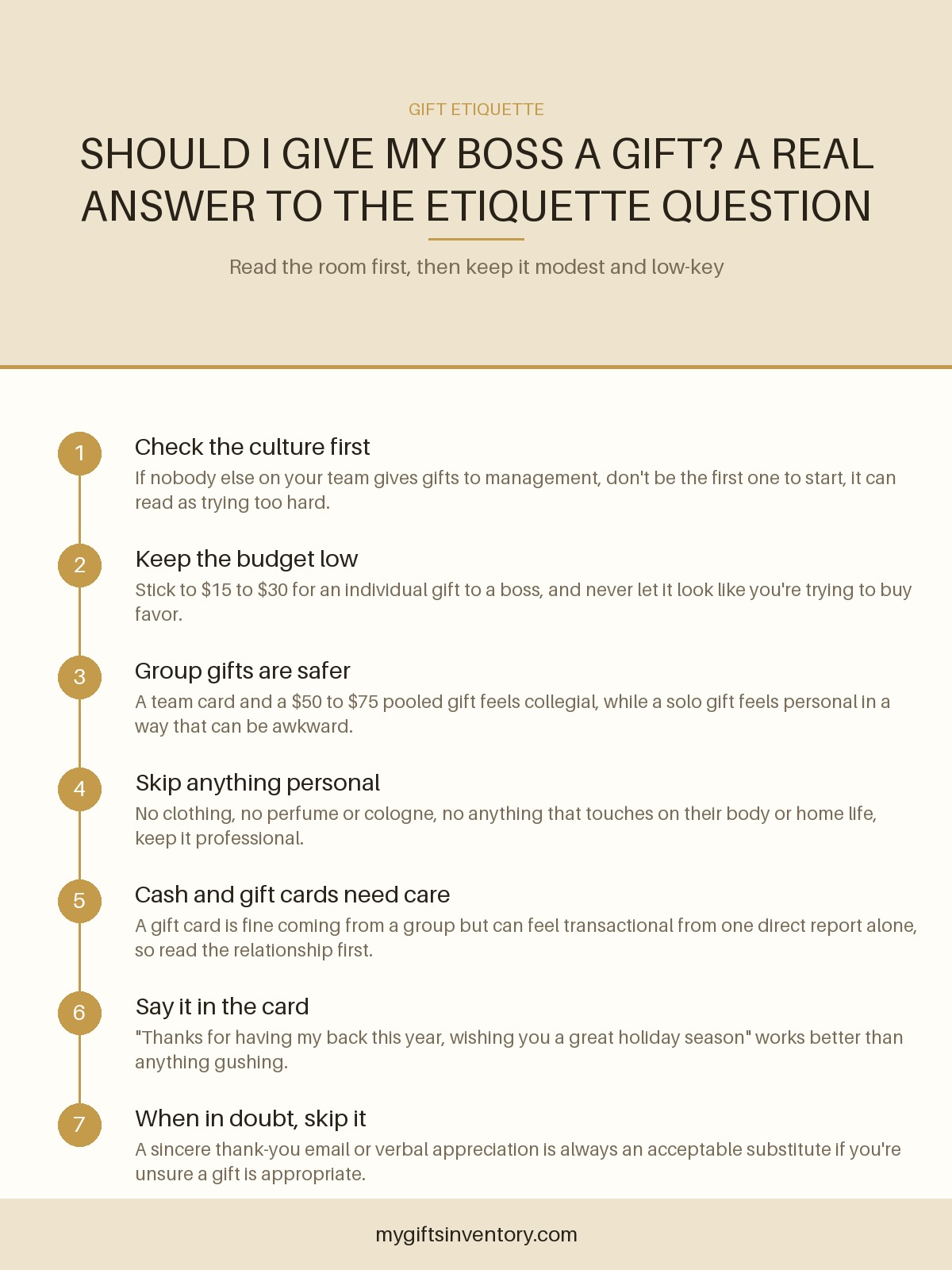
Gifts in business contexts go privately. Don't hand a gift to a business contact in front of colleagues or in a meeting room full of people. It can embarrass the recipient or create the appearance of favoritism, and in some government or corporate settings it can raise a compliance question. If you're working with an organization that has gift policies, follow them strictly. A handwritten card delivered separately is often the better play.
What to Spend: Real Numbers by Occasion
Nobody in the region will tell you the number. It depends enormously on the relationship, and generosity is genuinely valued. But if you're looking for a starting frame, here's what we'd suggest as ranges, bearing in mind that a modest gift given warmly beats an expensive gift given awkwardly.
Host gifts (dinner, iftar, a weekend at a family home)
For a dinner at someone's home, roughly $20 to $50 is right. A box of good dates, a nice dessert, a scented candle, a small plant, or a box of fine chocolates. If you're staying the weekend at a family home, $50 to $150 is more appropriate, and a gift that's consumable and shared (a big box of sweets, a coffee table book, a serving piece) is better than something the host has to find a place for.
Business and professional contacts
For a client or colleague, keep it modest and impersonal: $25 to $75. A desk object, a quality pen, a coffee-table book on art or architecture, a box of premium dates. Don't spend enough to make the recipient feel indebted. In some organizations a gift over a certain value (often around $50 to $100) requires internal disclosure, so if you're gifting a corporate contact, check the policy first.
Weddings
Wedding gifts are the biggest area of divergence. In many Gulf families, cash is not just acceptable but expected, and giving an object when cash is the norm can feel off. Amounts vary widely. In Gulf cities, $100 to $300 from a guest is a normal range, more from close family. In the Levant and North Africa, $50 to $150 is common, and again, close relatives give more. If you're giving an object, go for a high-quality piece for the home: a good serving tray, a set of crystal glasses, an elegant table linen. Registry-style gifts are becoming more common in urban areas, particularly among younger couples, so ask a family member what they've set up. If you're ever unsure about a wedding gift and want to consider a flexible alternative, a carefully chosen gift card to a well-known department store is worth thinking through, and you can check how to verify the balance on a card like Harvey Nichols if you're buying in the UK, or Saks Fifth Avenue if you're buying in the US.
Eid and religious holidays
Eid al-Fitr and Eid al-Adha both involve gift giving, especially for children. For children, $15 to $50 per child is a reasonable frame for non-family, and considerably more from close family. For adults, a box of dates, a good perfume, or a small home object at $30 to $100 is plenty. Cash gifts (Eidi) are common for children and for younger relatives, often in small notes or in a decorated envelope.
New baby, housewarming, and graduation
Baby gifts: $25 to $75. Clothes are risky because sizes and cultural preferences around dressing babies vary, so a soft blanket, a keepsake object, or a gift for the mother is often better received. Housewarming: $30 to $100, and something for the home is ideal. Graduation: $25 to $100, often cash for a younger graduate.
Cards and Wording: What to Actually Write
Cards are welcome, but keep them warm and short. Avoid humor you can't deliver with tone, and avoid religious language if you don't share the recipient's faith.
For a host: "Thank you for having us in your home. Your hospitality made the evening. With appreciation, [Name]."
For a wedding: "Wishing you a marriage full of joy, health, and blessings. Congratulations to you both."
For Eid: "Eid Mubarak. Wishing you and your family peace and happiness."
For a business contact: "Thank you for the warm welcome. I hope our paths cross again soon. With kind regards, [Name]."
For a new baby: "Congratulations on your new arrival. Wishing your family health and happiness."
If you're sending a thank-you to someone who hosted you, be specific about what you appreciated. "The meal was wonderful, and the conversation even better" does more than a generic thank you.
Ramadan and Eid: Timing Matters
Ramadan is a month of generosity and charity (zakat and sadaqah are central), and gift giving is common. But timing matters. Don't deliver a food gift during the hour before iftar; people are busy and distracted. Deliver in the late morning or after the evening meal. If you're gifting food, make sure it's appropriate to break a fast, and remember that observant Muslims don't eat or drink between sunrise and sunset. A gift delivered during the day is fine as long as you're not pressing someone to eat it. For Eid al-Fitr, gifts are traditionally given on the morning of Eid, often to children first. For Eid al-Adha, gifts are often given in the days following the holiday, and meat from the sacrifice is typically shared with neighbors and those in need, so don't gift meat back.
Wrapping and Presentation: A Quick Note
Wrap gifts in paper, not gift bags, if you can manage it. Gift bags read as slightly casual. Use gold, green, deep red, or floral patterns. Avoid wrapping paper featuring alcohol, dogs, pigs, or religious imagery that doesn't match the recipient. If you're gifting food, a decorative tin or basket raises the whole gift considerably. If you're gifting perfume, keep it in its box and add a ribbon. If you're sending something to a home, consider sending it before you arrive rather than carrying it in, which allows the host to put it away without ceremony.
Where This Gets Complicated: Gulf vs Levant vs North Africa
The Gulf (Saudi Arabia, UAE, Qatar, Kuwait, Bahrain, Oman) tends to be more formal, more generous in gift scale for weddings and family occasions, and stricter on alcohol and pork, particularly in Saudi Arabia and Kuwait. The Levant (Jordan, Lebanon, Syria, Palestine) has a more relaxed attitude toward alcohol among many families, a strong tradition of food gifts, and a slightly more personal approach to gift giving. North Africa (Egypt, Morocco, Tunisia, Algeria) is similar to the Levant in many ways, with strong traditions around food, textiles, and household objects. If you're buying for someone from the region but living in the US or UK, you can lean toward their family's practice rather than the country's, and asking a family member is always the best move.
Frequently Asked Questions
Is it rude to give alcohol in the Middle East?
It depends entirely on the recipient and the country. In Saudi Arabia and Kuwait, giving alcohol is illegal and should be avoided completely. In the UAE, Qatar, Bahrain, and Jordan, many people drink, but for business contacts and people you don't know well, alcohol is still a risky gift. The safest play is to give something non-alcoholic that you're confident about, like dates, perfume, or a food gift.
Should I open a gift in front of the person who gave it to me?
Generally no. In most of the Middle East, gifts are not opened immediately in front of the giver. Accept it graciously, set it aside, and open it later. If the giver insists, follow their lead, but don't assume. Opening it right away can put pressure on the giver and the recipient.
How much should I spend on a wedding gift in the Gulf?
For a guest, roughly $100 to $300 is a normal range in Gulf cities, more for close family. Cash is common and often expected. In the Levant and North Africa, $50 to $150 is typical for guests. If you're giving an object, choose something high quality for the home, like a serving tray or good glassware.
Can I give a gift card in the Middle East?
Yes, but it depends on the setting. Gift cards are increasingly common in urban areas, particularly among younger people and in the UAE and Jordan. For older relatives or formal occasions, a physical gift is usually more appropriate. If you do give a gift card, choose a well-known brand and check the balance to be sure it's active before handing it over.
What should I bring to a dinner at someone's home?
A box of good dates, a nice dessert, or a small gift for the home at roughly $20 to $50 is right. Don't bring alcohol unless you know the host drinks. Don't bring white flowers. Arrive with something wrapped and present it with your right hand. A short, warm thank-you note is a nice touch, and a follow-up message the next day is appreciated.
Looking for an Actual Gift Instead?
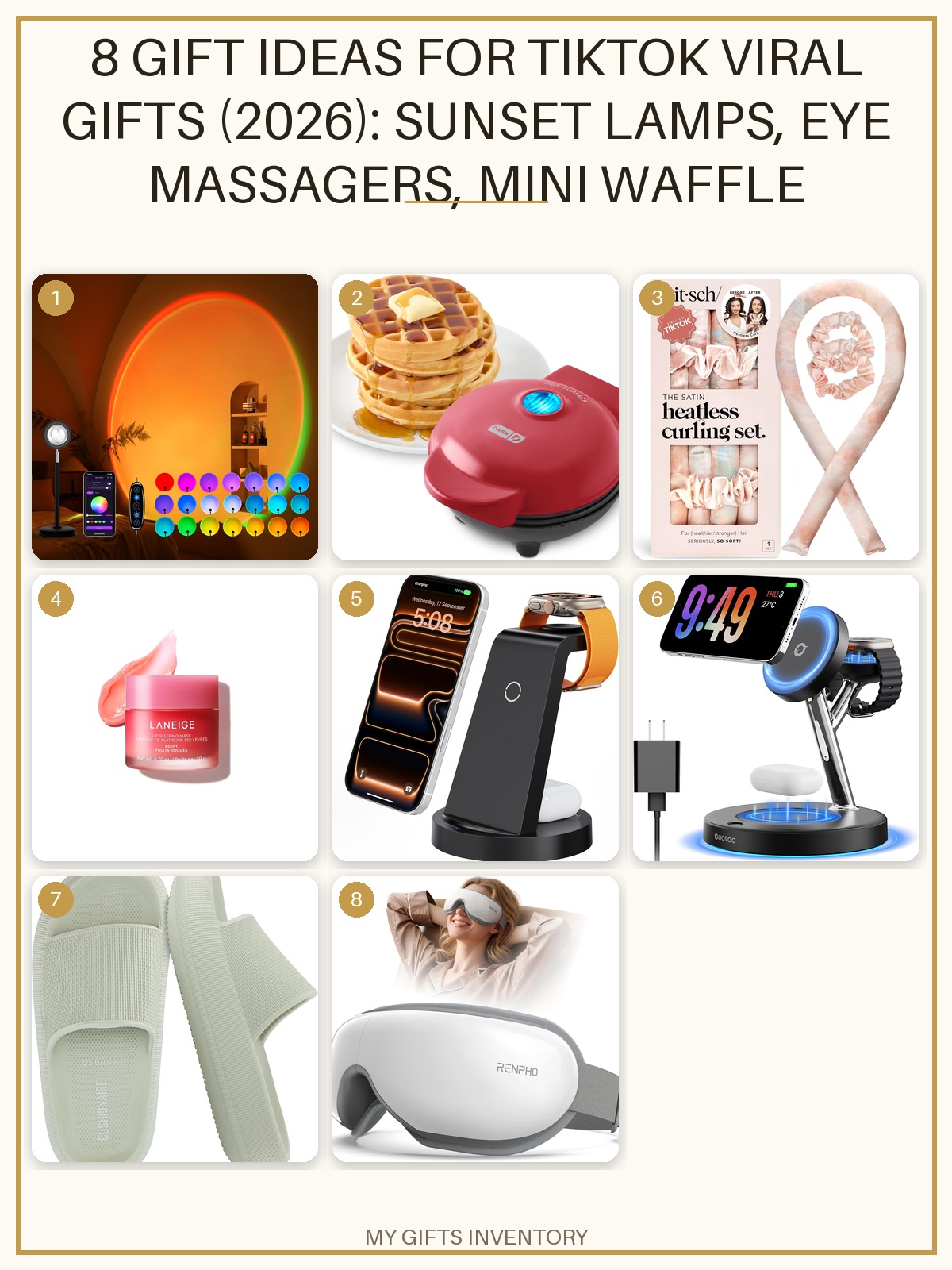
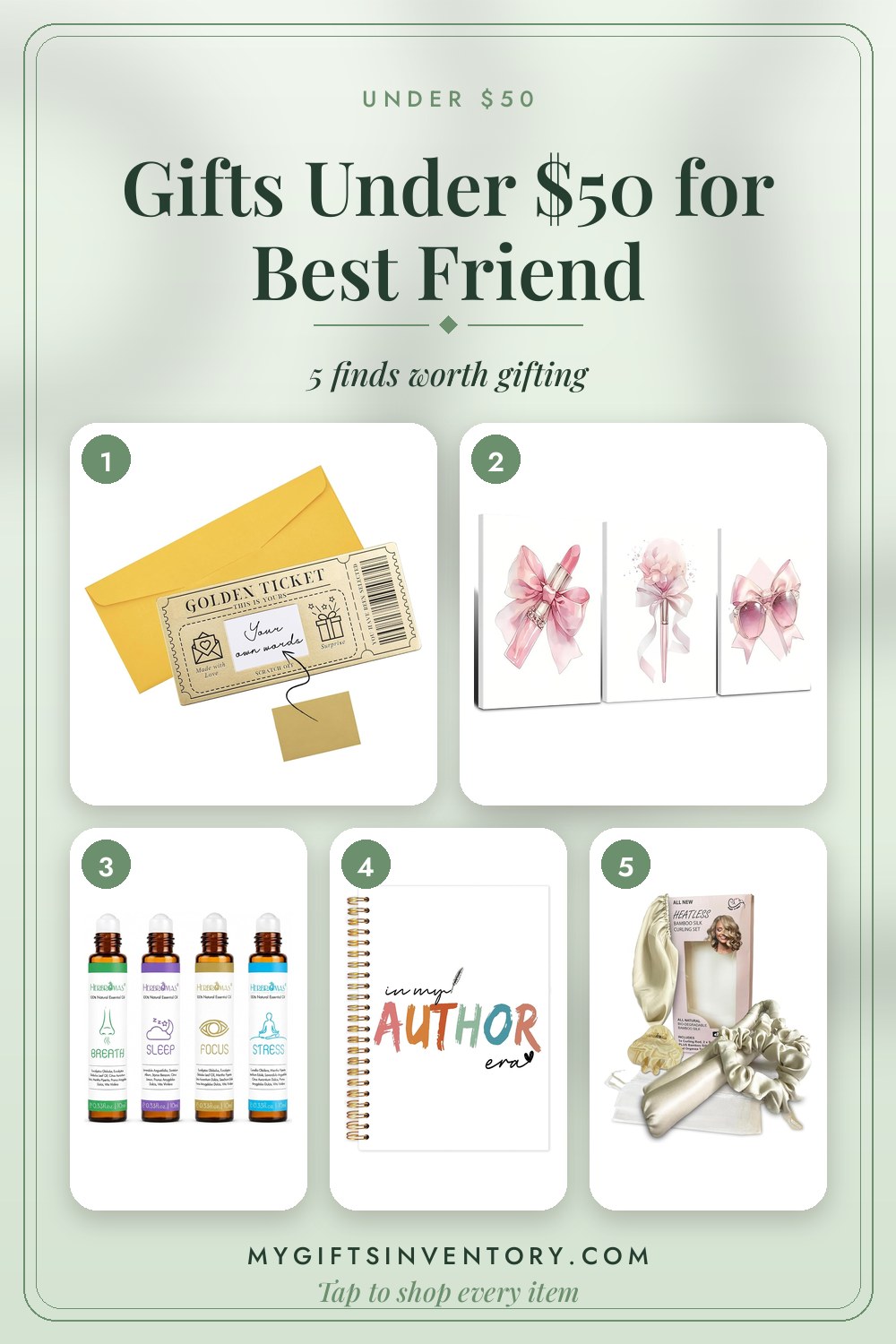
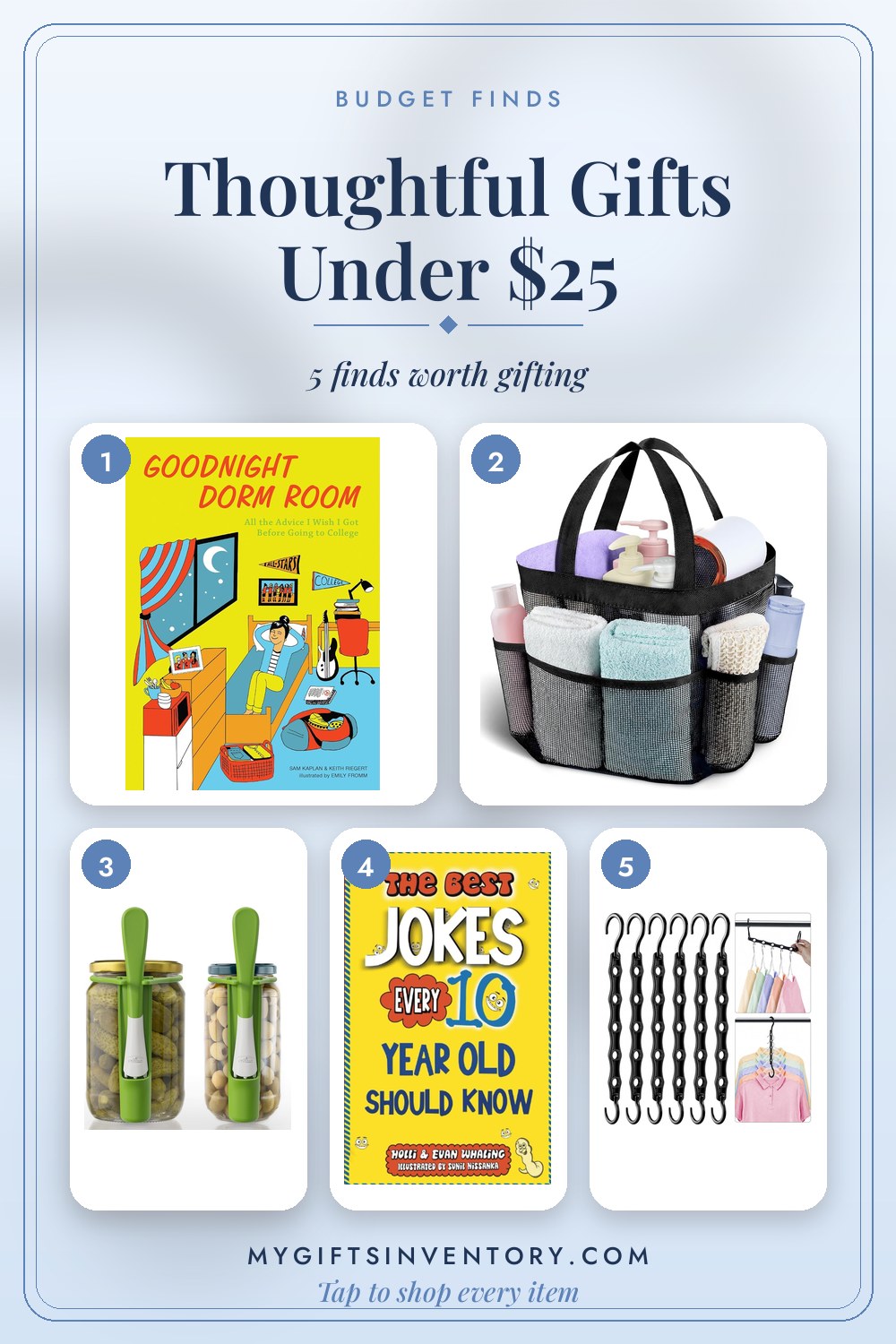
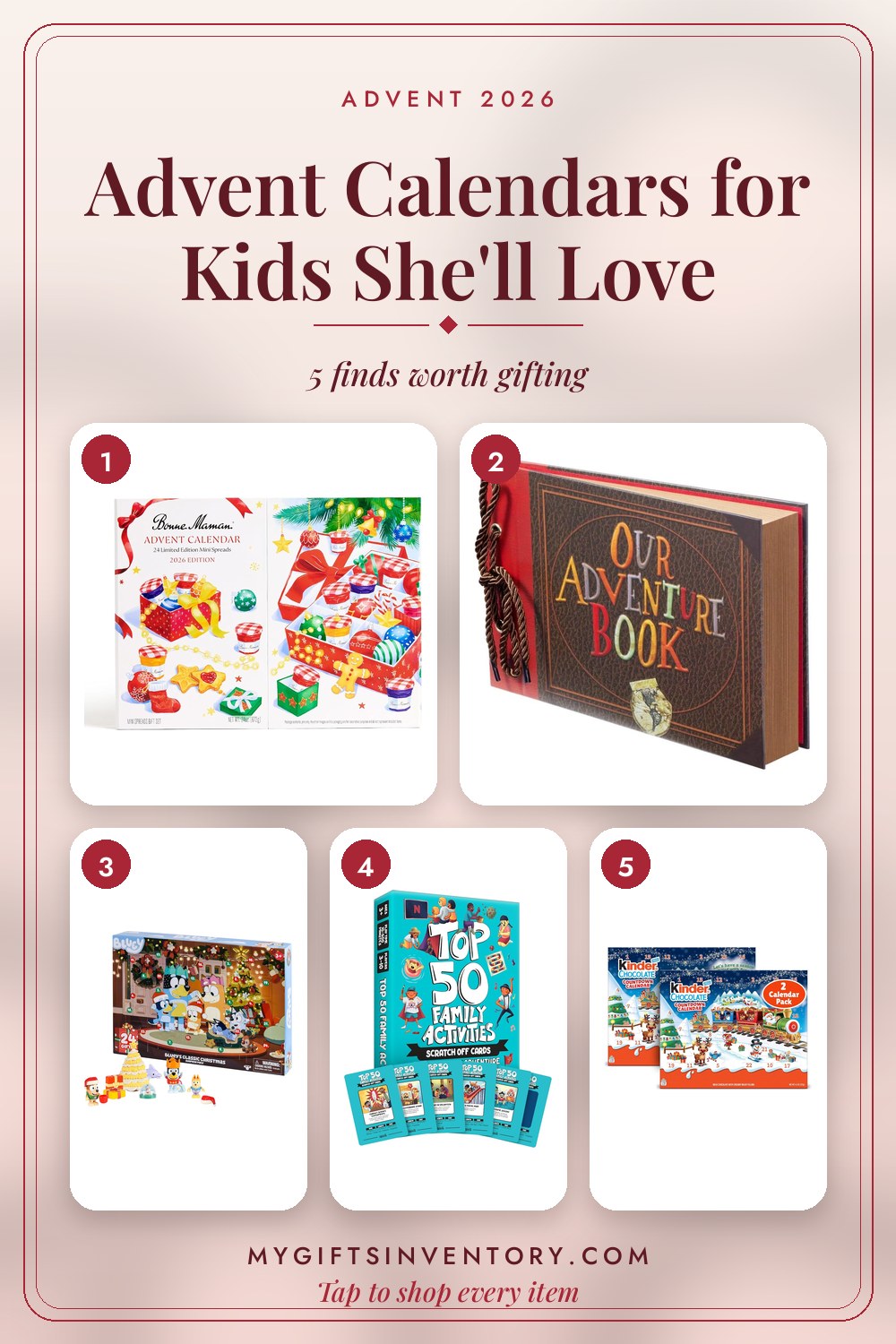
Gift Sets We Love Right Now
Every item picked, priced and linked, ready to buy.
More Gift Advice