Gift Giving in the Workplace: A Complete Etiquette Guide
From boss gifts to Secret Santa budgets to what never to write in a coworker's card, here's how to handle office gift giving without the awkwardness.

As an Amazon Associate, My Gifts Inventory earns from qualifying purchases. We only recommend products we'd genuinely consider buying ourselves.
There's a specific kind of dread that shows up every December (or before a coworker's last day, or when someone starts circulating an envelope for the office manager's birthday) and it's the workplace gift dilemma. Do you have to participate? How much is too much, or too little? Is it weird to give your boss something personal? Most of the anxiety here isn't about the gift itself, it's about accidentally sending the wrong signal in a relationship that has actual professional stakes attached to it.
Workplace gifting has its own set of unwritten rules, and they're different from the ones that govern gifts between friends or family. Money, hierarchy, and office politics all quietly shape what's appropriate, so let's walk through it properly.
The Basic Rule: Gifting Should Flow Down, Not Up
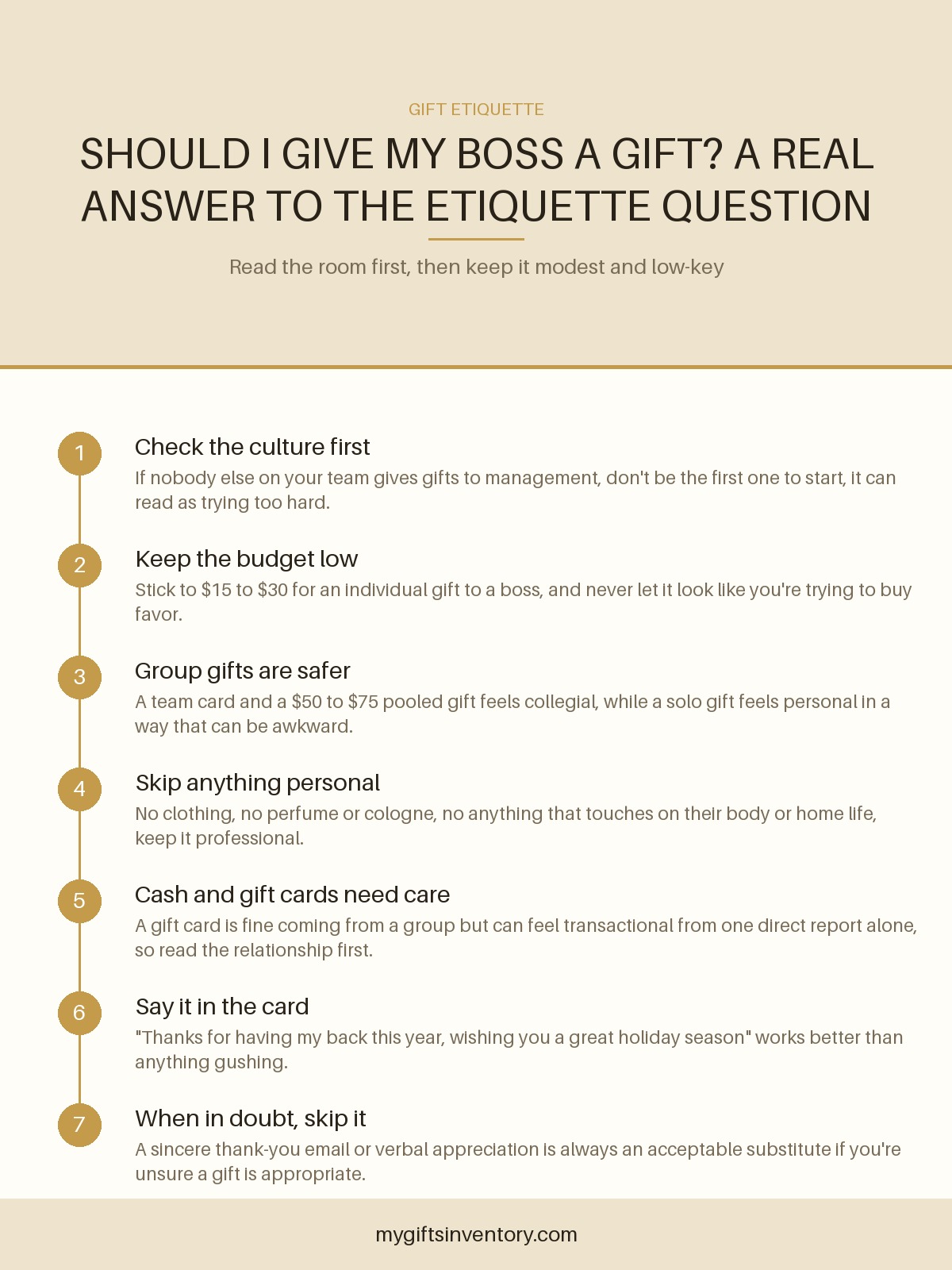
The safest default in any office is that gifts flow downward or sideways, not upward. A manager giving small gifts or a holiday bonus to their team is normal and expected. An individual employee giving a personal gift directly to their boss, on the other hand, can come across as trying to curry favor, even when that's not the intent at all.
If your team wants to acknowledge a manager's birthday or the holidays, the cleanest way to do it is as a group. One card everyone signs, one modest collective gift, no single person positioned as the standout gift-giver. If you're a manager wondering whether to get your team something, that's a much easier yes: a small, uniform gift for everyone (not favoring one person over another) is a genuinely nice gesture and rarely reads as anything but kind.
What's a Reasonable Budget for an Office Gift?
Budgets in a workplace context should stay modest enough that nobody feels pressured to match them, and nobody feels embarrassed if they can't.
Peer-to-peer coworker gifts
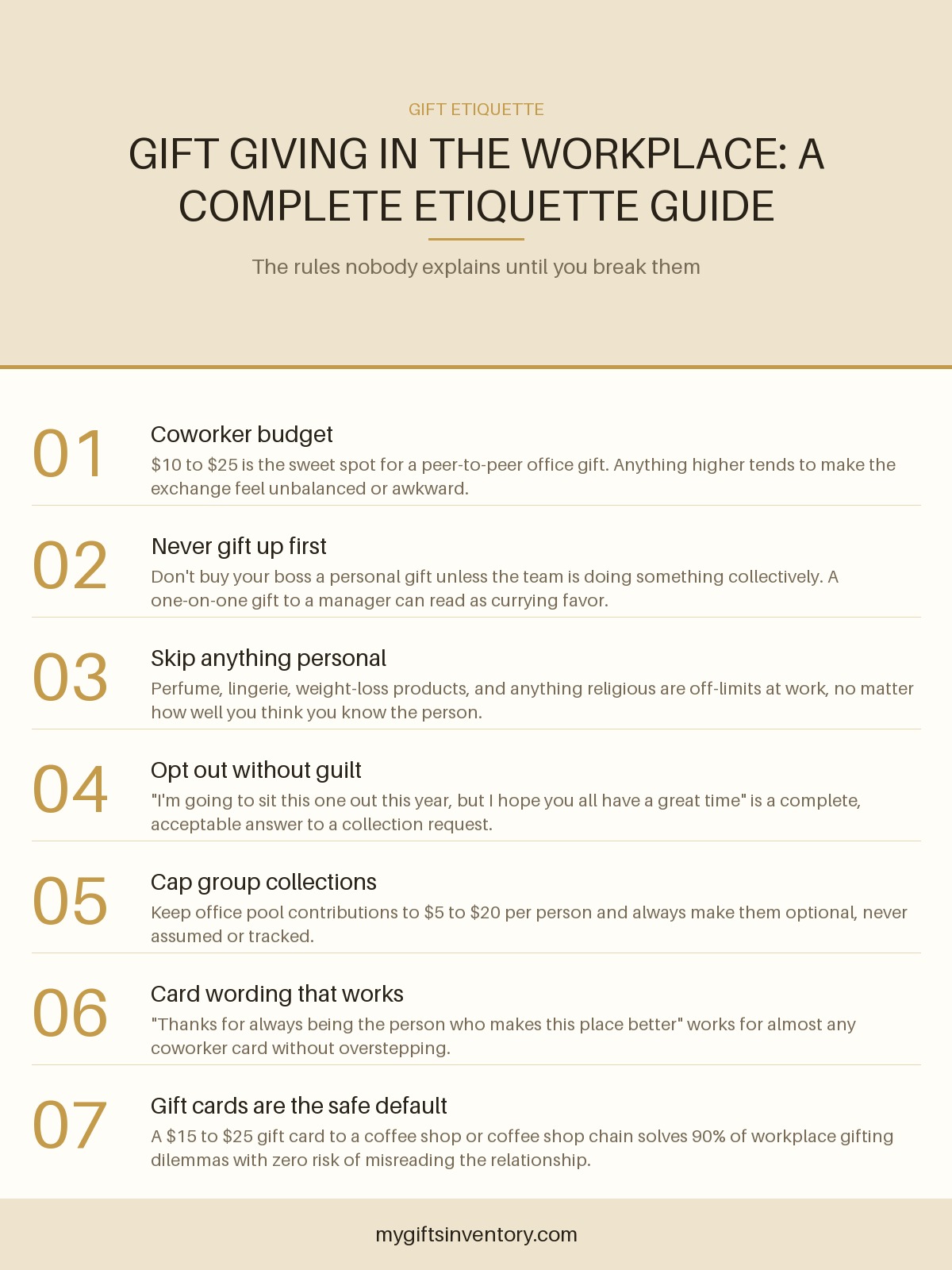
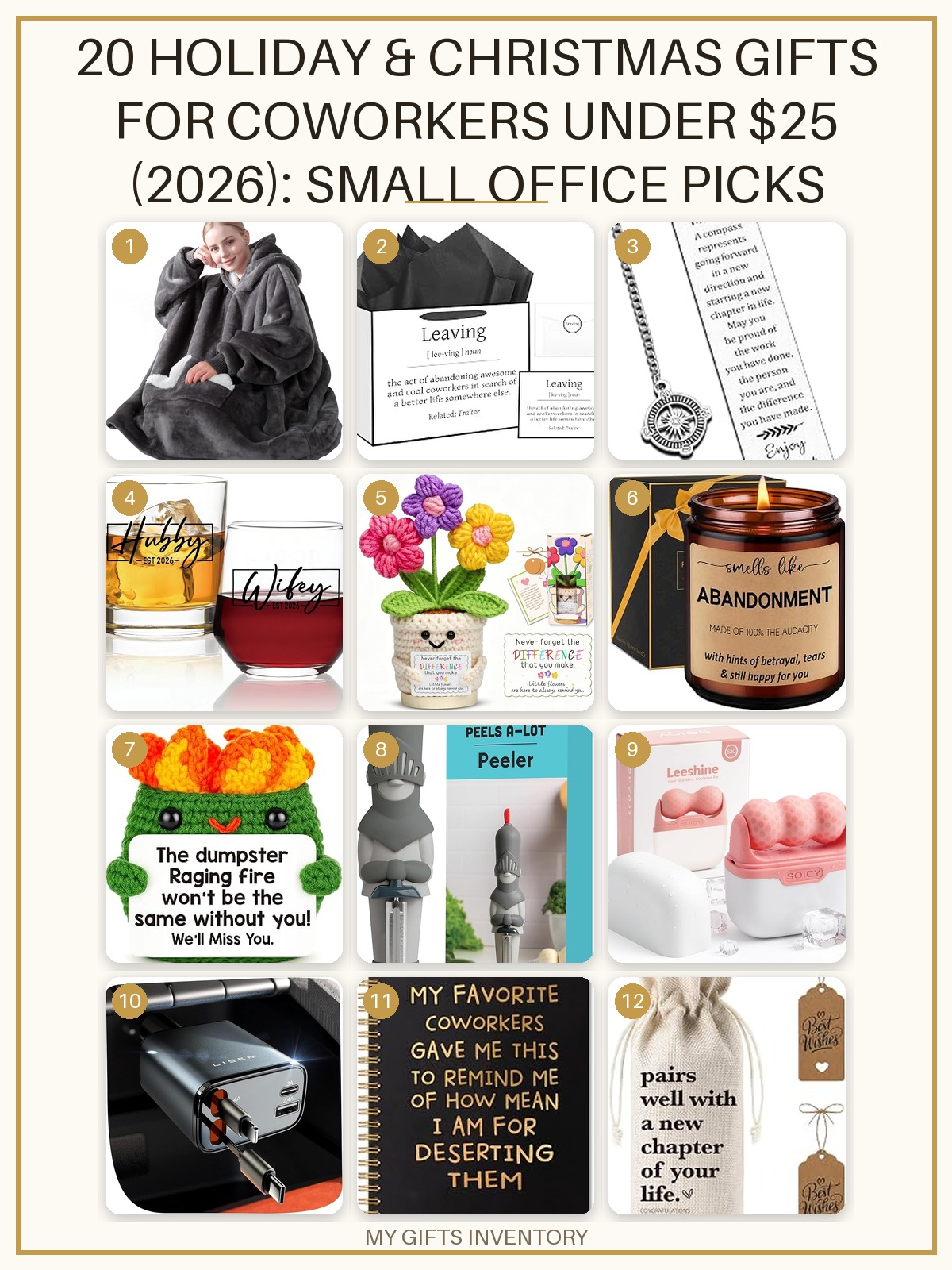
For a coworker you're friendly with, somewhere between $10 and $25 is the range that feels generous without feeling like a statement. If you're doing a Secret Santa or a desk-drawer surprise, browsing something like 45 Best Gifts Under $20 is a good way to land on something that feels thoughtful without going overboard.
Manager-to-team gifts
If you're a manager gifting to your direct reports, plan on roughly $20 to $50 per person depending on your company culture and the size of the team. Consistency matters more than the exact number: everyone should get something comparable, even if people's actual gifts differ slightly (say, a coffee gift versus a snack gift).
Team-to-manager gifts
When a group is chipping in for a manager, keep individual contributions optional and small, typically $5 to $15 per person, and let the group total determine the final gift rather than setting an ambitious target and pressuring people to hit it.
Client and customer gifts
Client gifts sit in their own category because they're really about relationship maintenance, not personal affection. A modest, tasteful gift in the $25 to $75 range is standard for most client relationships, and it's worth checking your company's gift policy first, since some industries (finance, government contracting, healthcare) have strict limits on what employees can accept or give. For ideas that read as professional rather than personal, 21 Corporate Gift Ideas Under $50 is built exactly for this situation.
Group Gifts, Collections, and Office Pools
The office collection envelope is one of the most common sources of workplace gift friction, mostly because it's rarely handled with clear boundaries. A few rules make it work better for everyone:
- Keep the ask small and explicit. "We're collecting $10 per person for Maria's retirement gift, totally optional" is far better than a vague envelope passed around with no stated amount.
- Never track who gave what. The whole point of a collection is that it's anonymous and pressure-free. If people start comparing contributions, it defeats the purpose.
- Give people a real way to opt out. Not everyone can spare $10 that week, and nobody should have to explain why. A simple decline like "I'm going to sit this one out, but I hope she loves it" is complete and needs no further justification.
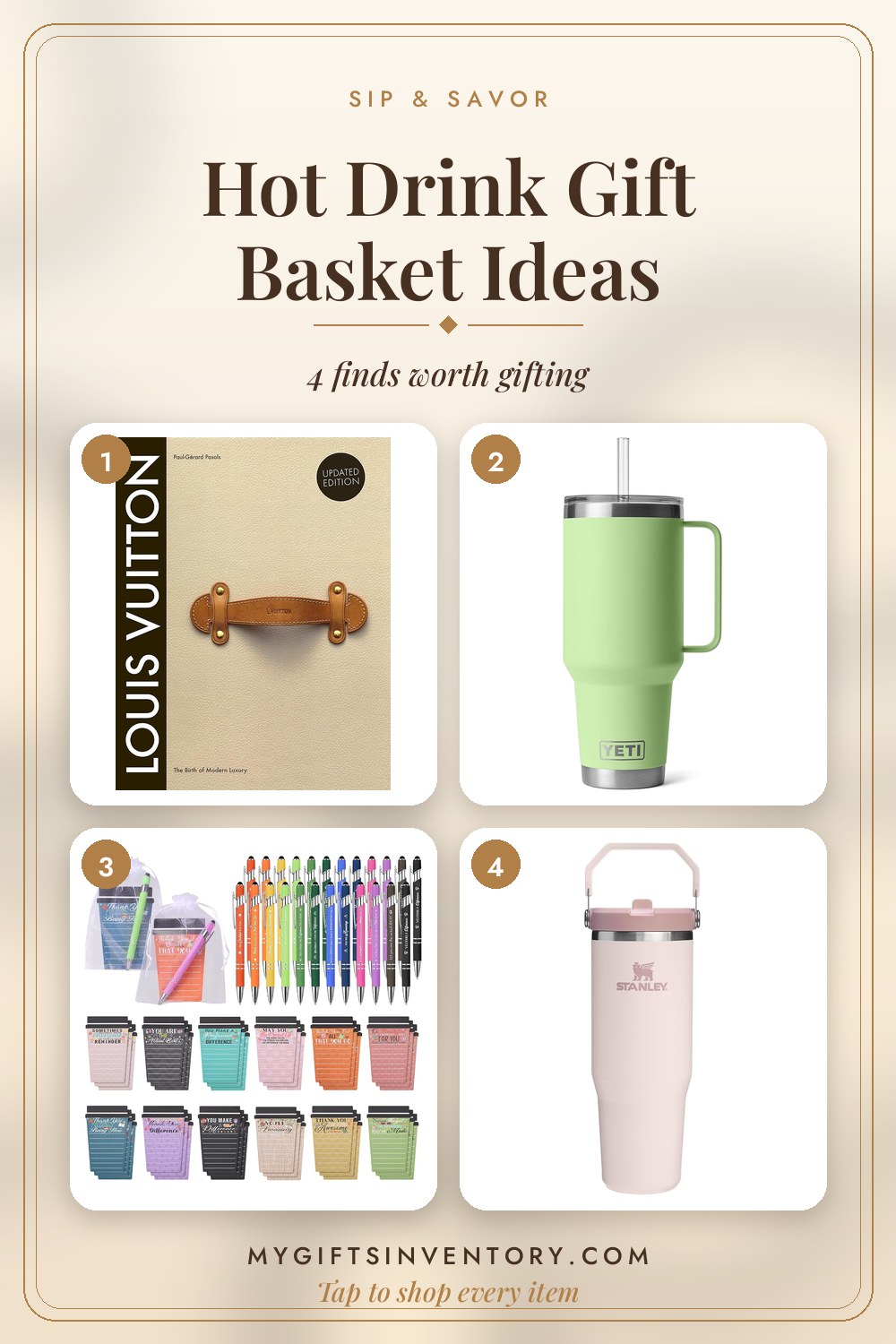
- Pick something universally useful. Group gifts work best when they're broadly appealing rather than personal. A nice gift basket or a shared experience tends to land better than something highly specific to one person's taste, since a group is choosing it by committee. A curated option like Gift Baskets Under $50 works well for exactly this kind of pooled gift.
Secret Santa and White Elephant: Setting Expectations Early
If your office does a Secret Santa or white elephant swap, most of the potential awkwardness gets solved by simply stating the rules clearly before anyone shops. Set a firm price ceiling (most offices land on $15 to $25), decide whether homemade or gag gifts are allowed, and clarify whether it's meant to be anonymous the whole time or revealed at the end.
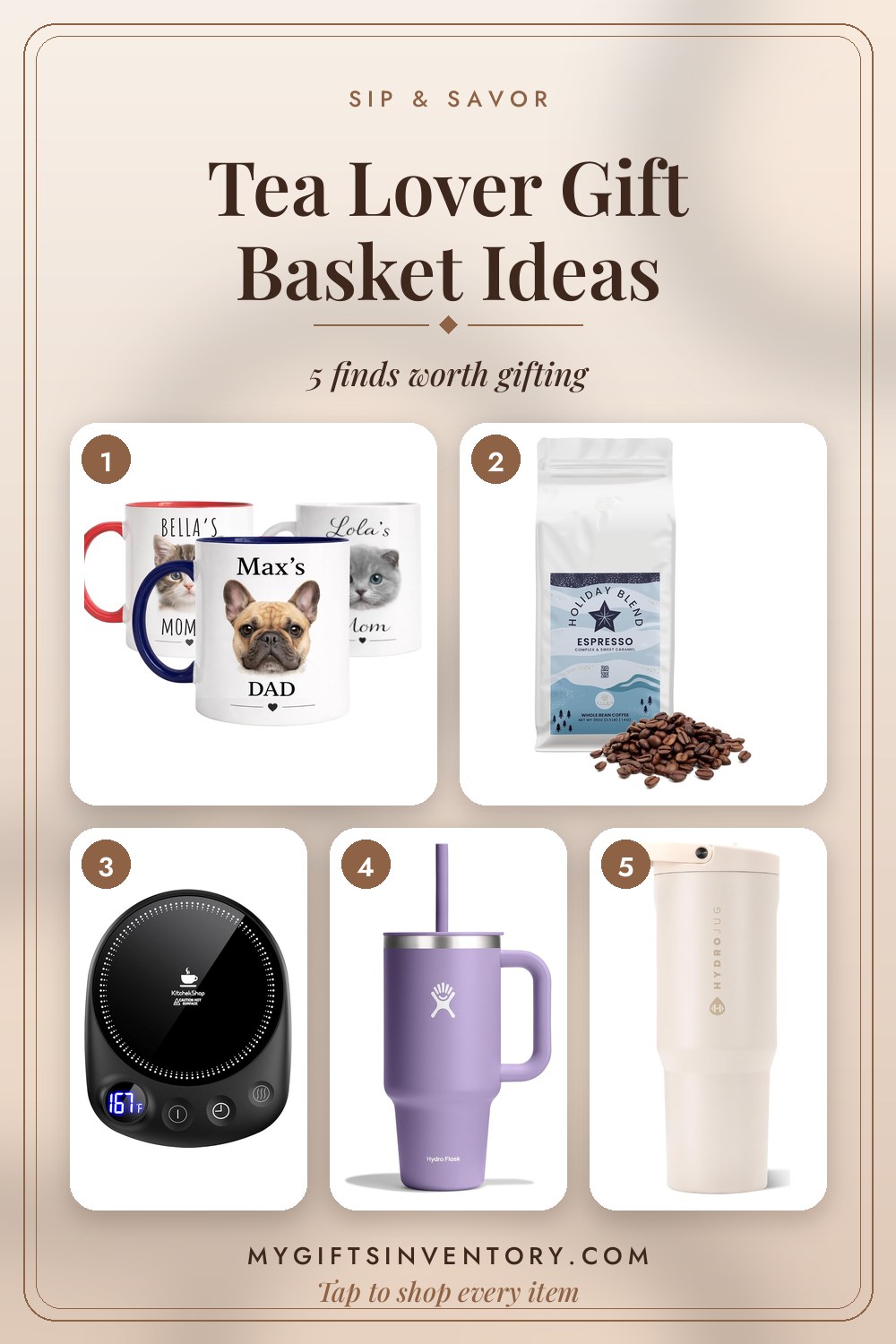
For Secret Santa specifically, resist the urge to get deeply personal even if you know your recipient well. The fun of the format is in being thoughtful within a small budget, not in demonstrating how much insider knowledge you have about someone's life. A nice mug, a good snack, a small desk item, or something from a gourmet gift roundup like Gourmet Treats, Wine & Coffee Gift Ideas Under $50 tends to land well across a wide range of personalities without overstepping.
What to Avoid Giving at Work
A few categories are worth steering clear of entirely in a professional setting, regardless of how close you feel to the person:
- Anything with romantic or intimate undertonesperfume, cologne, lingerie, jewelry meant to signal affection. Even innocent intentions can be misread, and it puts the recipient in an uncomfortable spot.
- Diet, fitness, or appearance-related giftsgym memberships, weight-loss products, "you should really try this" items. These almost always land badly, even when meant kindly.
- Anything overtly religious or politicaloffices are diverse spaces, and a gift tied to one belief system can alienate people or feel presumptuous.
- Anything that requires deep personal knowledgeinside jokes, references to someone's personal struggles, or anything that assumes a closeness that may not actually exist in a work context.
- Cash, unless it's a formal bonus structure. Cash between coworkers or from a boss to an employee (outside of an official bonus) can feel transactional or even inappropriate depending on the power dynamic.
What to Write in a Workplace Card
Card messages at work should be warm but professional, specific enough to feel genuine, general enough not to overstep. A few real examples depending on the occasion:
General coworker appreciation
"Thanks for always being the person who makes this place better. Hope this year brings you good things."
A colleague's last day or retirement
"It won't be the same around here without you. Thank you for everything you taught me and for making the tough days easier. Wishing you all the best in whatever's next."
A manager's birthday (from the team)
"Happy birthday! We appreciate everything you do to make this a good place to work. Hope you have a great one."
Congratulating a coworker on a promotion or new role
"Congratulations, this is so well-deserved. Excited to see what you do next."
Sympathy or a difficult personal moment
"Thinking of you during this hard time. Please let us know if there's anything we can do." Keep sympathy messages short and sincere rather than trying to fill the whole card.
Client and Corporate Gifting: A Slightly Different Set of Rules
Client and vendor gifts operate under more formal expectations than internal office gifts, partly because there are real compliance considerations involved. Many companies have written policies capping the value of gifts employees can give or accept from external partners, and some industries prohibit it outright. Before sending anything to a client, it's worth a quick check with HR or your manager if you're not sure what's allowed.
Beyond the compliance angle, client gifts tend to work best when they're useful, shareable, or consumable rather than deeply personal. Think along the lines of a nice food gift for the whole office, a well-made desk item, or something branded but tasteful. A gift card is also a perfectly acceptable and low-risk option here, particularly if you're not sure of someone's specific tastes; a card to a well-known retailer, and you can always point recipients to a page like the Coffee Lovers gift guide for inspiration if you want to pair it with something physical instead.
When Gift Cards Are the Right Call
Gift cards get a bad reputation for being impersonal, but in a workplace context they're often the smartest choice precisely because they're neutral. They don't require guessing at someone's size, taste, or personal life, and they let the recipient choose something they'll actually use. For office gifts, a card in the $15 to $30 range to a coffee shop, a general retailer, or a restaurant near the office covers almost every situation gracefully. If you go this route, it's worth double-checking the card's balance before handing it over, especially with a reloadable or promotional card; a quick check through a page like Amazon Gift Card Balance: How to Check It takes the guesswork out of it.
Timing: When to Give Workplace Gifts
Holiday gifts and office parties are usually the biggest flashpoint, but they're not the only occasion. Here's a rough sense of timing for the most common situations:
- Holiday season: Aim to have gifts or a card ready before your office's last working day before the break, or before a scheduled holiday gathering.
- A coworker's last day: Try to have something ready at least a day before they leave, since goodbyes at work often happen quickly and informally.
- Birthdays: A card on the actual day is plenty; if the team is doing something collective, it's fine to celebrate on the nearest convenient workday.
- New baby, wedding, or major life event: These don't need to align with any calendar event, give whenever feels natural once the news is shared.
Remote and Hybrid Teams
Remote work has changed a lot of workplace gifting norms, mostly by making shipping and timing more important than they used to be. If you're organizing anything for a remote or hybrid team, build in extra lead time (at least a week or two before the occasion) so gifts arrive before the moment they're meant to celebrate, not after. Digital gift cards sent by email solve a lot of the logistics headaches here, since they don't rely on anyone's mailing address being current.
Is It Okay to Just Not Participate?
Yes, and this deserves to be said plainly. Not everyone can or wants to participate in every office gift exchange, and that's a completely reasonable position. Financial circumstances change, personal beliefs vary, and sometimes people just prefer to keep their work relationships more contained. A simple, warm decline like "I'm not going to be able to join in this time, but I hope everyone has a great time" closes the conversation without requiring further explanation. Nobody who runs a respectful workplace should push further than that.
Gift Ideas to Go With This


Want more ideas? Browse our full guide: 20 Best Gifts Under $100 (2026): Thoughtful Picks They'll Actually Use
Frequently Asked Questions
Do I have to get my boss a gift?
No, and in most cases it's better if you don't give an individual, personal gift to your boss on your own. If the team wants to acknowledge your manager's birthday or the holidays, do it as a group with everyone contributing a small, optional amount toward one shared gift.
How much should I spend on a coworker's gift?
Somewhere between $10 and $25 is the standard range for a peer-to-peer office gift. Going much higher can unintentionally create pressure for others to match your spending, which is exactly what workplace gift etiquette tries to avoid.
What's a safe gift for someone I don't know well at work?
A gift card or a consumable item like coffee, tea, or snacks is the safest choice when you don't know a colleague's personal tastes. These options avoid any risk of the gift feeling too personal or presumptuous while still showing genuine thoughtfulness.
Is it rude to opt out of a Secret Santa or office gift exchange?
No, declining a gift exchange is not rude as long as you communicate it clearly and kindly ahead of time. A simple message like letting the organizer know you won't be participating this year is all that's needed, no lengthy explanation required.
Can I give a coworker a more personal or expensive gift if we're close friends?
Yes, if you have a genuine friendship with a coworker outside of work, it's fine to gift as you would with any close friend. Just be mindful of keeping that gift private and not opening it in a group setting where it might create an uneven feeling among other coworkers.
Looking for an Actual Gift Instead?


Gift Sets We Love Right Now
Every item picked, priced and linked, ready to buy.
More Gift Advice