How to Ask for Gifts Without Being Rude (Real Wording That Works)
A practical guide to asking for what you actually want for birthdays, weddings, and holidays, with exact phrases that read as helpful instead of demanding.
As an Amazon Associate, My Gifts Inventory earns from qualifying purchases. We only recommend products we'd genuinely consider buying ourselves.
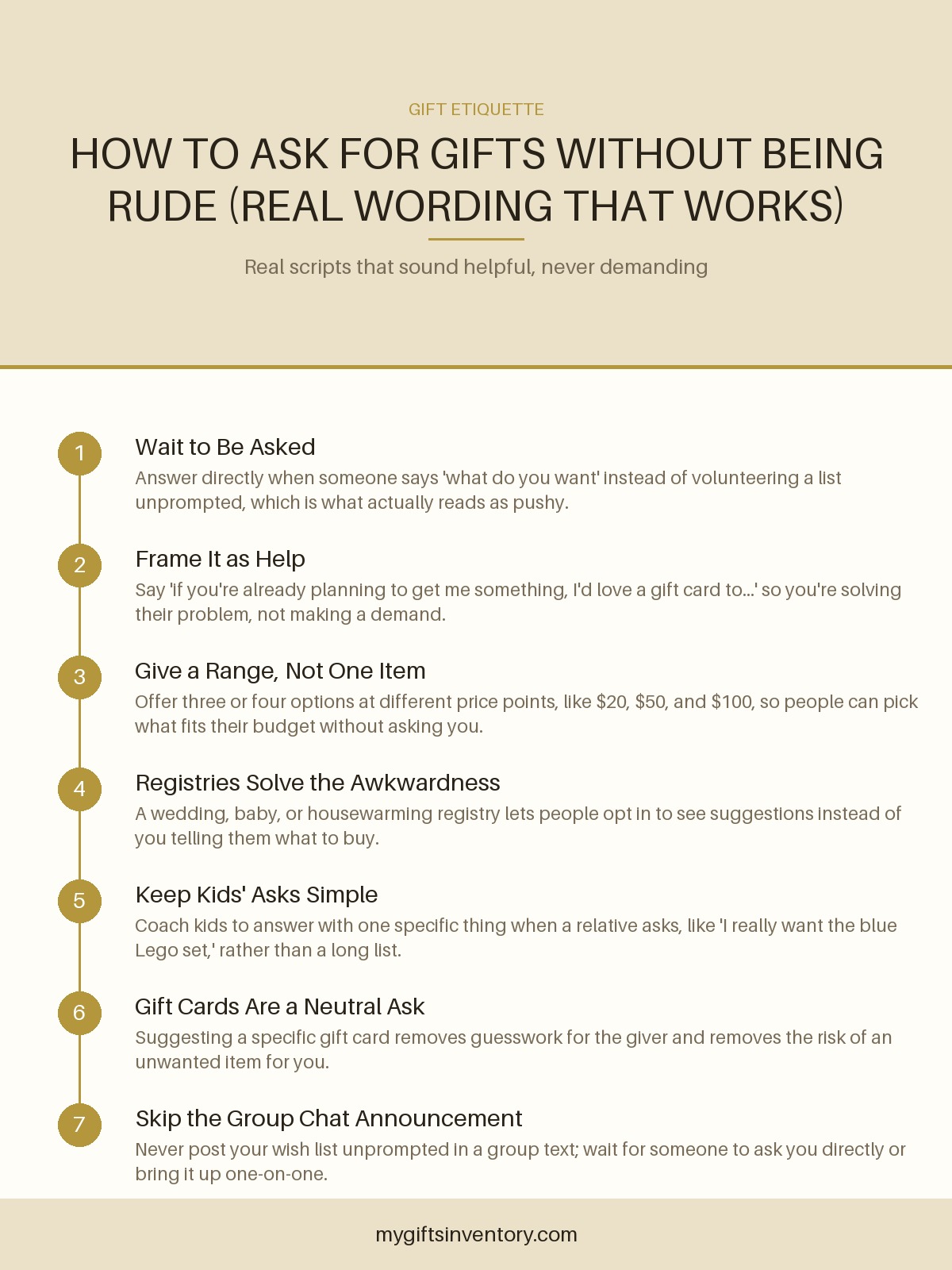
There's a very specific kind of dread that comes with someone asking "what do you want for your birthday?" and your brain going completely blank, or worse, going straight to something you'd never actually say out loud because it feels greedy to admit you want it. Asking for gifts feels loaded in a way that giving them never does, because we're taught early that wanting things and saying so are two different, slightly shameful acts. The good news is that there's a real difference between asking for gifts in a way that sounds like a demand and asking in a way that sounds like you're just trying to make someone's shopping easier, and the difference usually comes down to timing, tone, and exactly three or four words.
Why This Feels So Uncomfortable in the First Place
Most of the awkwardness around asking for gifts isn't really about the gift. It's about the fear of seeming ungrateful, materialistic, or like you're keeping score. We're socialized, especially in a lot of Western etiquette traditions, to treat gift-giving as something that should be spontaneous and generous rather than transactional, so the moment you name a specific want, it can feel like you've broken an unspoken rule. But the people who love you generally want to get this right. They'd rather know what you actually want than guess wrong and watch you fake enthusiasm over something that misses the mark. Reframing the ask as a favor to them, not a favor to yourself, is most of the battle.
The Core Rule: Answer, Don't Announce
The single biggest thing that separates a gracious gift request from a rude one is whether you were asked first. If your aunt texts "any ideas for your birthday?" and you reply with three specific, reasonably priced suggestions, that's not rude, that's helpful. If you post an unsolicited wish list in the family group chat two weeks before your birthday with no one having asked, that reads very differently, even if the actual items on the list are identical. Wait for the door to open. It almost always does, because most people genuinely don't know what to get and are relieved when you make it easy.
How to Phrase It So It Lands Well
When Someone Directly Asks You
This is the easiest scenario and the one most people overthink. When someone says "what do you want," you don't need to deflect with "oh, anything, I don't need anything," because that just puts the guesswork back on them. Instead, try something like: "I've actually been wanting a good pour-over coffee setup" or "I could really use a new set of hand tools." Naming one or two specific things, not a sprawling list, signals that you thought about it without sounding demanding.
When No One Has Asked Yet
If an occasion is coming up and nobody has brought up gifts, it's fine to plant a seed casually rather than issue a directive. Something like "I've been eyeing a new espresso machine, but who knows if I'll actually get one" said in passing during a normal conversation does a lot of quiet work. It's low pressure, it doesn't obligate anyone, and it gives whoever's listening something concrete to remember later. If you want to go one step further without feeling like you're handing someone a shopping list, you can say "I'll send you a couple of links if you're curious" and only follow up if they say yes.
For Specific Interests
Specificity is your friend here, not your enemy. Vague requests like "surprise me" or "I like books" put all the labor on the giver and often lead to gifts that miss. Naming a genuine interest, like being a coffee obsessive who'd actually appreciate a curated set from our guide to gifts for coffee lovers under $50, gives someone a real starting point without dictating the exact item.
Asking Different People Requires Different Scripts
Parents and Grandparents
Family tends to be the most forgiving audience for a direct ask, but it still helps to frame things as information rather than instruction. "If you're getting me something for Christmas, I'd love anything from my running gear list" lands better than "get me these specific shoes in this specific color." Parents and grandparents often want the joy of choosing something themselves within your general direction, so give them a lane, not a lockstep.
Partners and Close Friends
With a partner or close friend, honesty is usually rewarded. These are the relationships where you can say "I really want X for my birthday, no pressure but I'd be thrilled" and it won't land as entitled, because the closeness itself provides context. This is also where budget conversations can happen more openly, since a close friend might genuinely want to know if you're hoping for something in the $30 range or the $150 range so they don't under- or overshoot.
Coworkers and Office Gift Exchanges
Workplace gifting has its own etiquette, and asking for something specific in an office Secret Santa or holiday exchange can feel especially fraught because the relationships are more transactional and the budgets are usually fixed. If there's an organizer, it's completely normal to fill out a simple preferences form (candle scents, coffee versus tea, a hobby) rather than naming an exact item. When budgets are capped, ideas from our list of corporate gift ideas under $50 can double as inspiration to share if a coworker asks what you'd like.
Kids Asking Relatives
Kids often get this exactly backwards, either going silent when asked or rattling off ten things unprompted. It helps to coach them to answer with one or two specific items when a relative asks directly, rather than a running list. "I really want the blue dinosaur set" is a complete, gracious answer. It's also worth teaching kids early that if nobody asks, they don't bring it up first, which sets them up well for adult gift etiquette later.
Registries: The Built-In Permission Slip
Registries exist precisely because direct requests can feel uncomfortable, and they solve the problem elegantly by making the ask opt-in. Nobody feels put on the spot by a wedding, baby, or housewarming registry, because browsing it is entirely their choice. If you're setting one up, resist the urge to only list expensive items. A good registry has a real range, from smaller add-ons like a nice gift basket (our gift basket guide under $50 has good starter ideas for that price tier) up through bigger-ticket items for guests who want to go in on something more substantial. For general strategy on curating a list that actually reflects what you'd use, our piece on choosing the perfect gift is worth a read even from the requester's side, since it helps you think through what's genuinely useful versus what just sounds nice on paper.
Gift Cards: The Low-Stakes Ask
Suggesting a gift card is one of the least awkward requests you can make, because it removes almost all the risk for the giver. Nobody has to guess your size, taste, or whether you already own something similar. If you know exactly where you'd use it, naming the store makes it even easier, and it also gives the giver a way to double check things later using a balance-check page like the ones for Target or Amazon gift cards if there's ever a question about what's left on it. Gift cards get an unfair reputation for feeling impersonal, but asked for the right way, with a specific store or purpose attached, they read as practical rather than lazy.
What to Avoid
- Don't set a price expectation out loud. Saying "I want something at least $100" turns a request into a demand and puts a dollar sign on the relationship in a way most people find genuinely off-putting.
- Don't ask more than once. If you've mentioned a want and it doesn't happen, let it go. Repeating the request starts to sound like nagging, not hoping.
- Don't compare gifts you've received. Mentioning what someone else got you, or what you got someone else, turns gift-giving into a scoreboard.
- Don't ask people who aren't planning to give you anything. If there's no established gifting tradition with a person, like a distant coworker or an acquaintance, don't volunteer a wish list unprompted.
Budget Honesty Without Being Blunt
Sometimes the real question isn't what to ask for, it's how to keep someone from overspending on your behalf. If a friend or family member tends to go overboard, you can say something like "please don't spend more than $30 on me, I'd feel weird otherwise" and mean it. This works especially well heading into a milestone occasion where people might feel pressure to go big, whether that's an anniversary where our personalized anniversary gifts under $75 guide shows plenty of options that don't require a huge budget, or a holiday season where everyone's spread thin already. Naming a ceiling isn't rude, it's considerate, and most givers appreciate the guardrail.
A Few Real Example Scripts
For a birthday when asked directly: "Honestly, I've had my eye on a nice French press, or anything cozy for the apartment would make me really happy."
For a holiday when nobody's asked yet: "I don't need much this year, but if anyone's stuck, I mentioned wanting new headphones the other day."
For a wedding when guests ask about gifts: "We put together a small registry, but honestly your being there means the most. No pressure at all if you'd rather skip it."
For a milestone birthday with a close friend: "This is going to sound specific, but I'd love that record I showed you last month if you're looking for ideas."
Gift Ideas to Go With This


Want more ideas? Browse our full guide: 20 Best Gifts Under $100 (2026): Thoughtful Picks They'll Actually Use
Frequently Asked Questions
Is it rude to send a wish list before someone asks?
Sending an unsolicited wish list can come across as presumptuous, especially in a group setting like a family text thread. It's better to wait until someone directly asks what you want, or to mention an interest casually in conversation and let them follow up if curious.
How do I ask for cash instead of a physical gift?
The most graceful way is to explain the reason briefly, such as saving toward something specific, and frame it as one option among a few. Something like "we're saving for a trip, so cash or a gift card would mean a lot, but we're happy with whatever feels right to you" keeps it from sounding like an ultimatum.
What if someone always gets me the wrong gift?
Offer a short list of specific, current options the next time they ask, rather than critiquing past gifts. Most people genuinely want to get it right and just need clearer direction, so specificity solves this more often than a direct conversation about past misses.
Can kids ask for gifts without seeming greedy?
Yes, especially if they're taught to answer with one or two specific items only when someone asks directly, rather than volunteering a long list. Keeping the response short and specific, like naming one toy by name, reads as thoughtful rather than demanding.
Is it okay to ask coworkers for a specific gift in an office exchange?
It's fine as long as it fits the exchange's spending cap and you're answering a preferences form or direct question rather than announcing wants unprompted. Keeping suggestions modest and generic, like a coffee brand or a hobby category, tends to work better than a single expensive item in a workplace setting.
Looking for an Actual Gift Instead?
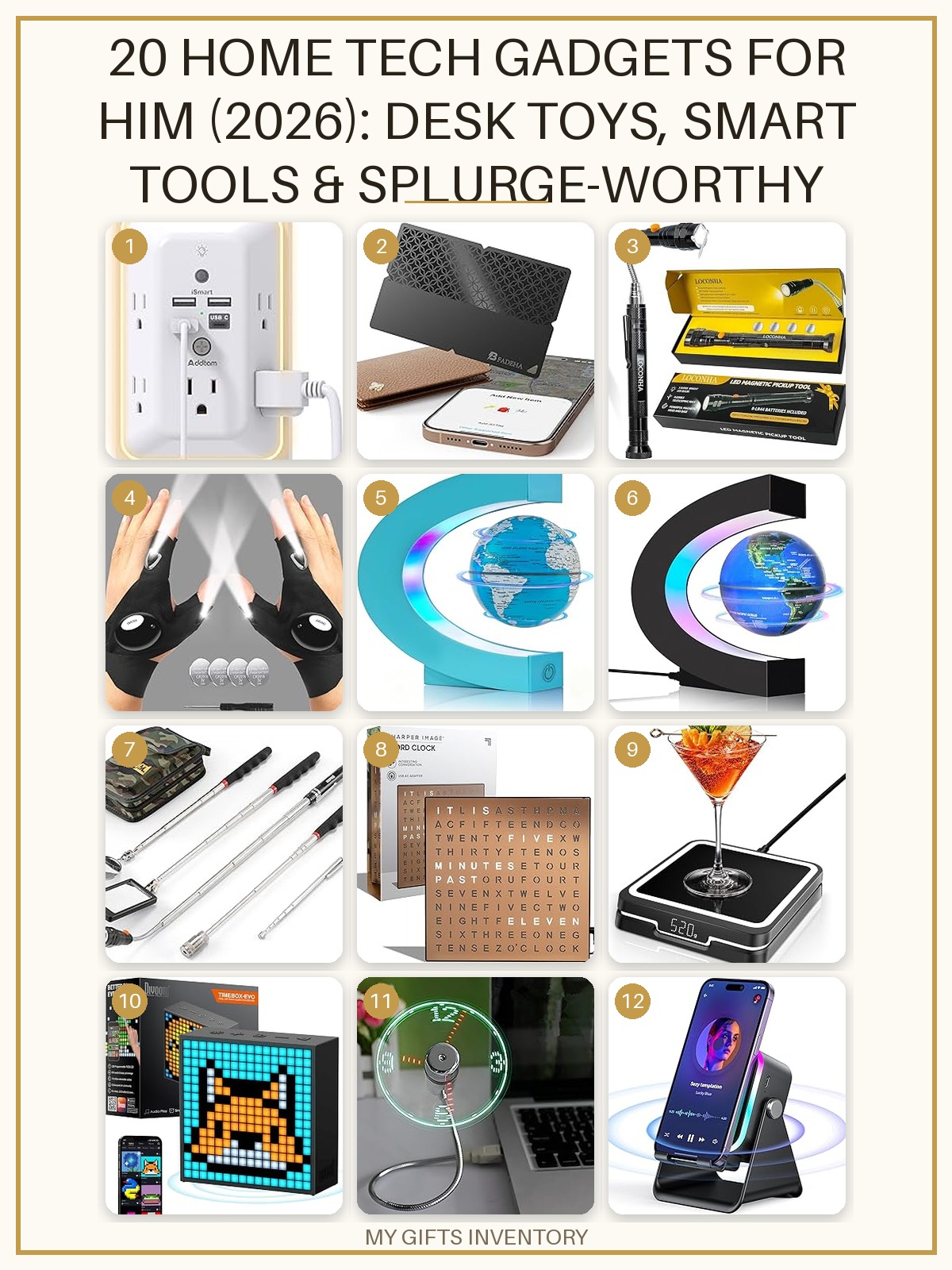

Gift Sets We Love Right Now
Every item picked, priced and linked, ready to buy.
More Gift Advice