How to Regift Properly: The Etiquette Rules Nobody Tells You
Regifting isn't tacky if you do it right. Here's how to pass along an unused gift without the guilt, the awkward reveal, or the risk of it landing back with the original giver.
As an Amazon Associate, My Gifts Inventory earns from qualifying purchases. We only recommend products we'd genuinely consider buying ourselves.
You've got a drawer (or a closet shelf, or a box in the garage) full of perfectly nice things you'll never use. A candle in a scent that's not you. A third cheese board. A sweater still folded in its tissue paper. The question isn't whether you should pass it along, it's whether you can do it without the giver finding out, without insulting the new recipient, and without that particular flavor of guilt that comes from feeling like you're cheating on the whole gift-giving system.
Here's the good news: regifting is not inherently tacky. Etiquette experts have softened on this over the last couple of decades, and most people do it at least occasionally whether they admit it or not. What separates a smart regift from an awkward one comes down to a handful of specific, checkable rules. We'll walk through all of them.
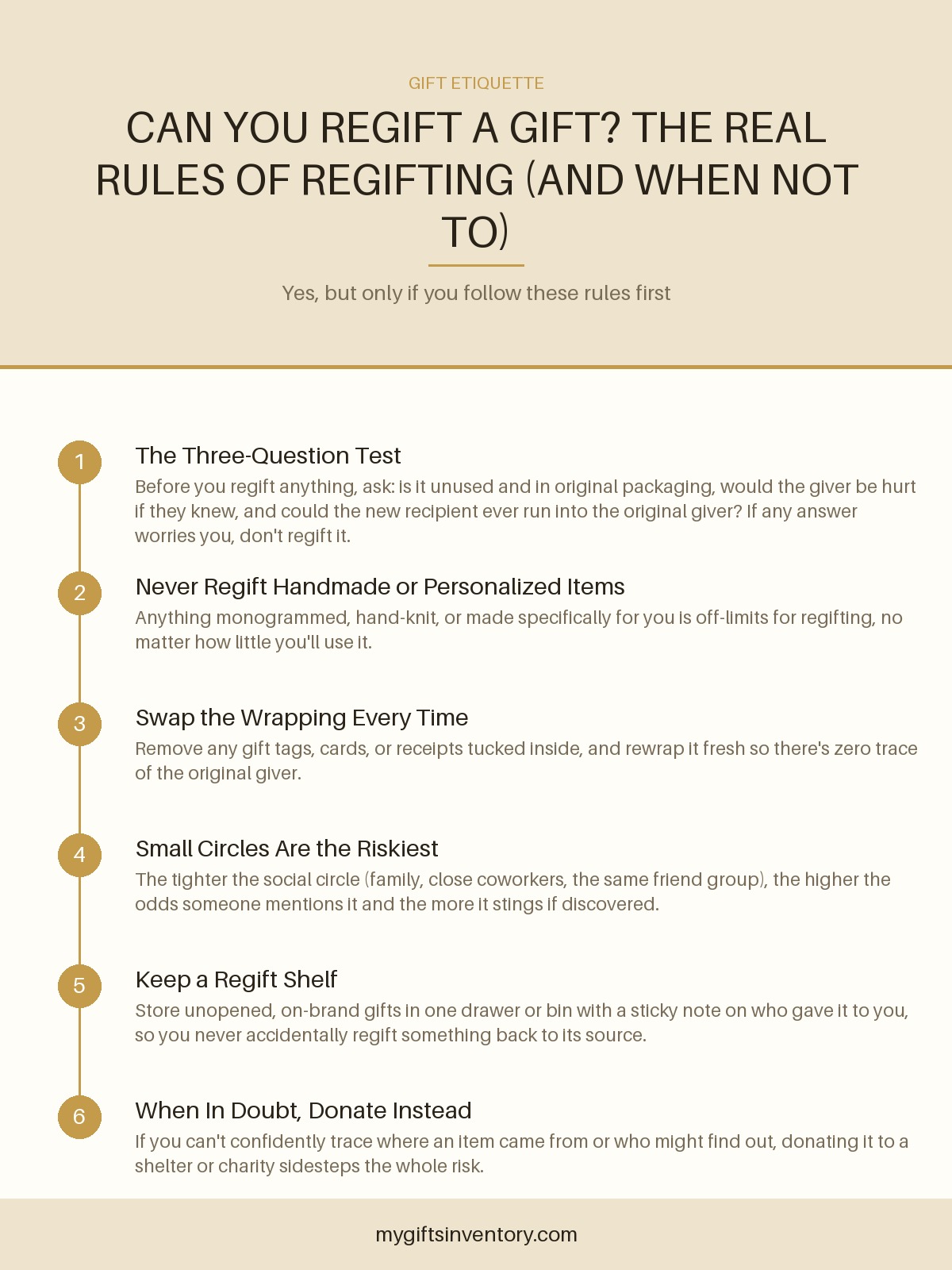
The Core Rules That Actually Matter
Strip away the anxiety and regifting etiquette really comes down to five things: condition, origin, timing, personalization, and fit. Get those right and nobody will ever know or care.
The item has to be new and unused
This one is non-negotiable. Regifting only works with something that's still in its original packaging, unworn, unopened, or otherwise untouched. A candle you burned twice isn't a gift anymore, it's a used candle. If there's any wear, any missing pieces, any sign it's been sitting in your bathroom cabinet for a year, it needs to go in the donation pile instead, not into someone else's hands as a "gift."
You need to know exactly where it came from
Before anything moves along, trace its path. Who gave it to you, and how close is that person to the new recipient? Regifting is safest when the original giver and the new recipient are unlikely to ever compare notes, different friend groups, different sides of the family, different cities even. The riskiest regifts are the ones that circulate within a tight social circle where someone is bound to mention "oh, I gave you that" at exactly the wrong moment.
Timing matters more than people think
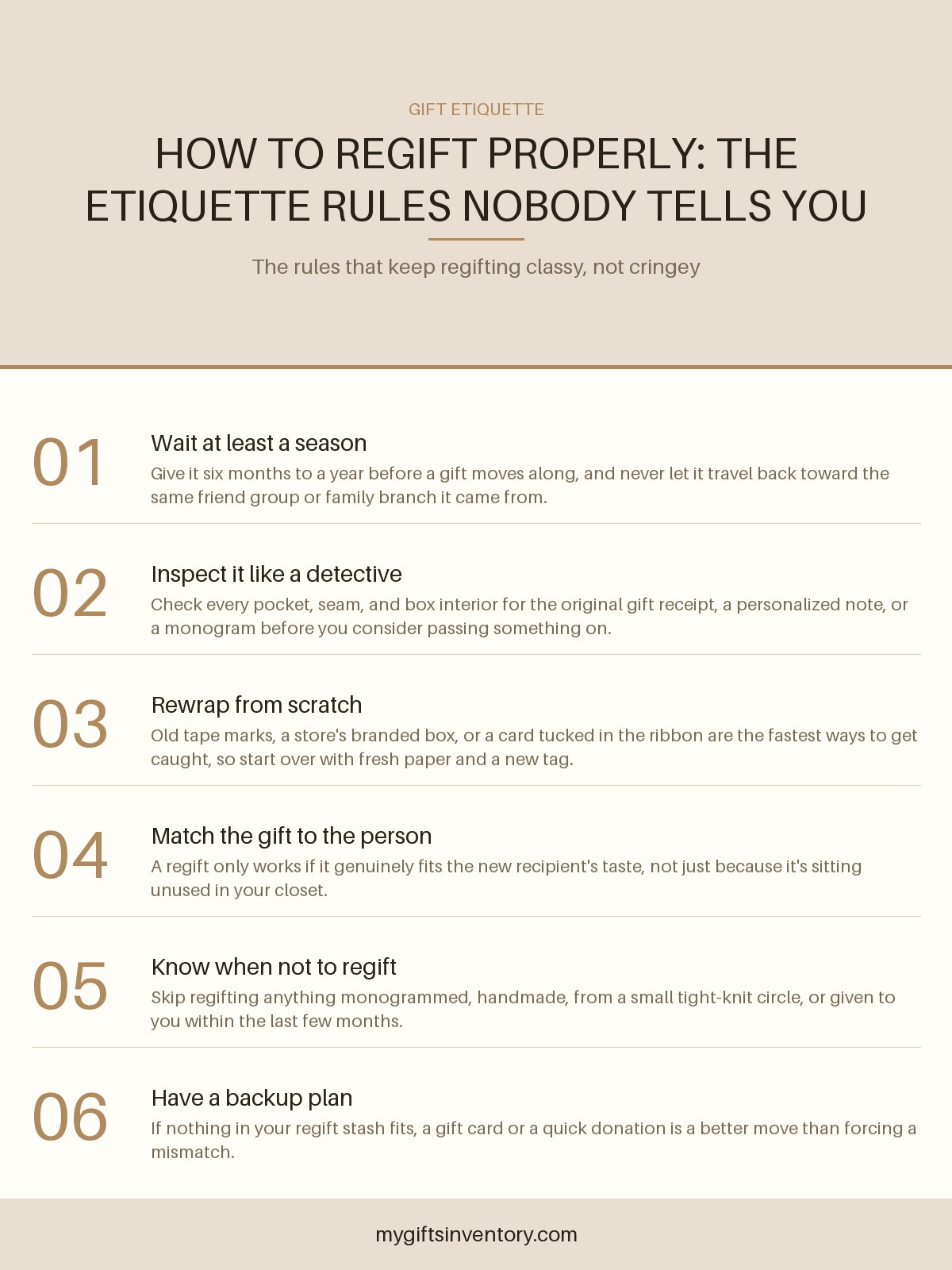
Give a gift at least a season or two of breathing room before it moves on. A candle you got last Christmas can reasonably become a hostess gift the following spring. A candle you got two weeks ago at a birthday party should not show up under someone's tree in December, the memory is still too fresh for everyone involved, including you.
Never regift anything personalized or handmade
Monogrammed items, anything engraved with initials, handknit or hand-sewn pieces, photo gifts, anything a person clearly spent hours making, these are all off-limits, permanently. Regifting a handmade item isn't just risky, it's genuinely hurtful if it's ever discovered, because it signals the effort meant nothing to you. Keep these, donate them anonymously, or quietly retire them, but don't pass them forward as if they were store-bought.
The new gift has to actually fit the person
This is the rule people skip most often, and it's the one that matters most for the relationship, not just the etiquette. A regift should never be chosen because it's convenient, it should be chosen because you looked at what you have and thought "this is genuinely right for them." If you're regifting purely to clear space and the fit is a stretch, it's usually better to set the item aside and find something more deliberate. Our guide to gift ideas for a mom who has everything is a good place to look if you're trying to solve the "she truly needs nothing" problem honestly rather than just offloading a spare item onto her.
How to Avoid Getting Caught
Most regifting disasters aren't about the ethics, they're about sloppy execution. Here's the actual checklist to run through before anything leaves your house:
- Open the box completely. Gift receipts, business cards, and handwritten notes love to hide in the bottom of gift boxes or tucked into tissue paper. Check every layer.
- Check for engraving or monogramming you might have missed on first glance, especially on jewelry, leather goods, or drinkware.
- Remove any price tags, store stickers, or return labels completely, don't just fold them under.
- Rewrap it yourself, from scratch. Never repass along a gift in its original wrapping paper or gift bag, even if it looks untouched, because the giver may recognize their own wrapping choices. Our home decor gift ideas for her guide has plenty of small, giftable items in this price range if you decide a regift isn't the right call and you'd rather buy something new instead.
- Keep a mental (or literal) log of who gave you what, so you never accidentally regift something back to a person who's connected to the original giver.
When Regifting Works Well
Unopened toiletries and beauty items
Bath sets, unopened perfume, unused skincare, these are classic, low-risk regifts because they're often given in multiples and rarely personalized. If you'd rather buy something fresh instead of regifting, our roundup of cruelty-free beauty gifts under $50 is worth a look.
Extra bottles, gourmet food gifts, and hosting items
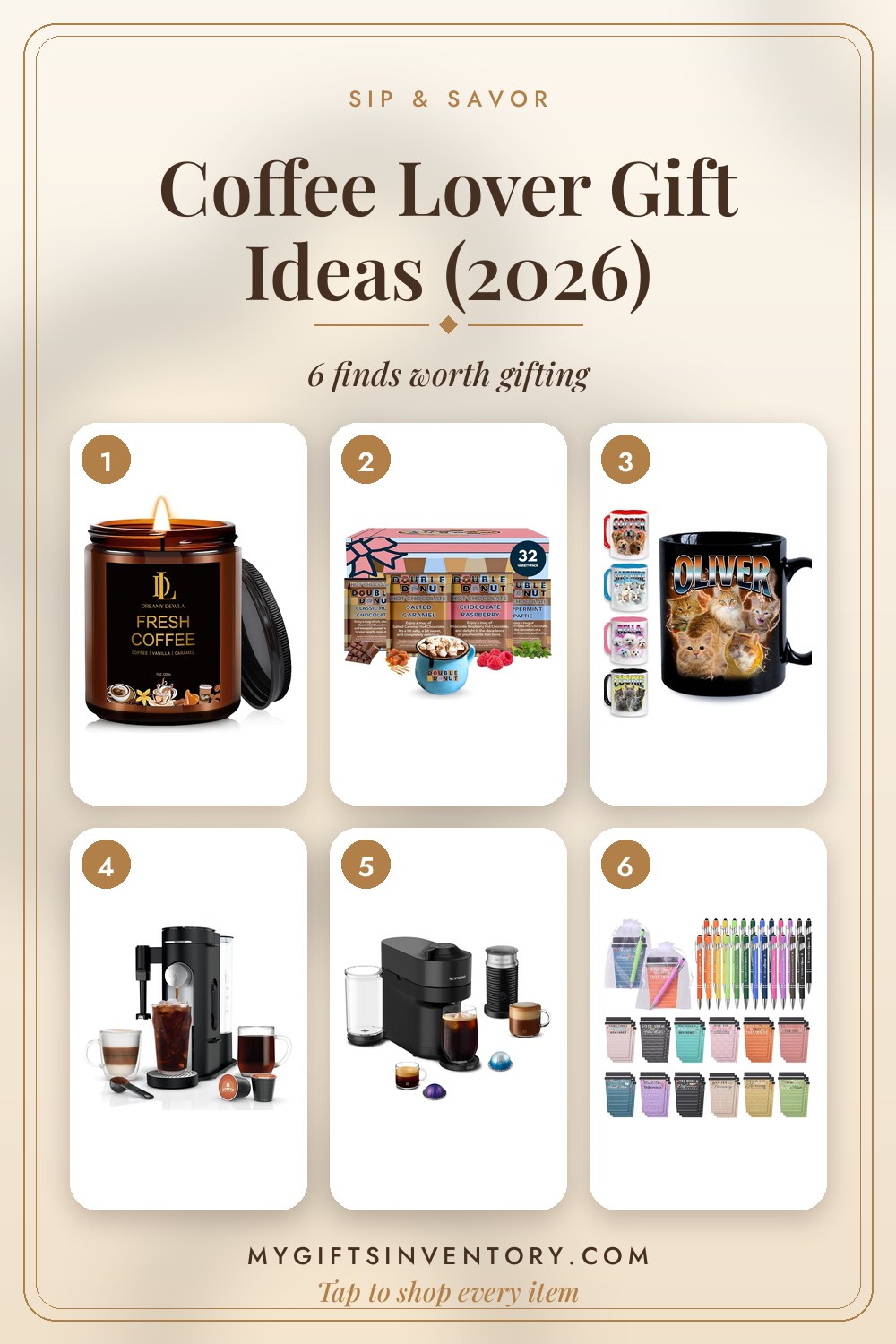
Wine, specialty coffee, olive oil sets, cheese boards, these travel well because duplicates are common and nobody expects a bottle of wine to be one-of-a-kind. If coffee gear keeps piling up in your kitchen, our gift ideas for coffee lovers under $50 guide can help you spot something new for a coffee-obsessed friend instead of recycling the fourth french press you've received.
Office and White Elephant gifts
Workplace gift exchanges are actually the one setting where regifting is often expected, even celebrated, especially in White Elephant or Yankee Swap formats where the whole point is comedic recirculation. Outside of games like that, though, be more careful. If you're building an actual office gift list rather than fishing something out of a drawer, our corporate gift ideas under $50 guide has options that read as thoughtful rather than obligatory.
Kids' gift duplicates
Kids often receive two or three of the same toy, especially around birthdays, and parents commonly redirect the extras to a sibling's friend, a cousin, or a birthday party the following month. Nobody expects a ten-year-old's gift to be a singular, never-duplicated item, which makes this one of the more forgiving regifting zones. If you need a fresh option instead, we've got a full list of gift ideas for 10 year olds under $30.
When You Should Not Regift
Some situations are just too risky, no matter how good your rewrapping game is:
- Wedding and shower gifts. These are tracked closely against a registry, and regifting registry items is one of the fastest ways to insult someone who put real thought into a specific request.
- Anything given within your immediate family or tight friend circle. The smaller and closer the group, the higher the odds of discovery.
- Gifts you know were expensive or hard to find. If someone clearly hunted for something specific, waited in line, or paid a premium, passing it along cheapens the effort even if they never find out.
- Anything monogrammed, engraved, or handmade. Worth repeating, because it's the rule people break most often out of laziness rather than malice.
- Gifts from someone with a long memory who asks about their gifts later. Some people genuinely follow up ("Do you still use that mug I got you?"). If that's the giver, don't risk it.
What to Do Instead When Regifting Doesn't Fit
Sometimes you go through the checklist and realize the item just isn't right for anyone you know. That's fine, you have better options than forcing a mismatch:
- Donate it. Unused, high-quality items are genuinely useful to local shelters, schools, or charity shops, and this avoids the whole etiquette question entirely.
- Return or exchange it if you still have the receipt or gift receipt, most stores allow returns within 30 to 90 days, some longer during the holiday season.
- Sell it through a local resale app if it's higher value and unused, this is increasingly normalized and not considered rude toward the original giver as long as you're not selling something sentimental.
- Give a gift card instead of forcing a fit. If you're building out a gift for someone and nothing in your regift stash is right, a gift card is a completely acceptable, zero-risk option. If you're the one who received a gift card and want to check what's left on it before using it toward something new, we've got balance-check guides for Amazon, Target, and Visa gift cards, among many others.
Wrapping and Presenting a Regift
The wrapping is where regifts get caught, so treat it like a fresh purchase every time. Use new paper, a new bag, a new tag, and write the card as if you bought the item yourself, because in every way that matters, you did, you're the one giving it now. Avoid reusing gift boxes with a store's logo printed on them if the recipient shops there too, and skip any bow or ribbon combination you remember using with the original giver's gift, small details like that are exactly what triggers recognition. If you want a browsable source of fresh, giftable ideas so you're not relying on regifting at all for a particular person, our unique gift ideas for women under $50 guide is built for exactly that kind of last-minute, needs-to-feel-intentional situation.
A Simple Timeline to Follow
If you want a rule of thumb rather than a case-by-case judgment call, use this: wait at least six months before regifting anything received from a close friend or family member, and a full year if it's something distinctive or memorable. For acquaintances, coworkers, or gifts received at large group events, three to six months is usually enough distance. Anything received in the last month should not move anywhere except your own shelf, a return counter, or a donation bin.
Gift Ideas to Go With This


Want more ideas? Browse our full guide: 20 Best Gifts Under $100 (2026): Thoughtful Picks They'll Actually Use
Frequently Asked Questions
Is it rude to regift something?
No, not if the item is new, unused, free of personalization, and genuinely suited to the new recipient. What's rude is regifting something worn or damaged, passing along a handmade or monogrammed item, or giving something back to a circle where the original giver is likely to find out.
How long should you wait before regifting something?
A safe rule is six months for gifts from close friends or family, and up to a year for anything distinctive or memorable. Gifts from casual acquaintances or large group events can usually move along after three to six months.
What items should you never regift?
Never regift anything monogrammed, engraved, or handmade, anything from your wedding or baby shower registry, or anything you know was expensive, hard to find, or given with real effort behind it. These carry too much personal significance to pass along without it reading as careless.
Can you regift a gift card?
Yes, gift cards are actually one of the safest and most common regifts because they're impersonal by nature and rarely traceable back to the original giver. Just check the balance first so you're not passing along a card with only a few dollars left on it, and pair it with a small wrapped item so it doesn't feel bare.
What should you do if you can't find anyone to regift something to?
Donate it, return it if you still have a receipt, or sell it through a local resale app rather than forcing it on someone it doesn't fit. A mismatched regift given just to clear space usually reads as thoughtless, so it's better to redirect the item somewhere it'll actually be used or valued.
Looking for an Actual Gift Instead?
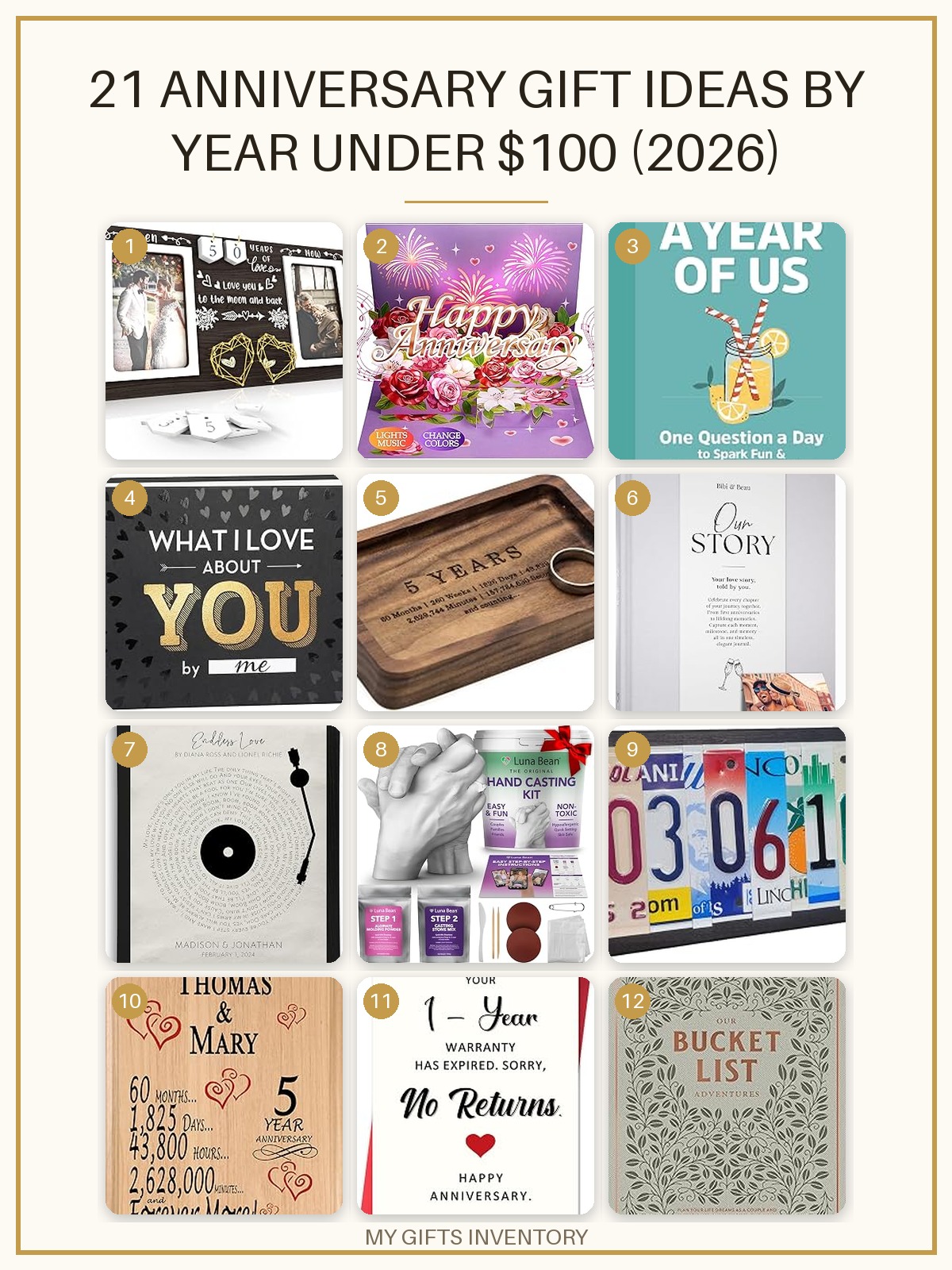

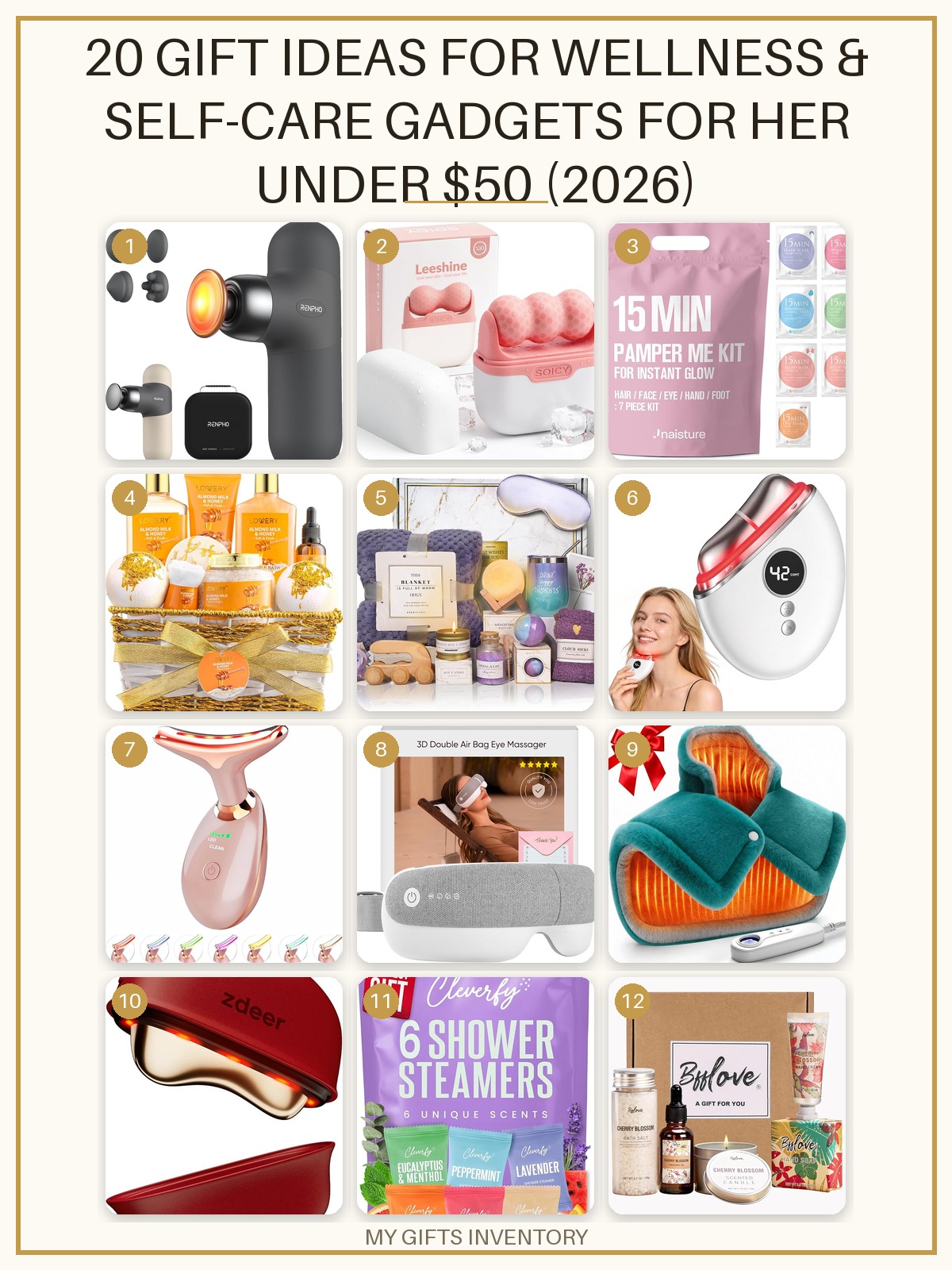

Gift Sets We Love Right Now
Every item picked, priced and linked, ready to buy.
More Gift Advice