How to Regift Without Getting Caught (Rules, Red Flags & What Never to Regift)
The real rules for regifting gracefully, from spotting the tells that give it away to knowing exactly which gifts are safe to pass along and which ones you should never touch.
As an Amazon Associate, My Gifts Inventory earns from qualifying purchases. We only recommend products we'd genuinely consider buying ourselves.
You're standing in front of a drawer full of candles you'll never burn, a still-boxed gadget, or a sweater with the tags still on, wondering if you can pass it along without anyone finding out. The anxiety isn't really about the gift itself. It's about the specific dread of your cousin recognizing her own handwriting on the gift tag, or a coworker realizing they're holding the same scarf they gave you last Christmas. Regifting is common, practical, and honestly kind of smart when done right. Getting caught is what turns it into a story people tell for years.
The Rules That Actually Prevent Getting Caught
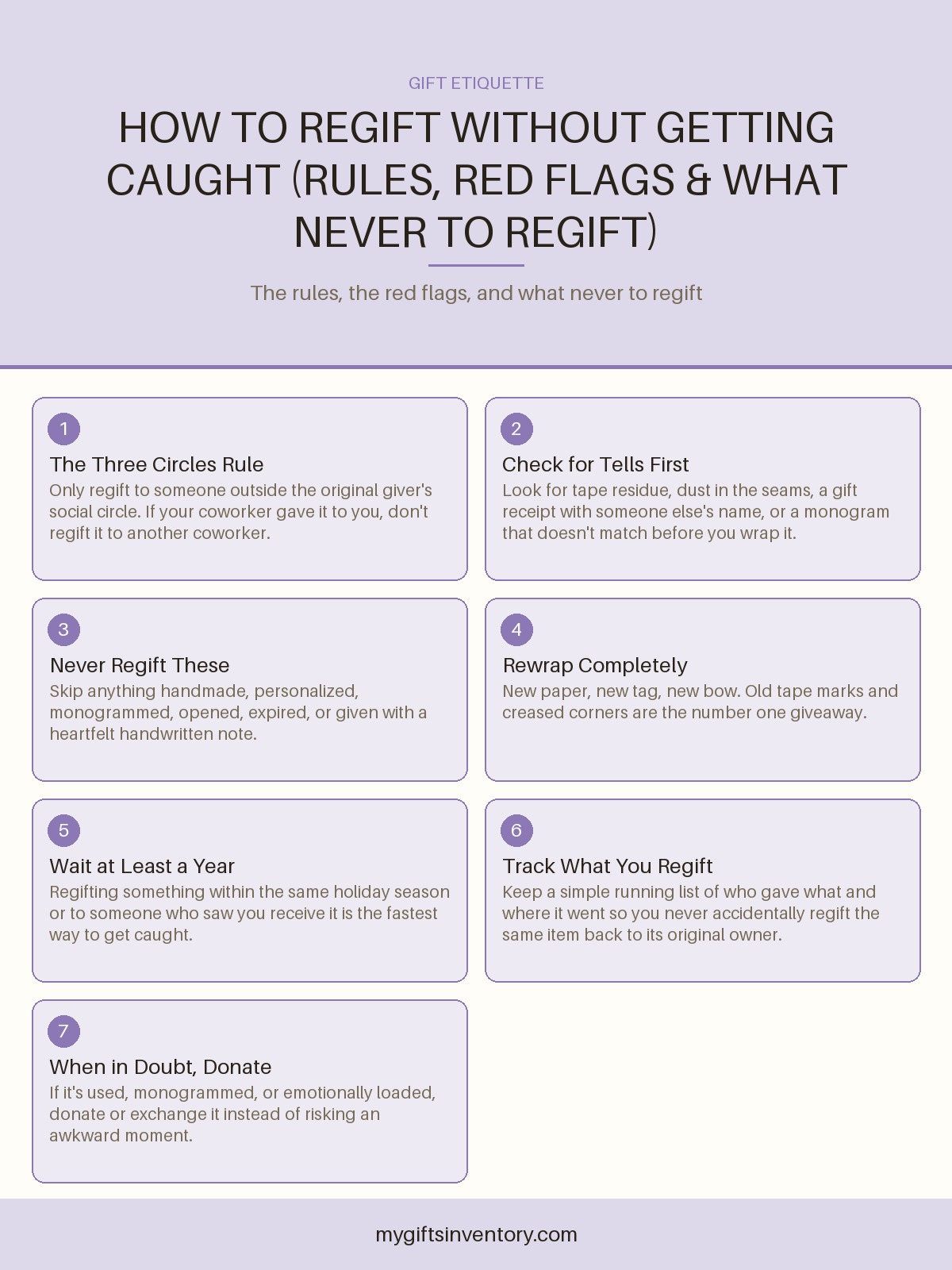
Most regifting disasters come down to breaking one of a few basic rules, not from regifting itself being wrong. Here's what actually keeps you safe.
Never Regift Within the Same Circle
This is the rule that matters most and gets broken most often. If your sister gave you a candle set, it cannot go to your mother, your best friend, or anyone who will see your sister at the next holiday gathering. The safest regifts travel across circles entirely: something from a work holiday exchange goes to a family member, something from a family member goes to a neighbor or a work friend who has zero overlap with the giver.
Wait Out the Season
An item given last Christmas can usually be regifted the following year or at a completely different occasion, like a birthday six months later. What you should never do is regift something within the same season it was given, especially if the original giver will be at the same event where you're handing it off.
Remove Every Trace of the Original Gift
Old gift tags, price stickers from a store the recipient never shops at, a card tucked inside with someone else's name, a receipt in the box, these are the details that get regifters caught. Before anything leaves your house a second time, open the box fully and check every pocket, sleeve, and fold.
The Telltale Signs That Give Regifters Away
If you've ever caught someone regifting, it was probably one of these. Knowing the tells means you know exactly what to fix.
- Tape residue and re-taped seams. Wrapping paper that's been opened and resealed almost always looks slightly different, with double layers of tape or crushed corners.
- Dust or a faint smell. Anything that's sat in a closet or drawer for a year can pick up a musty smell or a thin layer of dust, especially candles, books, and fabric items.
- A monogram or personalization that doesn't fit. A leather journal with someone else's initials, a mug that says "World's Best Aunt," anything with another person's name on it should never be regifted, full stop.
- An outdated expiration date. Gourmet food baskets, wine, spa products, and skincare all have shelf lives. If the item has sat around for more than a few months, check it before wrapping it up again.
- A card or note still inside the box. This is the single most common way people get caught. Always check every pocket and flap.
- Seasonal mismatch. A holiday-themed item regifted for a birthday, or summer sunscreen gifted in January, tends to raise questions.
What's Actually Safe to Regift
Not everything is fair game, but plenty of gifts are genuinely good candidates as long as they're unused, unopened, and in original packaging.
Good Candidates
- Unopened gift sets, especially bath and body or self-care items, as long as there's no expiration issue. If you're looking for what a good one even looks like, our roundup of self-care and spa gift sets under $50 is a useful reference for what's considered a thoughtful, still-current gift in that category.
- Unused home goods still in their box, like small kitchen appliances, decorative items, or serveware.
- Unopened gourmet food and drink gifts, provided the expiration date is comfortably far out. This is one of the trickier categories because these often come as part of curated baskets.
- Gift cards, with one big caveat covered below.
- Books, especially if they still have the shrink wrap or look unread and are a good match for the new recipient's interests.
Never Regift These
- Anything handmade, even if it's not your style. Handmade gifts represent someone's time and are almost impossible to pass along without it eventually surfacing.
- Anything personalized or monogrammed with initials, names, or a specific date.
- Anything that arrived with a heartfelt handwritten card, especially if the giver referenced the gift specifically in it.
- Opened cosmetics, skincare, or anything applied to skin, for hygiene reasons as much as etiquette ones.
- Anything visibly used, worn, or displayed in your home for a period of time, even briefly.
The Gift Card Regifting Problem
Gift cards feel like the easiest regift because there's no wrapping paper to worry about and no monogram to spot. But there's a quieter risk: activation records. Store gift cards are tied to a specific card number, and if the original giver ever mentions the brand or amount, and the new recipient happens to check the balance and finds a purchase history that doesn't match what they'd expect, it can get awkward. If you're regifting a card, it's worth actually checking the remaining balance first so you're not accidentally handing over $4.12 instead of $50. We've put together balance-check guides for a long list of retailers, including Target, Amazon, and Best Buy, so you know exactly what's left before you pass it along. If the balance is low or oddly specific, it's often better to be upfront that it's a partially used card, or to swap it out entirely for something new.
Repackaging Without It Looking Repackaged
If you're combining a few regifted odds and ends into something that reads as a single cohesive gift, presentation does a lot of the work. A candle, a small book, and a box of chocolates thrown loose into a gift bag looks like leftovers. The same three items arranged in a basket with tissue paper and a ribbon looks intentional. If you want a sense of what a properly assembled basket actually looks like before you attempt your own, our guide to gift baskets under $50 is a good visual reference, even if you're building yours from things already in your closet rather than buying new.
Track What You Regift (So You Don't Get Caught by Your Own Memory)
The most common way people get caught isn't a sharp-eyed recipient, it's the regifter forgetting who gave them what. A simple running note on your phone works fine: who gave the gift, what it was, when you received it, and who it eventually went to. This takes thirty seconds and prevents the genuinely mortifying scenario of regifting something back to the person who gave it to you two years later, which happens more often than people admit. If you're the type who keeps a broader system for gifts, cards, and sizes for people in your life, it's worth building that habit into your regular gift planning rather than treating it as a one-off fix, something our guide to choosing the perfect gift touches on in terms of paying attention over time rather than scrambling last minute.
When Regifting Isn't the Right Move
Sometimes the honest answer is that you shouldn't regift at all. If the item is genuinely useful to you, keep it. If it's not right for anyone you know but still good quality, donation is often the better call, especially for clothing, unused toiletries, or home goods that a charity can put to immediate use. If it's something with real resale value, like electronics or unopened luxury items, consider store credit or a return instead. And if the gift came from someone who will absolutely notice it circulating, like a close friend or partner, it's simply not a candidate no matter how unused it is. In office settings, this calculation shifts a bit, since white elephant exchanges and Secret Santa swaps are built around the expectation that regifting happens; our corporate gift ideas guide covers the etiquette specific to workplace exchanges if that's the context you're navigating.
If You'd Rather Just Buy Something New
Sometimes the safest option is skipping the regift entirely, especially for someone you see often or someone who'd likely recognize the item. A genuinely good gift under $20 removes the risk completely and doesn't take much more effort than digging through a closet; our list of best gifts under $20 is built for exactly this kind of low-stakes, low-budget occasion, like a white elephant swap, a teacher gift, or a last-minute add-on to a card.
Gift Ideas to Go With This


Want more ideas? Browse our full guide: 20 Best Gifts Under $100 (2026): Thoughtful Picks They'll Actually Use
Frequently Asked Questions
Is it rude to regift a gift someone gave you?
No, regifting itself isn't rude as long as the item is unused, appropriate for the new recipient, and not something personalized or handmade. What's actually rude is regifting something the original giver will find out about, or handing off something clearly used or expired.
How long should you wait before regifting something?
A good rule of thumb is at least one full season or occasion cycle, ideally longer. Regifting something within the same holiday season, or to someone who will see the original giver at the same gathering, is when people most often get caught.
Can you regift a gift card?
Yes, and it's actually one of the safer things to regift since there's no packaging or personalization to worry about. Just check the remaining balance first so you're not accidentally giving away a nearly-empty card, and consider being upfront if it's partially used.
What should you never regift?
Skip anything handmade, monogrammed, personalized with a name or date, opened, expired, or given alongside a heartfelt handwritten note referencing the specific item. These are the categories most likely to be noticed and most likely to hurt feelings if traced back.
How do you keep track of what you've regifted?
A simple running note with who gave the item, what it was, and who it eventually went to takes seconds to maintain and prevents the most common regifting mistake, which is accidentally giving something back to the person who originally gave it to you.
Looking for an Actual Gift Instead?
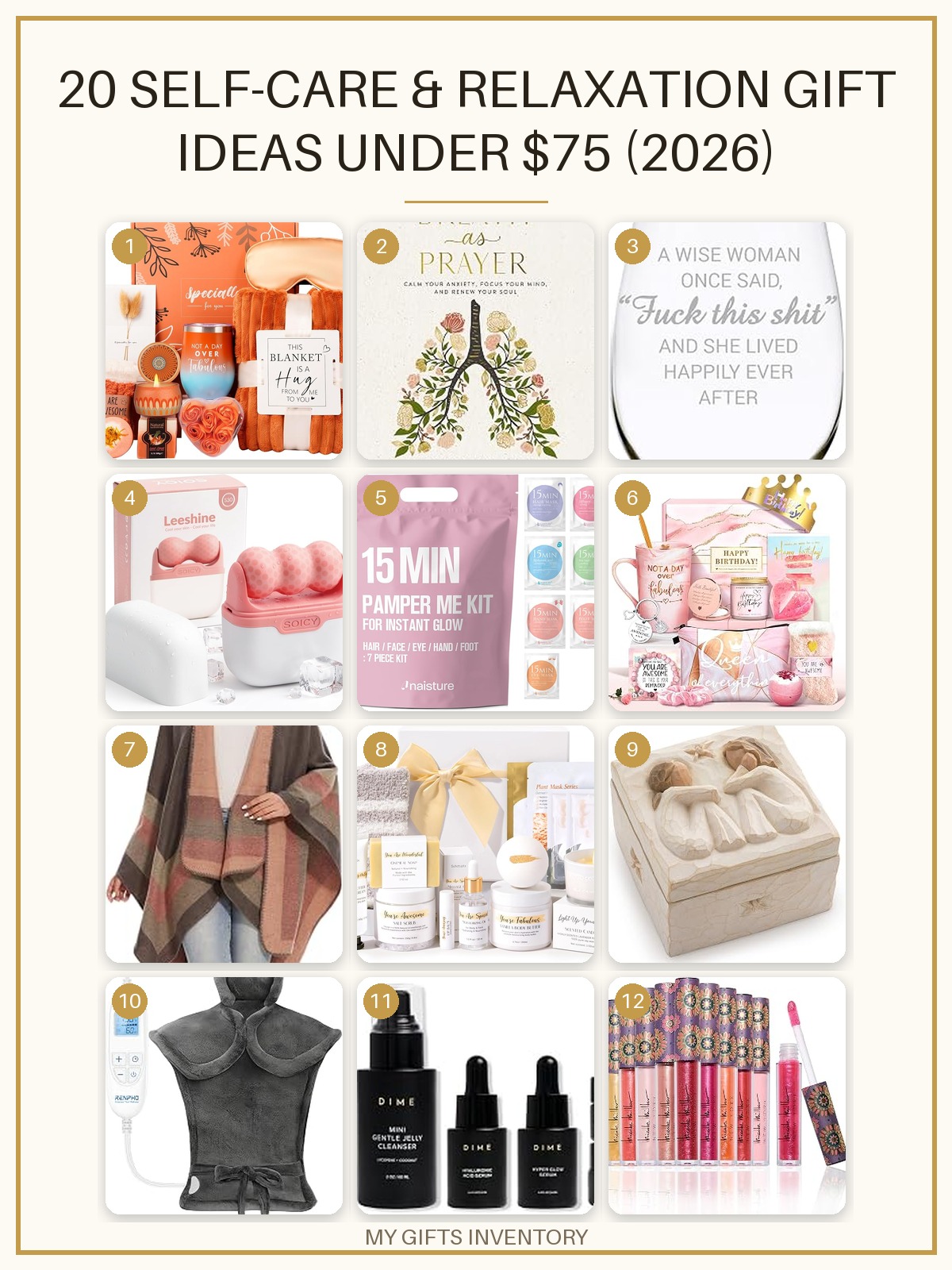



Gift Sets We Love Right Now
Every item picked, priced and linked, ready to buy.

More Gift Advice